TLDR
- Silence about race is not neutrality. When you avoid the topic, your child learns that race is too dangerous or shameful to discuss. They fill the gap with whatever messages they absorb from the world around them.
- Color-blind is not the goal. Pretending not to see race invalidates the lived experience of people of color and confuses children who can clearly see differences. Aim for color-fair and color-rich instead.
- Toddlers already notice. By kindergarten, many children have formed opinions about race, including valuing lighter skin over darker skin. The window for shaping those opinions opens earlier than you think.
- Stories do the heavy lifting. A picture book about a child being excluded for how they look teaches more than a lecture about systemic racism. Start with stories, not abstractions.
- Action prevents cynicism. Children who learn about injustice but feel powerless become cynical. Give them something to do, even something small, and the conversation becomes a project instead of a burden.

Your child already sees race
You are in the grocery store. Your three-year-old, at full volume, points at the person in front of you and announces: "Why is that man's skin brown?"
Your face gets hot. You shush them, change the subject, and silently pray the man didn't hear. What just happened: your child asked a perfectly reasonable question, and you taught them that noticing race is wrong. That two-second lesson is more powerful than any children's book about diversity you will ever buy.
Kids notice racial differences as early as six months. By age two, they are asking about them. By kindergarten, many have already formed opinions about which skin tones are "better," based entirely on the signals the adults around them send.
Why "we don't see color" backfires
It confirms that race is shameful
When a child brings up race and the adult dodges, the child concludes it's unspeakable. Your silence doesn't erase race from your child's awareness. It just takes you out of the conversation.
It erases real experiences
For families of color, "we don't see color" invalidates what they live every day. A Black child who gets followed in a store knows the world sees color. Pretending otherwise tells them their experience doesn't count.
The better frame: color-fair and color-rich
Instead of pretending differences don't exist, teach your child to be color-fair (everyone deserves the same treatment) and color-rich (differences make the world more interesting). "We're all different, and that's what makes things good."
Why do they look different
The Body Safety Conversations course will teach you to answer identity questions honestly
You'll respond in the grocery store aisle without freezing, with words that build curiosity instead of shame.

What to say at every age
Toddlers: answer the question they asked
When your two-year-old says "why is she brown?", they are doing exactly what they do with every new thing. Categorizing. They pointed at a firetruck last week with the same energy.
Respond the same way. "Yes, her skin is darker than yours. People come in lots of different shades." No lecture, no whispered apologies. If you panic, they learn noticing is bad. If you answer simply, they learn asking is safe.
Preschoolers: fairness is their currency
Three-to-five-year-olds are obsessed with fairness. Use it. "Some people get treated differently because of how they look. That's not fair, is it?" A preschooler who can grasp that cutting in line is wrong can grasp that treating someone badly because of their skin color is wrong.
When your child makes a remark that sounds prejudiced, take a breath. Ask what made them say that. Then have a conversation about your family's values. They are forming these opinions right now, and this is the moment to shape them.
Elementary age: stories and real-world examples
Kids ages six to ten hear about current events from friends and screens. They need context from you, or they'll build their own from whatever fragments they pick up.
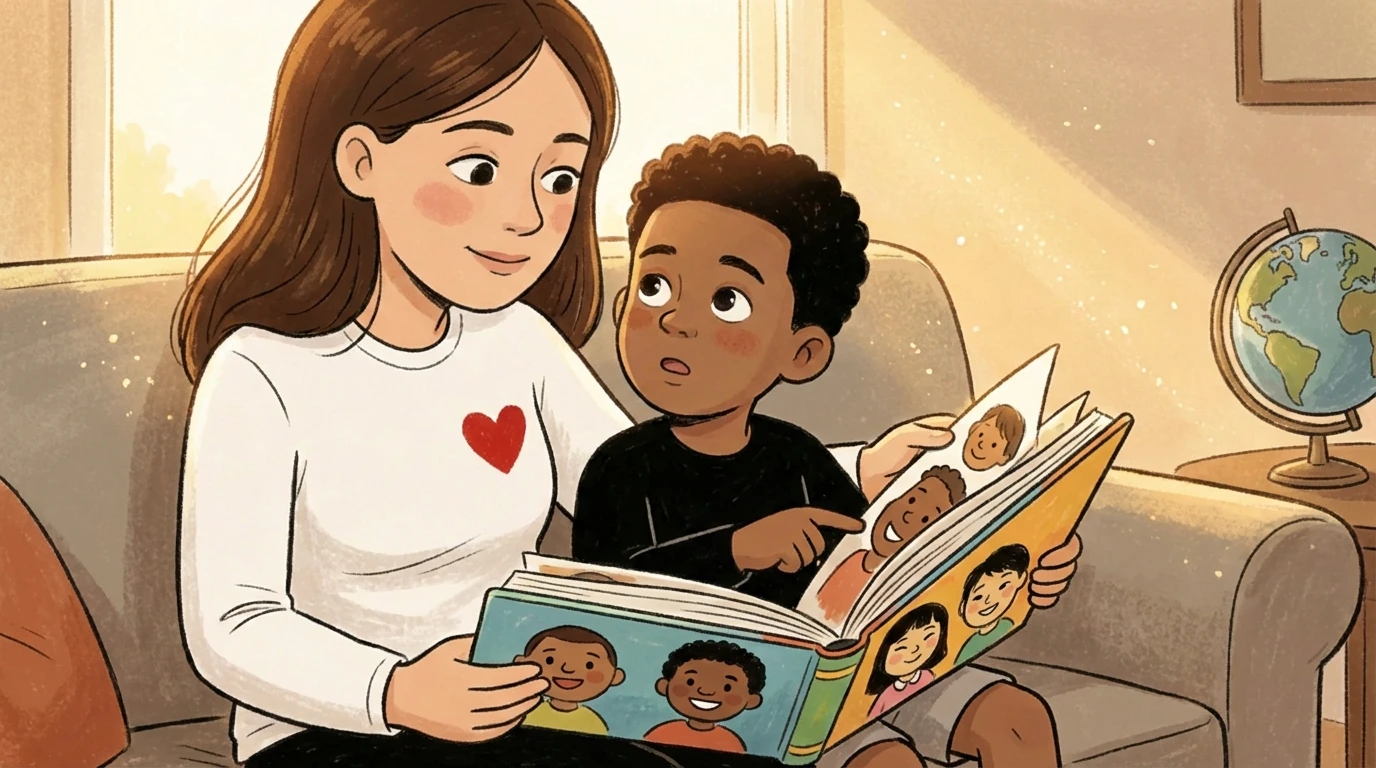
Stories are the most effective tool at this age. A book about a child who gets treated differently at school does more than any abstract explanation. Helping them process the uncomfortable emotions that come up during these conversations is part of the deal.
This is also the age when your child starts noticing patterns in the real world. They might ask why some schools have nicer playgrounds than others, or why certain neighborhoods look different from theirs. These are golden questions. Answer them honestly at a level they can handle: "Some communities have had more money spent on them than others, and that is not fair." You can tie these observations to history in simple terms - the idea that people made unfair rules a long time ago and we are still working to fix them. When you give your child real context instead of vague answers, you teach them to think critically about the world they live in.
How to talk to your child about race
- Respond to their observations without shushingWhen your child points out someone's skin color, answer simply. 'Yes, her skin is darker than yours. People come in lots of different shades.' Treat the observation the same way you would if they pointed out someone's red hat.
- Name unfairness when you see itPoint out examples in books, shows, or daily life where someone is being treated differently because of how they look. Use plain language: 'That was not fair because everyone deserves the same chance.'
- Use stories to explain hard conceptsA picture book about a child who gets treated differently at school does more work than a lecture about systemic inequality. Stories give kids a character to relate to and a feeling to name.
- Check your own reactionsNotice if you lock the car doors in certain neighborhoods, clutch your bag around certain people, or go quiet when race comes up. Your child is watching your body language more than listening to your words.
- Connect learning to actionGive your child something concrete to do with what they learn. Write a letter, attend a community event, choose to support a business, or simply stand up for a classmate who is being treated unfairly.
Teens: action prevents cynicism
Teenagers who learn about injustice but have no outlet become cynical. The antidote is giving them agency.
Talk about current events related to racial injustice and ask what they think. Not as a quiz, but as a real conversation. "Can you think of a time you saw someone treated unfairly because of how they looked? What did you do?"
Then help them act. Research an organization together. Attend a community event. The size of the action matters less than the fact that they took one.

The conversation you need to have with yourself first
Before you can talk to your child about race honestly, you have to sit with your own discomfort. Most of us grew up in families where race was either never mentioned or discussed in ways we would not repeat.
Your child absorbs your body language more than your words. If you tense up when a Black family moves in next door, if you go quiet when someone mentions racism, your child learns from every one of those micro-reactions. Notice your own biases. Everyone has them. The work is noticing, not pretending they don't exist. Try keeping a mental tally for a week - when did you cross the street, lower your voice, or change the subject because of someone's race? Write those moments down. Seeing them on paper makes them harder to dismiss. This is the same honest self-examination that makes raising kids who treat everyone with respect possible.
What you are really teaching them
Every conversation about race is also a conversation about empathy. Can my child imagine what it feels like to be treated differently because of something they cannot control?
The goal is not to make your child feel guilty about their race. The goal is to make them informed, curious, and willing to act when they see something wrong. Guilt paralyzes. Understanding motivates.
Kids who grow up in families where race is discussed openly tend to handle diverse environments with more confidence and less anxiety. They walk into a college dorm, a new job, or a different country and already have a framework for understanding the people around them. The awkward kitchen-table conversations you have now become the social instincts they carry for the rest of their lives. That early practice in sitting with discomfort and asking good questions pays off long after they leave your house.
You are also teaching them that hard conversations are safe in your family. That they can bring you questions about race, about the scary things happening in the world, about anything, and you will answer honestly. That trust, built conversation by conversation over years, is the real point.

FAQ
As soon as they start noticing differences, which is around two years old. If your toddler points out someone's skin color in a store, that is your opening. Answer simply and positively. Waiting until they are older means they fill the silence with their own conclusions.
Stay calm. They are observing and processing, not being hateful. Acknowledge their observation warmly and redirect. Later, at home, have a fuller conversation about what they noticed and what your family values about treating people fairly.
Seek out books, media, and community events that feature diverse characters and perspectives. Choose environments where your child interacts with people who look different from them. Your effort to broaden their world matters more than perfection.
Yes. Telling your child you are still learning models intellectual honesty. Say something like 'I am figuring this out too, and we can learn together.' That teaches them curiosity is a better response than pretending to know everything.