TLDR
- Empathy is built through daily practice, not a single conversation. Talking about what everyone in the family feels and needs, every day, makes children more sensitive to other people's experiences over time.
- Forced sharing kills generosity. When you make a child hand over their toy, they learn resentment, not kindness. Voluntary giving is the only kind that sticks.
- Coaching questions beat lectures every time. Asking 'How do you think she felt?' after a conflict teaches more than any speech about being nice. Kids learn by reflecting, not by being told.
- Repair matters more than apology. Forget extracting a mumbled 'sorry.' Help your child figure out how to make things better. That builds real empathy and preserves their dignity.
- You are the primary textbook. Your child watches how you treat the cashier, your partner, and the person who cut you off in traffic. They are always taking notes.
Your kid is not born knowing how to care
You know that moment when your four-year-old steps on another kid's sand castle and stares blankly while the other child wails? And you think, Oh no. I'm raising a sociopath.
You are not. You are raising a human whose prefrontal cortex is still under construction. Empathy is a skill, not a personality trait, and it develops through repetition the same way reading does. Nobody hands a toddler a novel and says "figure it out." You read to them hundreds of times before they recognize a single word.
The same applies here. Your child will learn to care about other people by watching you care, by practicing in messy real-life situations, and by getting it spectacularly wrong over and over. The research backs this up: when parents talk to toddlers about what a baby sibling might be feeling, those toddlers develop more empathy and less jealousy. Emotion coaching is the foundation everything else builds on.
Walking past a crying friend
The Social Skills course will show you how to grow genuine caring
You'll see your child pause, look over, and ask what's wrong instead of walking past without a glance.
Talk about feelings like you talk about the weather
Here is the simplest thing you can do, starting today: narrate emotions out loud.
"Your sister looks frustrated. See how she's scrunching up her face? She really wanted that last piece of banana."
"I'm feeling irritated right now because I've asked three times for shoes to go on and the shoes are still not on."
"That man at the store seemed sad. Did you notice his face?"
When you make feelings a normal part of conversation, your child starts noticing them in other people without being told to look. This is the difference between a child who sees a crying classmate and walks past, and one who stops and says "Are you okay?"
Start with yourself
Kids trust narration about emotions more when they see you doing it first. If you only label their feelings ("You seem angry") but never your own, it comes across as clinical. Try being honest about what you feel, in age-appropriate doses.
"I'm disappointed we can't go to the park because of the rain. I was looking forward to it."
That is a grown adult modeling how to name an emotion, sit with it, and not lose their mind. Your kid is watching.
Then wonder about others
The magic question is "I wonder how they feel." You are not demanding your child produce the right answer. You are inviting them to consider that other people have inner lives. "I wonder how Marcus felt when you took that truck." Said with genuine curiosity, not as a guilt trip.

The coaching questions that do the heavy lifting
After your child has a conflict (with a sibling, a friend, anyone), there is a sequence of questions that teaches more than any lecture about "being nice." But timing matters. You cannot coach a child who is still activated. Wait until the emotional storm passes completely.
Then try this:
- "How did you feel?"
- "What did you want?"
- "What did you do?"
- "How did that work out?"
- "How do you think they felt?"
- "Would you do the same thing next time, or try something different?"
That is it. You listen. You nod. You repeat back what they said to confirm you understood. You do not evaluate, correct, or lecture.
When they say something wild
Your child will, at some point during this process, say something like "Next time I'll punch him in the face." Stay calm and ask: "Hmm. What do you think would happen then?"
Let them think through the consequences in their head instead of needing another real-world disaster to learn from. This is how judgment develops. Good judgment often comes from bad experience, but mental rehearsal counts too.
Why forced sharing backfires
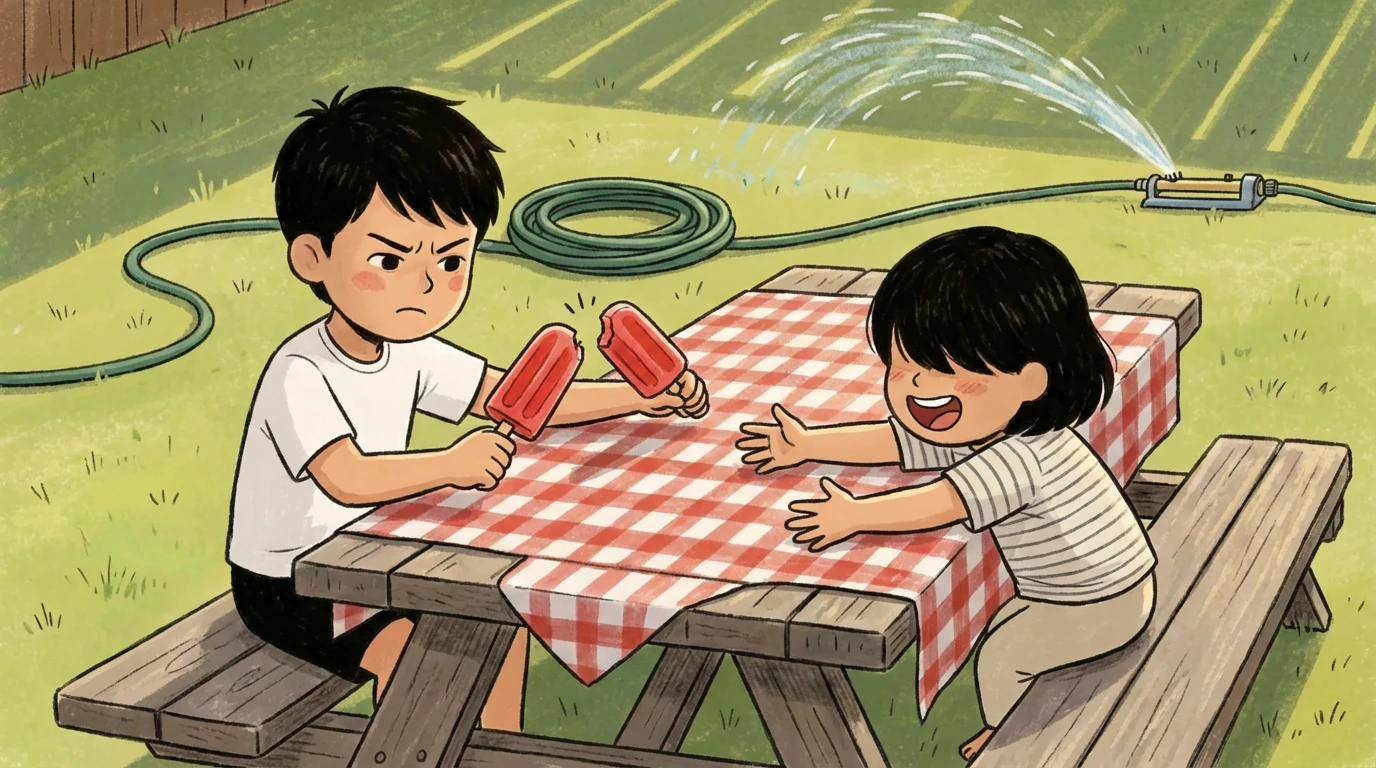
Your toddler is clutching a toy truck. Another child reaches for it. Every adult in the room looks at you expectantly. Make him share.
Do not do it.
Research on children's social development shows that forced sharing leads to less sharing in the future, not more. When a child is guilted or pressured into handing over something they love, they learn resentment. They learn that their feelings do not matter when someone else wants something. That is the opposite of empathy.
Genuine generosity comes from feeling internally full. A child who feels seen, appreciated, and secure will eventually give voluntarily, and that voluntary giving is what builds the habit. A two-year-old's favorite truck is the equivalent of your phone. Imagine someone ripping it out of your hands and saying "You need to share."
What to do instead
Give them the words: "You can say 'I'm still using this. You can have it when I'm done.'" That teaches boundary-setting AND consideration. They learn that other people have wants, and that there are ways to acknowledge those wants without surrendering your own needs.
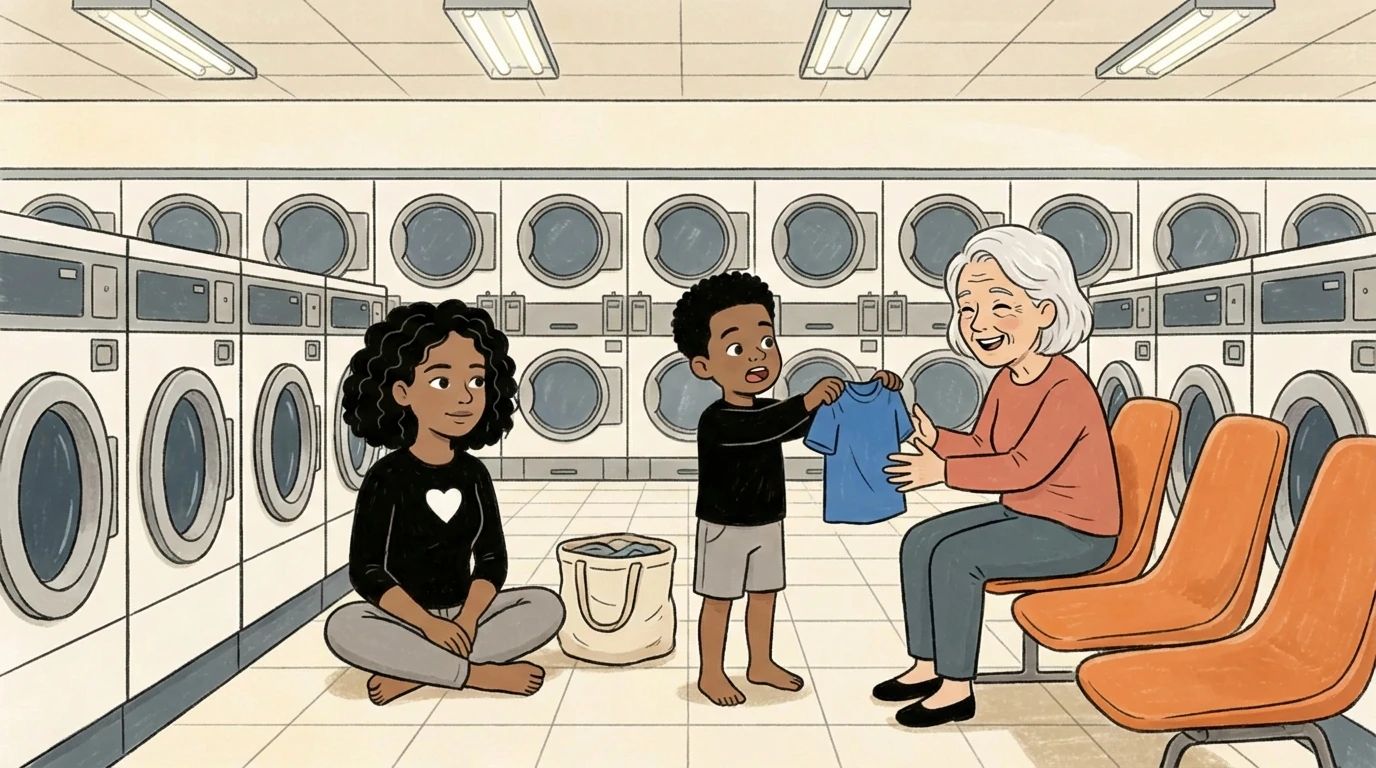
When they do share on their own (and they will), notice it. "You gave Mia a turn with the blocks. Did you see her face? She looked so happy." Let them feel the reward of making someone else's day. That internal "I made someone happy" feeling is the engine of genuine kindness.
How to build empathy skills daily
- Narrate emotions out loudLabel feelings as they happen, yours and other people's. 'Your brother looks frustrated' teaches observation. Do this daily so emotions become a normal topic, not a special event.
- Ask 'I wonder how they feel'After conflicts, invite your child to consider the other person's experience. Keep it curious, not guilt-tripping. 'I wonder how she felt when that happened' opens a door.
- Wait for calm before coachingDo not try to teach empathy during a meltdown. Wait until the emotional storm passes, then use coaching questions to help them reflect on what happened.
- Give scripts for hard momentsHand your child exact words to use: 'I'm still using this, you can have it when I'm done.' Rehearse them. Kids use language they have practiced.
- Let them experience giving voluntarilyCreate low-pressure opportunities to give. When they choose to share on their own, point out the other person's reaction. That feeling of impact is what sticks.
- Teach repair instead of forcing apologySkip the extracted 'sorry.' Ask 'What could you do to make things better?' Let your child become the hero who fixes things rather than the villain who got caught.
Teach repair, skip the forced apology
Your child knocks over their sibling's block tower. The sibling screams. You say: "Say sorry."
Your child mumbles "sorry" while staring at the floor with zero remorse. The sibling does not feel better. Nobody learned anything.
Repair is the alternative, and it works. Instead of extracting an apology, try: "Your sister is really upset that her tower got knocked down. I wonder what you could do to make things better with her."
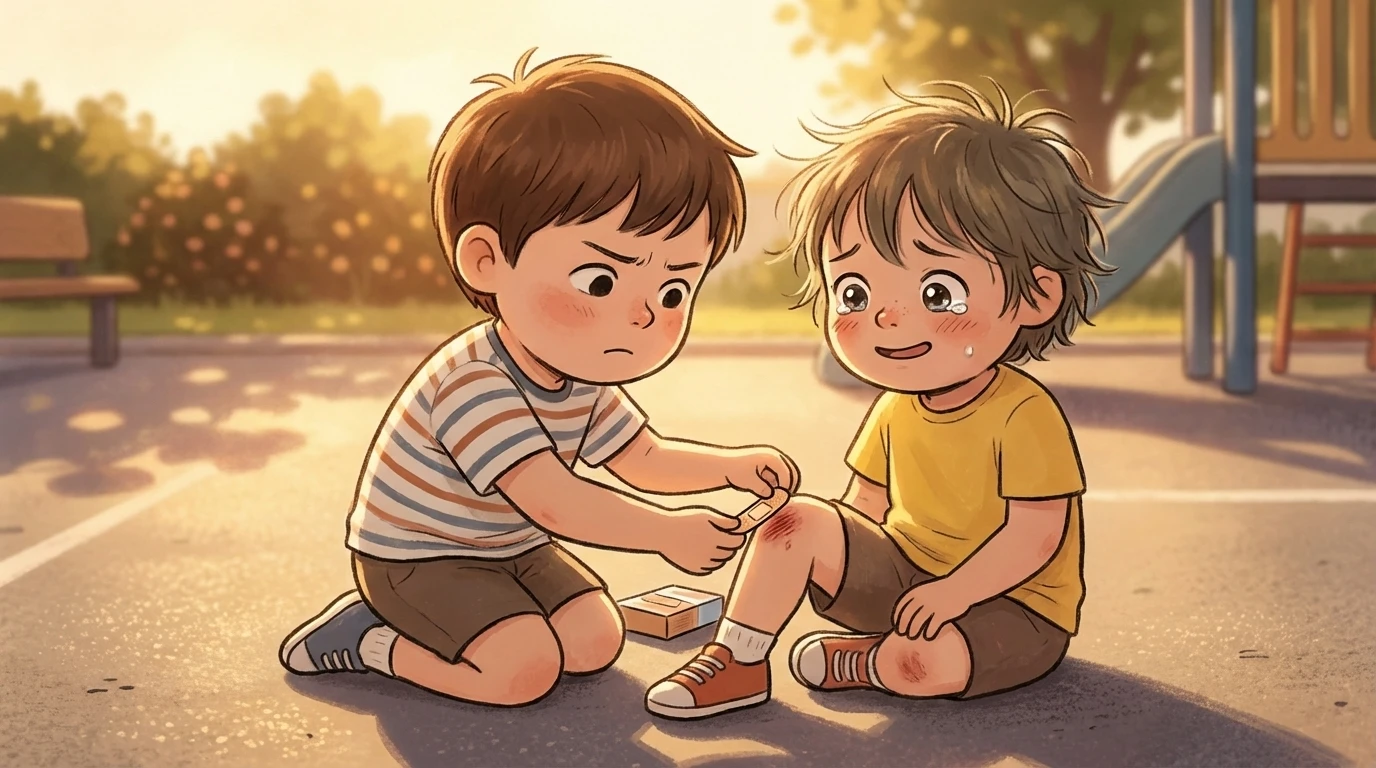
Now your child has to think. Maybe they rebuild the tower. Maybe they get her favorite stuffed animal. Maybe they draw her a picture. The point is they chose an action, and they get to feel like the person who fixed things instead of the person who got punished.
Why this matters for empathy
When children are punished after hurting someone, they feel resentful and blame the sibling. When children repair, they feel capable and connected. The child who learns to repair at age four is the teenager who knows how to say "I messed up and here is what I'm going to do about it" at age fifteen. Kids who develop these skills early show less aggressive behavior as they grow.
The long game with kindness
You are going to watch your child ignore a crying friend and think "I have failed." You are going to hear them say "I don't care" about someone's feelings and feel your stomach drop.
This is normal. Empathy develops unevenly. A child who comforts a hurt puppy on Tuesday might shove their best friend on Wednesday. The brain is building the circuitry, and it takes years.
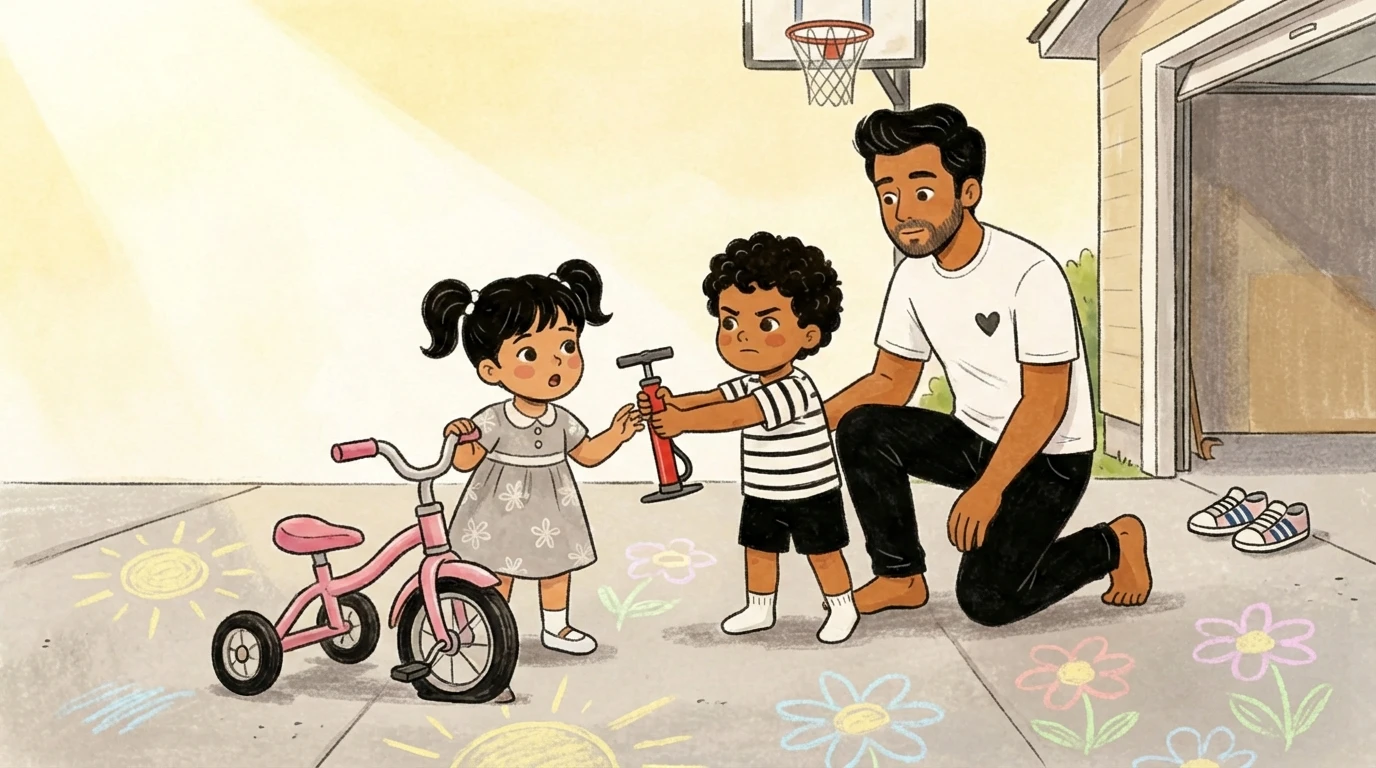
Your job is to keep talking about feelings, keep asking the wondering questions, keep modeling what it looks like to care about other humans. Every time you split the last cookie with your partner while your kid watches, you are teaching. Every time you say "I think the neighbor is having a hard day, let's bring them some food," you are teaching.
The payoff is a kid who, at some point, does something kind without you prompting it. And you will know: they did not do it because you made them. They did it because they wanted to. That is the whole goal of raising kind kids.
Curious where your child stands right now? The emotional intelligence assessment can help you see which skills are already strong and where to focus next.
FAQ
Toddlers show basic empathy around 18-24 months, like patting a crying friend. But mature empathy, understanding why someone feels a certain way, develops gradually through the preschool and early school years. Keep practicing daily even when it seems like nothing is landing.
Probably not. Young children sometimes laugh from discomfort or confusion, not cruelty. They do not know how to process another person's distress yet. Model the appropriate response by saying 'Oh, she is sad. Let us check on her.' Over time, they will mirror you.
Forced apologies teach performance, not empathy. Instead, guide your child toward repair: 'What could you do to help them feel better?' This builds genuine caring because the child chooses the action and experiences the positive result of making things right.
All young children are self-centered by design. Their brains are wired for survival, not altruism. You build empathy through daily emotion talk, modeling generosity, and coaching questions after conflicts. Consistency over months matters more than any single conversation.