TLDR
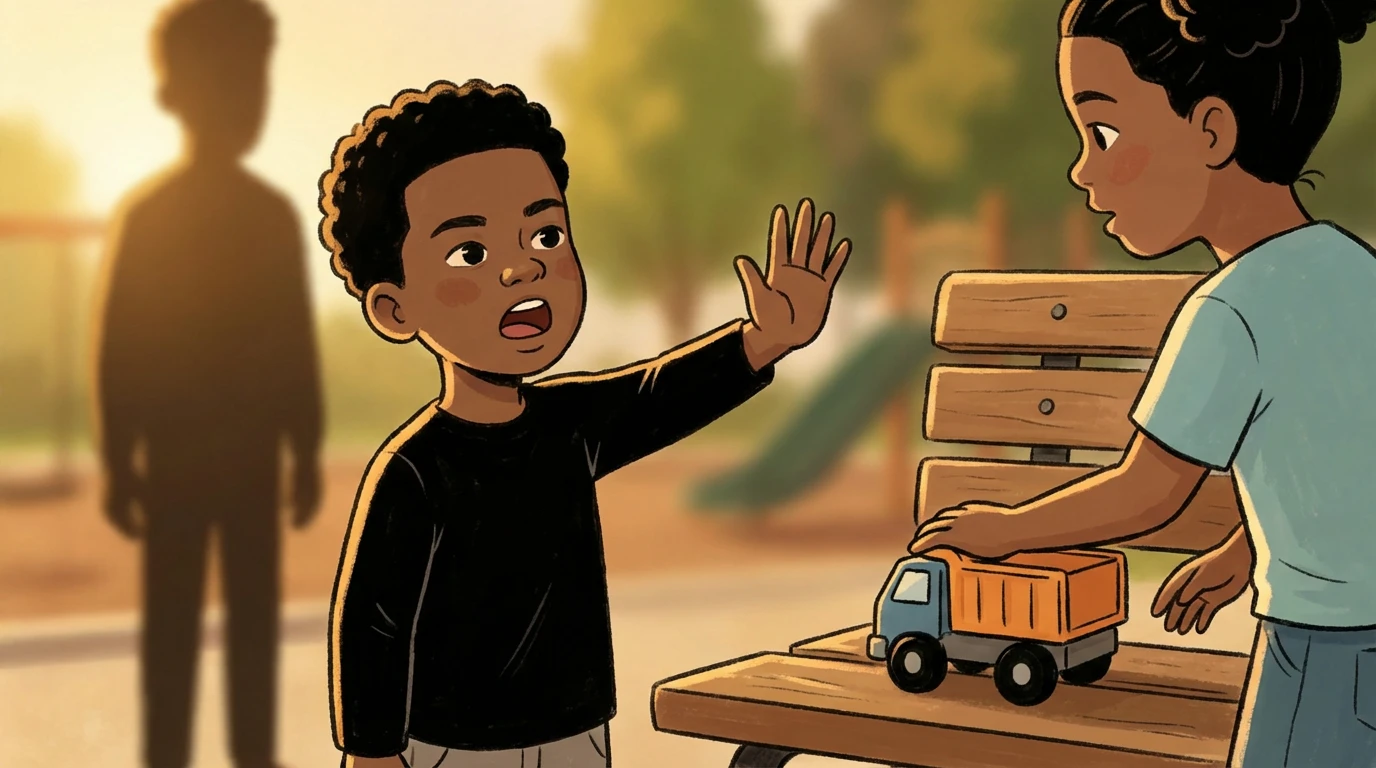
- Every assertive kid was coached into it. Children do not instinctively know how to stand up for themselves without aggression. They need specific scripts, practice, and a parent nearby to prompt them in real situations.
- Aggression and passivity are the same problem. A child who hits when frustrated and a child who freezes when someone grabs their toy both lack the same skill: words that work under pressure.
- Role-play at home transfers to the playground. When you act out the exact scenarios that cause problems, your child builds the neural pathways to respond differently next time.
- Your calm is the teaching. How you handle conflict in front of your child matters more than any script you give them. They are watching your face, your voice, your body.
- Hovering is not helicopter parenting when your child needs coaching. Staying close during peer interactions lets you prompt your child with words before the moment escalates. Pull back as the skill develops.
The kid who freezes and the kid who hits
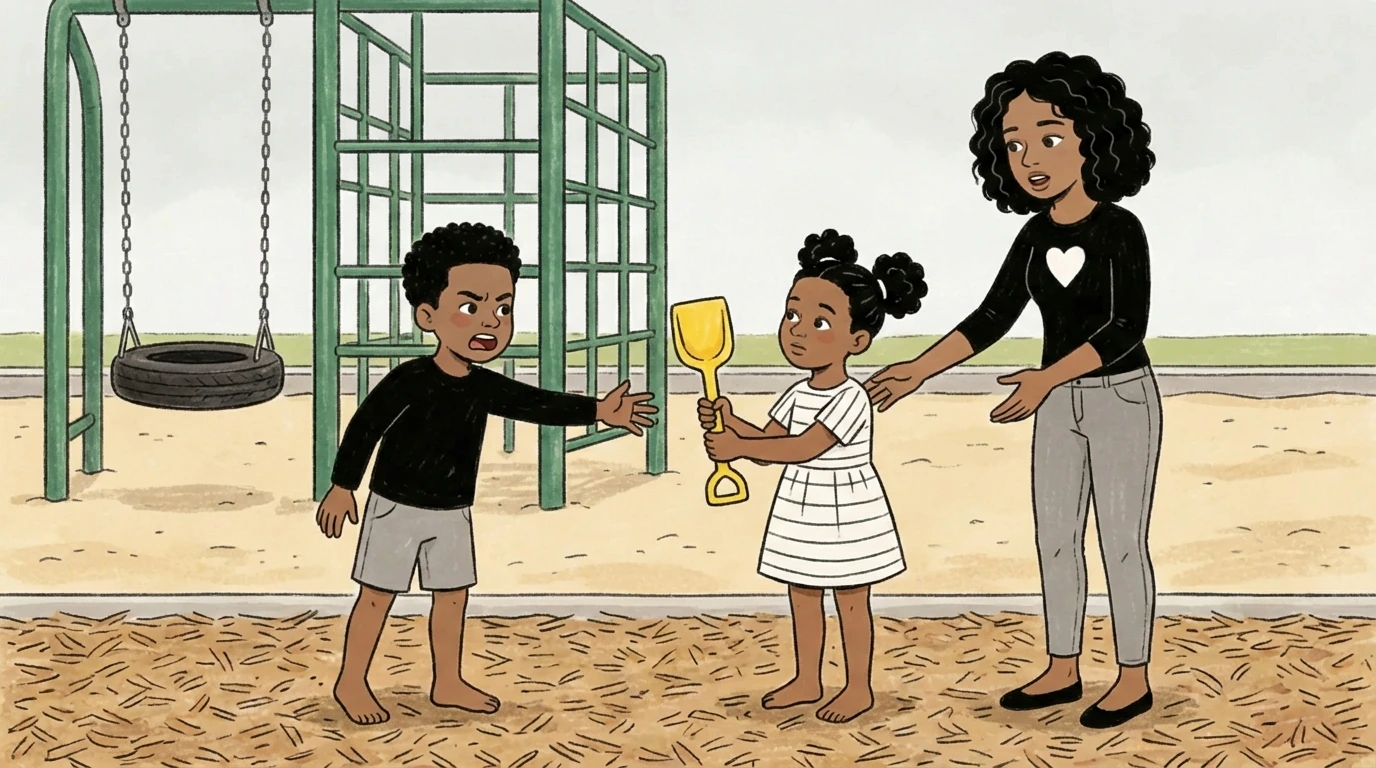
Your child retrieves a shovel from across the playground. Another kid walks up and grabs it out of their hands. Your child looks at you. You look at your child.
What happens next determines a lot.
If you stay quiet and find a substitute toy, you have taught your child that when someone takes something from you, the correct response is to accept it. If you storm over and demand the shovel back, you have taught them that a bigger person solves your problems for you.
The middle path is the one nobody does instinctively: you coach your child to speak up for themselves, in the moment, with words you give them. "You can say: 'I was using that. Can I have it back, please?'"
Most parents land in one of two camps. There are the parents whose kids go passive (freeze, cry, look helpless) and the parents whose kids go aggressive (hit, push, scream). Both groups are dealing with the same gap: their child does not have language that works under pressure.
Assertiveness is a skill. It gets built the same way any other skill gets built: through specific practice in specific situations.
Giving up every turn
The Social Skills course will help your child speak up without shouting
You'll practice four calm phrases together until your child can hold their spot in line without folding.
Why "use your words" does not work
You have probably said it a hundred times. Your child is mid-meltdown, another kid just shoved them, and you call out: "Use your words!"
The problem is that your child does not have words to use. Telling a three-year-old to "use your words" when they have never been given specific words for this specific situation is like telling someone who has never cooked to "just make dinner."
What they need instead
Scripts. Actual sentences they can rehearse and deploy.
- "I was playing with that. I want it back."
- "Stop. I do not like that."
- "I need space right now."
- Don't push my body.
These are tools. And tools need to be practiced before the moment arrives, not introduced during it.
The role-play method that transfers
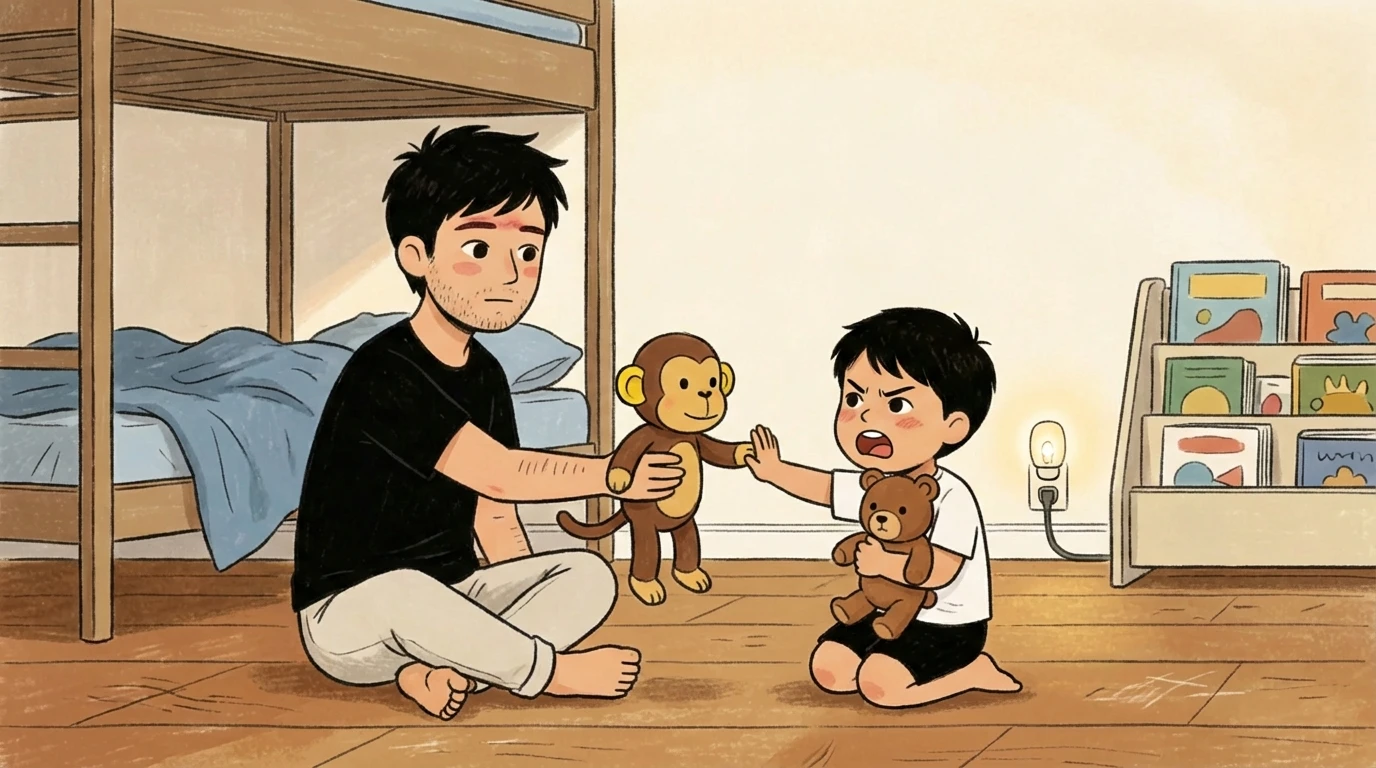
Sit down with your child when everyone is calm. Use stuffed animals if your child is under four, or just play both roles if they are older.
Act out the exact scenario that causes problems. If another kid keeps taking their toys at preschool, you be that kid. Reach for their toy. Let them practice saying "Stop, I am using that." Let them practice it five times until the words come out without thinking.
Kids who rehearse specific scripts at home use them at school. The neural pathway is already built. When the situation arises, the words are there. This is the same principle behind fire drills: you practice the response so it becomes automatic.
Then talk about what to do if the words do not work. Sometimes another child will not listen. That is when you go find a grown-up. "If they do not stop when you ask, go tell your teacher. That is what teachers are for."
Assertive versus aggressive (the line parents worry about)
Every parent teaching assertiveness has the same fear: What if I turn my kid into a bully?
Here is how to tell the difference. Assertiveness states a need. Aggression attacks a person. "I want the swing" is assertive. "You are stupid and I hate you" is aggressive. "Stop pushing me" is assertive. Pushing back is aggressive.
Teach the distinction by labeling it in daily life. When you watch a show together: "She told her friend what she wanted without being mean. That is assertive." When your child crosses the line: "You told him you wanted a turn. Good. But calling him a name was not okay. Let's find the words without the insult."
When assertiveness spills into verbal aggression
Some kids get the confidence piece and overshoot. They learn that speaking up feels powerful and then they weaponize it. "I SAID it is MY turn" becomes a threat instead of a statement.
Watch for the shift from stating needs to controlling others. Assertive: "I do not want to play that game." Controlling: "Nobody is allowed to play that game." If your child starts dictating what other kids can do, they have moved from assertiveness into dominance. Pull them aside and recalibrate: "You get to choose what you do. You do not get to choose what other people do."
Coaching in real time (the hover-and-prompt method)
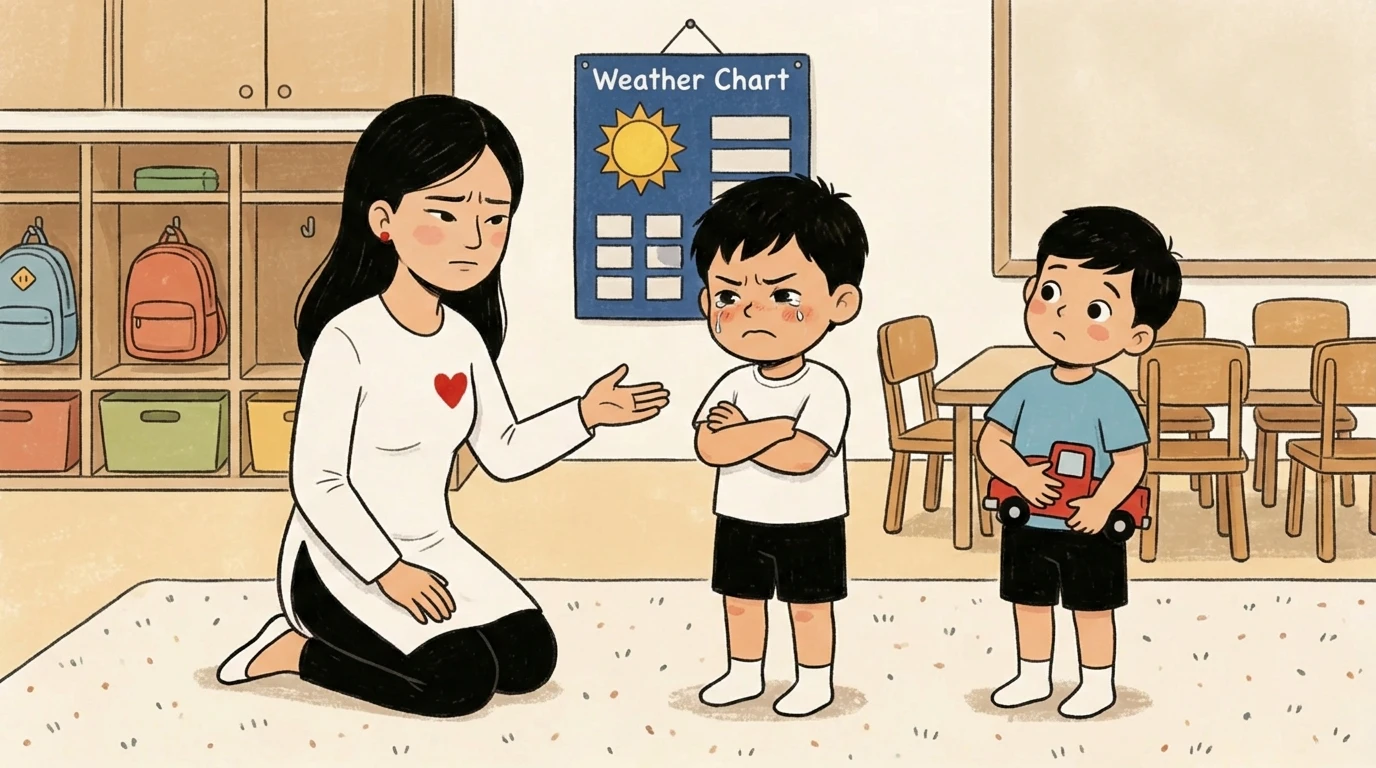
For kids who are still learning, you need to be physically close during peer interactions. Think of it as coaching, plain and simple.
Stay within earshot. When the moment arrives, prompt them with the exact words. "You can say: 'That is mine right now. You can have it when I am done.'" If your child is too frozen to speak, say it for them and to them at the same time: "Aurora, you had the shovel. You walked over to get it. Then Oliver took it. You can ask for it back."
The narrate-then-prompt sequence
- Move close to both children (keep it friendly, not confrontational)
- Describe what happened without judgment: "You had the toy. He took the toy. You look surprised."
- Give your child permission and a script: "You can say: I was using that."
- If the other child does not comply, address them directly but warmly: "It is her turn right now. Do you want this one while you wait?"
Stay present after the immediate conflict resolves. If you walk away, the grab will happen again in thirty seconds. Your physical proximity is the safety net while your child's skill is still developing.
How to build assertiveness skills at home
- Give exact scripts for real situationsIdentify the specific conflicts your child faces and create short, simple sentences they can use. 'Stop, I do not like that' or 'I was using that, can I have it back?' Practice these until they are automatic.
- Role-play the triggering scenariosAct out the playground fights, the toy grabs, the exclusion moments. Use stuffed animals for younger kids. Let your child practice responding assertively at least five times per scenario.
- Label assertive behavior when you see itPoint it out in real life and in media. 'She asked for what she wanted without being mean. That worked.' This builds your child's mental model of what assertiveness looks like.
- Coach in real time during peer playStay close enough to prompt with words before the moment escalates. Narrate what happened, give your child language, and let them try speaking up with you right there.
- Teach the backup planWhen words do not work, your child needs to know the next step: walk away and find a trusted adult. Seeking help is the assertive move when someone will not respect your boundary.
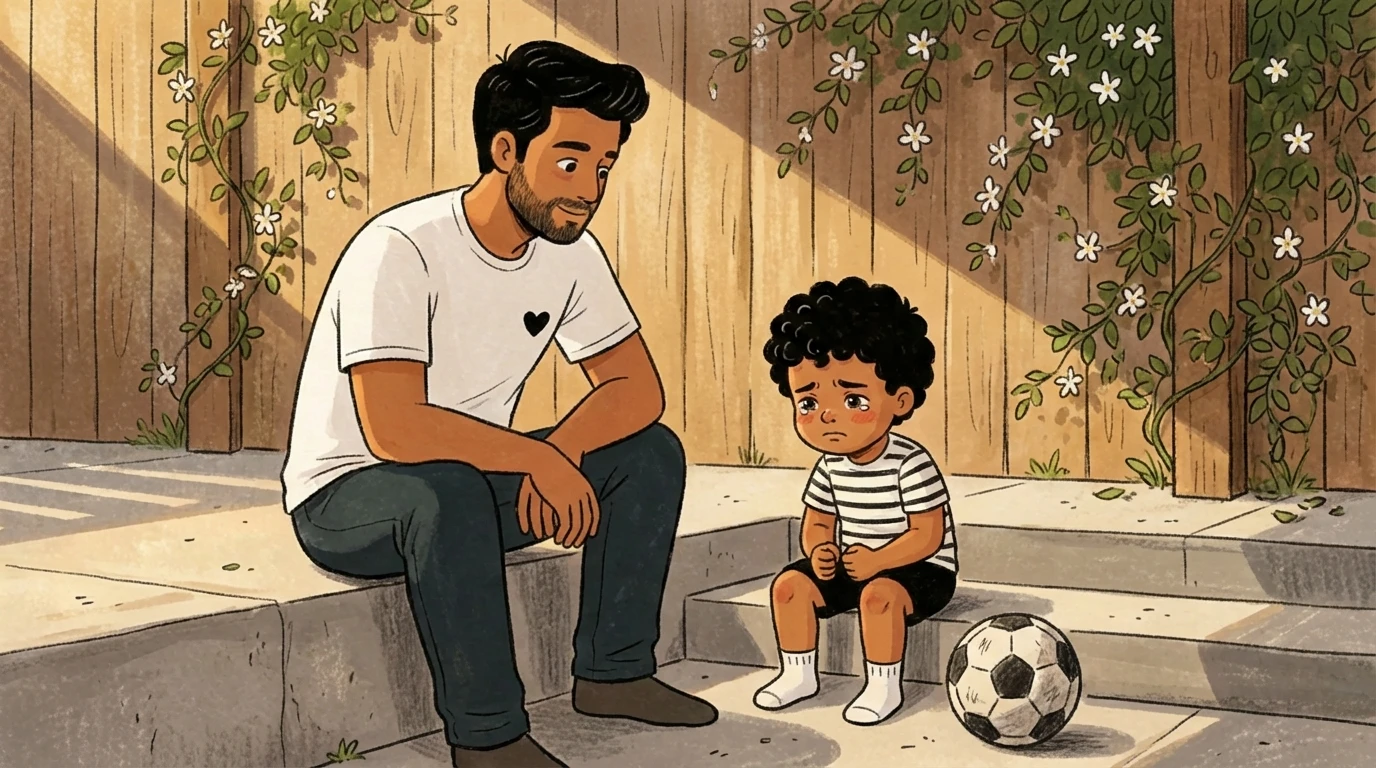
When a child who was being bullied starts hitting
Sometimes the kid who has been on the receiving end of peer aggression starts dishing it out at home. They push a sibling. They hit you during a disagreement. They become the aggressor in the play scenario.
They are processing the experience. When children experience something scary or painful, they often replay it from the position of power. The child who was pushed at school pushes at home because they are trying to overcome the helplessness they felt.
If setting a simple limit ("pushing hurts, we do not push in this house") does not stop it, you are looking at a child who needs to work through the feelings underneath. Sit with them. Wonder out loud: "I wonder if someone has been pushing you?" Wait. Let them tell you. Then let them cry about it.
After the crying, after the storm passes, after the reconnection, that is when you teach. "Pushing and hitting hurt. I would never push or hit you. What could you say to someone who pushes you?" Now the child is ready to think forward because the emotional charge has been released.
The long game with assertiveness
Your child will not become assertive because you explained the concept once over dinner. They will become assertive because you sat on a playground bench close enough to whisper scripts, because you played stuffed-animal conflicts on the bedroom floor, because you labeled it when you saw it and corrected it when it went too far.
The child who learns at four to say "I do not like that, stop" is the child who says it at fourteen when the stakes are higher. Every rehearsed script, every role-play, every coached moment at the playground is building a voice they will carry into situations you will not be present for.
Wondering where your child falls on social confidence? Assertiveness is one piece of a bigger picture, and knowing the full picture helps you know where to focus.
FAQ
Around two and a half to three years old, children can learn simple scripts like 'stop' and 'mine.' Before that, you are the one setting boundaries on their behalf. By four, most children can rehearse and use two-sentence scripts in real situations with coaching.
Home feels safe. Peer situations carry social risk. Your child may fear rejection or retaliation. Close the gap by role-playing peer scenarios at home and staying nearby during real interactions to prompt them with words when they freeze.
Draw the line clearly: assertiveness states a need, aggression attacks a person. Practice scripts that start with 'I' statements. When your child crosses into insults or physical force, name it immediately and redirect to the assertive version.
Coach, do not rescue. Move close, narrate what happened, and give your child words to use. If they are too young or frozen to speak, model the words for them. Only physically intervene if a child is about to be hurt.