TLDR
- Forced affection teaches kids to override their own instincts. Every time a child hugs someone because an adult made them, they practice ignoring their gut. That's the opposite of what body safety requires.
- Kids need scripts before they need courage. A child who has rehearsed 'No thank you, I don't want a hug right now' will say it. A child who hasn't will freeze and comply.
- Body autonomy starts with people they love. If your child can't say no to grandma's kisses, they won't say no when it matters more. The low-stakes practice is the training ground.
- Relatives will survive a high-five instead. Offer alternatives: waves, fist bumps, blowing a kiss from across the room. The relationship doesn't require physical contact.
- Regular check-ins keep the conversation alive. Body safety isn't a single talk. Quick questions after playdates and family gatherings normalize speaking up about unwanted touch.

The holiday hug standoff
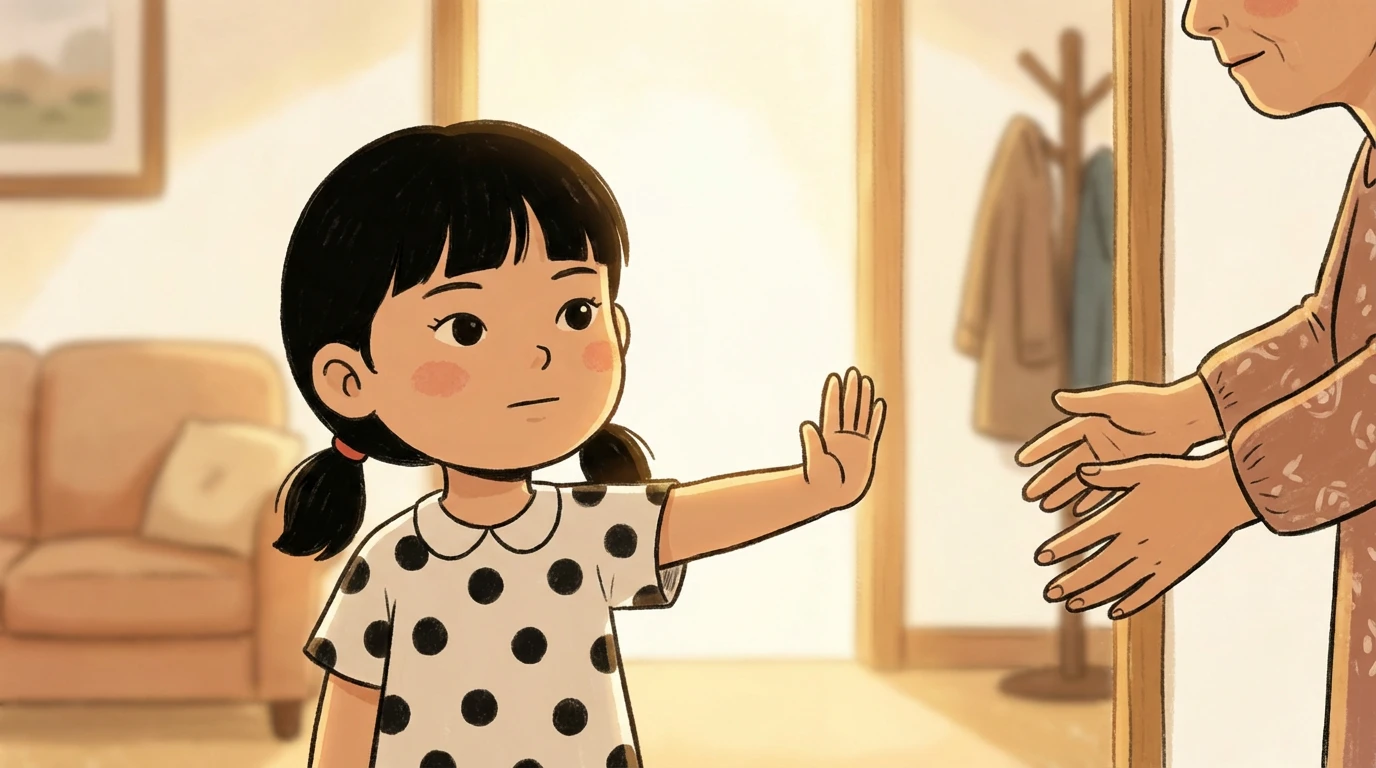
You know the scene. Grandma arrives for Thanksgiving. She drops her bags, opens her arms wide, and your kid bolts behind your legs like you're a human shield.
Now everyone is looking at you. Grandma's smile is starting to wobble. Your partner is doing that eye thing that means just make her do it. And your kid has a death grip on your jeans.
This is the moment that matters more than you think. What you do in the next ten seconds teaches your child whether their body belongs to them or whether it belongs to whichever adult has the strongest feelings about it.
Most of us grew up in the "give Aunt Linda a kiss" era. We turned out fine, supposedly. But "fine" meant learning to override our own discomfort to keep adults happy.
Why forced affection backfires
When you tell your child to hug someone they don't want to hug, the message is clear: your discomfort matters less than this adult's feelings.
Kids who are taught to override their body's "no" signals lose access to those signals over time. The research on body safety and consent is clear: children who understand they control who touches them are harder targets for unsafe people. They trust their gut. They speak up. They tell a safe adult.
Children who have been trained to perform affection on command? They've practiced compliance. Hundreds of times. With people they love, in situations that feel harmless.
That practice is the problem.
The compliance habit
Think about what forced hugging rehearses. An adult wants physical contact. The child doesn't. A bigger, more powerful person insists. The child complies.
Now swap "grandma at Christmas" for any other scenario where an adult pressures a child for physical contact. The muscle memory is identical.
Body autonomy is one skill. It doesn't have a switch that flips depending on whether the person asking is related to you.
Grandma wants a hug
The Body Safety Conversations course will show you how to hold the boundary
You'll back your child's no in front of family without it turning into a scene or a lecture.
What kids take away
Here's what children take away from forced affection:
- My body is available to adults who want access to it
- Saying no to touch makes people angry or sad
- My feelings about my own body are less valid than other people's feelings about my body
- The way to be a good kid is to let people touch me when they want to
None of those lessons are ones you'd write on a whiteboard and teach on purpose. But they land anyway, one holiday hug at a time.

What to do instead (the scripts that work)
Your kid needs words before they need bravery. A seven-year-old who has never practiced saying no will freeze and default to obedience. A kid who has rehearsed? They'll surprise you.
How to teach your child to set touch boundaries
- Teach them the baseline ruleSay it plainly: 'Your body belongs to you. Nobody gets to touch you without your yes.' Repeat this often enough that your child can say it back to you without thinking.
- Give them ready-made phrasesPractice specific scripts: 'No thank you, I don't want a hug right now.' 'I'd rather do a fist bump.' 'I'm not in the mood for kisses today.' The child picks the one that fits.
- Offer alternatives to huggingTeach your child to offer a wave, a high-five, a fist bump, or blowing a kiss from across the room. Relatives get a greeting. Your child keeps control of their body.
- Role-play before family eventsBefore a gathering, practice: 'What will you say if Uncle Marco wants a hug and you don't?' Let them rehearse their exact words. Praise them for using their body safety language.
- Back them up publiclyWhen your child says no and the adult looks hurt, you step in. 'She's learning about body boundaries, and we're proud of her for using her words. How about a high-five instead?'
- Prep the relatives in advanceText or call ahead: 'We're teaching the kids about body autonomy. They might offer a wave instead of a hug. Please follow their lead.' Most adults respect it when framed this way.
The role-play trick
Role-playing sounds awkward, but it moves body safety from theory to muscle memory. Use stuffed animals with younger kids. "Baby Bear's grandpa wants a big hug, but Baby Bear doesn't feel like it. What should Baby Bear say?"
For older kids, be direct. "I'm going to pretend to be Aunt Linda and ask for a hug. You practice saying no." Then do it. Praise them. Do it again.
Kids who have practiced asserting themselves in pretend scenarios do it when the pressure is real. The rehearsal builds the neural pathway.

Handling the offended relatives
This is the hard part. Your kid saying "no thank you" to grandma's hug is a ten-second interaction. The fallout from grandma's feelings can last the whole visit.
Your child's right to control their own body outweighs an adult's desire for affection. Every time. Even when the adult is someone you love. Even when the adult raised you.
Some strategies for managing the pushback from family members:
- Name it before it happens. "We've been teaching Mia about body boundaries. She might want a wave instead of a hug. It's a good thing."
- Redirect, don't debate. If someone pushes back, don't argue the philosophy. Just offer the alternative: "She'd love to give you a high-five. Want to try that?"
- Validate without caving. "I know it feels different from how we grew up. We're figuring out what works for our family."
The adults in your child's life can adjust. Your child shouldn't have to.
Building body safety into daily life
Body autonomy conversations need to become part of your family's normal language, not a one-time lecture.
Check-ins that work
After a playdate: "How was playing at Sam's house? Did anything happen that made your body feel uncomfortable?"
After a family gathering: "We saw a lot of people today. Did you feel like the boss of your body?"
After school: "Anything on the bus or at recess that felt weird or tricky?"
They're low-pressure invitations to talk that teach your child you're a safe person to tell.
Connect it to everything
Body autonomy isn't just about hugs. It connects to how we talk about food and eating ("you decide when your tummy is full"), to how we handle rough play ("your friend said stop, so we stop"), to consent as a two-way street.
The more contexts your child sees body autonomy applied in, the deeper it lands. It stops being a rule and becomes a worldview: my body is mine, other people's bodies are theirs.

When your child tells you someone touched them
If your child tells you about unwanted touch, your reaction determines whether they ever tell you again.
Stay calm. Your face, your voice, your body. A child who sees alarm learns that telling you was a mistake.
Listen without interrogating. Let them finish. Say: "Thank you for telling me. That took bravery." Make three things clear: it wasn't their fault, they won't get in trouble for telling, and you will keep them safe.
If the situation warrants it, report to the appropriate authorities. You are your child's advocate.
The long game
You will have the same conversation dozens of times. You will role-play the same scenarios until you could recite them in your sleep. You will field offended looks from relatives at every family gathering for years.
And your child will grow up knowing that their body is theirs. That they can say no. That someone will back them up when they do.
That's worth every awkward Thanksgiving.
FAQ
That's body autonomy working exactly as it should. Your child is making choices about who gets physical access to their body based on their own comfort level. Don't override those choices or insist on equal treatment. The person they refuse can handle a wave instead.
Start the moment your child can understand simple sentences. Even toddlers grasp 'your body belongs to you.' The language gets more specific as they grow, but the core message stays the same. Waiting until they are older means years of missed practice.
Stay direct and brief: 'We're teaching body boundaries, and we're proud of how they're using their words. They'd love to wave or high-five instead.' If the relative keeps pushing, that's a boundary issue on the adult's end, not your child's problem to solve.
A verbal greeting or a wave is reasonable to expect as basic social courtesy. Physical contact is not. You can hold the boundary that your child acknowledges people while still letting them decide whether and how they want to be touched.
Most of us were. And most of us also learned to ignore our own discomfort to keep adults happy. Teaching your child differently is an upgrade based on what we now understand about how kids learn body safety and consent.