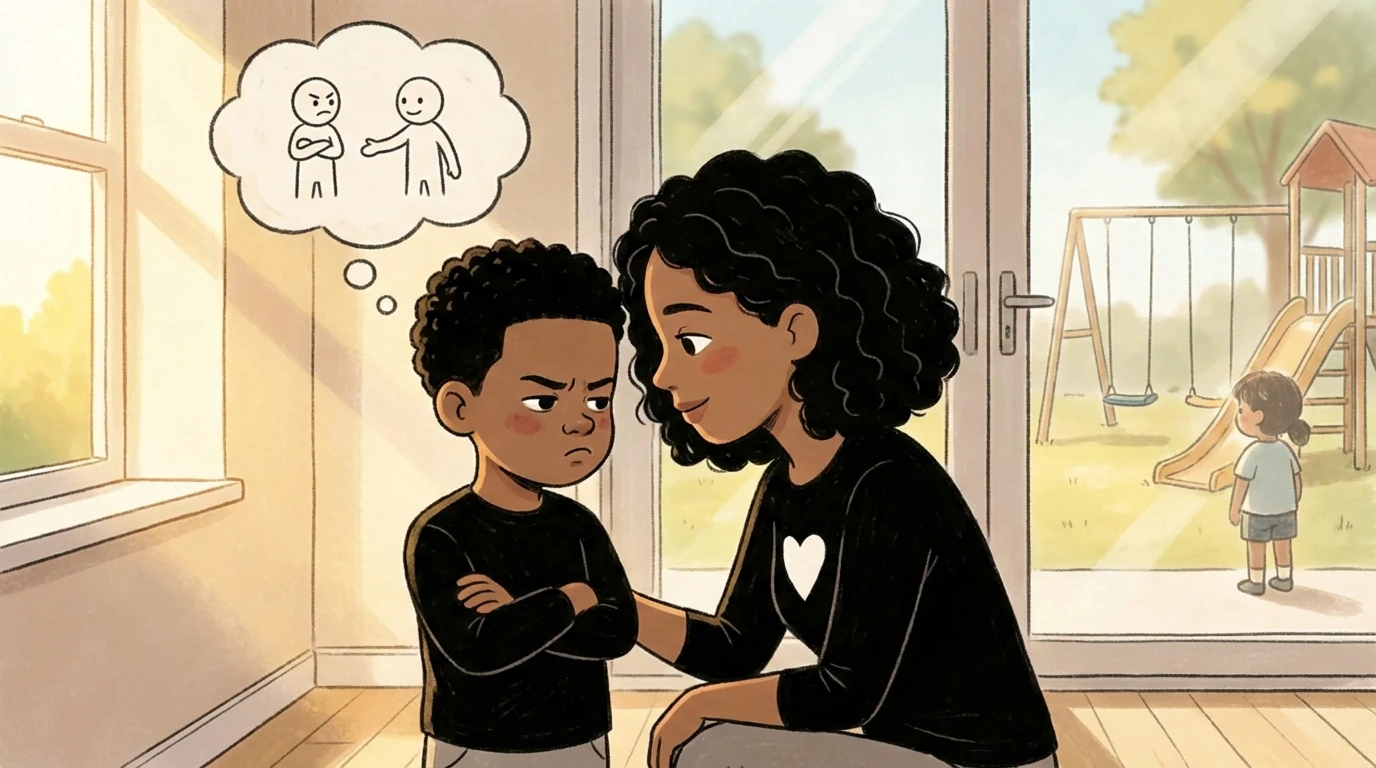
TLDR
- Forced apologies do not repair relationships. Research on adults shows that coerced apologies create resentment. Children report the same thing: they feel angrier, not better, when made to say sorry before they are ready.
- Kids know when they are lying. Children openly describe forced apologies as dishonest. They learn that saying things you do not mean is what adults expect from you.
- The receiving child does not feel better either. Siblings describe a winner/loser dynamic rather than reconciliation. A hollow sorry makes the other kid mad all over again.
- Timing is everything. Children cannot take another person's perspective while their own anger is still running. Wait until the storm has passed. Then repair becomes possible.
- Repair beats apology. Help your child choose an action that makes things better. A kid who rebuilds the knocked-over tower feels like a hero, not a loser who had to grovel.
What kids hear when you say "say sorry"
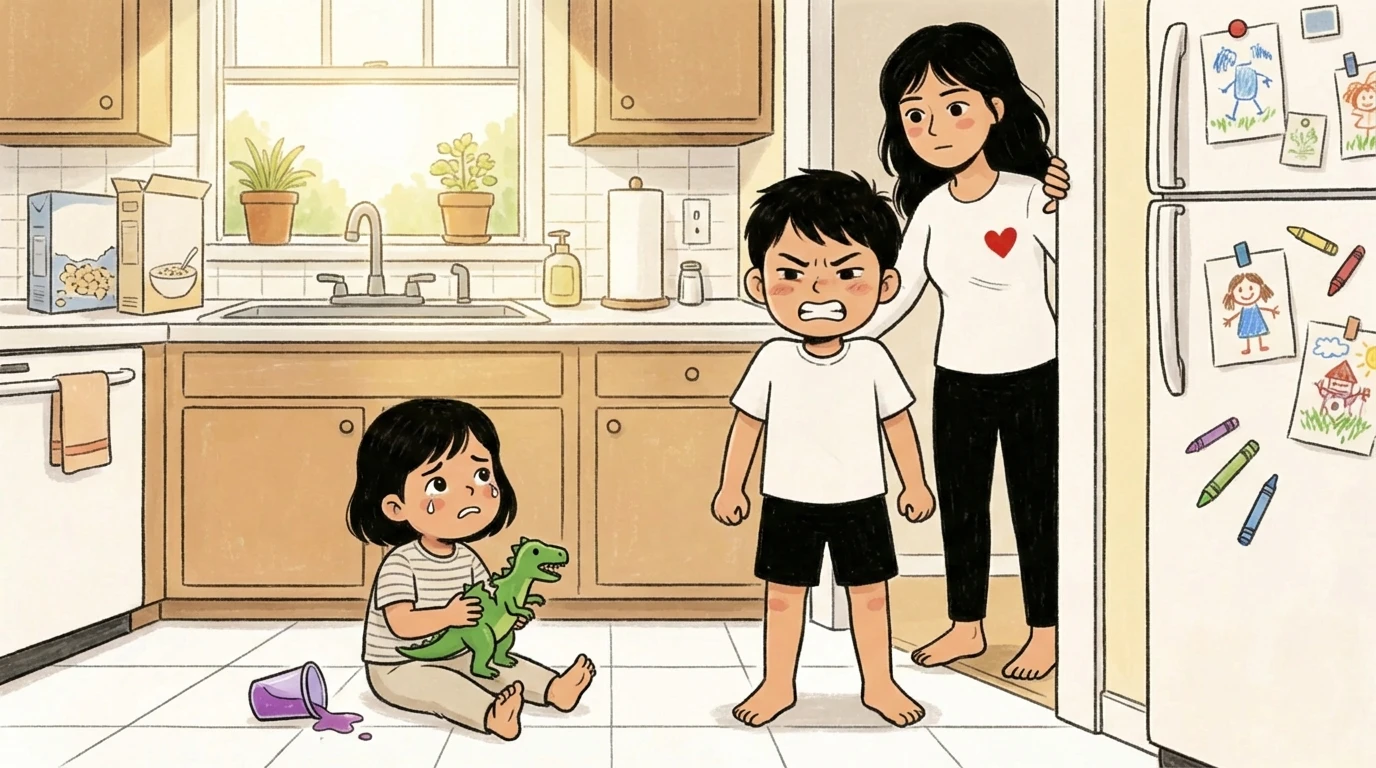
You know the scene. One kid shoves the other. Crying erupts. You march the offender over and deliver the line: "Say sorry to your sister."
The kid mumbles "sorry" with all the sincerity of a hostage reading a prepared statement. The other kid crosses her arms. Everyone is slightly more irritated than they were thirty seconds ago.
Here is what children report learning from this ritual:
- "It's lying." Kids recognize they are saying something they do not mean. They absorb the lesson that faking emotions is what adults want.
- "I feel like I won." The receiving sibling experiences triumph, not connection. That does nothing for the relationship between them.
- "It makes me madder." Being forced to apologize while still angry amplifies the resentment instead of draining it.
And the kid who receives the hollow apology? They can smell the insincerity. It makes them angry all over again. Both children leave the interaction worse off than before you intervened.
Mumbling sorry on command
The Social Skills course will replace hollow apologies with real repair
You'll guide your child from a forced mumble to a genuine attempt to fix what happened, no script required.
Why forced apologies backfire (the science part)
John Gottman's research on adult couples found that when one partner feels coerced into apologizing before they are ready, the relationship gets worse. Resentment builds. The "sorry" becomes a weapon the apologizer resents handing over.
No one has run the identical study on children yet. But kids describe the exact same dynamic in their own words. A five-year-old told researchers: "Later I always like my sister again. I could apologize then. But not when I'm mad."
Children intuitively understand something most adults have forgotten: genuine repair requires emotional readiness. You cannot shortcut the process by extracting words.
The developmental piece matters too. Before roughly age five, most children struggle to hold someone else's perspective in their mind while their own feelings are running hot. Their prefrontal cortex is still under construction. Asking a three-year-old to feel sorry while they are still furious is asking their brain to do something it is not yet wired to do. The capacity shows up over time, and pushing before it arrives does not speed the process along.
The alternative: let them choose how to fix it
The word "sorry" is not the point. Repair is the point. And repair works best when the child owns the process.
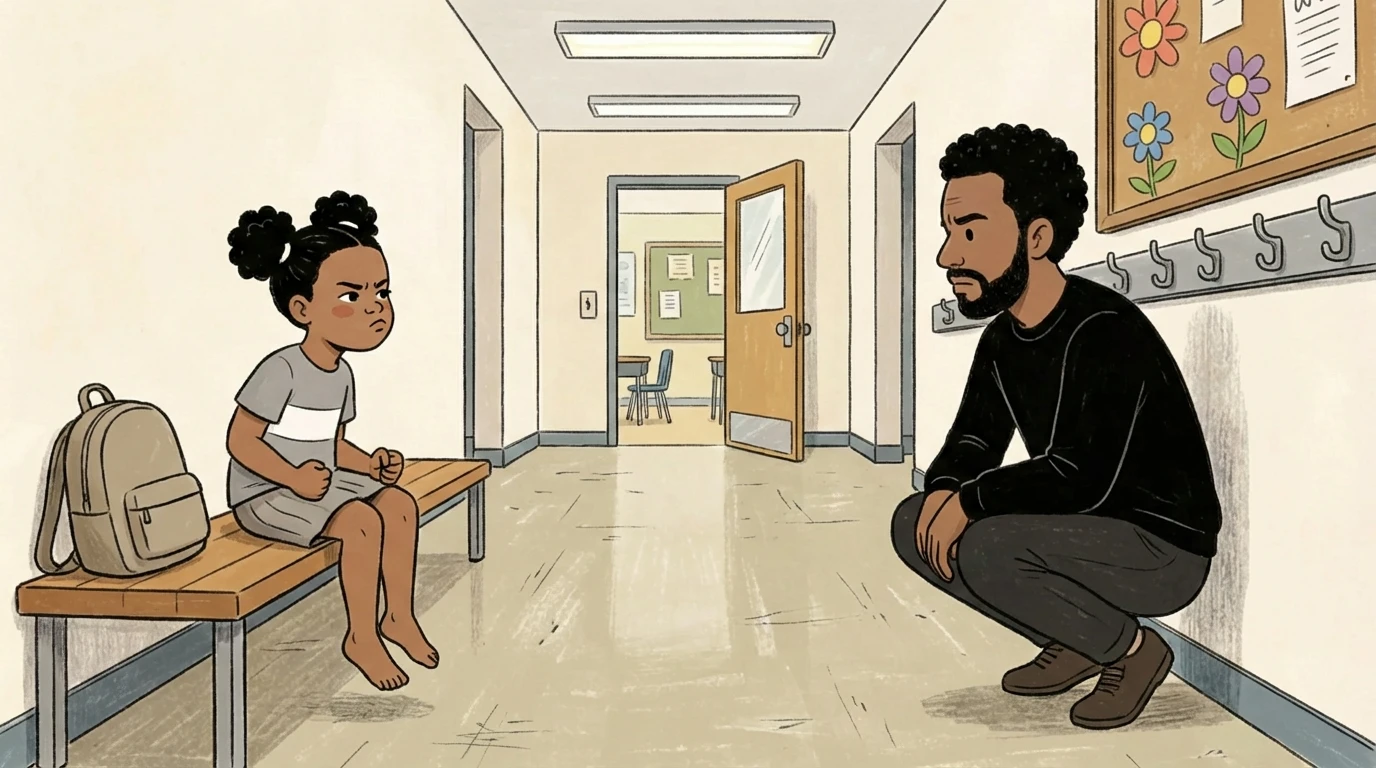
Wait until the anger passes
This is non-negotiable. A child who is still furious cannot take someone else's perspective. Their brain is in survival mode. Trying to force empathy during peak anger is like trying to have a calm conversation during a fire alarm. Wait until the alarm stops.
Invite repair without scripting it
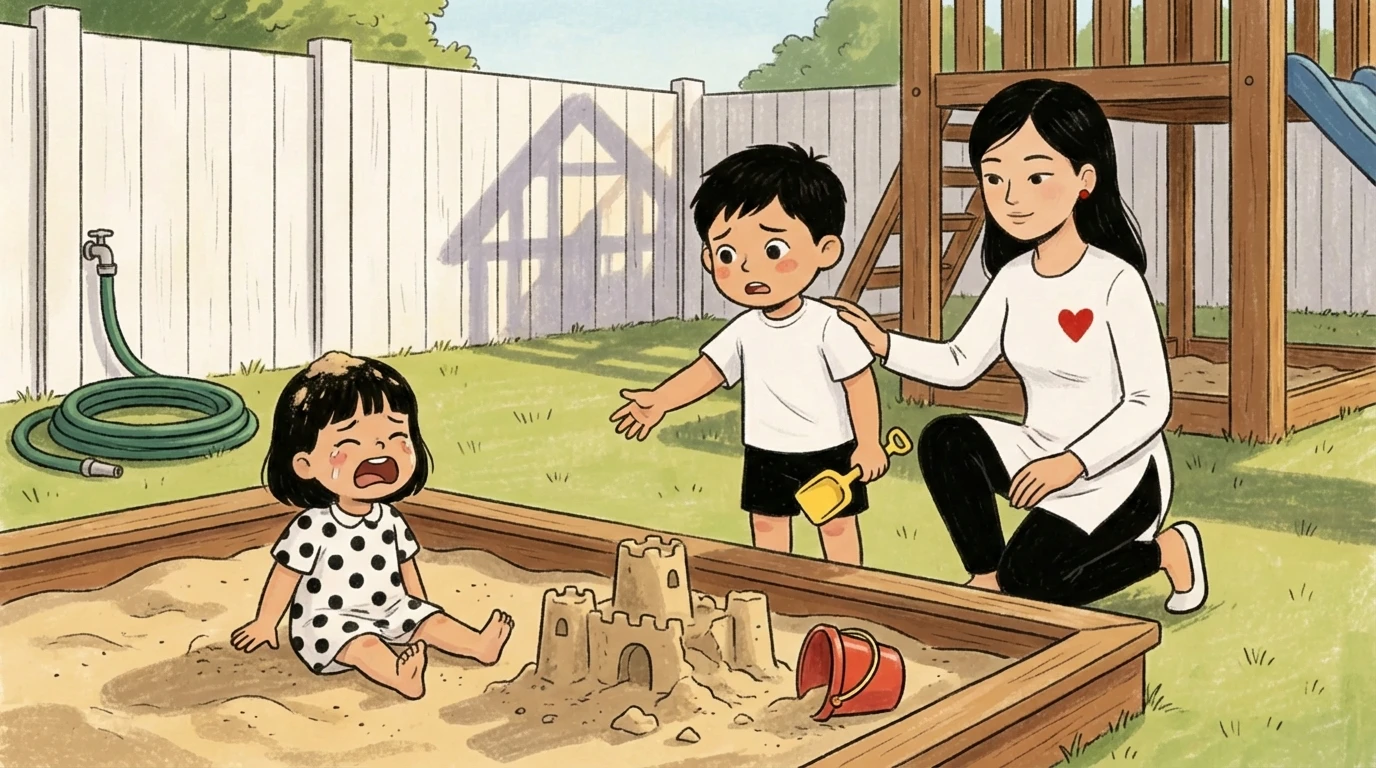
Once your child has cooled down, try something like: "Your brother loves you and looks up to you. When you yelled at him, it looked like it really hurt his feelings. I wonder what you could do to make things better with him."
This does three things. It reminds your child of the relationship they value. It names the impact of their behavior. And it invites them to generate their own solution instead of performing yours.
The identity shift matters. A child forced to apologize feels like a loser paying a debt. A child who chooses to make things better feels like a hero. One builds resentment, the other builds character.
Check for authenticity
If your child suggests apologizing but sounds sullen, do not accept it. "Apologizing is a wonderful way to make things better, but I do not want you to apologize until you mean it. I am not asking you to say something that is untrue."
This teaches that apologies are powerful tools, not empty rituals. Saying something you do not mean does not serve anyone.
How to guide repair without forcing sorry
- Wait for genuine calm firstNo repair work while anger is running. Watch for the breathing to slow, the fists to unclench. This might take ten minutes or two hours. Do not rush it.
- Name the impact without shamingDescribe what happened factually: 'When you grabbed her book, she cried.' Connect behavior to impact. Skip the lecture about what kind of person does that.
- Invite them to choose a repairAsk 'What could you do to make things better?' Let them generate ideas. Their solution will stick better than yours because they own it.
- Offer ideas only if they are stuckRebuild the tower together. Draw a card listing things you love about your sibling. Play a game they want to play. Give options, then step back and let them pick.
- Express confidence and leave the roomSay 'I know you will figure out the perfect thing to do.' Then walk away. This gives them space, ownership, and the message that you trust them to do the right thing.
What if they refuse to repair anything
Sometimes your child digs in. "I do NOT want to do anything nice for her." They are still too angry.
That is fine. Do not panic. Acknowledge it: "I can see you are still really mad. That is okay. When you are ready, I know you will know just the right thing to do to make things better."
The expectation stays. The timeline flexes. Repair is not optional, but you are not going to stand over them with a stopwatch. Children need space to let anger dissolve at its own pace.
If you are dealing with a child who hurts others and feels no remorse, that is a different problem from a child who is simply too angry to apologize yet. The first needs deeper work on understanding other people's feelings. The second just needs time.
What teaches kids to say sorry (and mean it)
Here is the part nobody wants to hear: your child learns to apologize by watching you apologize.
When you lose your temper and yell, do you circle back later and say, "I should not have raised my voice. That was my frustration, not your fault. I am sorry"? Or do you pretend it did not happen?
Children who watch their parents repair ruptures learn that mistakes are survivable and fixable. They absorb the pattern: something broke, I acknowledge it, I do something to make it better. That is how genuine apologies develop, through years of modeling rather than through forced performances.
Build communication skills, not scripts
The deeper work is helping kids express their needs, listen to each other, and restate what they heard. When children can say "I was mad because you took my turn" and hear "You felt mad because I took your turn," conflicts heal at a level where apologies become almost unnecessary.
This is the opposite of punishing kids into compliance. Instead of forcing the outcome you want (the word "sorry"), you are building the skills that make genuine repair possible.
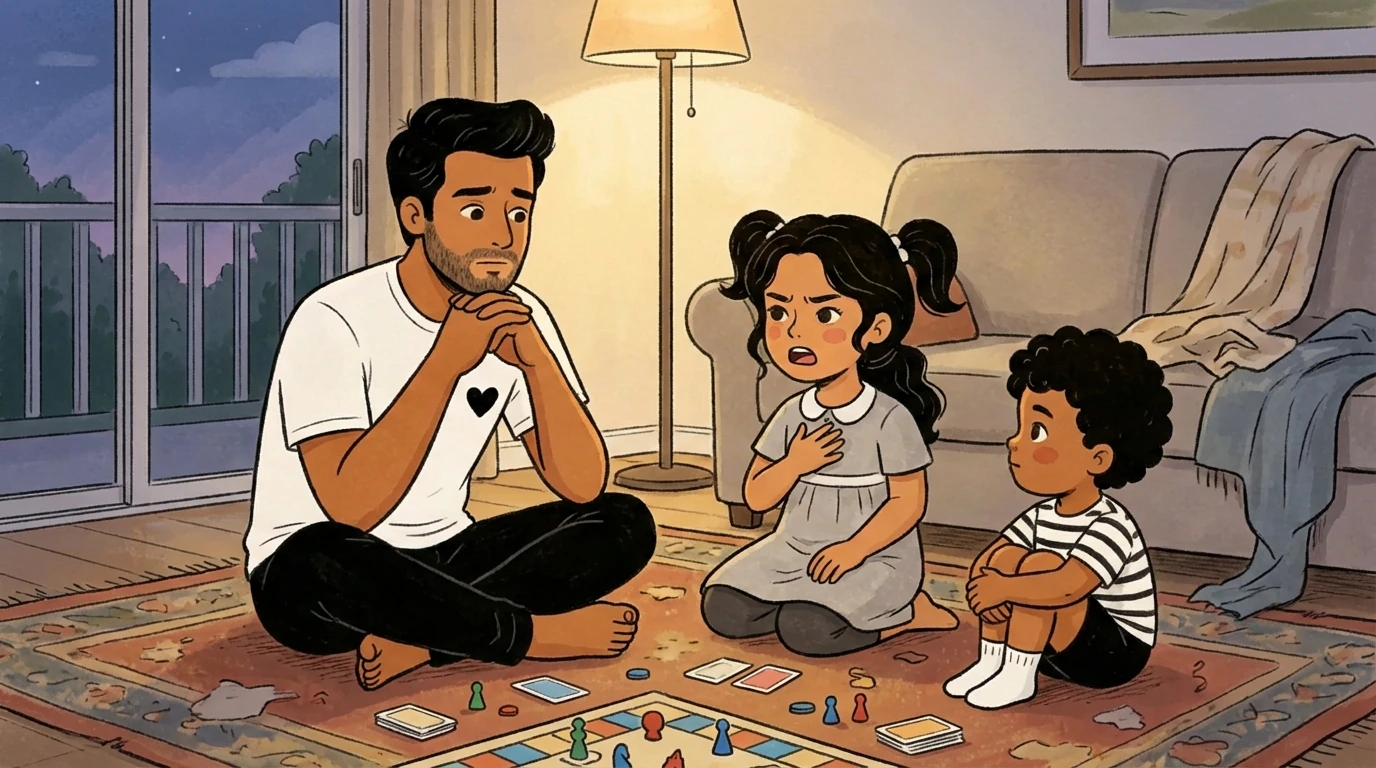
The long game
You are going to mess this up. You are going to bark "say sorry right now" at 6 PM on a Wednesday because dinner is burning and you have zero patience left. That is human.
But every time you catch yourself, pause, and let your child come to repair on their own terms, you are wiring something. A child who knows that broken things can be fixed. That they are capable of making things better. That the people they hurt are worth the effort.
That is what you are building. A kid who repairs because they want to, not because you made them.
FAQ
Right now, regardless of age. Forced apologies do not teach repair at any age. Even toddlers can learn to bring a sibling a toy or give a hug as a repair action they chose themselves. The words will come when the understanding develops.
You can say 'We are working on genuine repair at home, which takes a little longer than a quick sorry but sticks better.' Most teachers respect this once they see the child making amends in their own way over time.
The opposite. Children who learn to repair voluntarily become adults who apologize readily and sincerely. They understand what apologies are for because they were never forced to fake them. The skill develops from modeling and practice, not from compliance.
Comfort the hurt child yourself first. You can say 'That was not okay and we are going to work on making it better.' Then give your child space to cool down before guiding them toward their own repair action.