TLDR
- Forcing 'say thank you' teaches performance, not respect. Kids who are compelled to say polite words learn to mouth them for rewards or to avoid conflict. They skip the part where they understand what gratitude means.
- You already know the method: it is how they learned to talk. Children pick up language by watching and listening. Polite words follow the same path. If you use them naturally in daily life, your kids will absorb them without drills.
- Narrate instead of commanding. When your child shouts 'water!' at the table, say 'It looks like you are asking me to please pass your water.' You model the words AND teach their meaning in one move.
- Role-playing makes the lesson stick. Show the silly wrong way, then the respectful way. Kids who laugh during the lesson retain it better than kids who get lectured.
- This takes longer, and the results are better. Forced manners produce a child who performs. Modeled manners produce a child who genuinely respects other people. The timeline is months, not days.
The "magic word" problem
Your kid wants a cookie. You hold it just out of reach and say, "What's the magic word?"
They say "please" with the enthusiasm of someone reciting a PIN code at the ATM. You hand over the cookie. Lesson learned: "please" is a password that unlocks snacks.
That is exactly the lesson you did not want to teach. "What's the magic word?" trains kids to view polite words as transactional keys. Say the code, get the thing. The word itself carries no meaning. It is a toll booth.
And here is the real kicker. When you force a three-year-old to say "thank you" to Grandma for the birthday sweater, your child learns that these words exist to make adults feel good. They have no idea what gratitude feels like. They just know that saying the sounds makes the uncomfortable moment end faster.
So what do you do instead? You do the same thing you did when they learned to talk in the first place.
How kids learn polite words
Think about how your child learned the word "dog." You did not sit them down with flashcards. You pointed at dogs. You said "look, a dog" forty thousand times. Eventually they pointed at a dog and said "dog" and you lost your mind with excitement.
Polite words work the same way. Children absorb language through observation and context. They are watching you constantly (yes, even when they appear to be completely ignoring you while building a Lego tower).
Every time you say "thanks for making dinner" to your partner, or "could you please pass the salt" at the table, or "excuse me" when you bump into someone at the grocery store, your child files it away. The filing system is slow. It takes months, sometimes over a year. But it is working.
Hissing say thank you again
The Social Skills course will teach politeness they feel
You'll stop prompting from behind gritted teeth and start hearing genuine thank-yous that surprise even you.
Why modeling works better than instruction
When you command a child to say "thank you," you are asking them to produce language before they understand its purpose. It is like asking someone to write a thank you note in a language they do not speak. They can copy the shapes of the letters, but they have no connection to the meaning.
When you model gratitude yourself, your child sees the full chain: something nice happens, you feel appreciative, and you express that feeling with specific words. The feeling comes first. The words follow naturally. That sequence is what you want your child to internalize.
Here is one that works especially well: "It was so nice of Grandma to bring us dinner tonight. I am going to write her a card to let her know how much we loved it." Your kid sees gratitude in action, connected to a real feeling, expressed through effort. That lands harder than a hundred forced "thank yous" at the door.

What to do in the moment (without commanding)
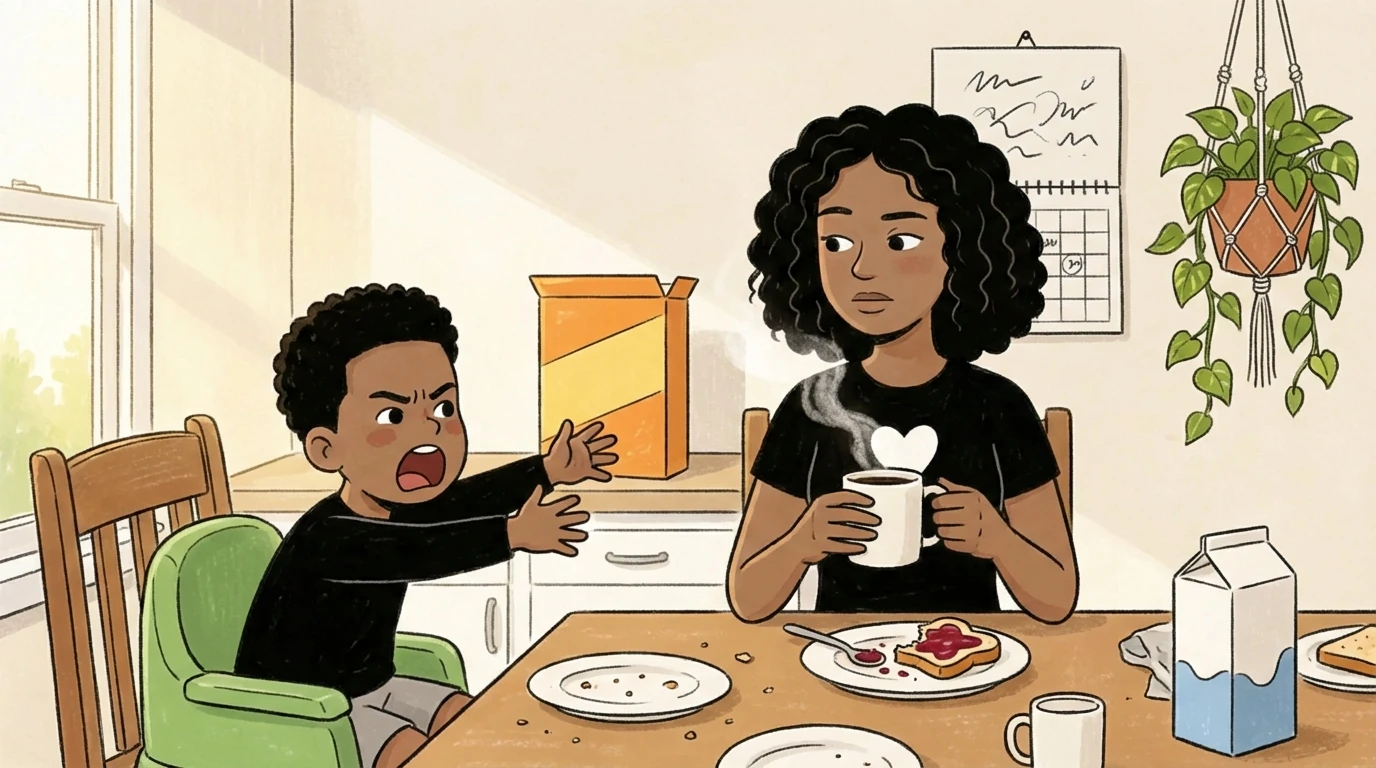
Your child is at the dinner table. They want water. They shout "WATER!" like they are summoning a waiter in a loud restaurant.
Every instinct tells you to say "say please" or "what do you say?" Resist that instinct.
Instead, narrate: "It looks like you are asking me to please pass you your water." Then pass the water.
You just did three things simultaneously. You modeled the polite phrasing. You showed them what the words mean in context. And you did not turn it into a power struggle where the water gets held hostage until they produce the correct syllables.
When someone gives your child something
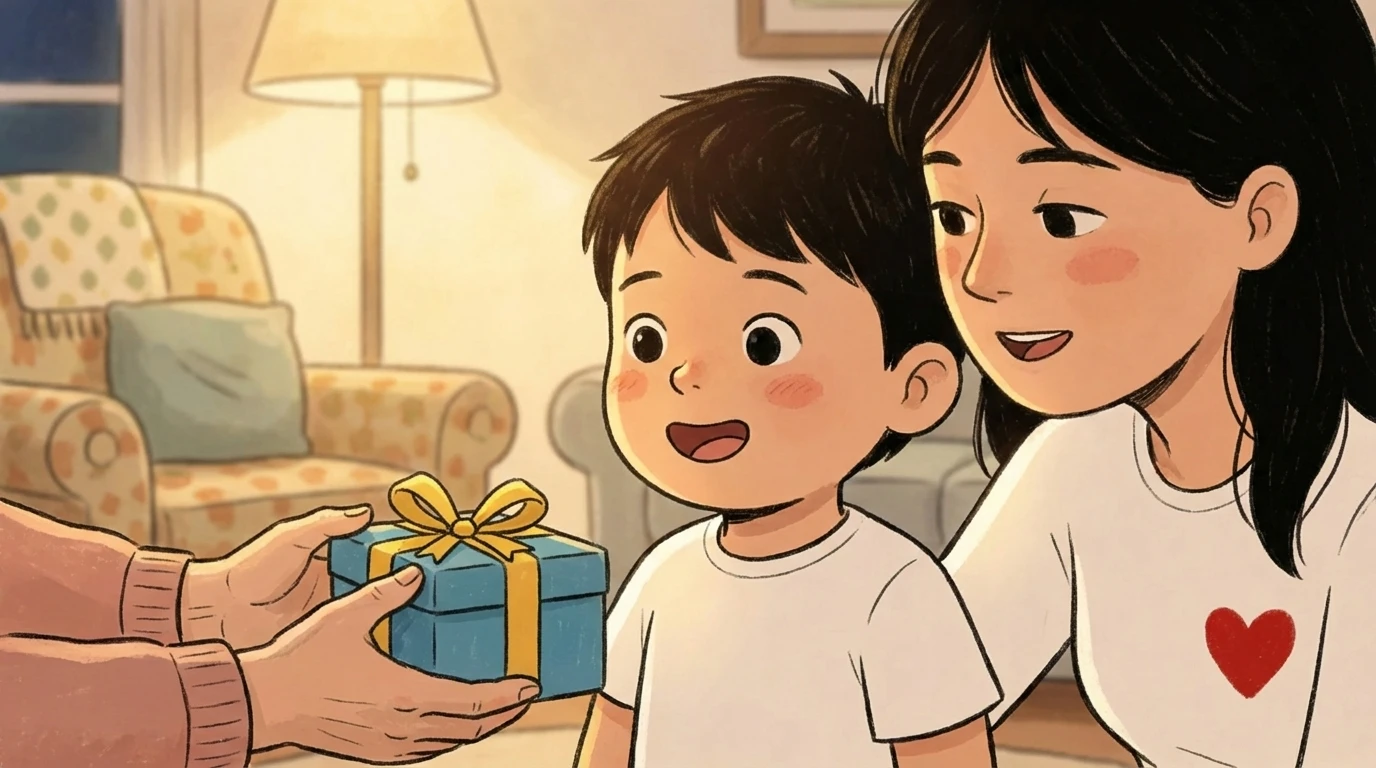
Your kid gets a present. They rip it open and start playing with it. The gift-giver is standing there, waiting. You feel the social pressure building.
Instead of hissing "say thank you," try: "Thank you so much for this, Auntie Sarah. Look how much she loves it, she went straight for the stickers."
You covered the social obligation. You modeled the words. And your child heard gratitude expressed in a way that connects the words to a real feeling, building genuine empathy rather than scripted compliance.
The role-playing trick that sticks
Here is a method that works absurdly well with kids aged three to seven: the silly contrast game.
You set up a real scenario. "Imagine your friend wants to play tag, but you want to play hide-and-seek. How should you tell them?"
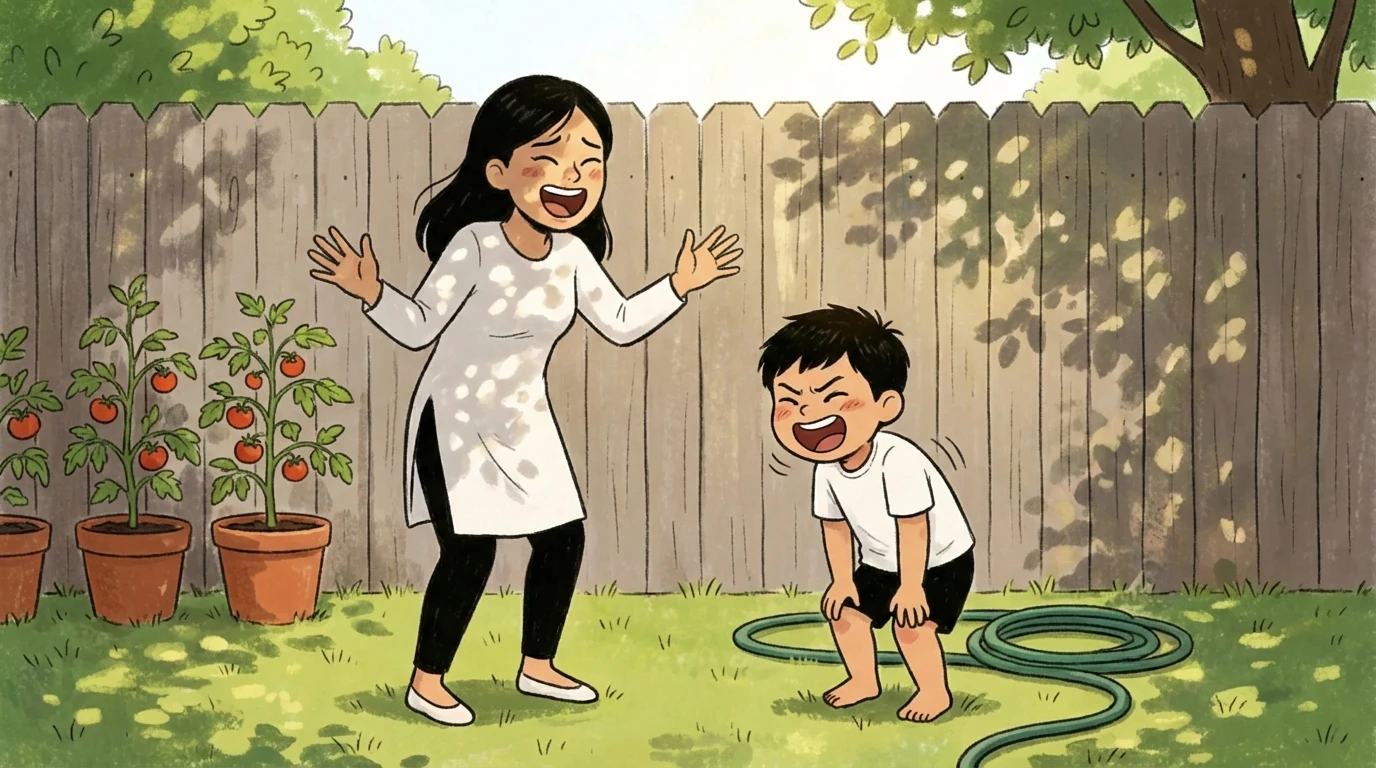
Then you do the wrong way first, as over-the-top ridiculous as possible: "NO! TAG IS STUPID! WE PLAY HIDE-AND-SEEK OR I AM GOING HOME AND I AM TAKING ALL THE SNACKS!"
Your kid will be on the floor laughing. Good. Now do the respectful version: "I hear you want to play tag. I would really like to play hide-and-seek because I found a great hiding spot. Can we do that one first?"
Kids who laugh during the lesson remember it. The silly version creates a mental bookmark. The next time your child feels the urge to demand or threaten, that bookmark fires and they remember (sometimes) that there is a better way to say it.
Making it a regular thing
This is not a one-and-done trick. The motivation has to come from within, not from fear of getting it wrong. Run the silly contrast game at dinner, in the car, at bath time. Use real situations from the day. "Remember when you and Liam both wanted the blue crayon? Let's act out the silly way and the good way."
How to teach manners without forcing
- Model the words in your own speechUse please, thank you, and excuse me in your daily conversations with your partner, friends, and your child. They are always listening, even when they look completely zoned out.
- Narrate instead of commandingWhen your child demands something, rephrase it for them: 'It sounds like you are asking me to please pass the ketchup.' You model the words and teach meaning simultaneously.
- Speak on their behalf when neededIf your child receives a gift or kindness, say the thank you yourself with genuine feeling. Cover the social moment while teaching them what gratitude sounds like in action.
- Play the silly contrast gameAct out the ridiculous wrong way and then the respectful way. Laughter creates a mental bookmark that fires the next time they face a similar situation in real life.
- Trust the timelineThis approach takes months, not days. Resist the urge to revert to forcing when progress feels slow. Children who learn manners through modeling use them because they understand them.
When your kid still says nothing
You have been modeling for months. You say "thank you" to every barista, every door-holder, every person who hands you a receipt. Your child has observed roughly nine thousand acts of politeness.
And they still grab the birthday present from Grandma and run off without a word.
This is normal and it does not mean the approach is failing. Young children, especially those under five, are absorbing more than they express. The understanding arrives well before the spontaneous use. It is the same gap that exists between a child understanding the word "frustrated" and saying "I am frustrated" in the heat of a meltdown.
Your job during this waiting period is to keep modeling, keep narrating, and resist the gravitational pull back toward "what do you say?" That pull is strong. It is powered by social embarrassment, grandparent judgment, and the voice in your head that says other kids say thank you, what is wrong with mine?
Nothing is wrong with yours. They are on their own timeline. And the way you praise their genuine politeness when it does show up matters more than you think.
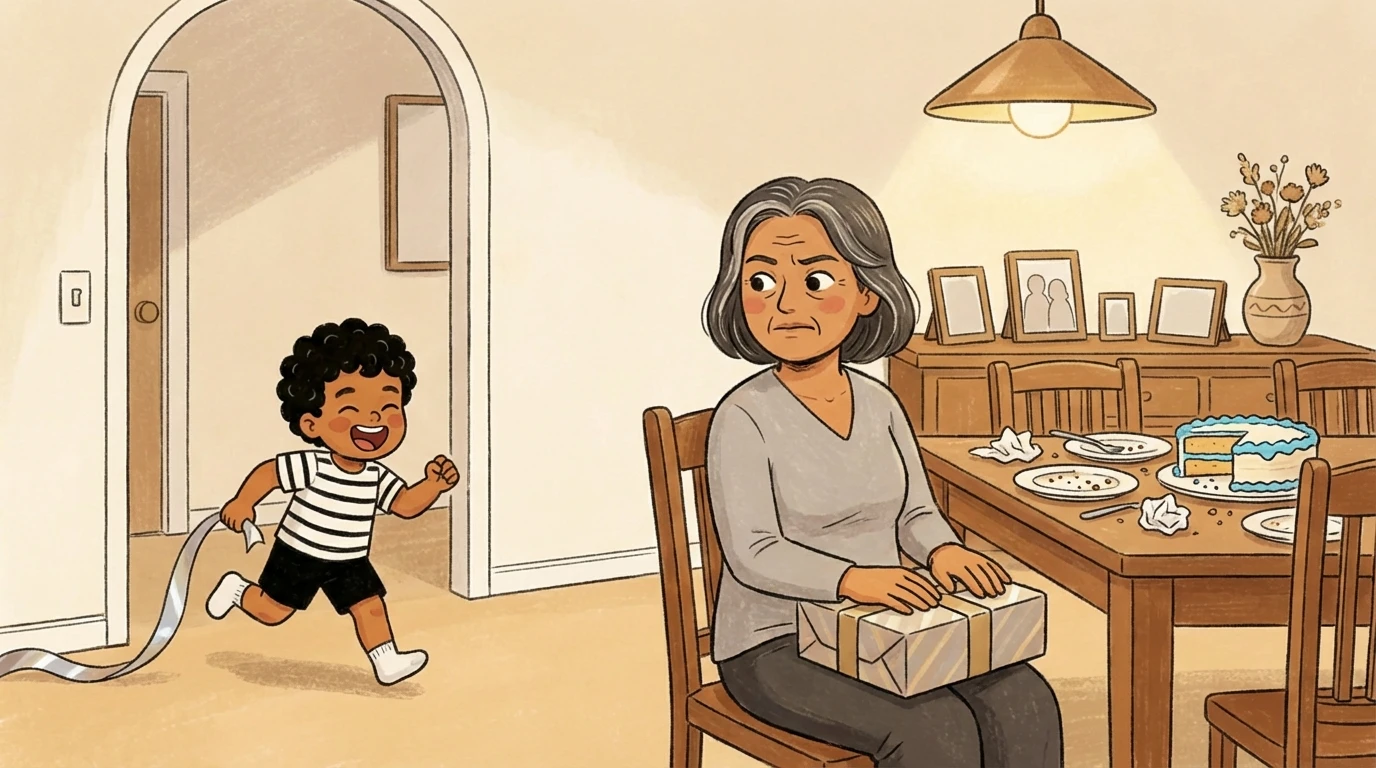
Table manners are the daily practice ground
If you are looking for a structured place to practice all of this, family mealtimes are the answer. The table is where polite language shows up in its most natural form. "Please pass the bread." "Thank you for cooking." "Excuse me, I need to get up."
You do not need a lesson plan. You need a dinner table where people talk to each other with basic respect. That is the manners curriculum. Everything else is extra.
Three-year-olds will eat with their hands and burp on purpose. That is fine. The table is a long game, same as everything else here. What matters is that they are hearing the words in context, attached to real interactions, every single day.
FAQ
Most children begin using polite words spontaneously between ages three and five when they have been consistently modeled. Some take longer. If your child is hearing these words daily in natural conversation, they are absorbing the meaning even when they are not producing the words yet.
You can handle the social moment yourself by saying 'Thank you, Grandma, she really loves it.' Later, privately explain your approach to the family member. You will not convince everyone, and that is fine. Stay consistent with your method at home.
No. Narrating models the correct language in context and teaches meaning. Making excuses would be saying 'oh, she is just tired.' Narrating says 'Thank you for the gift, she is so excited about those stickers.' One teaches, the other deflects.
Home is where kids feel safe enough to drop the performance. School has social consequences they are managing. This gap is normal and healthy. Keep modeling at home without forcing. The school behavior proves they know the words and understand when to use them.