TLDR
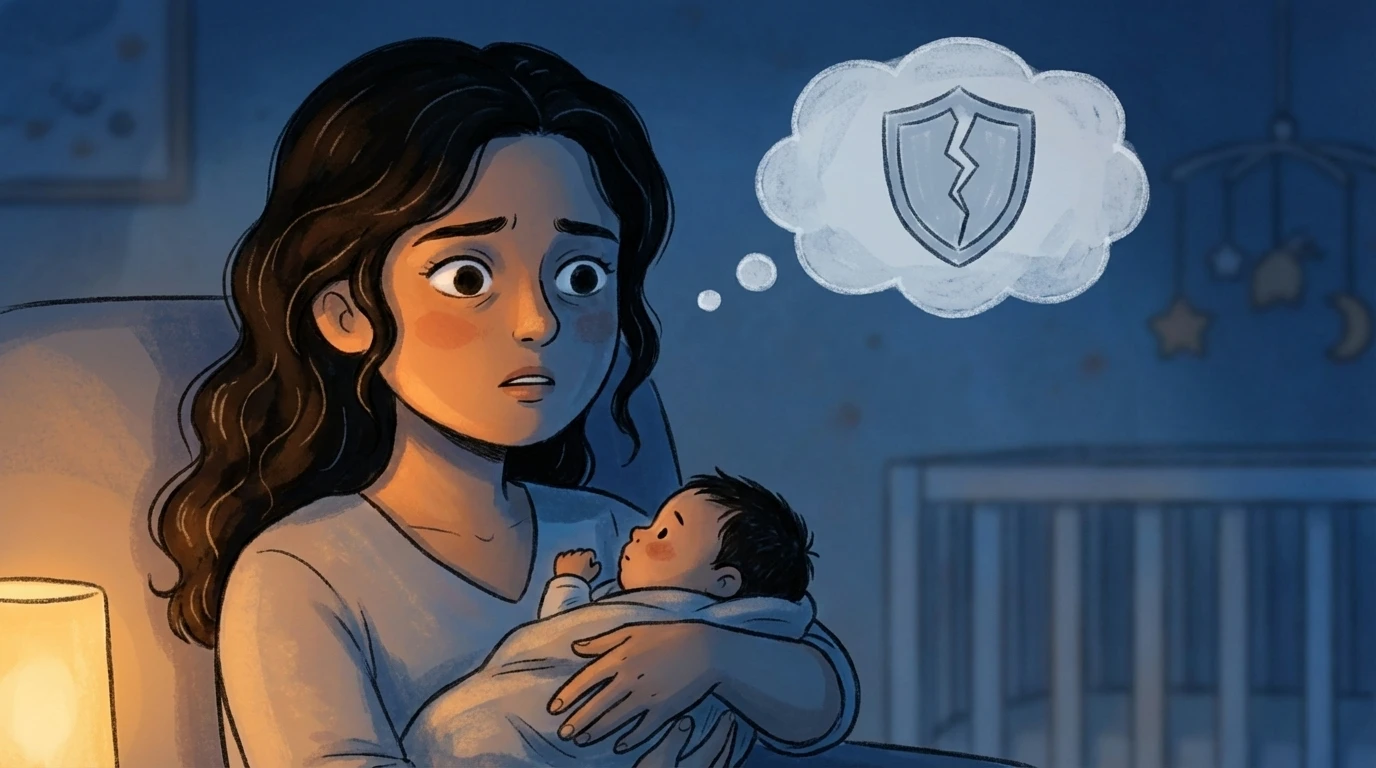
- Intrusive thoughts are a symptom, not a character flaw. Nearly all new parents have them. The thoughts feel dangerous, but the fact that they horrify you is evidence you'd never act on them. Brains under stress produce worst-case scenarios.
- Baby blues and postpartum anxiety are different things. Baby blues hit most parents in the first two weeks and resolve on their own. PPA persists, escalates, and starts running your day. The two-week mark is the diagnostic line.
- PPA can show up anytime in the first year. It doesn't have to start in week one. Many parents develop symptoms months later when support networks pull back and sleep debt compounds.
- Medication is safe during breastfeeding. SSRIs like sertraline have been studied extensively in breastfeeding parents. Multiple medical bodies confirm safety. Your doctor can walk you through the data.
- Talking about it is not optional. Silence makes PPA worse. Telling your partner, a friend, or a professional what's going on inside your head is the single most effective first step toward getting better.
Your brain at 3am
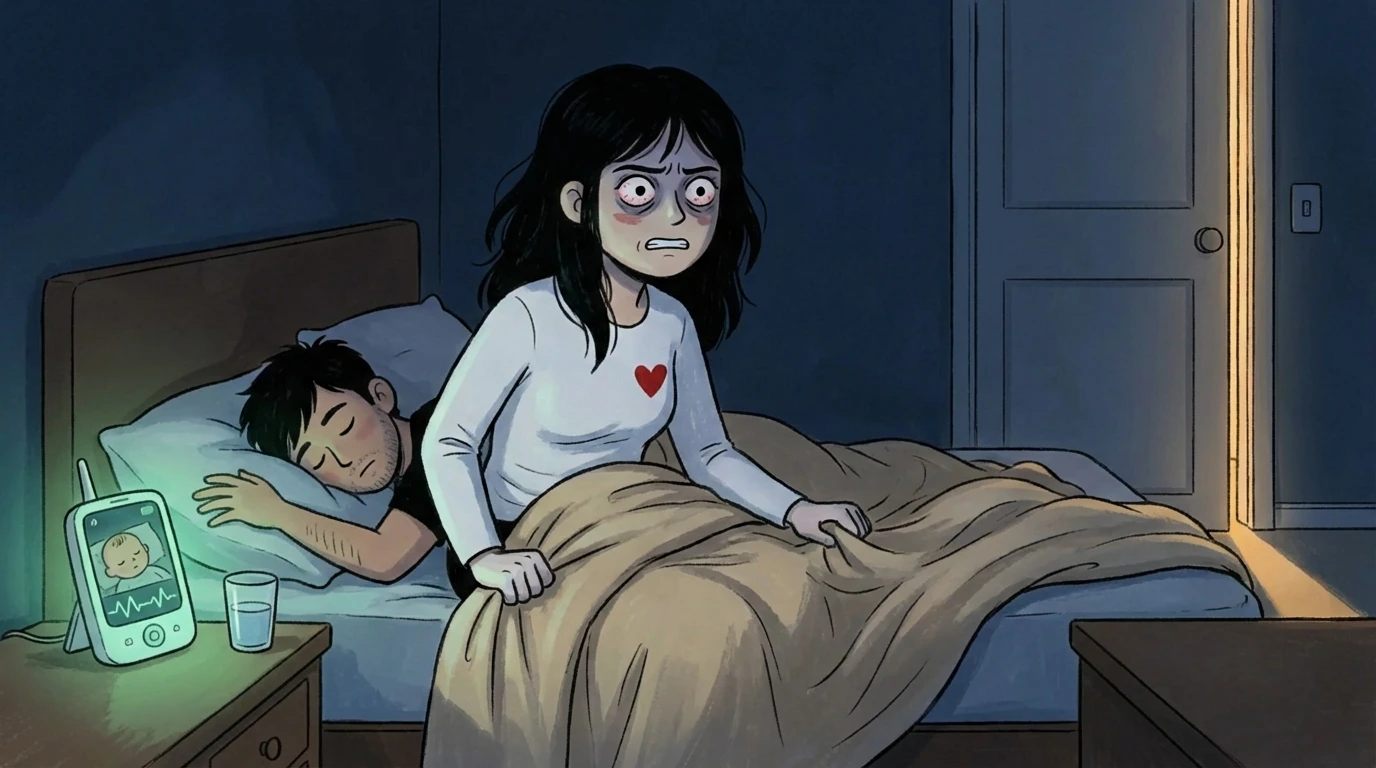
The baby is asleep. The house is quiet. And you are lying in the dark, constructing elaborate scenarios about everything that could go wrong.
What if you drop the baby on the stairs. What if you fall asleep during a feeding and suffocate them. What if you left the stove on and the house fills with gas. What if you just stop breathing in the night and your children grow up without you.
These thoughts have a clinical name: intrusive thoughts. They are one of the most common symptoms of postpartum anxiety, and they are spectacularly good at convincing you that you're losing your mind. You're not. Your brain is doing what brains do under extreme stress and sleep deprivation: scanning for threats.
Here's the part that matters. The fact that these thoughts horrify you is diagnostic. People who are a danger to their children don't lie awake agonizing about it. The horror is the proof that you're safe.
Baby blues versus something bigger
Almost every new parent hits a rough patch in the first two weeks. Crying over a diaper commercial, snapping at your partner for breathing too loud, feeling incompetent because you can't snap a onesie right. That's the baby blues. Hormones are crashing, sleep is nonexistent, and your identity just got reorganized in 48 hours.
Baby blues resolve on their own within about two weeks. If they don't, you're looking at something else.
Postpartum anxiety keeps going. It escalates. The what-if thoughts that started at night creep into the daytime. You're checking the baby's breathing every ten minutes. You can't hand them to your partner without a knot in your stomach.
The symptoms nobody warns you about
Everyone knows about postpartum depression. PPA gets almost no airtime, so you might not recognize what's happening. Watch for:
- Physical symptoms that mimic cardiac events. Racing heart, tight chest, shortness of breath. Panic attacks in new parents frequently get mistaken for heart problems.
- Inability to sleep even when the baby sleeps. This is the signature PPA symptom. Exhaustion plus inability to rest is a brutal combination.
- Constant mental rehearsal of catastrophe. Planning what would happen if you died. Imagining your partner raising the kids alone.
- Rage that comes from nowhere. PPA doesn't always look like worry. Sometimes it looks like snapping at everyone because your nervous system is running so hot that any stimulus feels unbearable.
Intrusive thoughts at night
The New Parent Survival course will teach you to defuse the scary images
You'll have a response for the unwanted thoughts that doesn't involve spiraling or pretending they're not there.
Why it hits people who "have no reason" to be anxious
One of the cruelest features of PPA is the shame loop. You look at your life and think: I wanted this baby. I have a good partner. I have a roof over my head. What right do I have to feel this way?
Every right. PPA is driven by biology, not biography.
After birth, progesterone and estrogen drop faster than at any other point in your life. Blood volume shifts. Sleep deprivation compounds daily. Your brain is flooded with new demands and operating on a fraction of its normal resources.
Having a wanted baby and a stable life does not immunize you against a neurochemical event.
The silence makes it worse
Most parents with PPA suffer quietly. The internal logic goes: if I tell someone about these thoughts, they'll think I'm dangerous. They'll take the baby. They'll think I'm a terrible parent.
Nobody is going to take your baby because you're experiencing a well-documented medical condition. But silence makes it worse. Bottling up intrusive thoughts gives them more power, not less. When you say the thought out loud to someone safe ("I keep imagining dropping the baby down the stairs"), it shrinks. It goes from a terrifying secret to a sentence that sounds, frankly, absurd in daylight.
Tell your partner. Tell a friend. Tell your doctor. If you're trying to figure out whether your worry has crossed into clinical territory, a screening tool can help you sort normal new-parent stress from something that needs treatment.
What helps
Talk to your doctor first
PPA is one of the most treatable conditions in perinatal mental health. Medication (usually an SSRI like sertraline) works. Therapy works. The combination works best for moderate to severe cases.
If you're breastfeeding and worried about medication safety: sertraline passes into breast milk in very small amounts. Multiple medical organizations have confirmed it's compatible with breastfeeding. Talk to your prescriber and your pediatrician.
The medication question is not "will this hurt the baby?" It's "what happens to the baby if I don't treat this?" Untreated PPA doesn't just affect you. A parent running on a constant adrenaline loop is less available, less responsive, and more likely to develop long-term anxiety patterns that persist well beyond the postpartum period.
Build a grounding practice
When an intrusive thought hits at 3am, you need something faster than a therapy appointment. Grounding techniques work by pulling your brain out of the catastrophe loop and into your body.
Try this: put both feet flat on the floor. Name five things you can see, four you can hear, three you can touch. Breathe in for four counts, hold for four, out for six. The extended exhale activates your parasympathetic nervous system and tells your body the threat is not real.
You will feel ridiculous doing this at 3am while your partner snores beside you. Do it anyway. The feeling of ridiculousness is fine. The panic attack is not.

Stop Googling symptoms at night
You already know this. The 2am Google spiral is making everything worse. You search "intrusive thoughts postpartum," read three forums, find one horror story, and your brain files it as confirmation that you are a danger to your child.
You're not. But Google at 3am is not the place to find that reassurance. Save the searching for daylight hours and direct it toward finding a therapist who specializes in perinatal mental health.
How to get through a postpartum anxiety spiral
- Name the thought out loudSay it to yourself or your partner: 'I'm having the thought that something bad will happen to the baby.' Labeling it as a thought, not a prediction, reduces its power immediately.
- Ground yourself physicallyFeet on the floor, cold water on your wrists, or squeeze an ice cube. Your nervous system responds to physical sensation faster than to rational argument.
- Check the facts onceIs the baby breathing? Is the door locked? Is the stove off? Check once and then stop. Repeated checking feeds the anxiety loop, not your safety.
- Tell someone tomorrow morningMake a deal with yourself: you will say one thing about how you're feeling to one person before noon. The thought survives in silence. It weakens in conversation.
- Call your doctor this weekNot next month. This week. PPA responds quickly to treatment. The longer you wait, the more entrenched the patterns become. One phone call can change the trajectory.
Recovery is not linear
You start medication. You feel better for a week. Then a terrible night hits and you think it's not working. This is normal. Recovery from PPA looks like a stock market graph: the overall trend is up, but individual days will still dip.
Most parents notice real improvement within two to four weeks of starting treatment. Some need a dosage adjustment. Some need to try a different medication. The point is that the process works, even when individual bad nights make you doubt it.
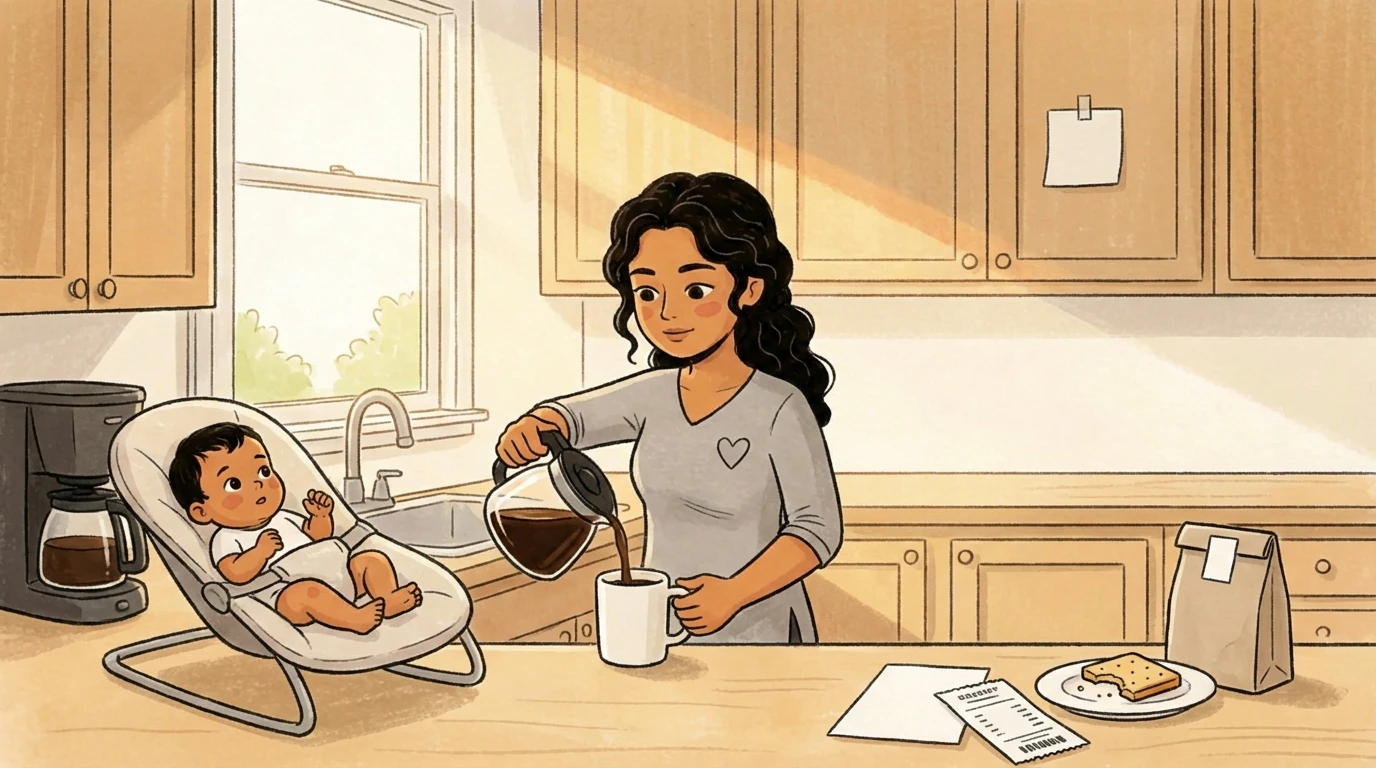
The trajectory bends toward feeling like yourself again. The intrusive thoughts get quieter. The chest stops tightening every time the baby makes a weird noise. Sleep comes back. And on the other side of this, you'll recognize that the worst of it was a medical event, not a reflection of your fitness as a parent.
FAQ
Yes. Research shows the vast majority of new parents experience intrusive thoughts about accidental harm to their baby. The thoughts are distressing precisely because they conflict with your values. Having them does not make you dangerous. If they are persistent and causing significant distress, talk to your doctor about PPA.
Postpartum depression centers on low mood, loss of interest, and withdrawal. Postpartum anxiety centers on excessive worry, intrusive thoughts, physical symptoms like racing heart, and hypervigilance. They frequently co-occur, and treatment approaches overlap, but the day-to-day experience feels different.
Yes. PPA can develop anytime during the first year. It often surfaces when initial support networks pull back, sleep debt accumulates, or a parent returns to work. Late onset does not mean it is less serious or less treatable.
Sometimes mild cases resolve as hormones stabilize and sleep improves. But moderate to severe PPA tends to worsen without treatment and can develop into a chronic anxiety disorder. Early intervention leads to faster, more complete recovery.
Yes. Research documents PPA in non-birthing parents too. Sleep deprivation, lifestyle upheaval, and the weight of new responsibility affect all parents regardless of biology. If you are the partner and recognize these symptoms in yourself, the same treatment options apply.