
TLDR
- Colic affects about 20% of babies and resolves by three months. It means prolonged crying without a medical cause. Your baby is not broken, and you did not cause this.
- The fourth trimester explains most newborn fussiness. Human babies are born before they're ready. The first three months are about finishing the job outside the womb, and they want womb conditions.
- Babywearing reduces crying across every study that's looked at it. In cultures where infants are worn constantly, colic is virtually nonexistent. A good wrap or sling is worth more than most baby gadgets combined.
- Dairy elimination plus probiotics has the strongest evidence. One study showed 95% of colicky breastfed babies improved when mothers dropped dairy and added L. reuteri probiotic drops. That's a massive effect size.
- When nothing works, your presence still matters. Sometimes babies need to cry with someone there. Holding them through it builds the relationship even when it doesn't stop the noise.

Your baby is not done being born yet
Human babies come out too early. Compared to other mammals, a human newborn is roughly equivalent to a fetus that needs another three months of gestation. Mother Nature kicks them out ahead of schedule because their heads are already almost too big for the birth canal.
So when your five-week-old screams the second you put them down, that's a mammal who was supposed to still be inside you, protesting the eviction.
The first three months of life are called the fourth trimester for a reason. Your baby's nervous system is immature, their digestive system is still calibrating, and every sound, light, and temperature change lands without a buffer.
Why they scream when you put them down
For most of human history, a baby placed on the ground was a baby that could be eaten by something. Babies who protested when put down survived. Babies who stayed quiet got selected out.
Your baby's fussiness when not being held is a survival instinct doing exactly what it's designed to do. A six-week-old does not have the neurological hardware for manipulation. They have a nervous system that needs your nervous system nearby to stay regulated.
Evening colic that nothing stops
The New Parent Survival course will show you what works when nothing works
You'll shorten the 5 PM screaming stretch and stop blaming yourself for not fixing it.
What colic is (and what it is not)
Colic gets thrown around like a diagnosis, but it's really just a description: three or more hours of crying per day, at least three days a week. About one in five babies qualifies. Calling it colic doesn't explain why the baby is crying. It just gives the crying a name.
Colic is not a disease, a disorder, or evidence that you are failing. It starts around two to three weeks, peaks at six weeks, and fades by three to four months.
The evening witching hour
Most colicky babies save their worst for late afternoon and evening. Babies accumulate sensory input all day. By 5 PM, their immature nervous system is overloaded, and crying is the only release valve they have. Tears contain stress hormones. The crying is the system flushing itself.
Back arching, body rigidity, a face that looks like genuine pain. These can mean gas or reflux, or just an exhausted baby. Always check with your pediatrician to rule out medical issues, but most of the time the answer will be "this is colic, it will pass."

The soothing toolkit that works
Every technique that works on a colicky baby does the same thing: it recreates womb conditions. Your baby spent nine months in a warm, tight, dark, noisy, constantly-moving space. Then they got evicted into a quiet, bright, still room and we expect them to be fine with it.
Swaddling
Most newborns prefer being wrapped tight. A good swaddle can turn a flailing, screaming baby into a mildly annoyed burrito within thirty seconds. Some babies hate it. If yours fights the swaddle every time, listen to them. But try it a few times, because the startle reflex often wakes babies who would otherwise stay settled.
Rhythmic motion
Rocking, bouncing, swaying, dancing around your kitchen at midnight. Start with bigger, more vigorous movement and dial it back once the crying slows. You're overriding the crying momentum, then easing into gentle rocking.
Motion should feel safe, not startling. If you're ever feeling that surge of rage that comes from prolonged crying, put the baby down in the crib and walk away. A crying baby in a safe place is always better than a shaken baby.
White noise
Shushing, a fan, a white noise machine, even a vacuum cleaner. The womb is loud, about as loud as a running vacuum. Silence is the unfamiliar environment.
Babywearing
This is the single most effective intervention across the research. Babies who are held or carried more cry less, period. In cultures where infants are worn throughout the day, colic barely exists. A carrier lets you have your hands back while your baby gets constant motion, warmth, and heartbeat proximity.
When the standard tricks don't work
Some babies cry through every technique in the book. The baby is still screaming after swaddling, bouncing, shushing, and nursing. This is where postpartum depression can get a foothold, because nothing erodes your confidence like a baby who won't stop crying.
Try the dietary route
If you're breastfeeding, cow's milk protein in your breast milk may be irritating your baby's gut. One study found that half of colicky babies improved when mothers eliminated dairy.
The strongest evidence comes from combining dairy elimination with probiotic drops. A 2007 study in Pediatrics gave colicky babies five drops daily of L. reuteri while their mothers cut dairy. 95% of the probiotic group improved versus 7% of the control group. Improvement started within the first week. Talk to your pediatrician before starting supplements.
For formula-fed babies
If your baby is on formula and consistently miserable, ask your doctor about a hypoallergenic formula. Some babies are sensitive to standard cow's milk-based formula.
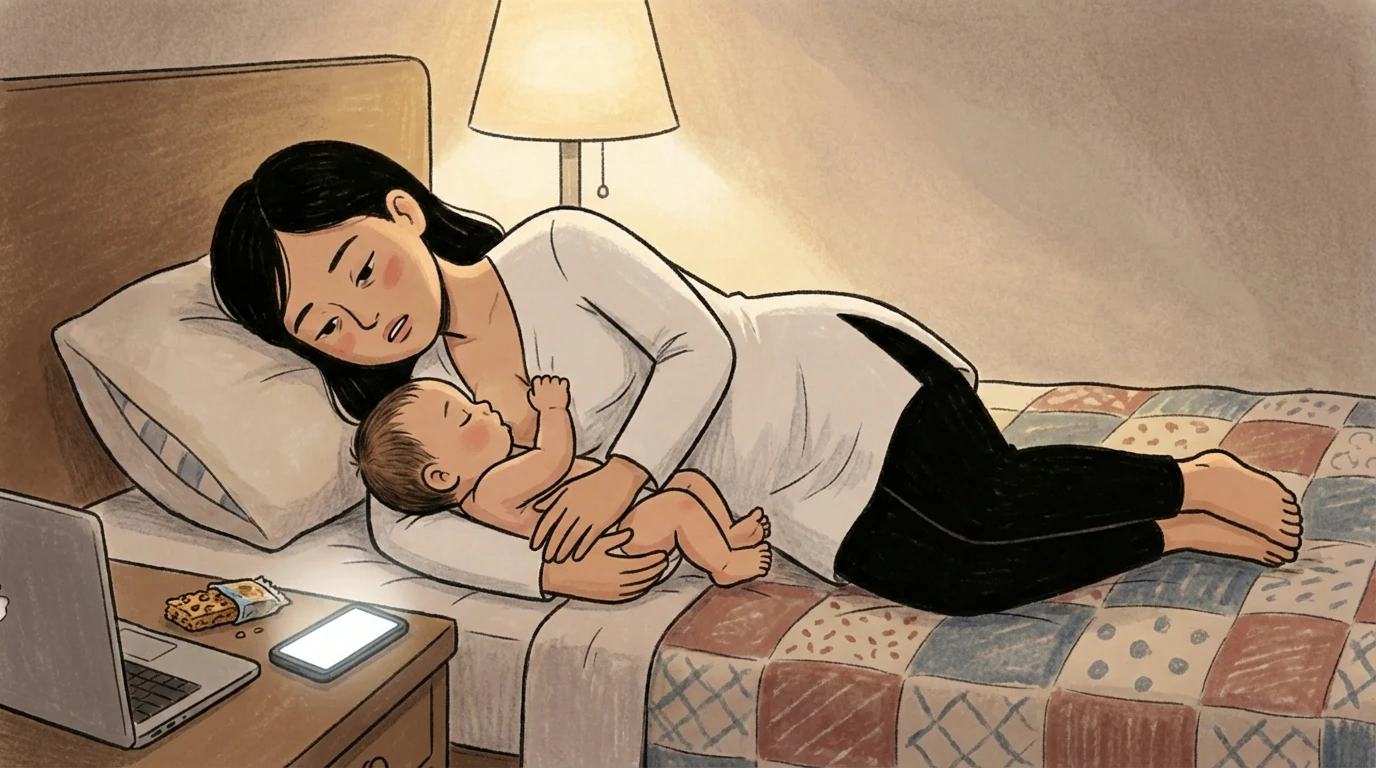
When nothing works, hold them anyway
Sometimes the baby just needs to cry, and the best thing you can do is be there for it.
This is called witnessing. You hold your baby, stay present, and accept that you cannot fix this episode. Your baby's nervous system is registering your presence, your body heat, your heartbeat, even while they scream. The connection matters even when it doesn't stop the crying.
Say something. "I know this is hard. I'm right here." They can't understand the words, but they feel the vibration of your voice against their body.
Protecting yourself from the breaking point
Prolonged crying triggers a stress response in adults. Your heart rate goes up, your patience goes down, and somewhere around the ninety-minute mark you may feel a flash of anger that scares you. This is normal. It does not make you a bad parent.
When you hit that wall:
- Put the baby in the crib, on their back, and close the door
- Go outside, breathe, shake out your hands
- Call someone. A partner, a friend, a crisis line
- Repeat: "This is what babies do. My baby is fine. I am a good parent."
A crying baby in a safe crib is always better than a baby in the arms of a parent who has hit their limit.

This ends
Colic resolves. The fourth trimester closes. Around three to four months, your baby starts smiling at you on purpose, discovers their hands, and begins to tolerate being put down because there are things on the floor they want to grab.
One day you'll realize it's been three days since the evening screaming session and you didn't even notice it stopped. It ends so gradually that you don't get a clean "it's over" moment. The storms get shorter, quieter, further apart. Then they're gone.
Your baby will not remember this. You will, vividly, for years. But every time you held them through the screaming, you were laying the foundation for a kid who knows that someone shows up when things are hard.
How to soothe a crying baby step by step
- Check the basics firstHungry, wet, too hot, too cold, overtired. Rule out the obvious before moving to soothing techniques. A quick diaper check and feeding attempt takes two minutes and solves the problem half the time.
- Swaddle snuglyWrap arms tight against the body with a stretchy blanket. The compression mimics the womb. If your baby fights it, try swaddling with one arm out. Some babies need a transition period.
- Add motion and noise togetherHold the swaddled baby against your chest and bounce gently while shushing loudly near their ear. Start with bigger, more vigorous bouncing to override the crying momentum, then ease into slower rocking once they quiet.
- Try the colic holdLay baby face-down along your forearm with their cheek on your wrist and legs straddling your elbow. The gentle pressure on the belly can relieve gas. Walk around slowly in this position.
- When nothing works, just holdSit somewhere comfortable, hold your baby against your chest, and let them cry. Say 'I'm here' out loud. Your heartbeat and warmth are doing more than you think, even when the crying continues.
FAQ
Colic babies cry intensely but are otherwise healthy, gaining weight, and feeding well. If your baby has a fever, refuses to eat, has blood in their stool, or seems lethargic between crying episodes, see your pediatrician immediately. Colic is a diagnosis of exclusion, meaning everything else gets ruled out first.
No. You cannot spoil a newborn. The research is unambiguous on this. Babies who are held more cry less and develop more secure attachments. The idea that responding to a baby's cries creates dependency is outdated and incorrect. Their brains are wired to need contact.
No. Colic has zero predictive value for temperament, behavior, or personality later in life. Most colicky babies grow into perfectly average toddlers. The colic is a temporary nervous system maturation issue, not a character trait.
Not at this age. Cry-it-out sleep training is designed for older babies, typically four months and up, and it addresses a different problem. A colicky newborn needs proximity and soothing, not independence training. Hold them, comfort them, and put them down safely only when you need a break.