
TLDR
- Crying is communication, not manipulation. Babies under twelve months do not have the brain architecture to cry on purpose to get something. They cry because something is wrong and they have no words.
- Responding to cries builds brain architecture. Every time you soothe a distressed baby, you strengthen the neural connections for emotional regulation they will use for the rest of their life.
- There are roughly six categories of cry. Hunger, fatigue, overstimulation, pain, loneliness, and discomfort (wet diaper, too hot, too cold). You will learn to tell them apart faster than you expect.
- You cannot spoil a newborn by holding them. The research is clear on this. Babies whose cries are responded to quickly cry less overall by twelve months, not more.
- When you have checked everything and they still cry, holding them is enough. Sometimes babies cry and there is no fixable cause. Your presence is the intervention.
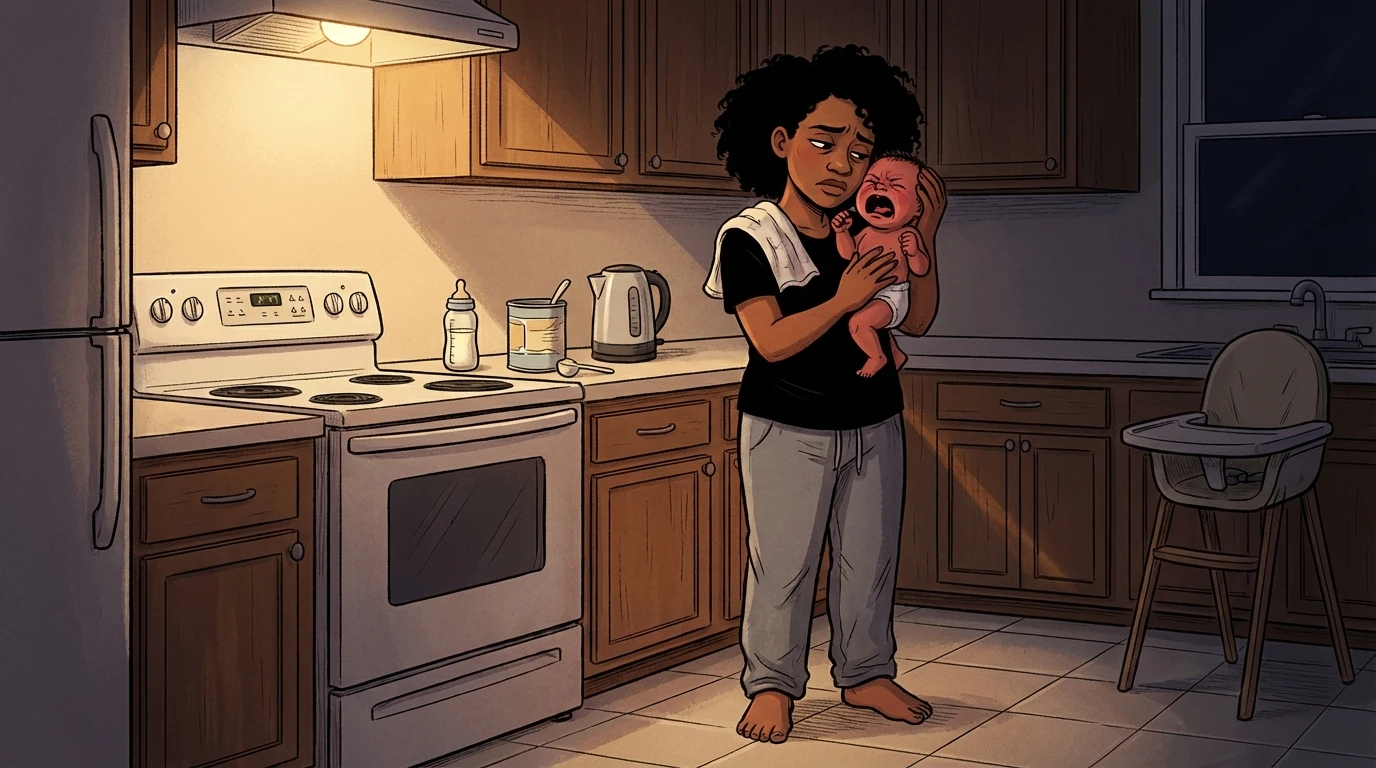
What the crying means
Your baby arrived with one communication channel. No words, no sign language, no ability to point at the thing that is bothering them. Crying is the entire system. And it works, because here you are, reading an article about it at some ungodly hour.
There are roughly six reasons a baby cries. Hunger (the most common, especially in the first three months), fatigue, overstimulation, pain or discomfort, a wet or dirty diaper, and loneliness. That last one throws people. Loneliness? In a three-week-old? Yes. Babies spent nine months listening to your heartbeat from the inside. Being put down in a quiet bassinet feels like being dropped on an alien planet.
The reason new parents feel frantic when a baby cries is biological. Your nervous system is wired to find infant crying deeply uncomfortable. That discomfort is supposed to make you act.
The hunger cry versus everything else
Hunger cries tend to start low and rhythmic, then escalate. A pain cry hits full volume immediately. An overtired cry sounds whiny and intermittent, with pauses where the baby seems to almost settle before starting again.
You will not tell them apart on day three. By week six, you will recognize the hunger cry from across the room. This is bonding in action. Your brain is cataloging every sound your baby makes and building a pattern library you did not ask for.
Forty minutes of screaming
The New Parent Survival course will teach you to read the cries
You'll hear the difference between hunger, overstimulation, and pain before you've tried all five guesses.
Why responding does not spoil them
Someone will tell you that picking up a crying baby "teaches them to cry for attention." This advice has been wrong since approximately 1972, and the research since then has been extremely clear.
Babies whose cries receive a prompt response cry less by the end of the first year, not more. The mechanism is straightforward. When you respond consistently, the baby's stress system learns that distress is temporary. The cortisol spike from crying gets shorter. The return to baseline gets faster. They learn that signaling works, so they do not need to escalate to get your attention.
When cries go unanswered repeatedly, the opposite happens. The baby's stress response stays elevated longer. They cry harder and longer because the signal is not getting through. The research on this is clear and well-documented.
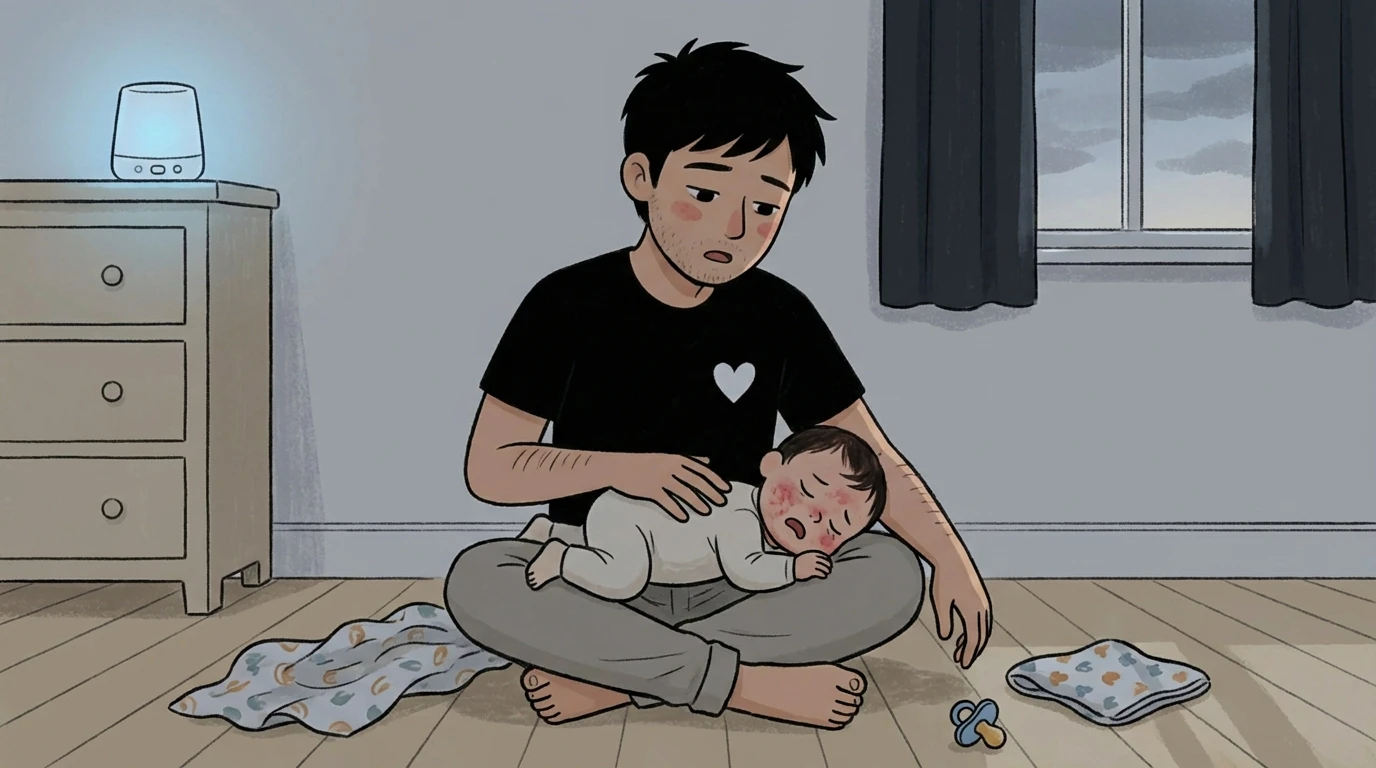
The checklist you will run forty times a day
When your baby cries and you do not know why, you run the list. Every parent develops their own version of this, but the basics are universal.
The quick scan
Hungry? Check the clock. If it has been more than two hours since the last feed (for a newborn), start there. Wet diaper? Check. Too hot or too cold? Feel their chest, not their hands (hands are always cold). Gassy? Try a burp or some gentle bicycle kicks with their legs.
The deeper check
Overstimulated? Bright lights, loud sounds, too many faces. Take them to a dim, quiet room. Overtired? Babies who have been awake longer than their sleep window get wired and fussy instead of drowsy. A newborn can handle about 45 to 60 minutes of awake time before they need to sleep again.
If you have checked everything and they are still crying, hold them. That is the whole intervention. You do not need to fix the crying. You need to be there while it happens. Your consistent presence is building their sense of security even when you cannot make the crying stop.
How to respond when your baby won't stop crying
- Run the basic checklist firstHungry, wet, tired, hot, cold, gassy. Check each one. Most crying has a fixable cause, and hunger is the most common in the first three months.
- Reduce stimulationMove to a dim, quiet room. Turn off the TV. Stop bouncing and shushing at the same time. Sometimes the soothing attempts are adding to the overload.
- Try skin to skin contactBare chest to bare chest with a blanket over both of you. Skin contact regulates the baby's heart rate, breathing, and temperature. It works when almost nothing else does.
- Use rhythmic motionRocking, swaying, a car ride, a stroller walk. The repetitive movement mimics what they felt in the womb. Keep the rhythm steady and slow.
- Tag out if you need toIf the crying is pushing you toward losing control, put the baby down in a safe place and step away for two minutes. A crying baby in a crib is safe. A baby held by a parent at the breaking point is not.
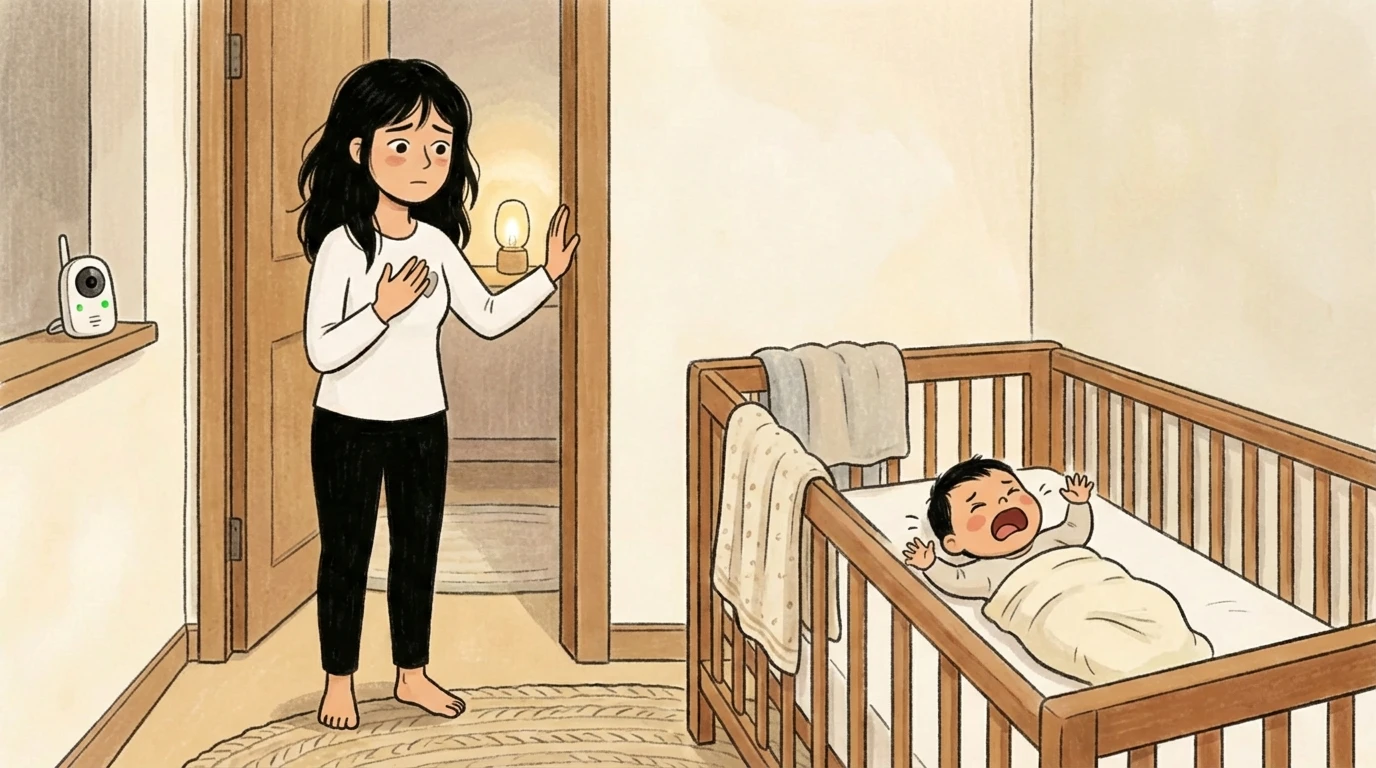
When the crying gets to you
Here is something nobody prepares you for: sometimes your baby's crying will make you feel rage. Not frustration. Not annoyance. Genuine, visceral anger at a seven-pound human who cannot control any of this.
That reaction is a stress response, not a character flaw. Your nervous system interprets sustained crying as a threat signal. Adrenaline floods your system. Your jaw tightens. Your thoughts narrow. This is fight-or-flight activating, and it has nothing to do with whether you love your baby.
If you feel yourself reaching a limit, put the baby down and walk away. A baby crying alone in a crib for three minutes is completely safe. A baby held by a parent about to snap is not. Step out. Breathe. Come back when your hands are steady.
The partner conversation
If you have a partner, the tag-out system is the single most important agreement you will make. One sentence: "I need you to take over." No explanation required. The other parent picks up the baby and you leave the room.
Set this up before you need it. Talk about it on a calm afternoon, not at 3am.
The colic question
Some babies cry for three or more hours a day, three or more days a week, for three or more weeks. This is colic, and it affects roughly one in five infants. If your baby falls into this category, you are dealing with something genuinely harder - and that difficulty is real.
Colic peaks around six weeks and resolves by three to four months. What helps: rhythmic motion, white noise, skin-to-skin, and a rotation of adults so no one absorbs all of it. The most important thing about colic is that it ends. It does not feel like it will. But it will.

What your baby is learning while you soothe them
Every time you pick up a crying baby, something invisible happens in their brain. The stress hormone cortisol drops. Neural connections between the amygdala (threat detection) and the prefrontal cortex (regulation) get a little stronger. The baby's internal model of the world updates: I was in distress. Someone came. The distress ended.
This is the foundation of secure attachment, built one soothing interaction at a time, thousands of them, across the first year.
You do not need to soothe perfectly. Research shows that responsive caregiving only needs to work about 30% of the time to build secure attachment. You will miss cues. You will guess wrong. You will offer a breast when the problem was a wet diaper. The pattern matters, not the individual attempts.
So the next time you are pacing the hallway at 2am with a baby who will not stop screaming: it is working. Your arms are the classroom.
FAQ
No. Research consistently shows that babies who are responded to promptly and consistently cry less by twelve months and develop stronger emotional regulation. You cannot spoil an infant. Responsiveness builds security, not dependence.
Evening fussiness (sometimes called the witching hour) is extremely common. Babies accumulate sensory input throughout the day and become overstimulated by evening. Their ability to self-regulate is lowest when they are tired. Reducing stimulation and increasing holding usually helps.
A sudden, sharp, inconsolable cry that sounds different from the usual fussing warrants a check for physical causes like a hair tourniquet, fever, or ear infection. If the cry sounds genuinely different and your gut says something is off, trust that and call the pediatrician.
Yes. Placing a baby in a safe sleep space and stepping away for two to five minutes when you are overwhelmed is both safe and recommended. Brief periods of crying in a secure environment cause no harm. Parents at the edge of their capacity are a greater risk.
Crying peaks at around six weeks of age and gradually decreases from there. By three to four months, most babies cry much less. Colicky babies follow the same curve but at higher intensity, also resolving around three to four months.