
TLDR
- Babies are not born knowing how to self-soothe. Self-soothing is a learned skill. The neural wiring for it gets built each time a caregiver responds to distress with comfort. Skip the soothing, skip the wiring.
- Oxytocin does the heavy lifting. When you comfort a crying baby, their body releases calming biochemicals that physically construct neural pathways. Each soothing interaction is a tiny brain-building session.
- Crying in your arms is productive. A baby crying while being held is releasing cortisol and stress hormones safely. Crying without a responsive caregiver present is a different neurological event entirely.
- Sensitive babies need more of this, not less. Highly sensitive babies who go from smiling to screaming in seconds have bigger reactions but the same developing brain. They need more co-regulation reps to build the same pathways.
- You don't need to stop the crying to be effective. Your voice, your presence, your steady breathing all count. The baby's nervous system registers your responsiveness even when they're still screaming.
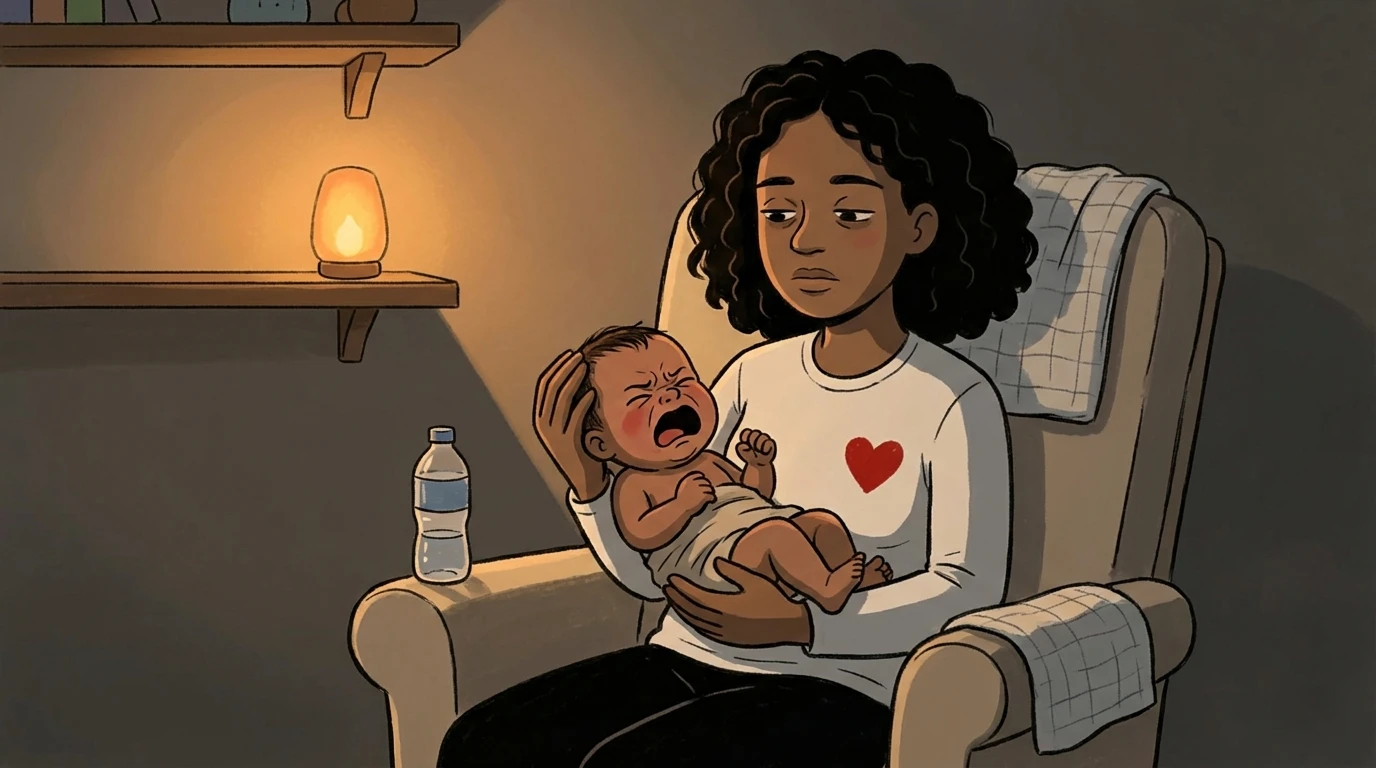
The thing nobody tells you about self-soothing
You've heard the phrase a thousand times. "They need to learn to self-soothe." It gets tossed around in sleep training debates and your mother-in-law's living room like it's something babies should just figure out on their own.
Babies are not born with the ability to self-soothe. The neural architecture required for emotional regulation doesn't come pre-installed. It gets built, connection by connection, through one mechanism: being soothed by someone else.
Every time you pick up your crying baby and rock them, hold them, talk to them in that low voice you didn't know you had, you're running a construction crew inside their brain. The blueprint for how they'll manage their own emotions at age 5, 15, and 35 is being drawn right now, in your arms, at 3 AM.
Told you'll spoil the baby
The Science of Parenting course will show you what picking them up builds
You'll see the brain architecture that forms every time you respond, and the doubt about spoiling will quiet down.
What happens inside a baby's brain when you respond
Here's where the neuroscience gets specific (and kind of amazing).
The oxytocin loop
When a baby is distressed and a caregiver responds with physical comfort, the baby's body releases oxytocin and other calming biochemicals. These biochemicals are building neural pathways. Each soothing interaction strengthens the connections that allow the brain to produce those same calming chemicals independently later.
It's a feedback loop. Baby cries, you respond, oxytocin flows, pathways form. Baby cries again, you respond again, pathways strengthen. Repeat this a few thousand times and the baby's brain starts producing its own calming response more efficiently. That's self-soothing. It was taught, not innate.
The trust blueprint
Something else is happening simultaneously. Every time you show up for a crying baby, you're writing a line of code in their working model of relationships. The message is: help is available. The world is safe enough. When things go wrong, someone comes.
This blueprint shapes how they approach distress as they grow. A baby who has internalized "someone comes" doesn't need to panic as hard when upset, because their system has learned that relief is on the way. The panic volume turns down. The recovery speeds up.
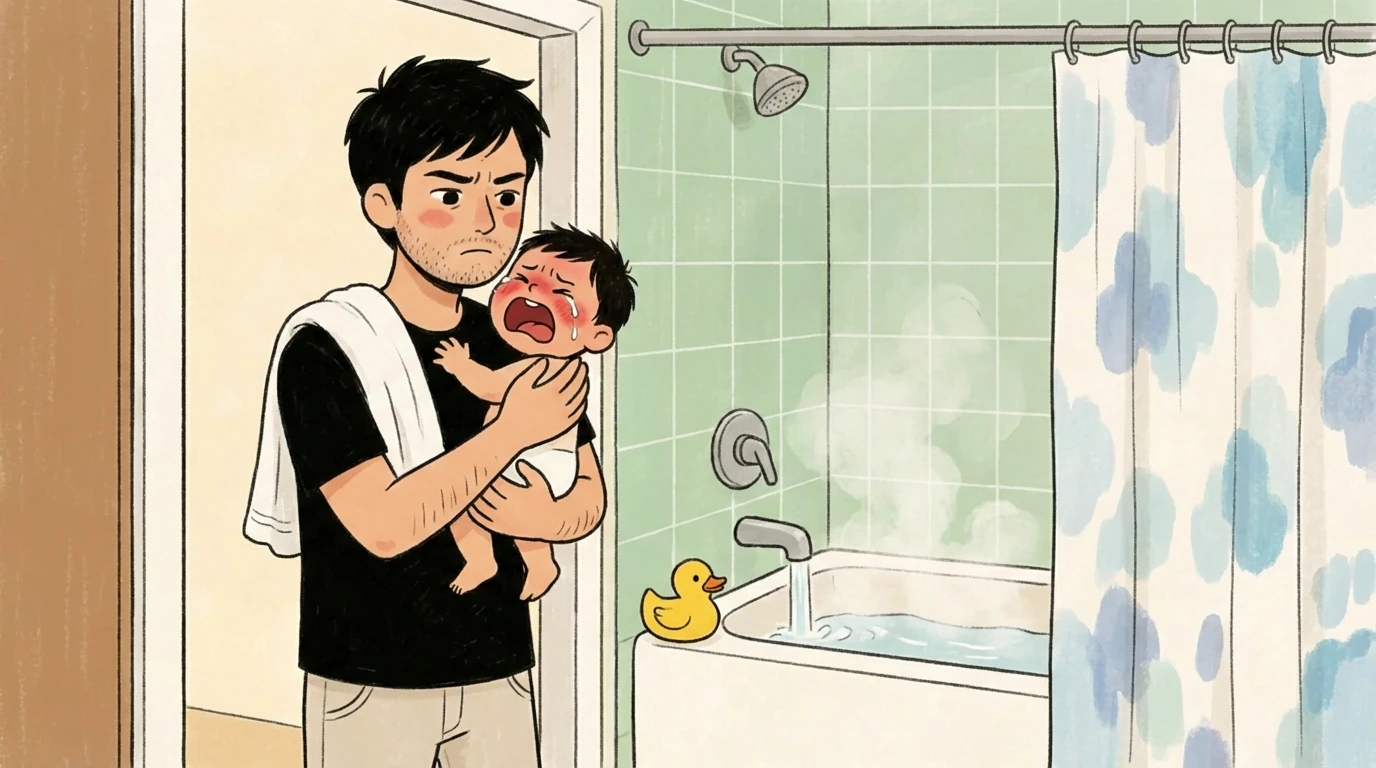
Crying while held is not the same as crying alone
This is the part that confuses a lot of parents. Your baby is in your arms, you're doing everything right, and they're still screaming. So what's the point?
The point is that crying while being held is a completely different neurological event than crying alone. When a baby cries in the safety of a caregiver's arms, they're releasing cortisol, adrenaline, and other stress hormones. This release is productive. The baby's body is processing the distress, offloading the chemicals, and coming back to baseline.
When a baby cries alone, the stress hormones flood without a safety net. The fight-or-flight system activates. The brain isn't processing; it's surviving.
Your presence changes the chemistry. You don't have to stop the crying. Your job is to be the container it happens in.
Your voice counts even when nothing else works
Maybe you're driving and can't pick them up. Maybe your arms are about to fall off. Your voice still creates what researchers call a "holding environment." The sound of a familiar caregiver speaking in steady, low tones registers as safety in the baby's nervous system. You need to be present and responsive. The bar is lower than you think.
Sensitive babies and the extra reps they need
Some babies go from smiling to screaming in the time it takes you to blink. They react to diaper changes like you've committed a war crime. Car seats are a personal offense. Being set down on any surface that isn't you is apparently the worst thing that has ever happened to a human.
If this is your baby, congratulations. You have a highly sensitive kid. That same intensity that makes the crying unbearable? It's the exact same wiring that produces the enormous grins, the deep belly laughs, the way they light up when you walk into the room.
Sensitive babies aren't broken. They have bigger reactions and the same underdeveloped regulation system as every other baby. They just need more reps to build those calming pathways. More soothing. More holding. More of you showing up, again and again, until the wiring catches up to the feelings.

Practical moves for the high-sensitivity phase
Babywearing works. A carrier or sling creates enough constant contact that many sensitive babies relax into a baseline where other small changes (a new room, a new noise) don't send them over the edge. It's not spoiling. It's strategic soothing that the science supports.
Minimize unnecessary transitions. If your baby loses it every time you change their diaper, ask yourself which changes are truly needed. Wet diaper? Try changing while held against another adult. Outfit change for a tiny spit-up spot? Probably not worth the meltdown.
This phase is temporary. The responsiveness that feels endless right now is building the exact capacity your baby needs to handle transitions without falling apart.
How to soothe in a way that builds their brain
- Respond before the peakPick up or touch your baby at the first signs of distress. Early intervention means less cortisol flooding and a faster return to calm. You're not reinforcing crying. You're catching the wave before it crests.
- Use your body as a regulatorHold them against your chest so they feel your breathing rhythm and heartbeat. Slow your own breathing deliberately. Their nervous system will start syncing to yours within minutes.
- Talk in a low, steady voiceNarrate what's happening: 'You're upset. I'm here. We're going to figure this out.' The words matter less than the tone. Low and predictable tells their brain safety is present.
- Stay through the stormDon't bounce between strategies every fifteen seconds. Pick one thing (holding, rocking, humming) and commit to it for several minutes. Switching constantly adds stimulation to an already overloaded system.
- Accept that some crying is releaseIf you're holding them and they're still crying, they may be processing. Crying in safe arms releases stress hormones productively. You don't have to fix it. You have to be there for it.
What this means for sleep (yes, that topic)
You knew we'd get here. The brain science of soothing has direct implications for nighttime waking.
A baby who has been consistently soothed during the day is building the same neural pathways they'll eventually use to settle at night. Responsive approaches to sleep are aligned with how the brain develops self-regulation. Every soothing interaction during waking hours trains the nighttime brain too. The pathways don't know what time it is.
When you're the one who needs soothing
Holding a screaming baby for the fourth hour is brutal. Your own cortisol is spiking. Your own nervous system is in fight-or-flight. And you're supposed to be the calm container?
You don't need a full cup. You need just enough regulation to keep your voice steady and your arms safe. If you're spiraling about whether you're responding enough or too much, the fact that you're asking means you're in the right zone.
Set the baby down in a safe place for sixty seconds if you need to. Take three breaths. Come back. That brief reset doesn't undo the thousands of soothing reps you've already logged.
Every response counts. Every time you show up, the wiring gets a little stronger. And one day, not far from now, you'll watch your kid take a deep breath and calm themselves down, and you'll know exactly where they learned it.

FAQ
The neural pathways for self-regulation begin forming from birth through responsive caregiving, but independent self-soothing ability emerges gradually between 6 and 12 months. Full emotional regulation capacity keeps developing until the mid-twenties. Expecting a newborn to self-soothe is like expecting them to walk. The hardware isn't there yet.
No. Research consistently shows that babies whose cries are responded to promptly cry less overall by 12 months, not more. Responsiveness builds security, and secure babies become more independent, not more dependent. The spoiling myth has no scientific support.
You don't need to be instant. Babies are building a pattern, not grading individual responses. If you respond consistently most of the time, the neural pathways still form. Taking thirty seconds to finish what you're doing, or responding with your voice while you walk over, counts.
No. A baby crying in the arms of a present, responsive caregiver is processing stress safely. The cortisol and adrenaline are being released productively. Trauma comes from chronic, unresponsive environments where distress signals are consistently ignored, not from individual crying episodes with a caring adult present.
The same principle scales up. Toddlers, preschoolers, and school-age children all build emotional regulation through co-regulation with caregivers. The method changes (you're not rocking a seven-year-old) but the mechanism stays the same: your calm teaches their brain what calm feels like.