
TLDR
- Temperament is biological, not behavioral. Your child's intensity, sensitivity, and activity level are baked into their nervous system. They're not choosing to be difficult. Their brain is wired to respond to the world in a specific way.
- There are no bad temperaments, only bad fits. A high-energy kid in a quiet household feels like chaos. The same kid in a family that hikes every weekend is a perfect match. The friction comes from the gap between your expectations and their wiring.
- Personality traits predict success better than IQ. Above a baseline threshold, IQ differences barely matter. Emotional regulation, persistence, and interpersonal skills are what separate kids who thrive from kids who struggle.
- Your parenting style interacts with temperament. The same approach that works beautifully for one child can backfire completely with another. Matching your response to your child's temperament is more effective than any one-size-fits-all strategy.
- Younger siblings often develop stronger social skills. Less anxious parenting and constant peer negotiation give later-born children measurable advantages in emotional intelligence, even if firstborns edge them out on IQ by a few points.
Your kid came with a settings menu you didn't write
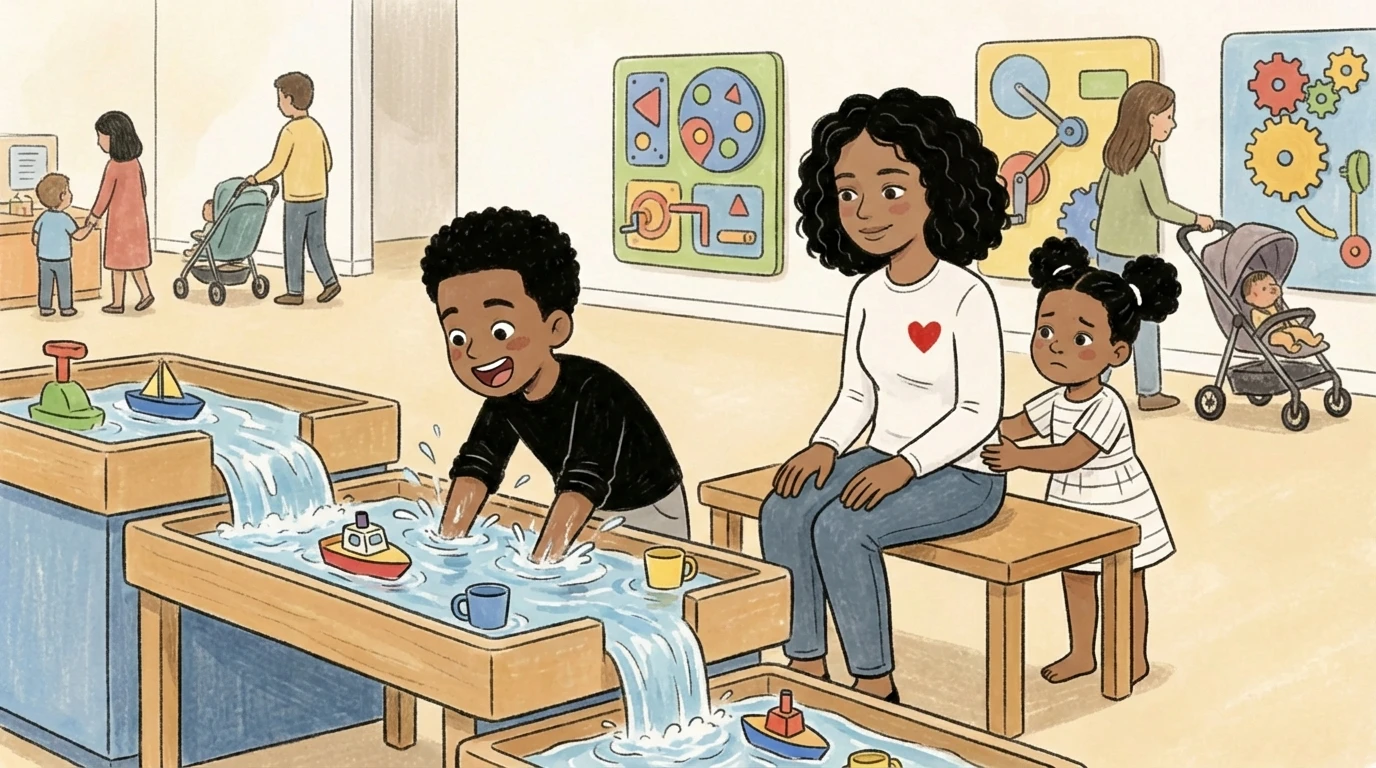
You've seen it at every playground. One toddler charges straight for the tallest slide, no hesitation, no backward glance. Another toddler sits in a parent's lap for twenty minutes, scanning the scene, processing every variable before setting one foot on the wood chips.
Same age. Same playground. Completely different operating systems.
That difference has a name: temperament. And it's one of the most researched, least talked-about concepts in developmental psychology. Temperament refers to the innate behavioral tendencies your child was born with. Their baseline reactivity, their sensitivity threshold, their default speed setting.
You didn't cause it. You can't cure it. And once you understand it, you'll stop blaming yourself for about half the things that aren't working.
Same house, different kid entirely
The Science of Parenting course will explain why your kids differ
You'll stop blaming yourself for the gap between siblings and start parenting each wiring pattern on its own terms.
What temperament is (and isn't)
Temperament is distinct from personality. Personality develops over time through experience, relationships, and choices. Temperament is what your child showed up with on day one.
The building blocks
Researchers generally agree on a handful of core temperament traits. These show up in infancy and remain relatively stable:
- Reactivity: How intensely your child responds to stimulation. High-reactive babies startle easily, cry louder, and feel everything at volume 11. Low-reactive babies take most things in stride.
- Self-regulation: How quickly they recover from that reaction. Some kids bounce back in minutes. Others need an hour and a dark room.
- Activity level: The sheer amount of physical movement their body demands. Some kids need to run before they can think. Others are content to sit and sort buttons for an hour.
- Sensory threshold: How much input it takes to trigger a response. A child with a low sensory threshold will notice the tag in their shirt, the hum of the refrigerator, and the fact that their socks are slightly different thicknesses. All at once.
The persistence factor
There's one more trait that doesn't get enough attention: persistence. Some children lock onto a goal and will not let go until they've achieved it or the sun goes down, whichever comes last. This is the kid who spends forty-five minutes trying to put on their own shoes, refusing help with increasing fury.
The research is clear that this trait predicts achievement better than intelligence does. A scientist with an IQ of 130 is just as likely to win a Nobel Prize as one with an IQ of 180. The difference comes down to persistence, emotional regulation, and the ability to work with other people. Those are temperament-adjacent traits, and they matter more than raw cognitive horsepower.

The goodness-of-fit model
Here's where most parents go wrong. They assume their child's temperament is a problem to solve rather than a variable to account for.
Developmental psychologists Thomas and Chess proposed the "goodness of fit" concept back in the 1950s, and it still holds up. The friction you feel with your child often comes from the mismatch between their temperament and your environment, not from anything broken in the child.
A strong-willed child in a household that values compliance above all else will be in constant conflict. That same child in a household that channels their intensity into choices and challenges will thrive.
A highly sensitive child with parents who dismiss their reactions as dramatic will learn to distrust their own perceptions. That same child with parents who take their experience seriously will develop extraordinary empathy and perceptiveness.
The temperament isn't the issue. The fit is.
When temperament looks like a disorder
This is the part that keeps parents up at night. Where does temperament end and a clinical condition begin?
The honest answer: the boundary is blurry. A highly active child with poor impulse control looks a lot like ADHD. A sensory-sensitive child who melts down in loud environments looks a lot like autism spectrum traits. A cautious, slow-to-warm child can look like anxiety disorder.
The difference usually comes down to degree and impairment. Temperament traits exist on a spectrum. When a trait is so extreme that it consistently prevents a child from functioning in daily life (making friends, learning at school, sleeping, eating), that's when professional evaluation makes sense. If you're trying to sort out whether your child's behavior is temperament or something more, start with your pediatrician.
Why birth order changes the equation
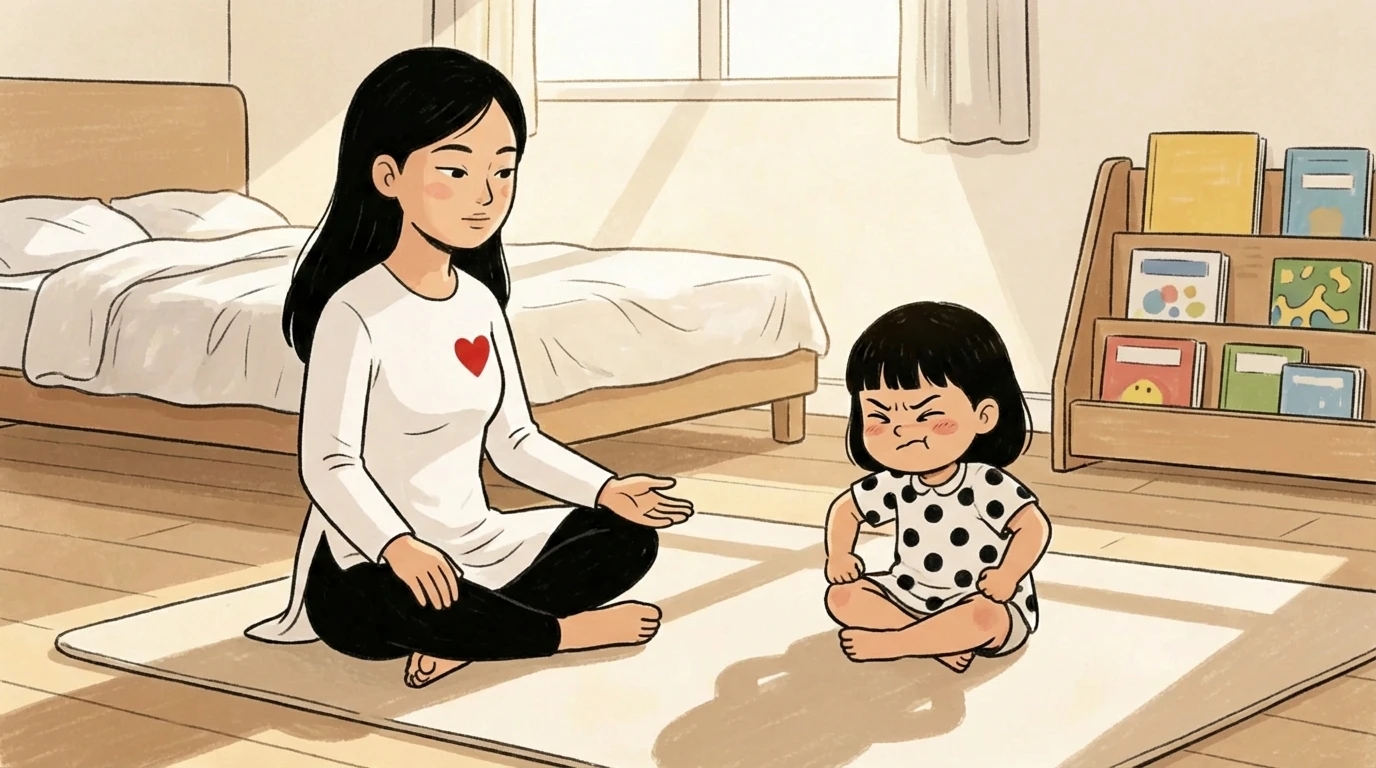
Here's something parents of multiple children already suspect: your kids can grow up in the same house and turn out completely different. Temperament is part of that. But so is birth order, and the two interact in ways that matter.
A large Norwegian study found that firstborn children score about three IQ points higher than their next-youngest siblings. The leading theory: older children benefit cognitively from explaining things to younger siblings. The tutor gets more out of teaching than the student gets from learning.
But younger siblings, who grow up with less anxious parenting and more practice negotiating with peers, develop stronger interpersonal skills and better emotional regulation.
So your firstborn might edge out their sibling on a standardized test. And your second child might read a room better, recover from setbacks faster, and make friends on the first day of camp. Both are wired for success. Just different kinds.
Working with the wiring
You can't rewire your child's temperament. But you can stop fighting it, which changes the dynamic entirely.
How to parent to your child's temperament
- Observe before you interveneSpend a week watching your child's patterns without trying to fix them. When do they get overwhelmed? When do they light up? What triggers meltdowns versus what triggers focus? You need data before you need a strategy.
- Name the trait, not the behaviorInstead of 'she's being difficult,' try 'she has a high persistence trait and changing tasks is hard for her.' Instead of 'he's too sensitive,' try 'his sensory threshold is low and this environment is above it.' Language shapes how you respond.
- Adjust the environment firstBefore asking your child to change, ask whether the environment is working against their wiring. A high-activity kid needs movement breaks built into their day. A sensitive kid needs a quiet space to decompress. Remove the mismatch before you address the behavior.
- Match your approach to the childThe parenting strategy that works for your easygoing first child may backfire spectacularly with your intense second child. Be willing to run completely different playbooks for different kids. Fair doesn't mean identical.
- Protect the trait's upsideEvery temperament trait that drives you crazy has a flip side that will serve your child well as an adult. The stubborn child becomes the persistent employee. The sensitive child becomes the perceptive friend. Your job is to keep that upside intact while teaching them to manage the downside.
The long game
Daily parenting practices matter more than any fixed trait. How you listen to your child, how you set limits with empathy, how much you read to them. These things shape outcomes far beyond what a temperament score or an IQ test can predict.
Reading to your child. Limiting passive screen time. Giving each kid a chance to be the expert at something (the younger one teaches the older one to draw; the older one teaches the younger one to ride a bike). These are the interventions that compound over years.
And here's the part that should take the pressure off: you don't need to fix your child's temperament. You need to understand it well enough to stop getting in its way. The cautious child doesn't need to be pushed into bravery. They need time to observe until they're ready. The intense child doesn't need to be calmed down. They need an outlet and a parent who can ride the wave without drowning.
Your child's wiring is the starting material you were given. What you build with it is the part you control.
FAQ
You cannot change the core wiring. Temperament traits like reactivity, sensitivity, and activity level remain relatively stable from infancy through adulthood. What you can change is how your child learns to manage those traits. A highly reactive child can learn regulation strategies. A cautious child can learn to approach new situations at their own pace. The trait stays; the coping skills grow.
No. Children labeled 'difficult' (high intensity, slow to adapt, negative first reactions) often grow into determined, passionate, perceptive adults. The outcomes depend far more on whether their environment fits their temperament than on the temperament itself. A difficult temperament with a good fit predicts better outcomes than an easy temperament with a poor one.
Yes, and this is one of the most consistent findings in temperament research. Genetics account for roughly 40-60% of temperament variation, but each child gets a different genetic combination. Add in birth order effects, different peer groups, and the fact that you are a different parent to each child, and the variation makes sense.
Temperament traits are observable from the first weeks of life. Some newborns are highly reactive to stimulation while others barely stir. By 4-6 months, patterns around activity level, fussiness, and adaptability become clearer. By toddlerhood, most core temperament traits are well-established and recognizable.