TLDR
- High sensitivity is a temperament trait, not a behavior problem. About 15-20% of children are wired to process stimuli more deeply. This is biological, not a phase they'll outgrow or a parenting failure.
- Their aggression is a defense mechanism. When a sensitive child lashes out, their nervous system has hit capacity. The hitting and screaming are overflow, not defiance.
- You can set boundaries and validate feelings at the same time. Firm limits plus emotional acknowledgment is the combination that works. Choosing one without the other creates either a doormat or a dictator.
- Environment changes prevent more meltdowns than discipline. Dimming lights, leaving the party early, or building in quiet breaks addresses the root cause instead of punishing the symptom.
- They push you away when they need you most. The 'go away, I hate you' is a fear response. They're terrified their feelings will overwhelm you too.
The kid who notices everything
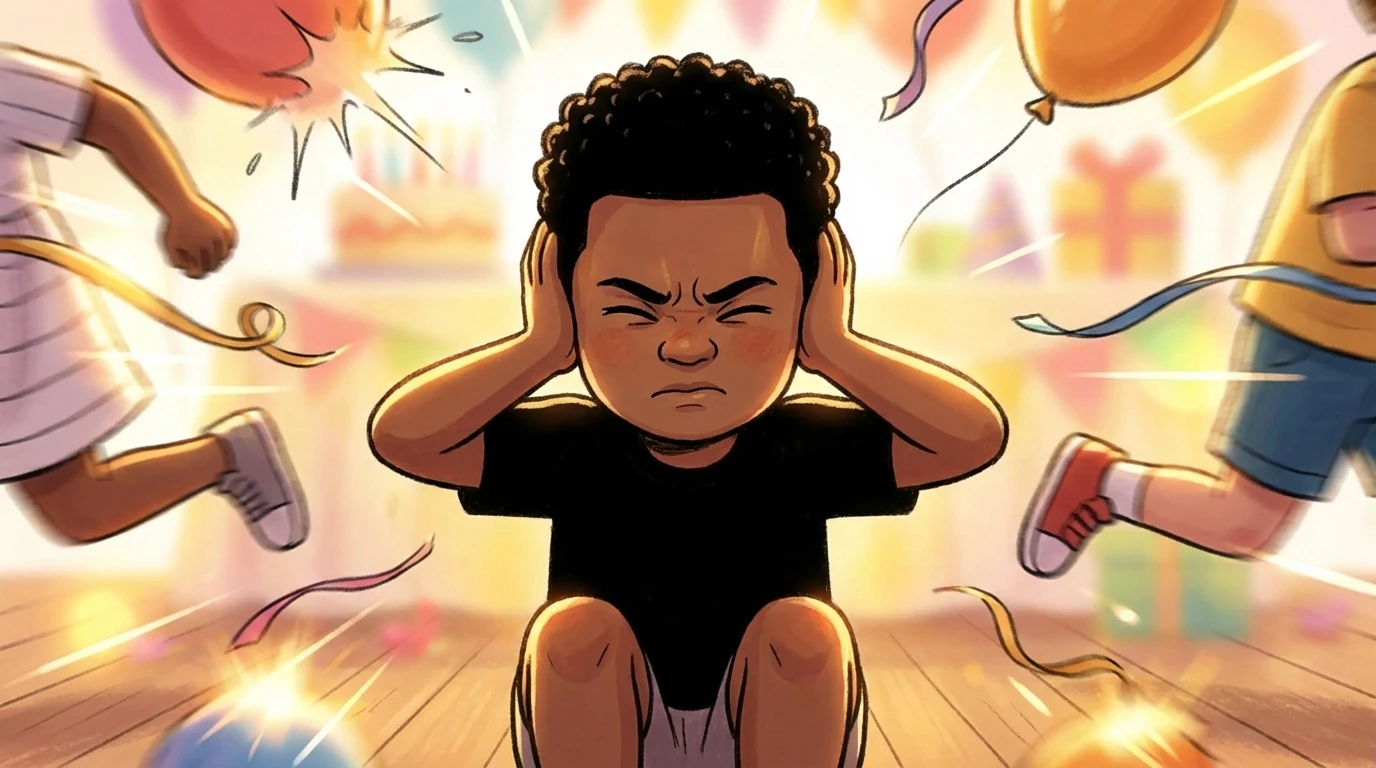
Your child walked into the birthday party and immediately told you the balloon was about to pop. You didn't hear anything. Thirty seconds later, it popped, and your kid was already crying.
This is the child who notices the flicker of a fluorescent light, who picks up on your bad mood before you've said a word, who refuses the pasta because "it smells different than last time." And people keep telling you they're overreacting.
They're over-processing. Their brain takes in the same sensory input as every other kid in the room and turns the volume up to eleven. Researchers call this sensory processing sensitivity, a temperament trait present in roughly one in five children. It shows up from birth. It runs in families. And it comes with a nervous system that treats the world like a data firehose.
The part that matters for your daily life: this same wiring that makes birthday parties unbearable also makes your child deeply empathetic, perceptive, and creative. The sensitivity is one trait with two sides, and you don't get to keep the good half and return the hard half.
Tears over a torn drawing
The Spirited Kids course will help you match their emotional depth
You'll meet the big reaction without minimizing it or drowning in it yourself.
Why everything hits harder
Emotions run deeper and longer
When a typical kid loses a board game, they're annoyed for five minutes. When your kid loses a board game, the world has ended, nobody loves them, and this family is the worst. The feeling doesn't just arrive bigger. It stays longer. Where another child bounces back in minutes, your child might be spiraling through worst-case scenarios an hour later.
This is the piece that exhausts parents. You can handle a big feeling that peaks and resolves. A big feeling that sets up camp and stays for the afternoon? That drains everyone's reserves.
Sensory input stacks up
Sensitive kids don't just react to one trigger at a time. The inputs accumulate. The scratchy shirt tag was fine at 8am. By noon, after a noisy cafeteria, a surprise fire drill, and a classmate who said something mean, that shirt tag becomes the last straw. The meltdown at 3pm is about everything the nervous system absorbed since morning, not the shirt tag alone.
Parents often get confused because the trigger looks absurd. "You're screaming about socks?" Yes. But the socks are the 47th sensory input of the day, and the system is full.

They absorb other people's feelings
Your kid manages their own emotional load - and absorbs yours too. A sensitive child walks into a room and reads the emotional temperature before anyone speaks. If you're stressed about money, they feel it. If their friend is sad, they carry it home.
This is why your child sometimes shuts down completely with no obvious trigger. They may not be reacting to anything that happened to them. They may be processing something they picked up from someone else's face.
What to do before the meltdown
The best strategy for a sensitive child is the one you deploy before things fall apart.
Learn your child's specific triggers. Keep a mental (or actual) list. Crowds? Loud environments? Hunger? Transitions without warning? The more specific you get, the more meltdowns you can prevent. Most parents discover their child has three or four reliable triggers that account for 80% of the blowups.
Build in exit ramps. Going to a family gathering? Scope out a quiet room beforehand. Plan check-ins every 30 minutes. Have a code word your child can use when they're approaching overload. The party doesn't have to end early. But your child needs to know they can step out.
Watch for the early warning signs. Clenched fists. Shorter answers. Withdrawing from the group. Whining that seems out of proportion. These are the signals that the nervous system is filling up. If you catch it here, a five-minute break in a quiet space can reset the whole system. Miss it, and you're managing a full meltdown in the parking lot.

How to respond during a meltdown
- Get close without crowdingSit nearby, within arm's reach but not touching. Your physical presence says 'I'm here' without adding sensory input to an already overloaded system.
- Say less than you thinkOne short sentence: 'I'm right here. You're safe.' Then stop talking. A dysregulated child cannot process a lecture or even a comforting paragraph.
- Hold the boundary and the feelingIf they hit, hold them gently. Say 'I love you and I won't let you hurt me. You can cry as much as you need to.' Boundary and permission in the same breath.
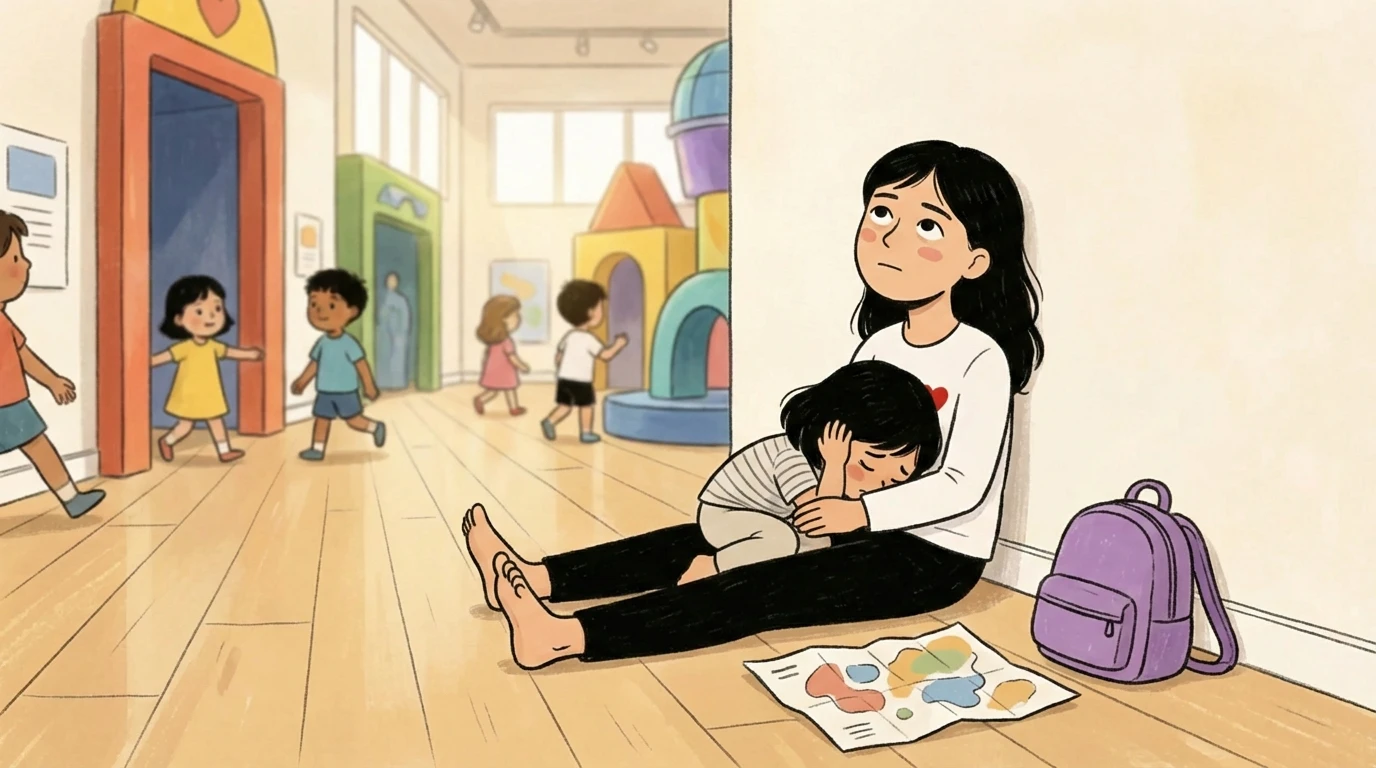
- Wait longer than feels comfortableThe feelings need to move through their body. This takes longer for sensitive kids. Resist the urge to fix, distract, or rush the process. Fifteen minutes of crying is not an emergency.
- Reconnect after, not duringOnce they're calm, a hug, a snack, a quiet activity together. No post-mortem. No 'let's talk about what happened.' That conversation can wait for tomorrow.
The pushing away problem
The thing that makes sensitive kids different from other intense kids is what happens when they're at their worst. They tell you to leave. "Go away. I hate you. You're the worst parent." And every instinct tells you to walk away and give them space.
Don't go. The pushing away is a test your child doesn't know they're running. The real question underneath "go away" is: Can you handle how big my feelings are? Or am I too much for you, too?
If you leave when they scream at you, you confirm their deepest fear. If you stay (calmly, without engaging the insults), you prove something words can't: that their feelings, even the huge ugly ones, don't scare you off.
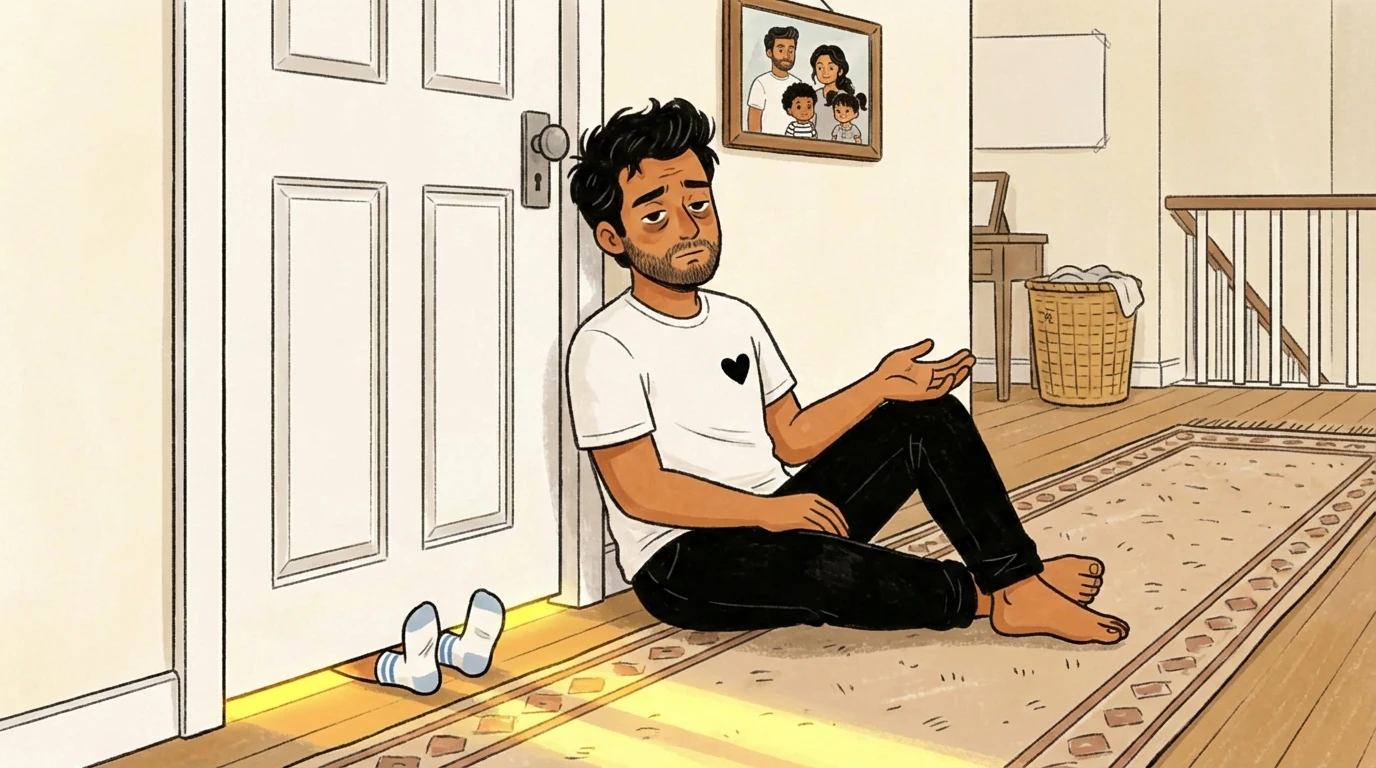
This doesn't mean sitting there absorbing abuse. It means saying "I hear that you want me to go, and I'm going to stay close because I love you" and then going quiet. You can sit outside their door if being in the room escalates things. The message is presence, not confrontation.
What not to do (the two traps)
Trap one: walking on eggshells. You start avoiding anything that might set them off. No playdates, no new foods, no schedule changes. Your entire family orbits around preventing the next explosion. Your child learns that their feelings are so dangerous, even the adults can't handle them, instead of learning to manage their fears and intense reactions.
Trap two: punishing the feelings. Time-outs for crying. Losing screen time for meltdowns. "You need to calm down right now." This approach fails spectacularly with sensitive kids because it adds shame on top of overwhelm. Now they have the original feeling plus the feeling of being bad for having the feeling. Two problems where there used to be one.
The third option is the only one that works. You hold the line on behavior (no hitting, no throwing, no screaming in someone's face) while making space for the emotion underneath (you can be furious, you can cry, you can tell me this is the worst day ever).
This is who they are
Your child will always feel things more than other people. At eight, at eighteen, at thirty-eight. The sensitivity doesn't disappear. But the skills to manage it grow. Every time you stay calm when they fall apart, every time you hold a boundary without shaming the feeling, you are building their capacity to do this for themselves.
The goal was always to make them skilled at being sensitive, not to sand down the sensitivity itself.
FAQ
They overlap but aren't identical. High sensitivity is a temperament trait affecting about 20% of kids. Sensory processing disorder is a clinical condition where sensory input disrupts daily functioning. A child can be highly sensitive without having SPD, but many sensitive kids do have some sensory processing differences.
The sensitivity is permanent, but the meltdowns aren't. As the brain matures and your child builds coping skills, the same nervous system that causes explosions at age four becomes deep empathy and keen perception at age fourteen. The wiring stays. The skills develop around it.
If the sensitivity disrupts daily life across multiple settings (school, home, social), a pediatric evaluation helps rule out co-occurring conditions like ADHD or anxiety. High sensitivity alone isn't a diagnosis, but it can coexist with things that are.
Be specific. Instead of 'my child is sensitive,' say 'loud sudden noises cause a fear response' or 'they need five minutes of quiet after group activities.' Concrete descriptions get better accommodations than personality labels.
Not everything. The basics of love, limits, and consistency still apply. What changes is how you deliver them: more environmental planning, more sensory awareness, more patience during the recovery window after big feelings. Same destination, different route.