
TLDR
- Cry-it-out is not your only option. Leaving a baby to cry alone spikes cortisol and stress hormones. Gentle methods achieve the same result without the physiological cost.
- The real problem is sleep associations. If your baby only falls asleep nursing or rocking, they need that same condition recreated every time they stir at night. Fix the association, fix the wakings.
- Gradual means weeks, not days. Each step (nursing to rocking, rocking to stillness, stillness to bed) takes about a week of consistent practice. Rushing it creates the distress you're trying to avoid.
- Crying while held is different from crying alone. A baby who cries in your arms while you set a limit is processing a change with support. A baby left alone is experiencing unregulated stress. The distinction matters.
- Start when you're ready, not when the internet says. Some families start at six months, others at fifteen. The right time is when sleep deprivation is affecting your ability to parent well during the day.
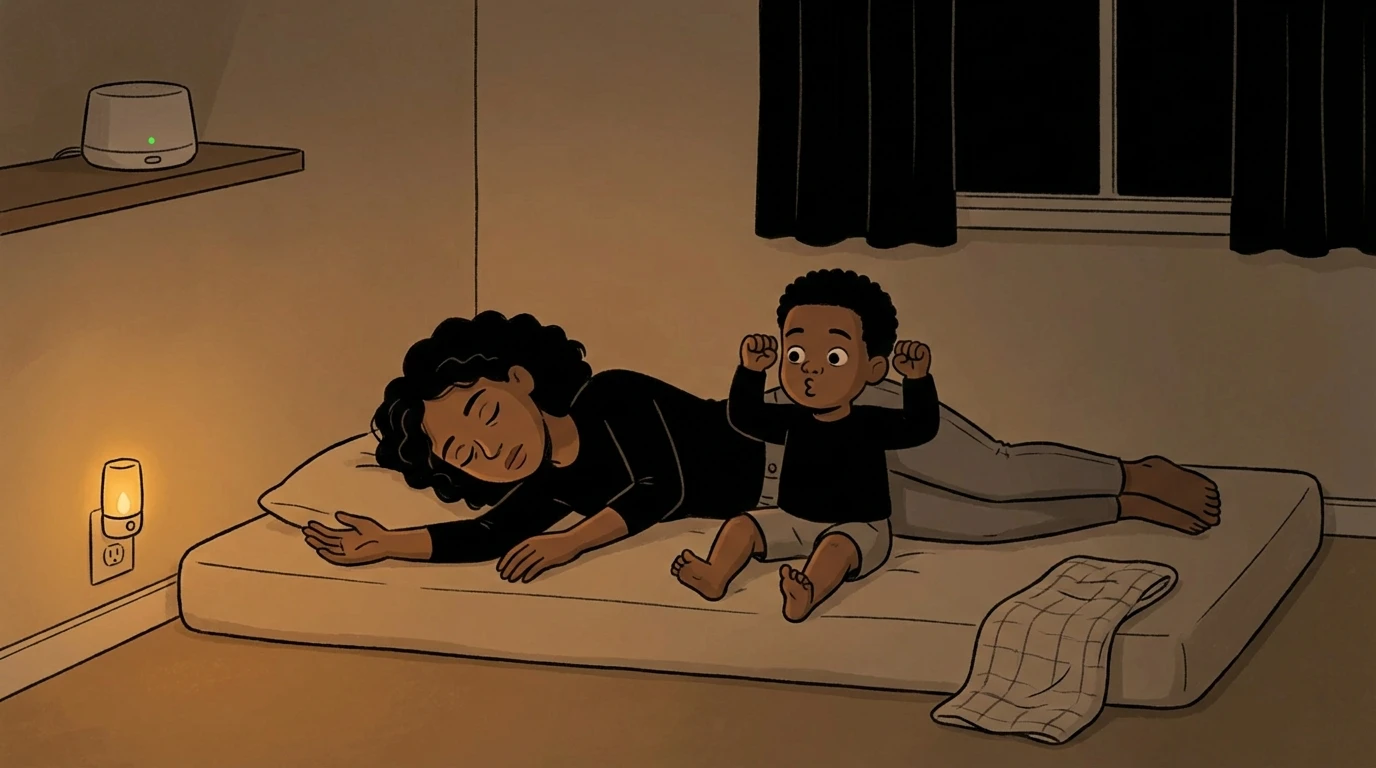
Why your baby keeps waking up (and what it has to do with you)
Here's a fact that explains almost every middle-of-the-night battle: all humans wake briefly between sleep cycles. Adults do it too. You shift, adjust the pillow, and drift back under without remembering any of it.
Your baby can't do that yet. And the reason is usually you.
If your baby falls asleep nursing, they wake up mid-cycle and the breast is gone. If they fall asleep being rocked, they wake up and nobody's rocking. The conditions that existed at sleep onset have vanished, and the baby's brain sounds the alarm. That's why a baby who was rocked to sleep at 7 PM needs rocking again at 10, midnight, 2 AM, and 4 AM. They're not hungry. They're confused.
This is called a sleep association. And it's the single biggest factor in frequent night waking for babies over four months old.
The good news: you built this pattern (accidentally), so you can reshape it (deliberately).
Can't put them down
The Sleep Solutions course will teach you gentle put-down methods
You'll get your baby from arms to crib without the crying spiral, through illustrated lessons with audio narration.
What the research says about cry-it-out
You've probably heard that letting babies cry builds independence. You've also heard it causes brain damage. The reality leans one direction.
The cortisol problem
When babies cry without comfort, their cortisol levels spike. That's a documented stress response, not parent guilt talking. Sustained, unregulated stress in infancy can shape the developing nervous system toward more reactive fight-or-flight responses. Repeated nights of uncomforted crying are, as one researcher put it, "a risk factor, and an avoidable one."
The key distinction
Crying while being held by a parent is a different experience from crying alone in a dark room. A baby who protests a new routine in your arms is experiencing frustration with support. A baby left to scream until they give up is experiencing abandonment. Even Richard Ferber has said he regrets how broadly his advice was applied.
Babies learn self-regulation through being soothed, not through being ignored.
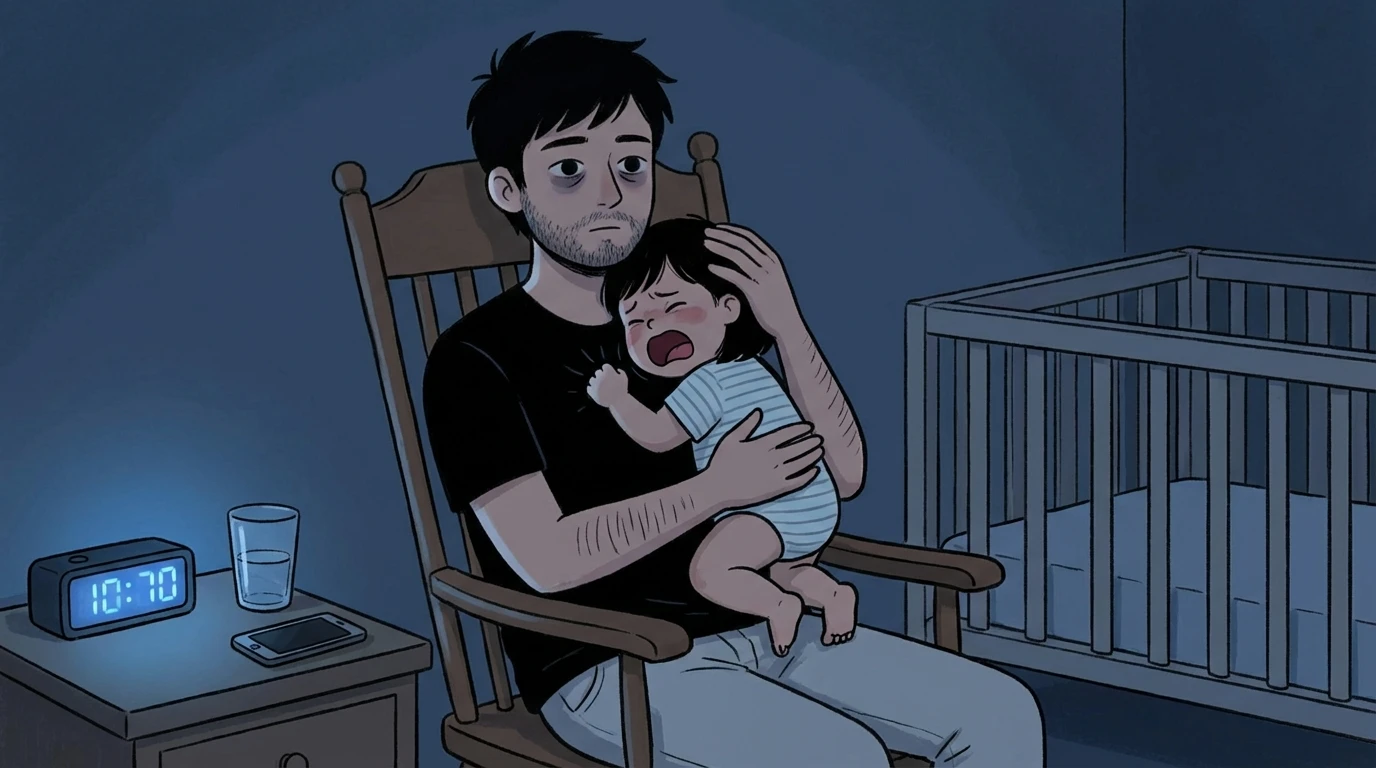
The five-step method (no crying alone required)
This is the gradual approach. Each step takes roughly a week of consistent practice. Some babies move faster, some slower. The pace should stretch them slightly without panicking them.
Step 1: break the nursing-to-sleep connection
If your baby only falls asleep while nursing, that's the first association to address. Feed them when they first wake up and when they're hungry, but when they're mostly tired, try rocking instead. You're not taking food away from a hungry baby. You're separating two activities that have been fused together.
A practical technique: nurse your baby, and just before they fall fully asleep, gently remove the breast. They'll protest. Give it back. Before they're asleep again, remove it. This might take 50 attempts the first night. Within a few days, they'll start rolling off the breast on their own and drifting off without it. The reasons babies cry at night are varied, but if they're over six months and well-fed during the day, waking every hour is almost always about the association, not hunger.
Step 2: replace rocking with stillness
Once your baby can sometimes fall asleep without nursing (even if you're rocking them), start pausing the motion. Rock until they're drowsy, then sit still. They'll fuss. Resume rocking briefly, then stop again. You're teaching their body that stillness is safe enough for sleep.
Do this for a week or so until falling asleep in still arms becomes the new normal.
Step 3: move from arms to bed
Hold your baby near the crib in a calm, still position. Lower them in while they're sleepy but awake. When they protest, pick them up, rock briefly, stop, then try again. It may take 25 attempts the first night. That number drops fast. Within a week, most babies accept being placed down without a fight.
Step 4: reduce physical contact
Once they're falling asleep in the crib with you holding them, shift to a hand on their chest. Then to holding their hand. Then to sitting beside the crib. The progression: holding, touching, nearby, gone. Each step a week.
Step 5: increase distance
Sit next to the crib, then move to the middle of the room, then the doorway, then just outside. If they try to sit up, use a monotone: "Bedtime. Lie down now." No stimulating conversation. No interesting stories. Just boring, predictable presence that gradually becomes boring, predictable absence.
How to teach your baby to sleep without cry-it-out
- Separate nursing from sleepFeed your baby when hungry, but start experimenting with rocking to sleep instead of nursing to sleep. Gently remove the breast before they're fully asleep and let them drift off without it.
- Fade out the rockingOnce they can fall asleep without nursing, begin pausing the rocking motion while holding them. Alternate between rocking and stillness until they accept falling asleep without movement.
- Move them into the crib awakeLower your drowsy baby into the crib while they're still conscious. Pick up and soothe if they protest, then try again. Repetition builds acceptance within a week.
- Shift from holding to touchReplace full-body holding with a hand on their chest, then hand-holding, then a finger they can grip. A stuffed animal can eventually substitute for your hand.
- Gradually withdraw your presenceSit beside the crib, then farther away, then in the doorway, then outside it. Each move takes several nights. If they regress, go back one step and try again.

What to do about night waking during the transition
While your baby is learning to fall asleep independently, they'll still wake at night. That's normal. The wakings decrease naturally once they learn to fall asleep without you, because their brain stops searching for the missing condition when they stir between cycles.
If the nursing parent responds, the baby will expect to nurse. Many families find the exhaustion of nighttime parenting easier to handle when the non-nursing parent takes over night duty. The baby will protest, but being comforted by their other parent is not abandonment.
For babies over twelve months: night-weaning is reasonable. Tell your toddler that "the milk goes to sleep at night" and hold firm. They can have water. Hold them while they cry. The rule is new and they're allowed to be upset about it. That's different from being left alone to scream.
The environment matters more than you think
Darkness
Dim the lights an hour before bedtime. Melatonin production responds to light exposure. For hyper-alert babies, blackout curtains are worth every penny. If they can see anything interesting, they will stay awake to study it.
Sound
White noise beats music. Music is too interesting for babies who love sound. White noise runs all night without requiring you to restart it, and it masks the household sounds that pull babies out of light sleep.
Timing
If your baby seems wired at bedtime, try moving it earlier. When babies miss their sleep window, cortisol and adrenalin kick in to keep them going. That second wind is chemistry, not willpower. Most babies do well with lights out between 6:30 and 7:30 PM. Experiment in 15-minute increments.
A bedtime snack after the bath (for older babies on solids) eliminates hunger as a variable. If you can soothe a fussy baby with a predictable evening routine, you can build the same predictability into the sleep transition.

When this takes longer than you expected
Some babies move through the five steps in three weeks. Others take three months. Alert, curious babies who find everything interesting and everyone stimulating tend to be the slowest. This is temperament, not failure. These kids are wonderful and exhausting, and they do not relax easily.
If you've been consistent for two weeks and things are getting worse instead of better, check three things: Is bedtime early enough? Is the room dark enough? Is the bedtime routine boring enough? The answer to at least one of those is usually no.
And if you're too exhausted to be consistent, that's information too. A parent running on four hours of sleep is not a better parent than one who co-sleeps and gets six. Do what keeps your family functioning, then optimize when you have the capacity.
FAQ
Most families start between six and twelve months. Before four months, babies lack the neurological readiness to change sleep associations. There's no upper limit. Toddlers can learn too, though they may be more vocal about their objections.
A baby who cries while being held, touched, or talked to by a parent is not being traumatized. The research concern is about uncomforted crying, where a baby is left alone in distress. Staying present and responsive throughout the process is what makes it safe.
Babies under twelve months may genuinely need one or two night feeds. This method doesn't eliminate feeding. It separates feeding from falling asleep so your baby can resettle without nursing every time they stir between sleep cycles.
Yes. You can teach your baby to fall asleep without nursing or rocking while bed-sharing. The association work happens at sleep onset. Many co-sleeping families find that once the baby can self-settle, everyone sleeps through the night in the same bed.