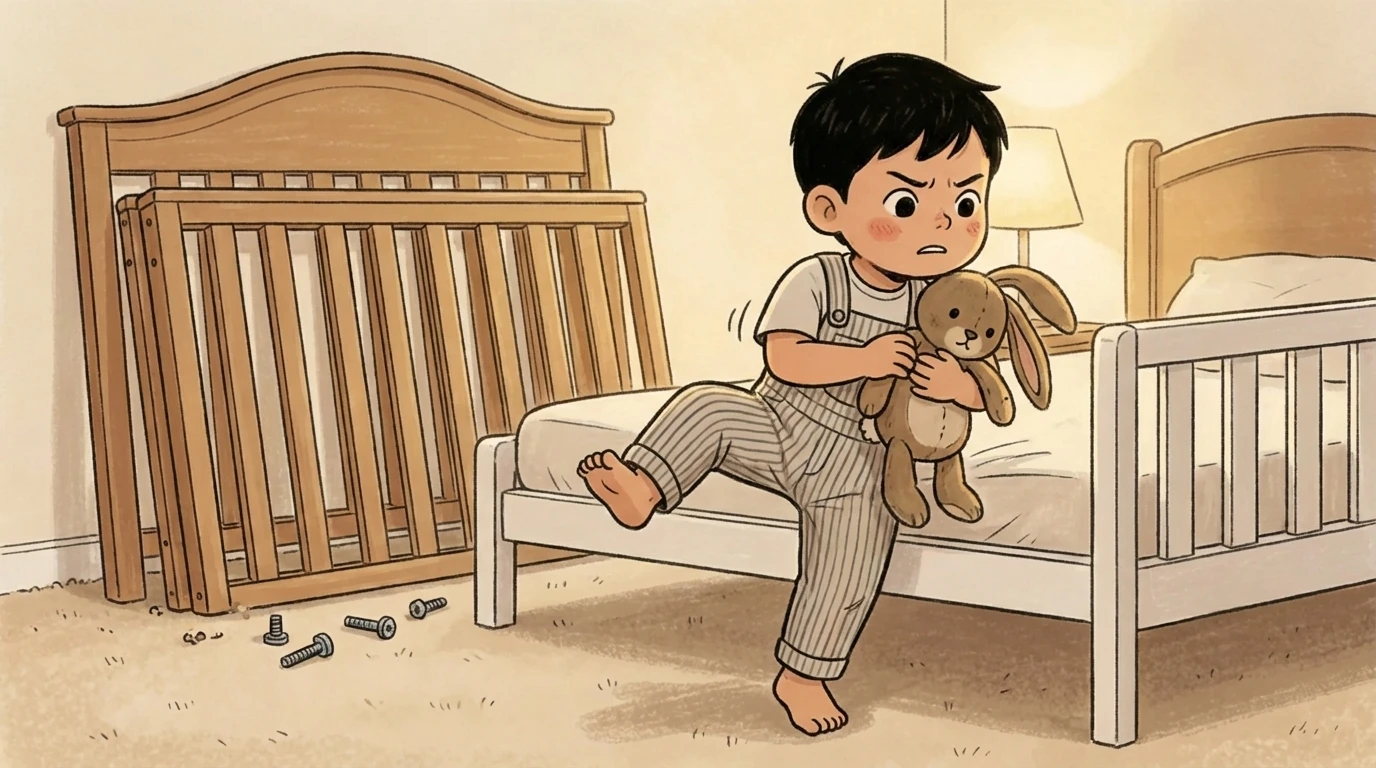
TLDR
- Timing matters more than age. Don't combine the bed switch with potty training, a new sibling's arrival, or a move. One major change at a time.
- The crib kept them in. Now they have to keep themselves in. Staying in bed is a new skill your toddler has never practiced. Expect a learning curve, not instant compliance.
- Make the bed a cave, not an open field. Guardrails, bed tents, familiar blankets from the crib, and a music player they control. Cozy beats spacious for toddlers.
- Stay close, then fade. Sit by the bed the first few nights. Move to a chair. Move the chair to the doorway. This takes one to four weeks and it works.
- Power struggles make everything worse. A toddler who feels forced to stay in bed has something to prove. A toddler who chose the big bed has something to protect.
The bed switch nobody warns you about
You dismantled the crib, assembled the toddler bed, put the sheets on, and felt like a competent adult for about forty-five minutes. Then bedtime happened.
Your kid climbed out. Climbed back in. Climbed out again. Wandered into the kitchen. Asked for water. Asked for a different water. Appeared silently at your elbow like a tiny ghost while you were watching TV.
This is the single most common outcome of moving to a toddler bed. The crib had walls. The bed doesn't. Your child just discovered freedom, and they're going to test every inch of it.
One thing worth knowing early: this is a skill problem, not a behavior problem. Your toddler does not know how to fall asleep in an open bed. The crib did that job for them.
When to make the switch (and when to wait)
There is no universal right age. Some kids climb out of the crib at 18 months and the decision gets made for you. Others stay happily caged until three.
Signs they're ready
Your toddler is consistently climbing out of the crib, they're at least two, and they can follow simple instructions like "lie down" most of the time. That's your baseline.
When to hold off
Don't stack transitions. If you're also potty training, moving to a new house, or expecting a new baby who needs the crib, separate these by at least three months. Every major change burns through your toddler's coping reserves. Two at once doesn't double the difficulty; it multiplies it.
If the baby is coming and your toddler isn't ready, borrow a second crib. Cheaper than the weeks of sleep everyone loses from a forced transition.
Out of bed for the twelfth time
The Sleep Solutions course will help you make the big bed stick
You'll handle the jack-in-the-box phase calmly and get them staying put within days, not weeks.
Make the bed feel like a den
A question that changes the whole approach: why does your kid keep getting out?
Sometimes it's freedom-testing. But sometimes the bed just feels wrong. A twin mattress is enormous to a two-year-old. They went from a snug, walled enclosure to a wide open surface. Imagine someone removed the walls of your bedroom and told you to sleep in a gymnasium.
Physical setup that works
- Guardrails on both sides. Not optional. They provide the partial containment your toddler is used to and they reduce the "I can just roll off" temptation.
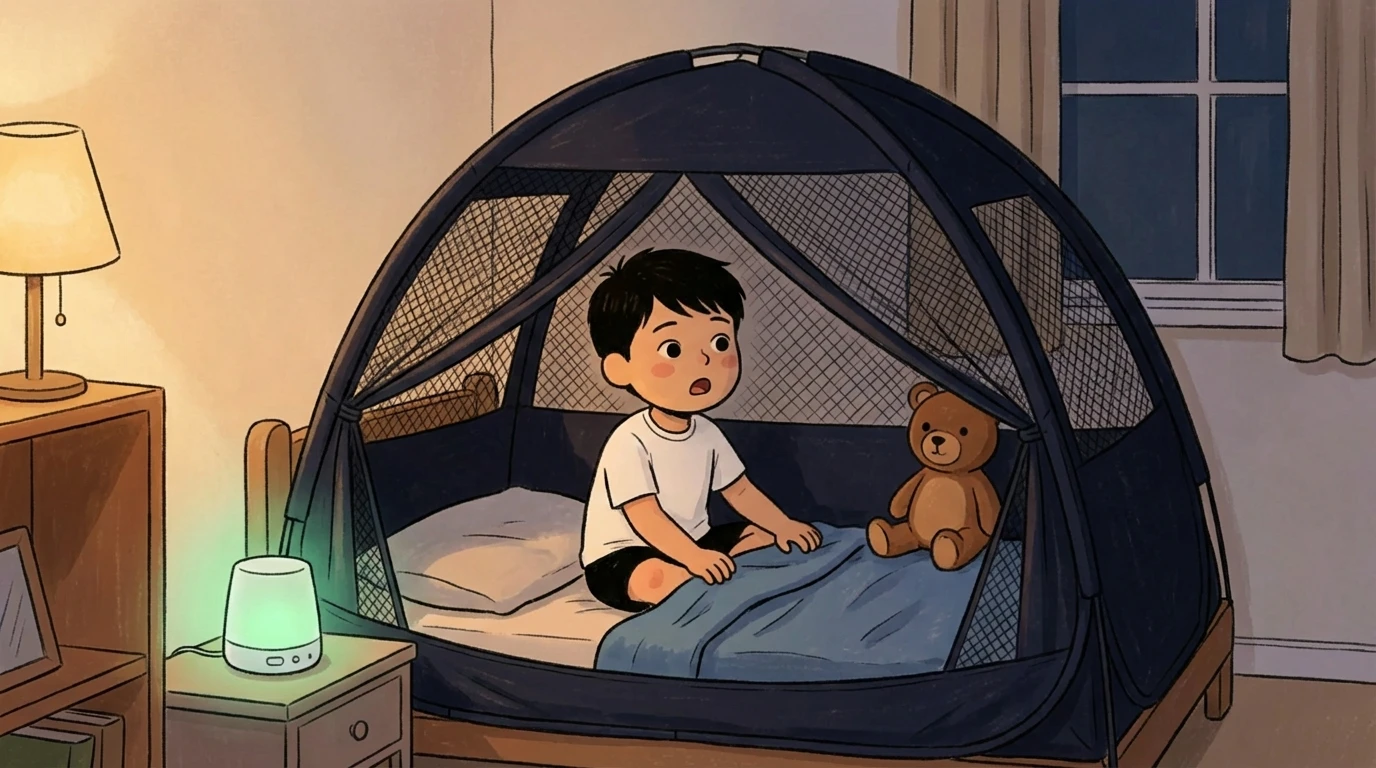
- Bed tent or canopy. Creates a cave. Toddlers love caves. If your kid recently went camping, a tent bed has bonus appeal.
- Mattress on the floor if a bed frame feels too high or exposed. Montessori-style floor beds remove the falling-out anxiety entirely.
- Every familiar item from the crib goes into the new bed. Same blanket. Same lovey. Same fitted sheet if you can manage it. Familiar smells matter more than you'd think.
Anchor the routine to the room
Move everything good into the bedroom. Storytime happens in the bed now. The music player lives there, plugged in, never moves, and your kid controls it. Stuffed animals get tucked in at bedtime (not scattered around the house). You want leaving the bed to feel like leaving the party, not escaping a prison.
The gradual presence method
This is the part that solves the getting-out-of-bed problem. Your child needs to develop the habit of falling asleep in the new bed the same way they once learned in the crib, except now there are no walls. You become the walls, temporarily, and then you fade out.
How to transition your toddler to staying in bed
- Offer a real choiceIf the crib is still available, let them pick: crib or big bed. When they choose the bed, say 'Great. And what do we do in the big bed? We stay in it and sleep.' The choice makes staying in bed their idea, not your mandate.
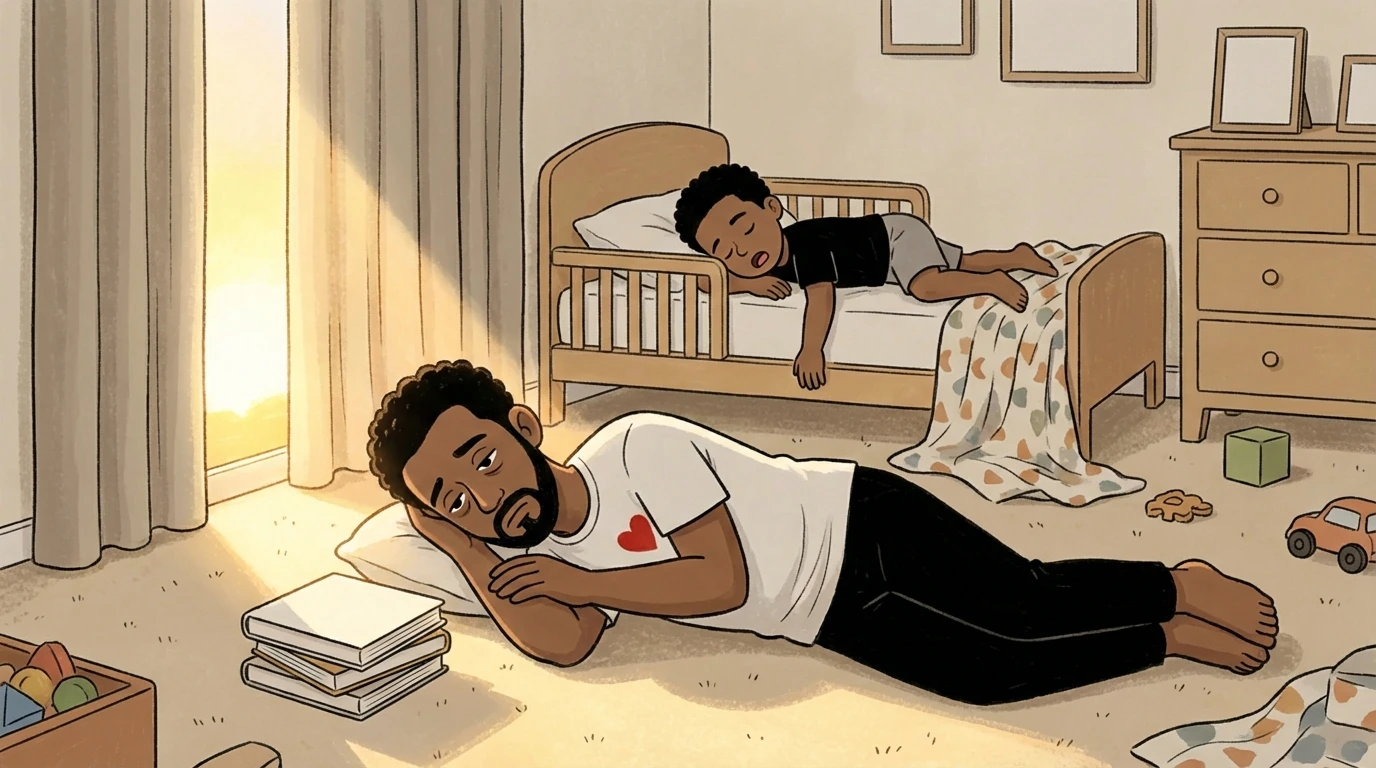
- Start close enough to touchSit on the floor next to the bed, close enough to rest a hand on their back. Your physical presence replaces the crib walls. If they try to get up, calmly say 'It's bedtime, we stay in the bed' and guide them back.
- Be boring on purposeBring a book and a small light for yourself. Do not engage in conversation, play, or negotiation. Brief responses only: 'We'll talk tomorrow. It's sleep time now.' Your calm, uninteresting presence signals that nothing fun is happening out here.
- Drop the physical contactAfter a few nights of easy falling-asleep, stop resting your hand on them. Still sit right there. If they fall asleep touching you, they'll wake at 2 AM and panic when you're gone. Wean the touch before you wean the presence.
- Move the chair toward the doorEvery two to three nights, shift farther away. Beside the bed, then middle of the room, then the doorway. Leave the chair in the doorway as a visual stand-in for you even after you've stopped sitting in it.
- Use the pretend-sleep trickWhen they insist they can't sleep, tell them the rule is they have to pretend to sleep. Ask them to show you how long they can pretend. Kids who pretend to sleep are usually out within minutes because the body's relaxation response doesn't know the difference.
Timeline: one to four weeks. Some kids graduate in days. Others take the full month. Both are fine.

When they keep getting out at 2 AM
If your toddler sneaks to the couch without waking you, don't make it a crisis. Fighting battles at 3 AM rarely produces anything except two cranky people. Note it, adjust, move on.
If they wake you to demand relocation, walk them back with minimal interaction ("It's nighttime, back to bed"). You can also try a morning reward: every morning they wake up in their own bed, something small happens. A sticker. Choosing the breakfast music.
The reward reframes the situation from "you must stay" (compliance) to "look what you earned" (achievement). That distinction matters to a toddler sorting out where their autonomy ends.
What to do when the meltdowns hit
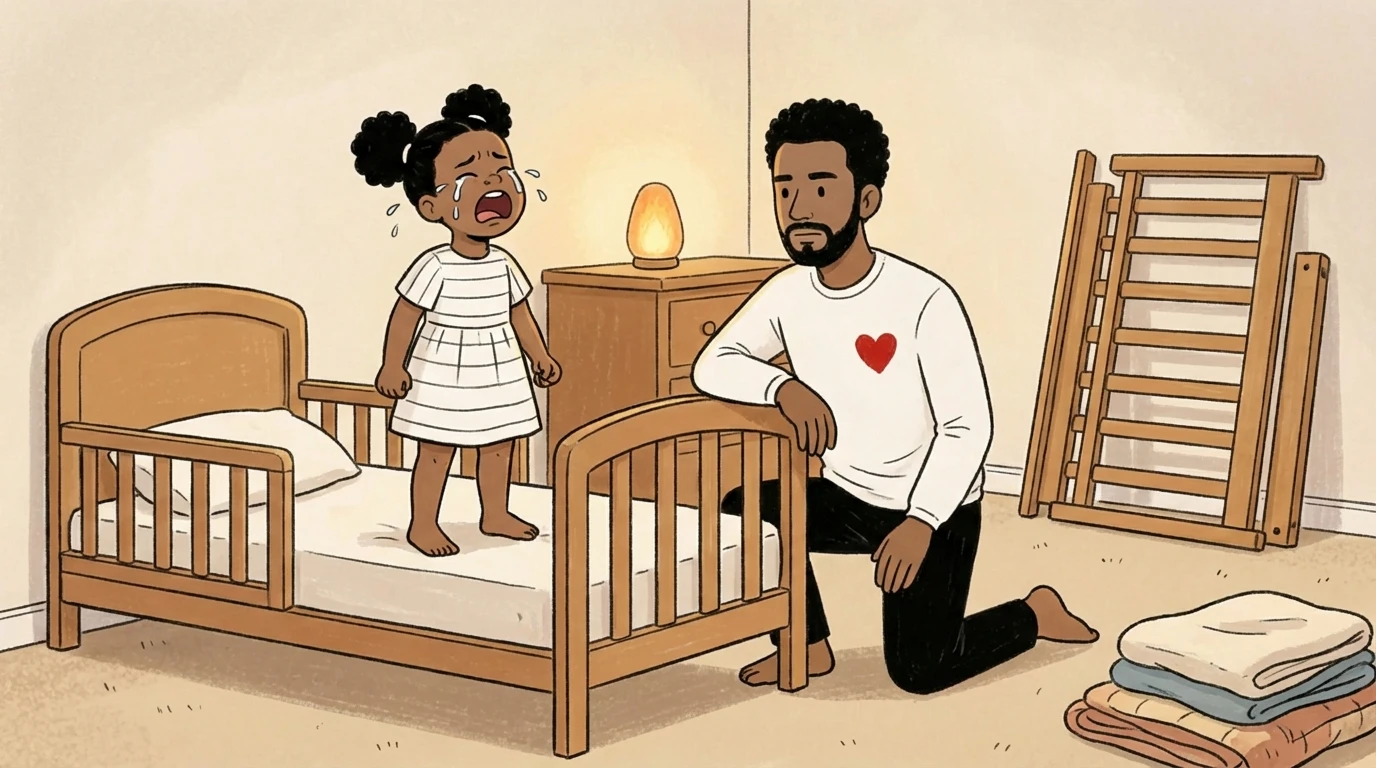
Your kid will lose it at some point during this transition. Probably multiple points. Big ugly crying, "I want my crib back," the works.
This is grief. They're mourning the crib, or the routine, or the version of bedtime where you lay next to them. Let them cry. Stay present. Don't fix it by giving in, and don't dismiss it by telling them to be a big kid. "I know this is hard. I'm right here. You're safe."
If you let your toddler express it while you stay steady, it burns through faster than if you try to logic it away or set the boundary without acknowledging the feeling behind the protest.
The sleep regression that tags along
Fair warning: many toddlers who were sleeping through the night will start waking up again after the bed switch. Treat this as part of the transition, not a separate problem. The regression resolves when the new bed feels like home. Keep the routine consistent, keep showing up, and resist the urge to abandon the whole project at week two.
The mindset shift that makes all of this easier
There is no rule about where toddlers need to sleep. The best place for a kid to sleep is wherever gets them (and you) the most sleep. If the transition is going badly, you can pause. Put the crib back for a month. Try again later.
Framing this as a gradual project instead of an urgent problem changes everything. Relaxed parents create low-stakes bedtimes. Anxious parents who treat every night as pass-fail create exactly the power struggle they're trying to avoid.
Your kid will sleep in a bed. Every adult you know made this transition. Give it time, and the bed becomes home.
FAQ
There's no fixed age. Most kids transition between 18 months and 3 years. The trigger is usually climbing out of the crib or needing the crib for a new sibling. Readiness matters more than the calendar. If your kid is happy in the crib, there's no rush.
Temporarily, yes. A toddler sleeping on the couch is not a crisis. Make the bed more appealing than the couch (all the good stuff lives in the bed, not the living room), remove the power struggle, and they'll migrate back on their own timeline.
One to four weeks for most families using the gradual presence method. Some kids take a few days, others take a full month. Regressions after illness or travel are normal and don't mean you're back to square one. Just resume where you left off.
No. Locking the door increases insecurity and can cause nightmares, separation anxiety, and more resistance. Stay nearby, calmly return them to bed each time, and keep your energy boring. The skill builds through repetition and safety, not containment.