TLDR
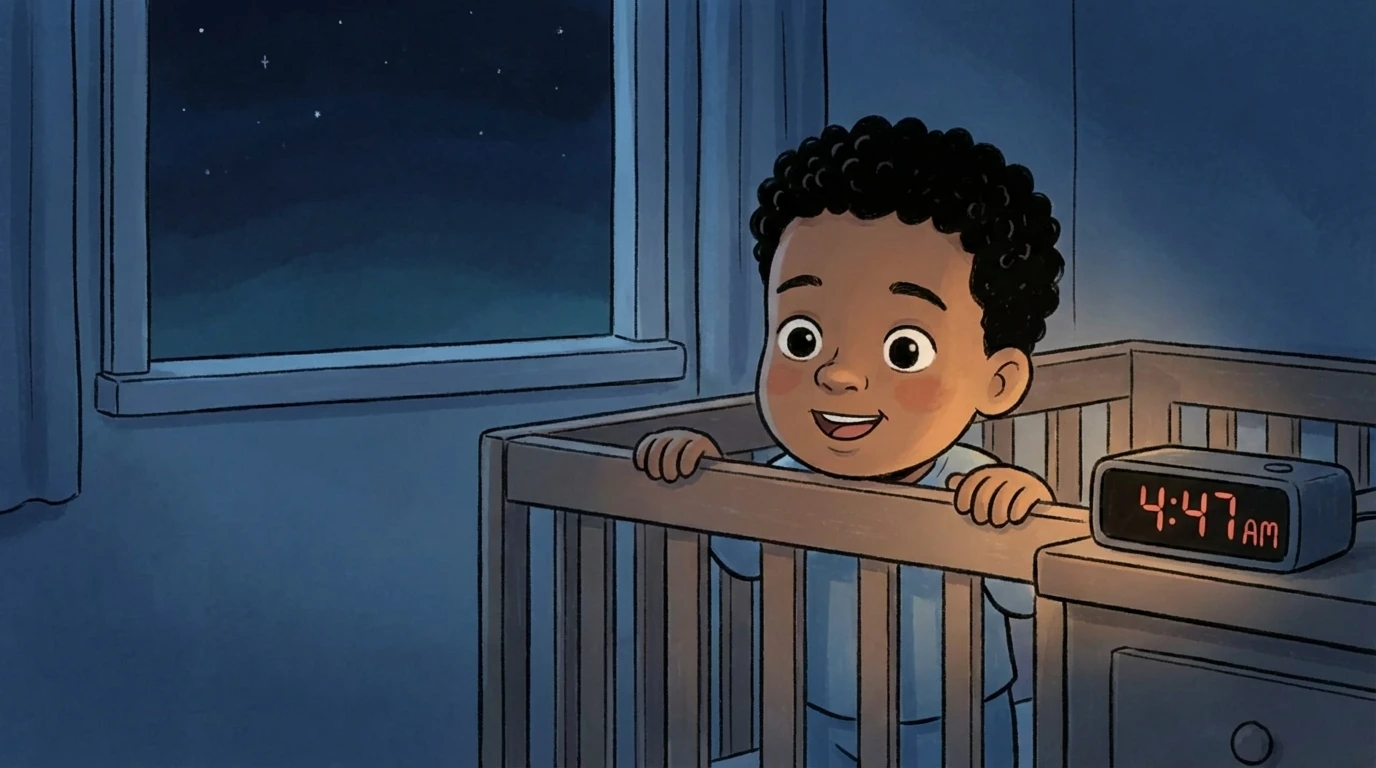
- Overtired kids wake earlier, not later. Cortisol from sleep debt keeps your child in light sleep during the early morning hours. They pop awake because their stress hormones won't let them cycle back into deep sleep.
- Earlier bedtime is the fix, not a later one. Moving bedtime thirty minutes earlier for a week often shifts the wake-up time later. It sounds backwards, but breaking the cortisol cycle requires more sleep, not less.
- Ok-to-wake clocks work when you start at the current wake time. Set the clock for when your child already wakes up. Let them succeed first. Then nudge it forward in five-minute increments over weeks.
- Light is the biggest environmental saboteur. Even a sliver of dawn light through curtains tells your child's brain that morning has arrived. Blackout curtains or heavy blankets over windows make a measurable difference.
- Don't feed breakfast before your target wake time. If your child eats at 5:30 AM, their body will start expecting food at 5:30 AM. Hold breakfast until the time you want morning to begin.
The reason your kid is up before the sun (and it's not what you think)
You'd assume a child who wakes at 5:15 AM has simply had enough sleep. Full tank, time to go. Logical. Also wrong.
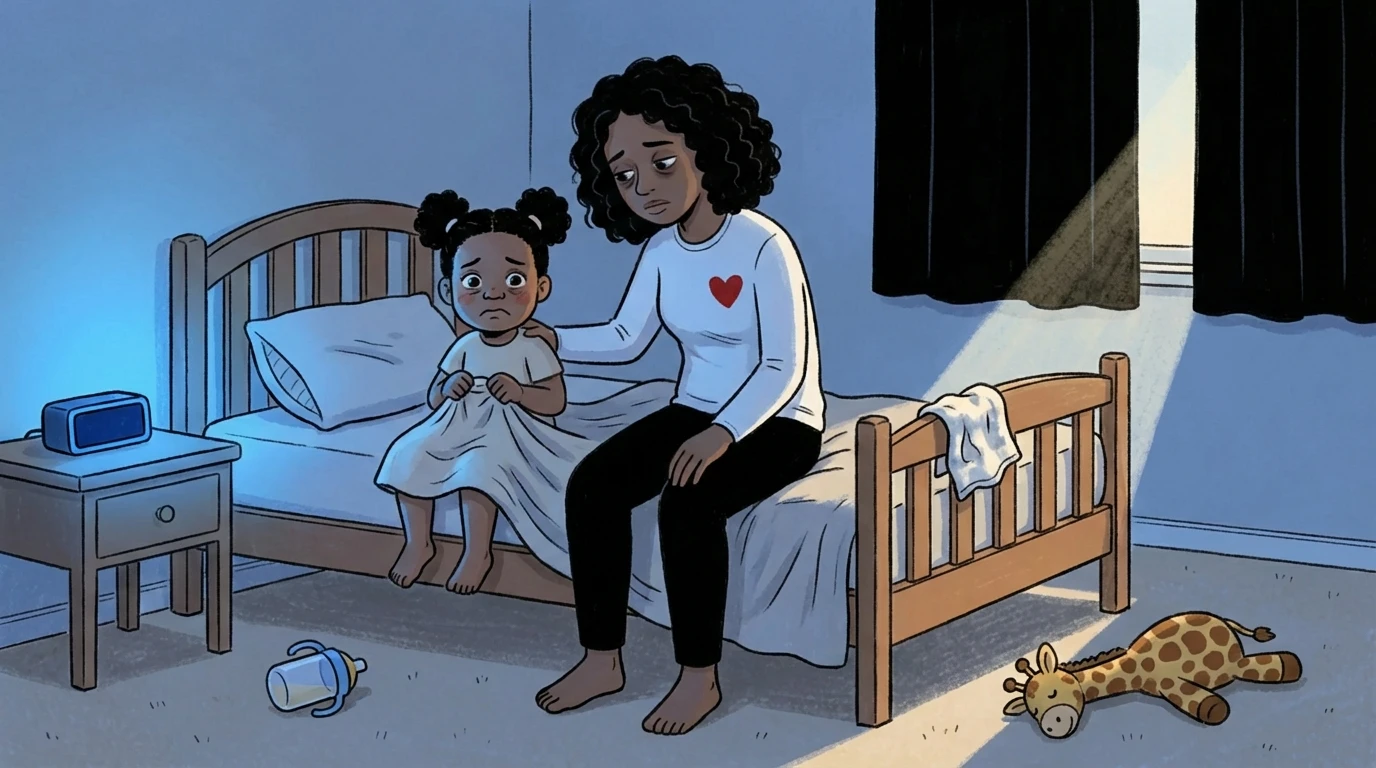
The most common cause of early waking in toddlers is being overtired. When your child misses a nap, goes to bed too late, or is running on a sleep deficit from days of short nights, their body releases cortisol, a stress hormone that makes them hyper-alert, cranky, and paradoxically harder to put to sleep.
Here's where it gets circular. That cortisol doesn't just make bedtime miserable. It persists through the night. During normal sleep cycles, everyone (adults included) drifts into light sleep phases every 90 minutes or so. A well-rested child rolls right through those transitions. An overtired child, loaded with cortisol, pops fully awake during the early morning ones because their stress hormones won't allow the transition back into deep sleep.
So the child who didn't nap yesterday, fought bedtime until 8:30 PM, and then woke at 5:15 AM? That's ten hours and forty-five minutes. Sounds decent. But a toddler who needs twelve hours is running a deficit, and the deficit is what's waking them up.
Wide awake before five
The Sleep Solutions course will show you how to shift the wake time
You'll push morning wake-up later without battles, using light cues and schedule tweaks that hold.
Why "just put them to bed later" backfires
Every parent tries this. The math seems obvious: if they wake at 5:30 regardless, pushing bedtime from 7 to 8 PM means at least you get your evening back.
The problem is that the later bedtime extends the overtired state. More cortisol builds up during that extra hour awake. The child sleeps worse, not better, and the wake-up time doesn't budge or even gets earlier.
Move bedtime earlier, not later. If your child normally goes down at 7:30, try 7:00. If they've been going to bed at 8:00, pull it back to 7:00 or even 6:45 for a few days. You're trying to break the cortisol cycle by flooding the system with sleep.
How long until the earlier bedtime works
Give it three to five days. The cortisol cycle needs a few nights of adequate sleep to reset. If you try an earlier bedtime for one night and declare it didn't work, you haven't given the biology enough time. The first night, your child may still wake early. By night three or four, most parents see the wake-up time start sliding later.
If your child's bedtime routine needs an overhaul to accommodate the earlier time, simplify it. Bath, books, bed. Twenty minutes, not forty-five.
The environment check you're probably skipping
Before you change anything behavioral, walk into your child's room at 5 AM and look around.
Light is the single biggest environmental trigger for early waking. Even a thin line of dawn light around the curtain edge tells your child's brain that morning has arrived. Their melatonin production drops, and they're awake.
Blackout curtains (the real kind)
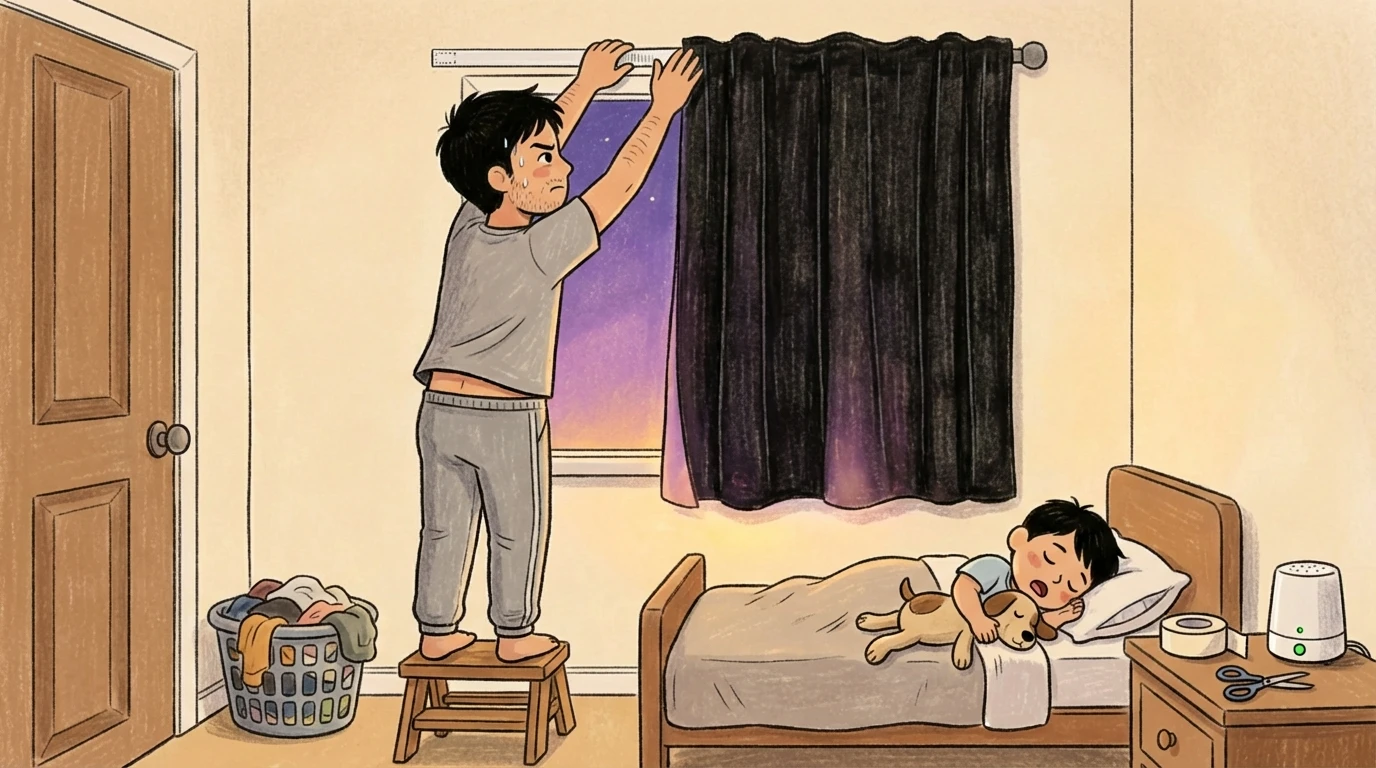
The curtains you bought that say "blackout" on the package are probably not doing the job. Hold your phone flashlight behind them. If you can see the glow, your child can too. What works: actual blackout fabric, plus Velcro strips or painter's tape around the edges to seal the gaps. Some parents tape cardboard over the window for a week just to test whether light is the issue.
Sound
Birds start singing before dawn. Garbage trucks run early routes. A white noise machine running all night masks these sounds. If you've been turning it off at midnight, try leaving it on until morning.
Hunger as an alarm clock
If your child eats breakfast at 5:30 AM every morning, their body has learned to expect food at 5:30 AM. Hunger hormones will start rising before that time, pulling them out of sleep.
Don't offer breakfast until your target wake time. If the goal is 6:30, that's when food appears, even if your child has been awake since 5:45. Bring them into your bed, read quietly, do whatever kills time. But the meal waits. Within a week, the hunger clock starts adjusting.
The ok-to-wake clock method (done right)
Ok-to-wake clocks are everywhere, from bunny-shaped ones with eyes that open to color-changing nightlights to ones that play music. They all do the same thing: give your child a visual or audio cue that morning has started.
Most parents set them wrong. They buy the clock, set it for 7:00 AM, and hand it to a child who's been waking at 5:30. The child wakes at 5:30, sees the clock is still "sleeping," and screams. Within three days, the clock is in a drawer.
How to use an ok-to-wake clock to shift morning wake time
- Set the clock to the current wake timeIf your child wakes at 5:30, set the light or music for 5:30. The first goal is teaching the concept: when the clock changes, morning starts. Success on day one builds trust in the system.
- Respond immediately when the clock activatesWalk in right when the light turns on or the music plays. Your child needs to connect the clock signal with you appearing. This is the anchor that makes the whole method work.
- Handle pre-clock waking brieflyIf your child wakes before the clock, go in, hug them, and say: 'It's still nighttime. When the light turns green, I'll come get you.' Keep it short. Leave.
- Nudge the time forward by five minutesOnce your child consistently sleeps until the clock activates for three to four days, push it forward five minutes. Five, not fifteen. Small increments prevent frustration and keep the system trustworthy.
- Hold each new time for several daysGive each five-minute shift three to five days before moving again. Rushing this creates a clock your child ignores because it stopped predicting when you appear. Patience here saves you weeks of backsliding.
From 5:30 to 6:30 takes roughly six to eight weeks at this pace. That feels slow. It also works, because your child never hits a wall where the clock feels arbitrary or punishing.
The nap question nobody wants to hear
If your toddler is possibly ready to drop the nap but hasn't fully transitioned, you're in a tricky spot. A nap that runs too late in the afternoon pushes bedtime later, which feeds the cortisol cycle, which causes early waking.
But cutting the nap entirely when your child still needs it creates the same overtired pattern from the other direction.
The sweet spot
Keep the nap, but cap it. Wake your child by 2:30 PM (or 3:00 PM at the latest) to protect bedtime. A forty-five-minute nap that ends at 2:30 is better than a two-hour nap that ends at 4:00, because the short nap still allows sleep pressure to build for a 7:00 PM bedtime.
If your child won't nap in the crib on weekends but falls asleep in the car, schedule an errand around nap time. Getting the nap matters more than where it happens while you're breaking the early-waking cycle.

When early waking is about more than sleep debt
Sometimes the wake-up time isn't about cortisol at all. If a major change happened recently (a parent started a new job, a move, starting daycare), your child may be waking because they're anxious about the separation.
A child who misses you will wake early looking for you. The biological pull toward the attachment figure is strongest when the child feels uncertain about where you are. More connection during waking hours (focused, phone-down, child-led play) helps fill the tank so the overnight separation feels less threatening.
And if the accumulated sleep loss is wearing you down to nothing, don't try to be a hero. Tag-team with a partner. Let the early riser come into your bed and doze together. Bring them to the couch with a pile of books. You're allowed to survive this phase while you fix it.
The short-term move that buys you sanity
Early waking is the hardest sleep problem to solve because your child is somewhat rested by 5 AM. They're not going back down easily.
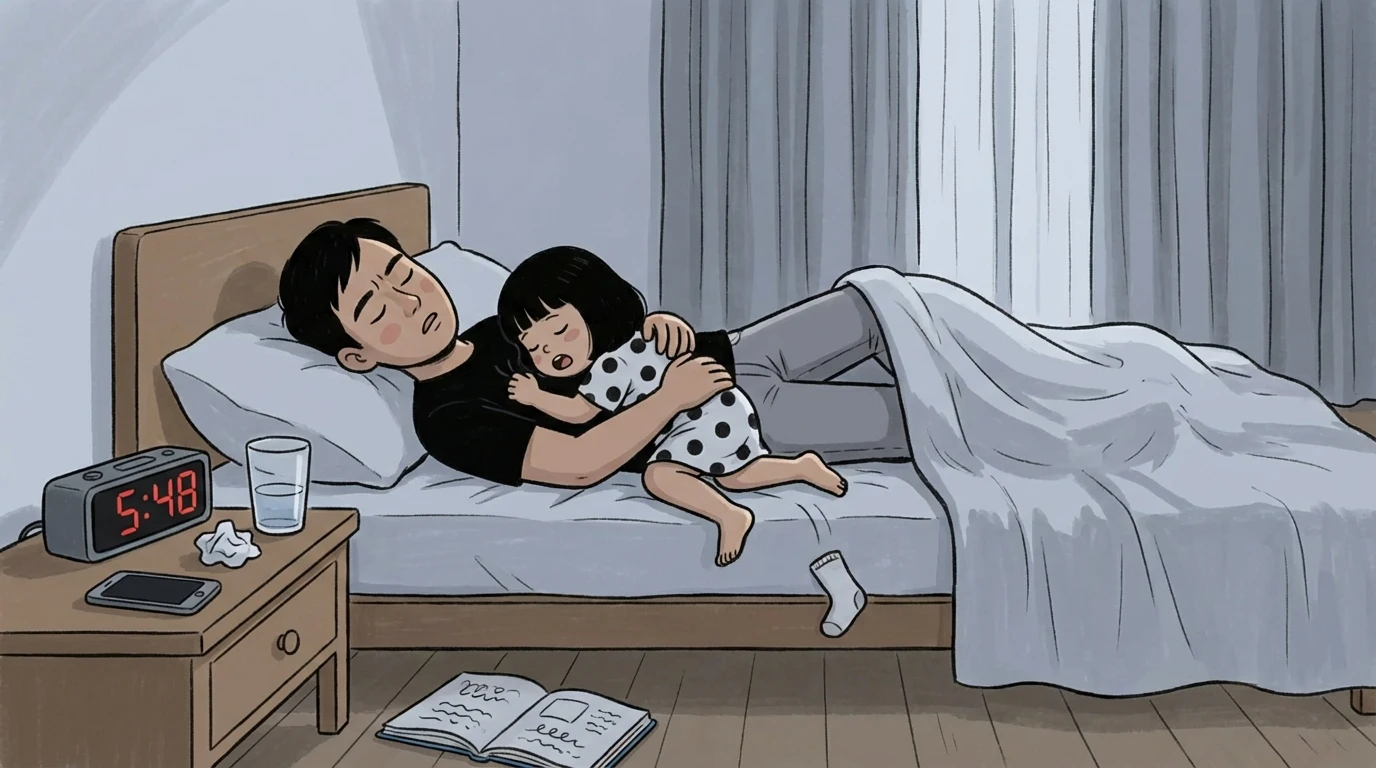
Co-sleeping in the early morning hours is a legitimate strategy. Bring your toddler into your bed at 5:30, close your eyes, and see if you both get another thirty to sixty minutes. A child who is genuinely sleep-deprived (and most early risers are) will often drift back off next to a warm body. This doesn't undo the work you're doing on bedtime or the ok-to-wake clock. It just means everyone gets slightly more sleep while the longer-term fixes take hold.
The morning meltdowns that come from an overtired child who's been up since 5:00 are worse than the co-sleeping you're trying to avoid. Pick the problem that costs you less.
This ends (but it takes weeks, not days)
The cortisol cycle breaks within a few days of adequate sleep. The behavioral habits (the ok-to-wake clock, the breakfast timing, the nap schedule) take weeks to solidify. Expect the full process to run six to eight weeks from first adjustment to stable, later wake-ups.
You'll have setbacks. Illness resets everything. Travel destroys routines. A bad nap day at daycare undoes two good nights. When it happens, go back to the earlier bedtime and restart the clock nudges from wherever you are.
Your child isn't choosing to wake you up at 5 AM. Their biology is doing it for them. Fix the biology first, teach the behavior second, and wait for both to catch up to each other.
FAQ
No. A later bedtime almost always makes early waking worse, not better. Overtired children produce more cortisol, which keeps them in lighter sleep phases during the early morning hours. Move bedtime thirty minutes earlier for a week and watch what happens to the wake-up time.
Some do. But if the pattern has lasted more than a few weeks and your child is clearly tired during the day, the cortisol cycle is self-reinforcing and won't break without intervention. Adjusting bedtime and naps is what resets the cycle, not waiting.
They work when used correctly. The key is setting the clock to the current wake time first so your child experiences success immediately. Then nudge it forward in five-minute increments over weeks. If you set it for 7 AM when your child wakes at 5:30, you've set them up to fail every morning.
Melatonin can help break a stubborn cortisol cycle for a night or two, but long-term use in young children lacks sufficient research. Talk to your pediatrician before trying it. The goal is to fix the underlying sleep debt, not mask it with supplements.