TLDR
- Sleep associations run the whole show. Whatever conditions exist when your child falls asleep become the conditions they need to fall back asleep at 2 AM. If you're lying next to them at bedtime, they'll come looking for you every time they hit a light sleep phase.
- Night waking is a skill problem, not a discipline problem. Yelling, consequences, and sticker charts don't work because your child isn't choosing to wake up. They haven't learned how to put themselves back to sleep without you.
- Fix bedtime first, and nights follow. When you teach your child to fall asleep independently at bedtime, they use that same skill during normal nighttime wake-ups. The evening skill transfers to 2 AM.
- Gradual beats cold turkey every time. Moving from full-contact sleeping to solo sleeping takes weeks, sometimes months. Each small step builds confidence. Rushing it creates regression.
- Your child is seeking safety, not testing limits. When they show up at your bedside at midnight, their attachment system is doing exactly what evolution designed it to do. Work with that biology instead of against it.
Why your child keeps waking up (and why it has nothing to do with discipline)
Your child cycles between deep and light sleep roughly every 90 minutes. During those light phases, their brain does a quick scan: Am I safe? Is everything the same as when I fell asleep?
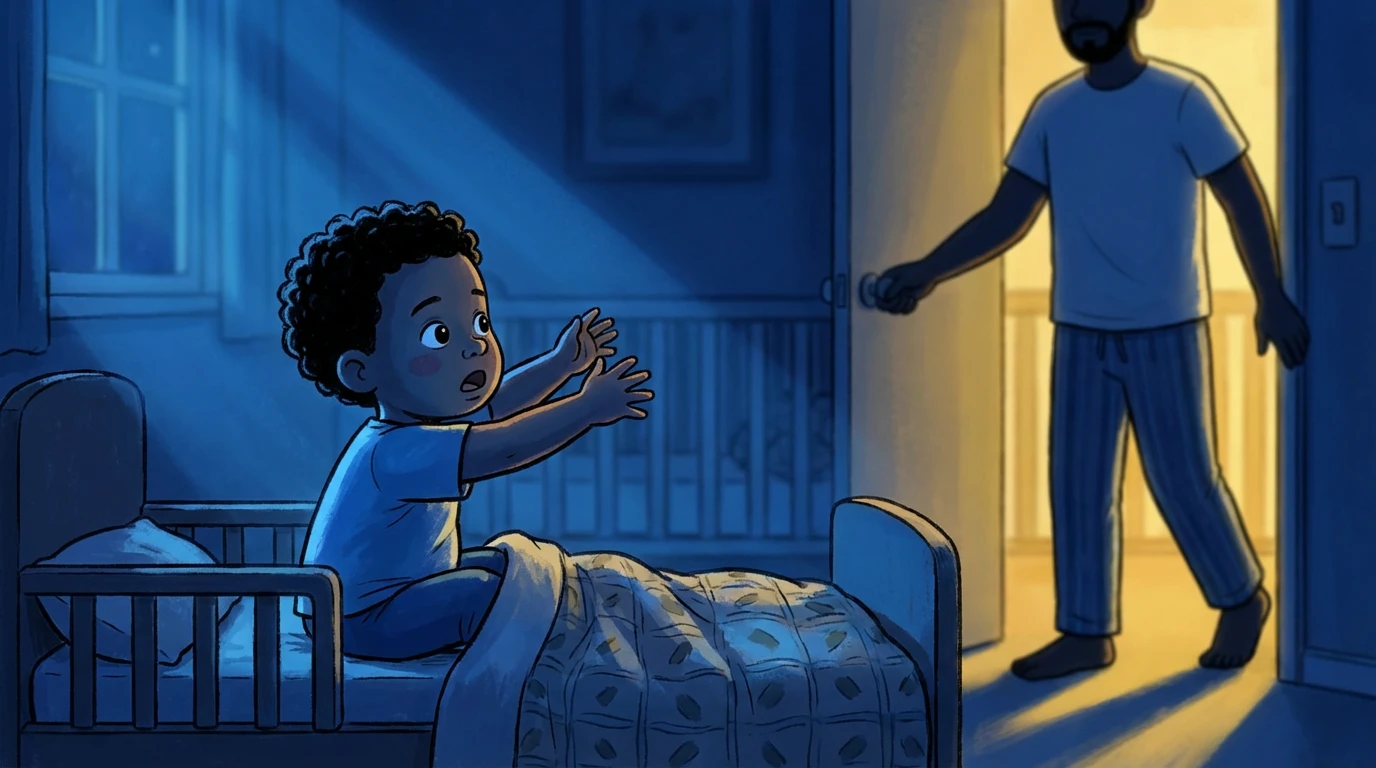
If you were lying next to them when they drifted off, and now you're gone, that scan comes back wrong. Their alarm system fires. They cry, they call out, they pad down the hallway to find you.
This is the single most common cause of chronic night waking in kids over 12 months. The conditions at sleep onset don't match the conditions at 2 AM. Your child isn't being difficult. Their brain is doing exactly what brains do.
Here's the part that might sting: you are the sleep association. If you lie with them until they're out, rock them to sleep, or nurse them down, you've become a required ingredient. Remove the ingredient and the recipe falls apart, every single sleep cycle.
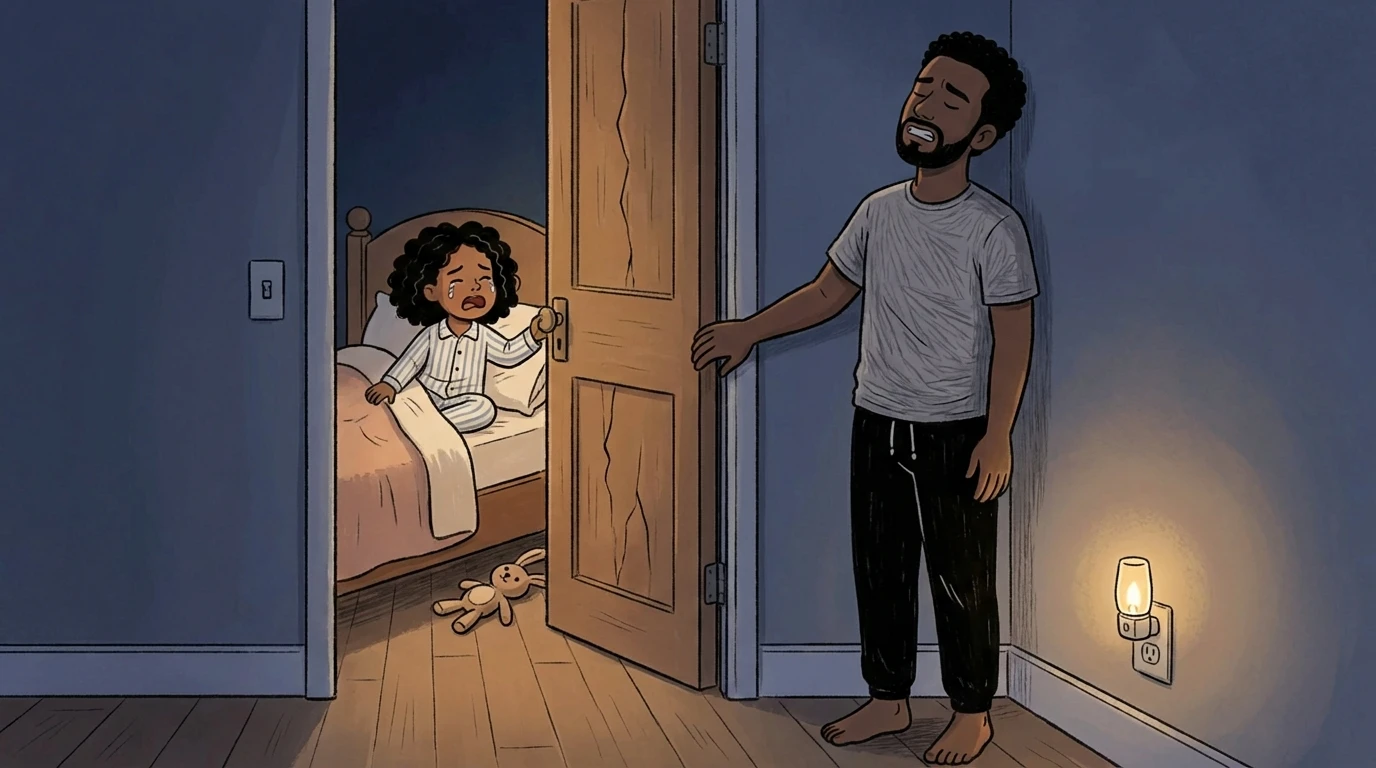
Footsteps at 3 AM again
The Sleep Solutions course will help you end the nightly visits
You'll get full nights back by changing how you respond in those first groggy minutes.
The sleep association trap (and how to spot it)
A sleep association is anything your child needs present to fall asleep. Some associations are fine. A dark room, white noise, a favorite stuffed animal. These things stay constant all night. Your child checks for them during light sleep, finds them, and rolls back over.
The problematic associations are the ones that disappear. You. The bottle. Being rocked. The TV playing in the background. If it won't be there at 2 AM, it shouldn't be there at 8 PM.
How to tell if associations are the issue
Ask yourself one question: could my child fall asleep right now without me doing anything? If the answer is no, you've found your problem.
The four-year-old who needs a complete re-do of the bedtime routine (back rub, cold water, sheet fixing, story) at midnight? She's recreating the exact conditions from 8 PM because those are the only conditions her brain accepts for sleep. The one-year-old who nurses every hour? Same thing. Nursing became the sleep switch, and now gentle approaches to reducing night feeds are the way forward, not toughing it out.
The nursing-to-sleep version
For babies and toddlers who nurse to sleep, the association is especially stubborn because it combines comfort, warmth, and calories into one package. The approach: nurse your baby, but before they're fully asleep, gently break the latch. They'll protest. Re-latch. Then pop again before sleep. This can take dozens of attempts in one session. Over days, your baby starts falling asleep without the latch as the final step.
How to teach your child to fall asleep without you
This works for toddlers through school-age kids. Gradually reduce your involvement at bedtime so your child develops the ability to cross the wake-to-sleep bridge alone.
How to wean your child off needing you at bedtime
- Have the conversation during the dayTell your child you're going to help them learn to fall asleep on their own. Frame it as a skill they're ready for. Promise you won't disappear. Kids who know what's coming handle the change better than kids who get surprised.
- Hold without lying downSit in their bed or a chair and hold them while they fall asleep. Do not lie down, because you'll fall asleep too and nothing changes. Offer a large stuffed animal or pillow they can wrap around as a body substitute.
- Touch without holdingMove to just touching, like a hand on their back or forehead. They'll resist. Stay boring and consistent. Within a week most kids adjust to falling asleep with minimal contact.
- Sit nearby without touchingPull your chair back. Stay close enough they can see you. Bring a book and a small light. You're a steady presence, not an active participant. Make a big deal of their progress during the day.
- Move toward the door over weeksShift your chair farther away each night. Bedside, then mid-room, then doorway, then just outside. Keep the door open. If they call out, respond with a calm 'I'm right here' without going back.
- Start brief departuresTell them you need to check on something and will be back in five minutes. Come back in five minutes. Reliability is everything. Stretch the interval as trust builds. Leave your chair visible in the doorway.
The whole process takes weeks, sometimes a couple of months for sensitive kids. If your child regresses after a hard day or a sleep disruption triggered by a life change, go back one step. The direction matters more than the speed.
What to do at 2 AM while you're teaching this
While you're working on bedtime independence, nights will still be rough. Go to your child quickly when they wake. Don't let crying escalate, because a fully dysregulated child takes much longer to resettle. Hug them, tuck them back in, keep words minimal: "It's sleepy time. I'm here. Back to sleep."
Do not repeat the bedtime routine. No stories. No back rubs. No cold water rituals. Every piece of the routine you reproduce at 2 AM reinforces the association you're trying to break. A sip from a water cup by the bed is fine. A fifteen-minute re-creation of bedtime is not.

Your child will protest. They genuinely don't know how to fall asleep without the old conditions. Consistency is what creates the new learning. If you give in on night three and redo the routine, you've taught them that enough crying gets the old system back online.
Some parents sleep on the floor in their child's room for a few nights during this transition. That's fine. You're still moving in the right direction.
The laughter trick that helps more than you'd expect
Kids carry anxiety into nighttime, and that anxiety makes everything harder.
Get your child laughing hard for ten to fifteen minutes every day. Pillow fights, tickle wars, chase games, whatever gets genuine belly laughs going. Do this before the bedtime routine starts, not during it. Laughter works as an emotional release valve. A child who has burned off the day's tension arrives at bedtime lighter, and the wake-ups often decrease before you've changed the sleep associations.
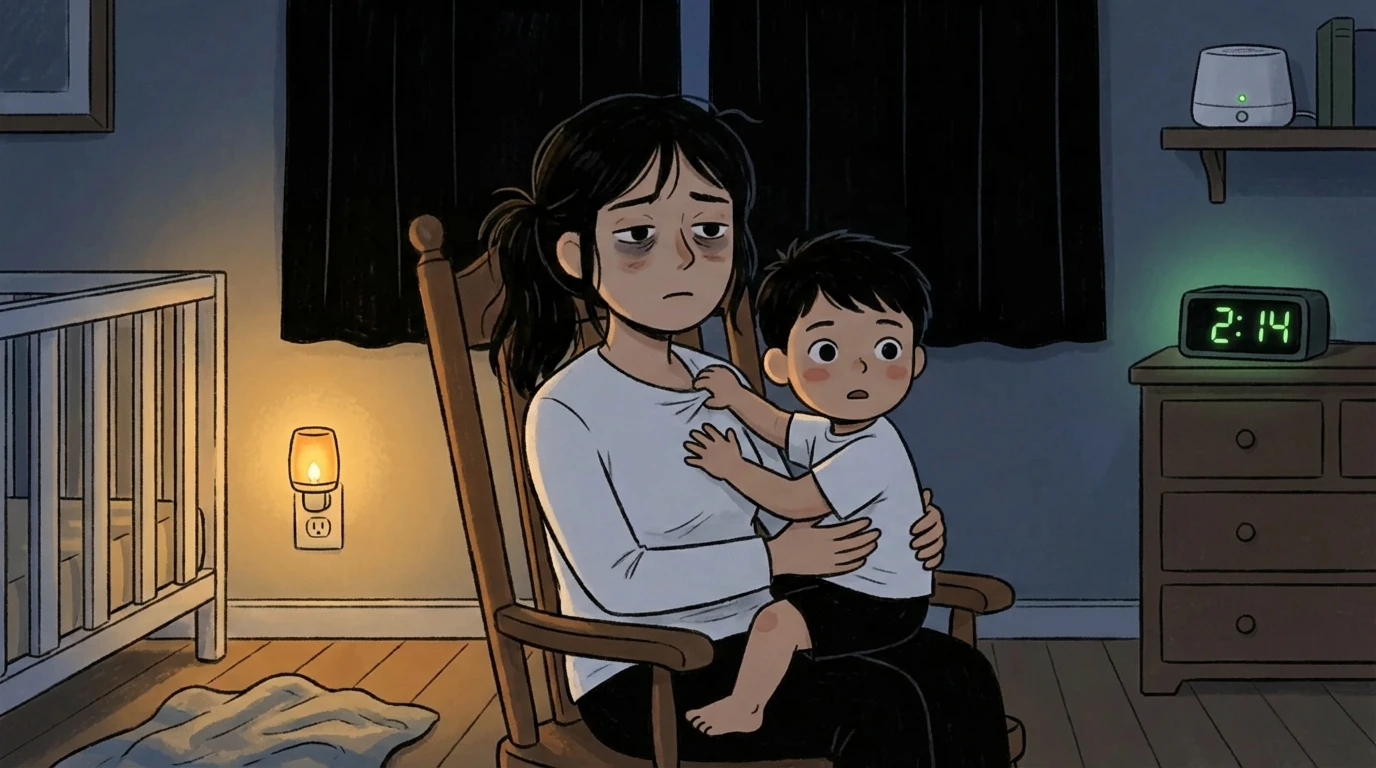
If you're wondering what kind of parent you become at 2 AM after weeks of broken sleep, you're not alone. Every parent in this situation is running on fumes.
When to worry and when to wait
Most night waking resolves once you address the sleep onset associations and give the process enough time. If you've been consistent for three weeks and nothing has changed, look at the environment first. A sound machine and blackout curtains eliminate the most common physical triggers.
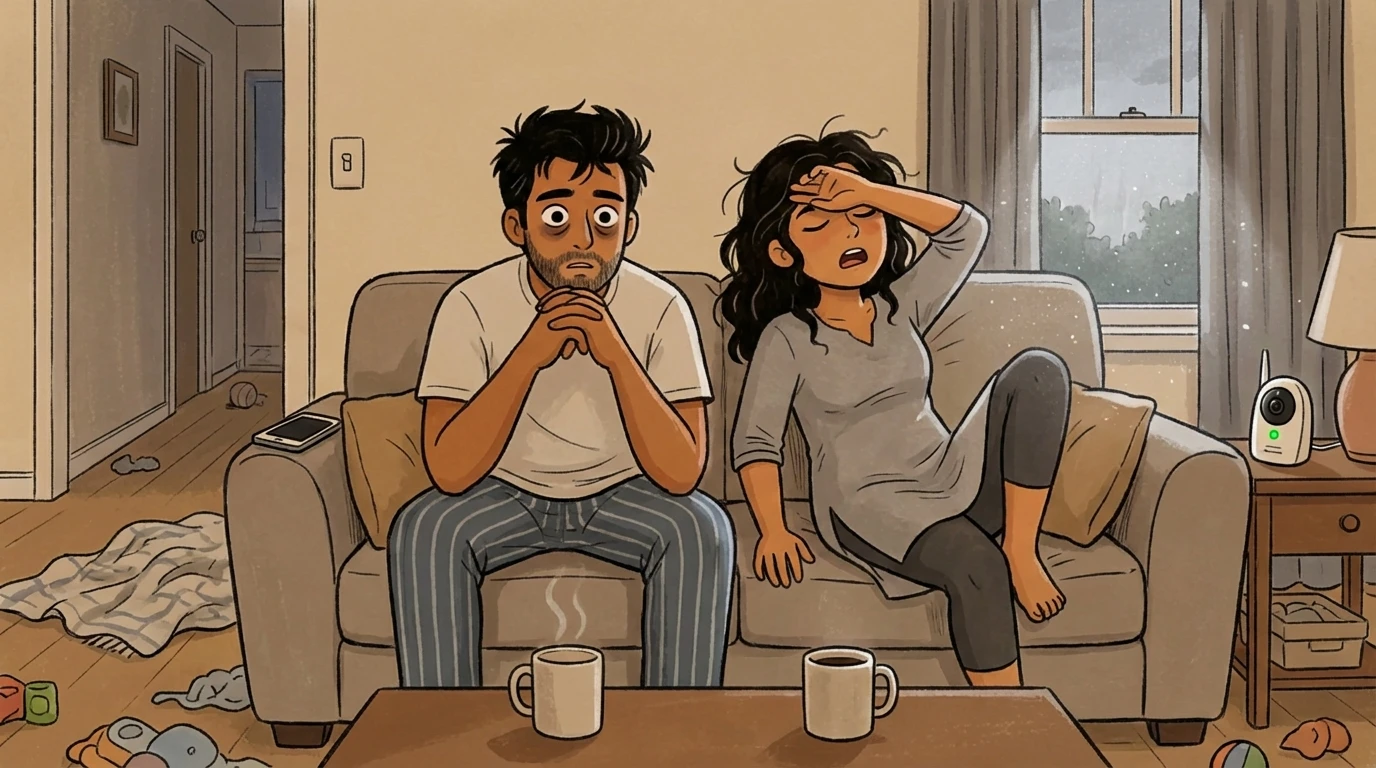
If chronic sleep deprivation is affecting your ability to function, get help. Tag-team with a partner, call in a grandparent for a few nights, do whatever it takes to keep yourself above water while the process runs its course.
Seek professional support if your child's night waking includes breathing difficulties, excessive sweating, or persists despite weeks of consistent intervention.
The long view
This ends. Every child learns to sleep. The sensitive ones take longer. The ones going through transitions take longer. But the trajectory is always toward independence, as long as you keep teaching the skill and stop recreating the dependency.
Your kid at 2 AM is having a hard time. The best thing you can do is help them build the skills to handle it, one boring, consistent, unglamorous night at a time.
FAQ
Not necessarily. Many sleep experts say that once a child can fall asleep independently at bedtime, allowing them into your bed during a nighttime waking won't sabotage that skill. The bedtime independence is where the real learning happens. If co-sleeping at 2 AM keeps everyone sleeping, it's a reasonable compromise while the process continues.
Consistent timing usually means a sleep cycle transition. About three to four hours after falling asleep, your child hits a light sleep phase and checks for the conditions from bedtime. If those conditions are gone, they wake fully. Fix the sleep onset associations and the clock-like waking pattern typically resolves.
Expect four to eight weeks for the full transition from dependent to independent sleep. Some kids move faster, some slower. Backsliding after a bad day or illness is normal and doesn't erase progress. Go back one step and resume. The trajectory matters more than any single night.
Yes. In this approach, a parent remains present and offers comfort throughout. Your child may cry because they want the old conditions back, but they are never left alone wondering why nobody is coming. The distress is about the change, not about abandonment.