TLDR
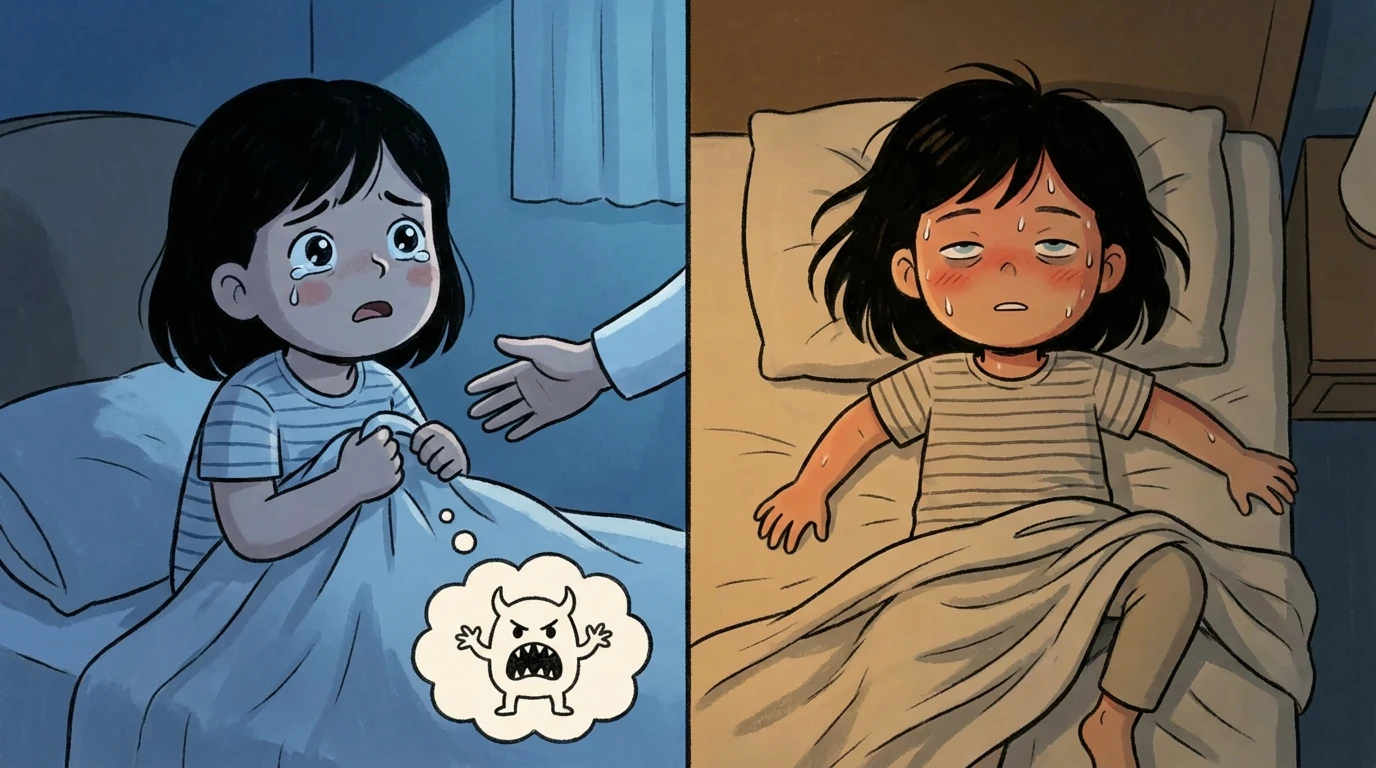
- They look similar but the brain is doing different things. Nightmares occur during REM sleep. Night terrors occur during Stage 4 deep sleep. Your child is awake after one, asleep during the other.
- If they respond to your comfort, it was a nightmare. A child having a night terror won't register your presence right away. They may look through you, thrash, scream, and seem unreachable. That's how you tell.
- Trying to wake a child from a night terror makes it worse. Forced waking causes extreme disorientation. Stay close, keep them safe, and let the episode run its course.
- Nightmares usually mean something specific is bothering them. Recurring bad dreams point to an unresolved fear or stressor. The dream content often gives you clues about what's wrong.
- Night terrors are a nervous system glitch, not an emotional crisis. Overtiredness, stress, illness, and overheating are common triggers. Most kids outgrow them as their brains mature.
The 2 AM scream that changes everything
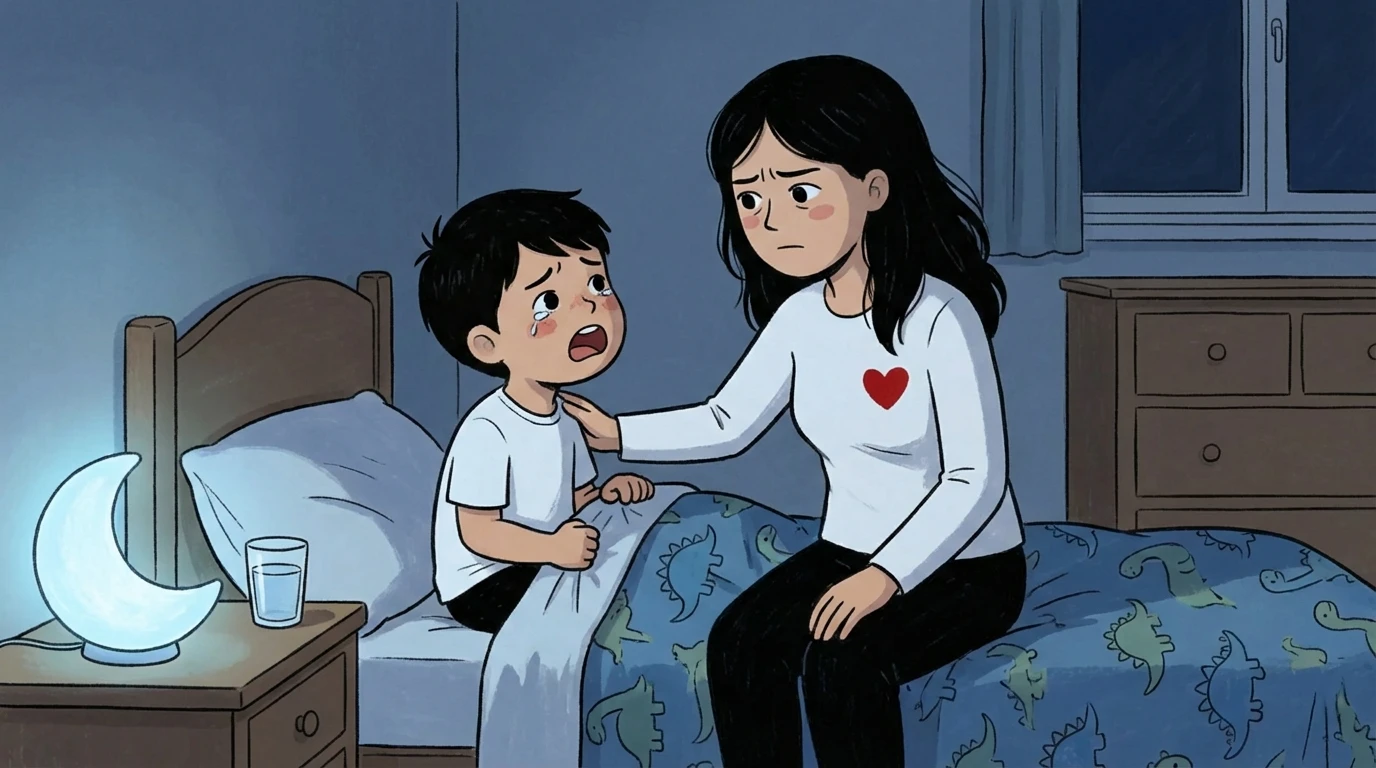
You're dead asleep. Then your child screams like something is physically wrong with them. You sprint to their room, heart slamming, and find them bolt upright in bed, eyes wide open, howling.
So far, this could be either thing. A nightmare or a night terror. And the difference between them changes what you should do next.
Here's the quick test. Talk to your child. Say their name. If they look at you, recognize you, and start telling you (or sobbing about) what scared them, that's a nightmare. They're awake. They had a bad dream. They need comfort.
If they stare through you, keep screaming, push you away when you try to hold them, and seem completely unreachable despite having their eyes open, that's a night terror. They are, by every measure their brain waves would show, still asleep.
The distinction matters because the correct response to one is the exact wrong response to the other.
Eyes open but unreachable
The Sleep Solutions course will teach you the right response for each
You'll know instantly whether to comfort or wait, and handle both without making the episode worse.
What's happening in the brain
Nightmares: REM sleep gone dark
Nightmares happen during REM sleep, the stage where dreams occur. Your child's brain is processing the day's experiences, emotions, and anything that got stuck. When the processing hits something scary or unresolved, the dream goes sideways.
Up to 10% of seven and eight-year-olds have nightmares once a week. That's a lot of kids having regular bad dreams, and it tracks with what we know about how the developing brain handles emotional overload. The prefrontal cortex (the part that would say "this is just a dream, relax") is years away from being able to override the fear response.
Kids wake from nightmares and remember them. Sometimes vividly. Sometimes they can tell you exactly what happened, who chased them, what the monster looked like. That recall is your advantage, because you can work with it.
Night terrors: a system glitch in deep sleep
Night terrors happen during Stage 4 deep sleep, or during the transition from deep sleep to REM. The child's body activates (screaming, thrashing, sitting up, eyes open) but their brain is still in deep sleep mode. Brain wave readings during night terrors show the person is asleep, even though they look fully awake.
Up to 15% of kids experience at least one night terror. Scientists believe they're caused by over-arousal of the central nervous system, and there's a genetic component. If you or your partner had them, your kid is more likely to get them.
The child almost never remembers the episode afterward. You will remember it vividly. They will wake up the next morning confused about why you look so exhausted.
How to handle nightmares
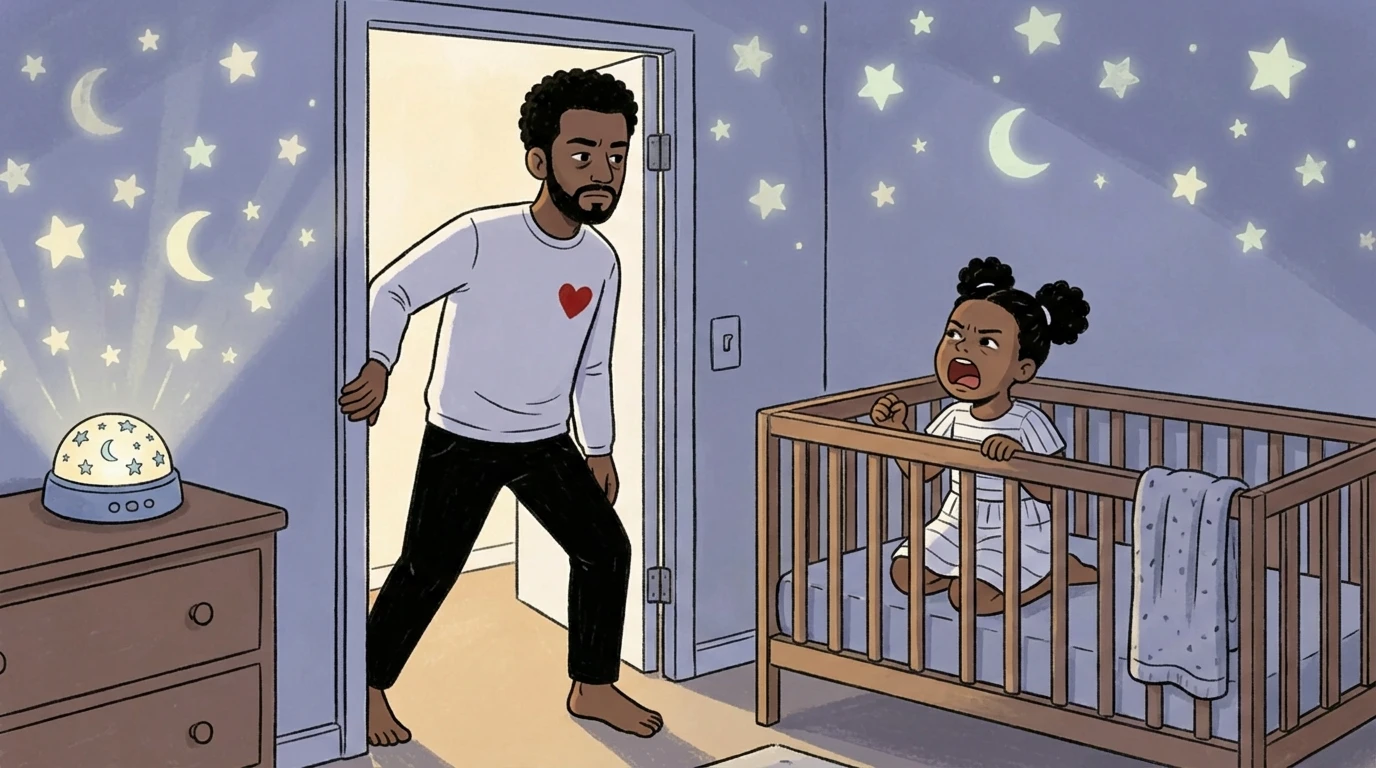
When your child wakes from a nightmare, they need three things: your presence, validation, and (eventually) a sense of control over their dream life.
In the moment
Hold them. Tell them you're there and they're safe. Don't rush to explain the dream away or tell them it wasn't real. To their nervous system, it was extremely real about thirty seconds ago. Let the fear come down before you start problem-solving.
Once they're calmer, find out what happened in the dream. Sometimes the content gives you direct clues. A dream about a parent disappearing might mean they're anxious about bedtime separation. A dream about being chased might connect to a real situation where they feel threatened or overwhelmed.
When the same nightmare keeps coming back
Recurring nightmares are a signal. The child's unconscious is stuck on something it can't resolve alone. If the same theme shows up three or more times, start looking at what's happening in their waking life. New school, parental conflict, a scary movie scene they can't shake, a bully, a change in the family.
Research shows that children who are frequently yelled at or physically disciplined have more nightmares. The home environment matters.
Rewriting the script
This is the intervention that sounds silly and works surprisingly well. Help your child come up with an alternate ending to their nightmare. During the day (not at 2 AM), sit together and brainstorm:
- "What if you told that scary thing to go away, and it listened?"
- "What if you could fly in your dream and just zoom away?"
- "What if the monster turned out to be lost, and you helped it find its way home?"
Have them draw the new ending. Act it out if they're into it. The goal is to give them a feeling of authorship over their dreams. One rule: keep the solutions non-violent. Teaching kids that punching the dream monster is the answer tends to bleed into their daytime problem-solving.
How to handle night terrors
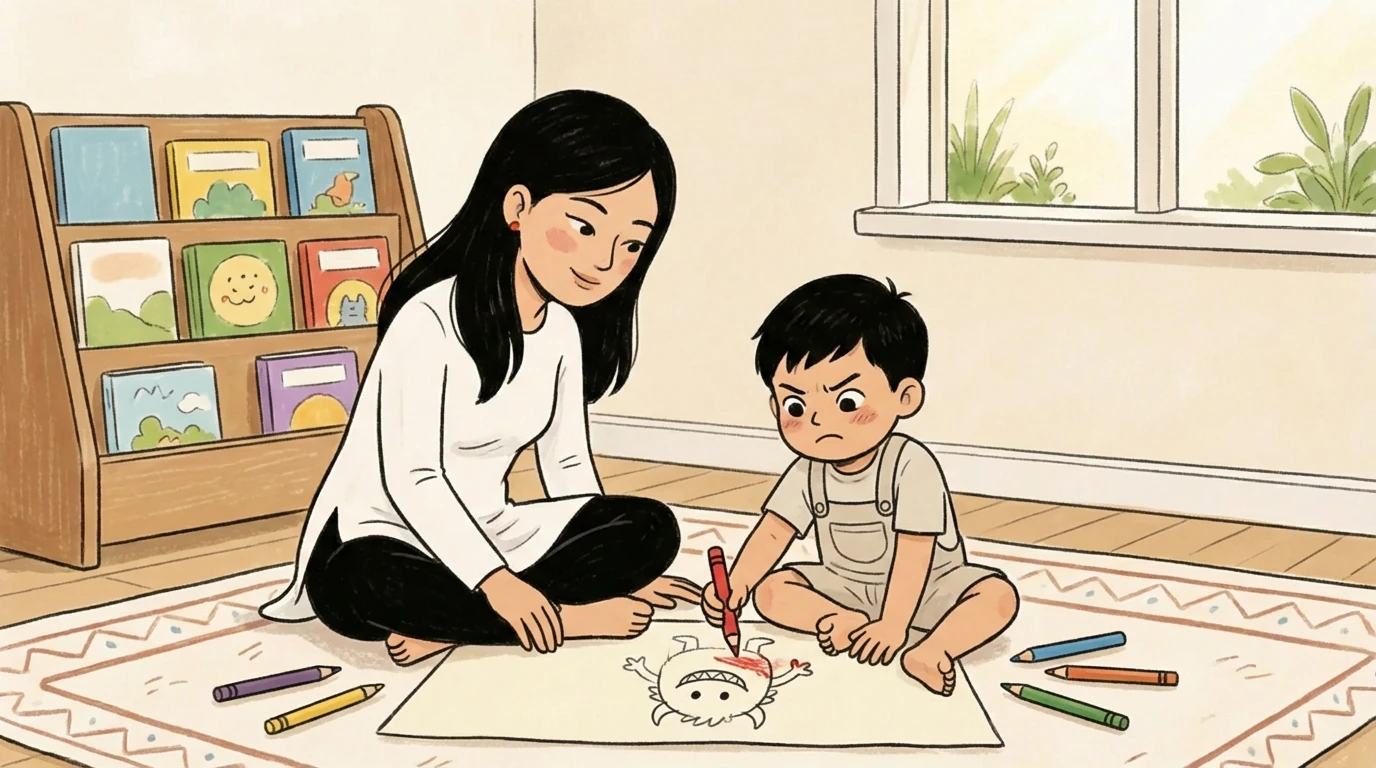
Night terrors require the opposite of your instincts. Everything in you wants to grab your child, wake them up, and make it stop. Don't.
How to respond to a night terror
- Stay calm and don't interveneYour child is asleep. They will not remember this. Sit nearby, keep your voice low and steady if you speak at all. Adults who experience night terrors report being comforted by calm voices even during episodes.
- Keep them physically safeMove objects they could trip on or hit. If they're in a crib, that's ideal. If they've moved to a bed, make sure the path to the door is clear and windows are secured.
- Do not force them awakeShaking or shouting a child out of a night terror causes extreme disorientation, sometimes temporary amnesia. Let the episode end on its own. It will.
- Track the timing patternNight terrors often happen at the same time each night. Note when they occur. If you see a pattern, you can try gently waking your child fifteen minutes before the usual time for three to five nights to reset the cycle.
- Address the triggers during the dayOvertiredness is the biggest one. Move bedtime earlier. Cut stimulation in the hour before bed. Check for illness, allergies, or overheating. Reduce stress where you can.
The triggers you can control
Most night terrors have a physical component that parents can address.
Overtiredness tops the list. When children stay up past their window, they produce adrenaline and cortisol to keep going. That chemical arousal carries into sleep and can trigger night terrors in kids who are prone. Moving bedtime earlier (even by fifteen minutes) often helps more than any other single change.
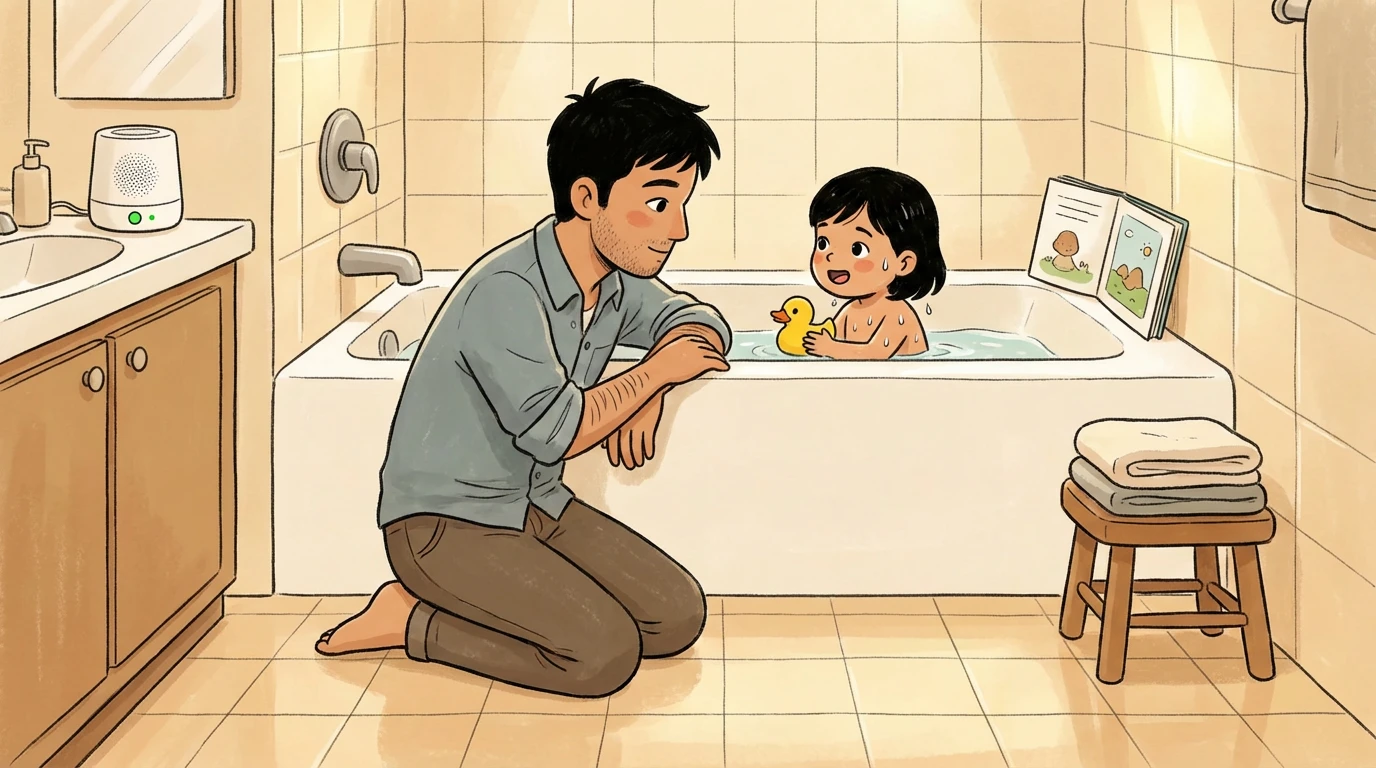
Screen time before bed is a double problem. It delays sleep onset and increases neurological arousal, both of which feed night terrors. The hour before bed should be bath, books, and boring.
Other triggers worth checking: overheating (ditch the footed pajamas), eating too close to bedtime, breathing difficulties from allergies or enlarged tonsils, and ambient noise that partially wakes the child during deep sleep. A white noise machine handles that last one.
If your child's night terrors are frequent, ask your pediatrician about sleep apnea. Stanford researchers found a link between childhood sleep apnea and night terrors, and treating breathing issues can sometimes resolve them entirely.
The anxiety connection (and the roughhousing fix)
Both nightmares and night terrors get worse when kids carry anxiety. And every child carries some, because being small and powerless in a world run by giants is inherently stressful.
Daily roughhousing that gets your child laughing reduces stress hormones in their bloodstream. Let them push you over. Chase them around the house. Play games where they win. The real, uncontrollable giggling is what does it.
One catch: do this well before bedtime. Before dinner or bath works. Roughhousing right before sleep winds them up instead of calming them down. When you feel your own frustration rising from yet another disrupted night, this kind of play helps you too. Hard to stay resentful when your kid just knocked you over with a pillow and is laughing so hard they can't breathe.
When to talk to your pediatrician
Occasional nightmares are normal. Night terrors that happen a handful of times and then stop are normal. What's not normal: nightmares that happen multiple times a week for more than a month despite your interventions, or night terrors that are frequent, intense, and show no improvement after you've addressed sleep hygiene.
Also watch for fear patterns that follow your child into daytime. A child who has nightmares and is also increasingly anxious during waking hours is telling you something bigger is going on. Trust that signal.
FAQ
Yes. Even infants can experience night terrors, though they're most common in toddlers and preschoolers. The response is the same: stay calm, keep them safe, don't force them awake. Most babies outgrow them as their nervous system matures.
Only if they bring it up, which is unlikely since they rarely remember. Describing the episode in detail can create new anxiety about bedtime. If they mention feeling tired or confused about why you look worried, keep your explanation brief and reassuring.
Work with it during the day. Help them rewrite the dream ending, draw the new version, or act it out. If the fear connects to something real (a bully, a family change, a scary movie), address that root cause directly. Nightmares often fade once the waking problem gets attention.
Usually not. Night terrors are common and most children outgrow them. But if they happen frequently and coincide with snoring or mouth breathing, ask your pediatrician about sleep apnea. There's a documented connection, and treating it can resolve the terrors.