TLDR
- Their brain can't hold two thoughts at once. Before ages five to seven, toddlers get stuck on 'you're leaving' and can't simultaneously process 'you'll be back.' The brain architecture drives this.
- Daytime closeness makes nighttime separation feel extreme. They spend all day near you, then you ask them to be alone for ten to twelve hours. The contrast triggers a genuine threat response.
- Sensitive kids feel this more intensely. Research shows that highly sensitive children struggle with separation from birth. Same biology, bigger volume knob. They need more time, not less patience.
- Connection bridges replace your physical presence. A heart on their hand, your t-shirt on their pillow, a photo on both nightstands. These objects carry your presence into the dark hours.
- Gradual withdrawal works. Cold turkey doesn't. Start beside the bed with full contact. Over weeks, reduce touch, increase distance, and introduce brief departures. The child builds confidence at their own pace.
Why bedtime separation hits so hard
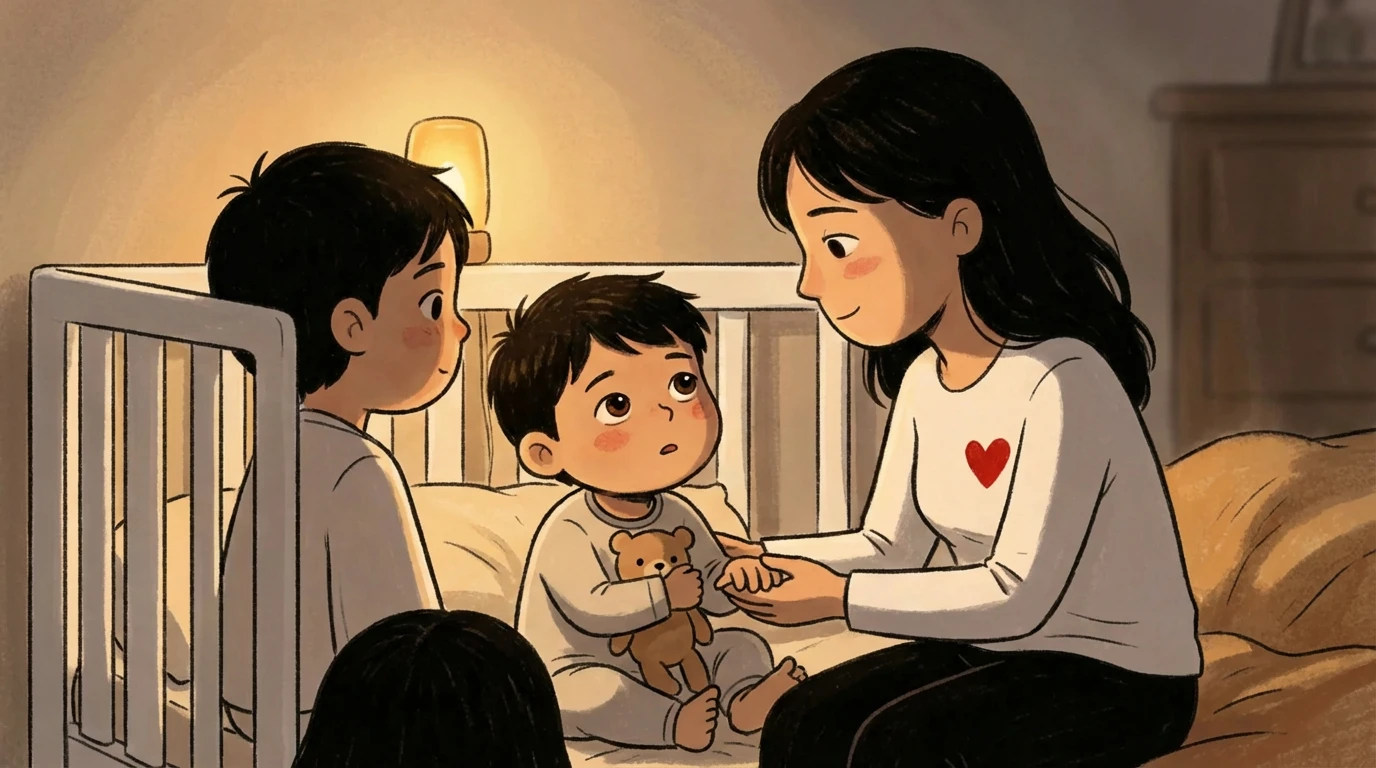
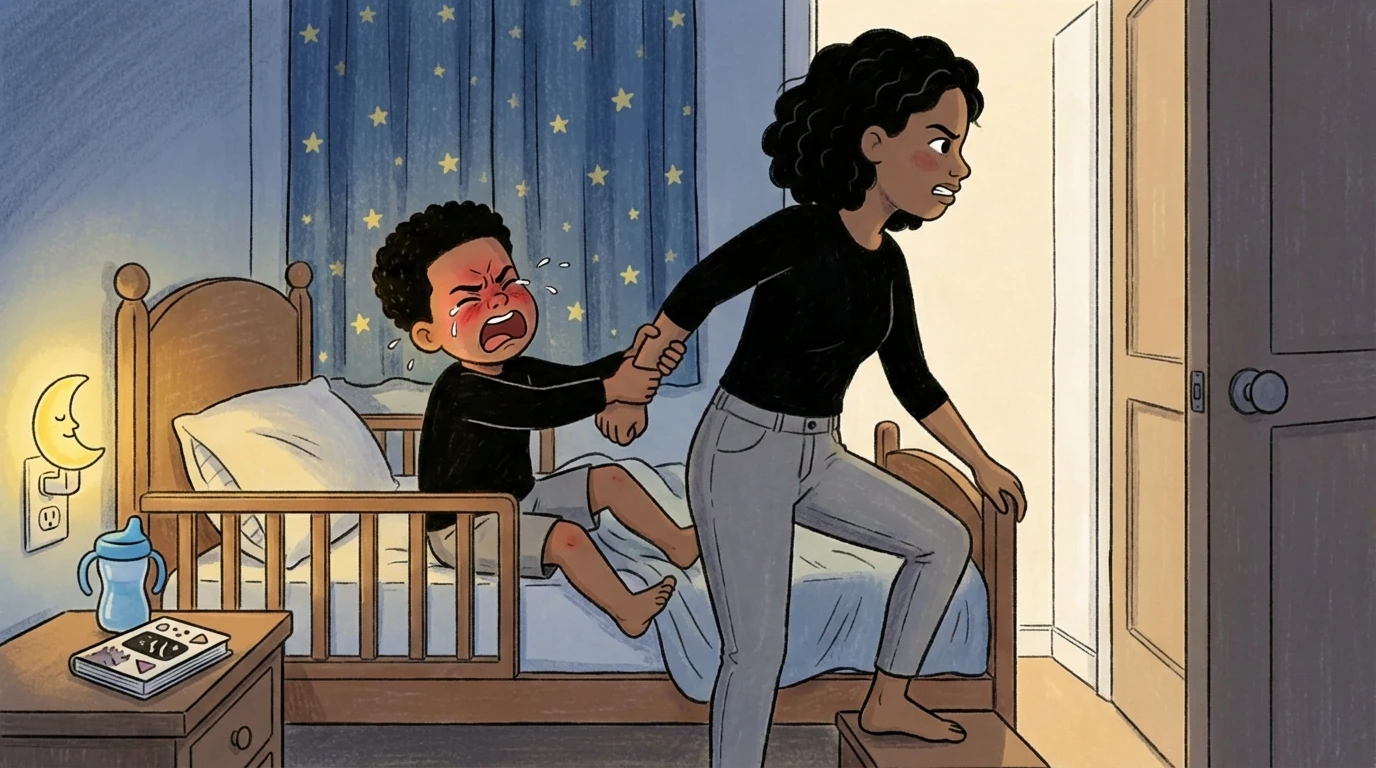
You've done the bath, read the book, refilled the water cup twice. You say goodnight, take one step toward the door, and your child comes apart.
This reaction has three biological drivers, and none of them involve your child being "difficult."
Their brain gets stuck on one track
Toddlers and preschoolers have what researchers call cognitive inflexibility. They can hold one thought at a time. When you head for the door, the thought is: you're leaving me. The companion thought, you'll be back in the morning, requires dual-processing their brain hasn't built yet.
That cognitive architecture doesn't come online until ages five to seven. And even then, having the hardware doesn't mean the child has the skills to use it. A five-year-old's brain might be physically capable of holding both thoughts, but emotional regulation is a separate skill that takes practice.
The daytime-to-nighttime contrast is brutal
All day, your child is within arm's reach of a safe adult. Then you ask them to be completely alone for ten to twelve hours. For adults, this is a routine transition. For a young child, this is a contrast so stark it can trigger a genuine fight-or-flight response.
You'll see it in their behavior. Screaming and protesting is the fight response. Running out of the room is flight. Going rigid on the floor is freeze. If any of these show up at bedtime, your child's nervous system is treating the separation as a threat, because to their brain, it is one.
Temperament makes some kids feel it more
Research shows highly sensitive children struggle with separation from birth. They feel everything at higher volume, including the distress of being away from you. An easygoing child might call out once and settle. A sensitive child might cry for forty-five minutes, come out of their room six times, and beg you to stay.
Temperament drives this reaction, and there's no window you missed. Sensitive kids aged two through twelve (and sometimes beyond) can have big reactions to bedtime separation. They need more scaffolding, not a firmer hand.
Screaming when you leave
The Sleep Solutions course will walk you through the separation sequence
You'll close the door knowing exactly when to go back in, and the crying will shorten night after night.
The connection bridge (your main tool)
The goal is to help your child know you're still there, even when you're not physically in the room. In child development terms, this is called a connection bridge. You're extending your presence past the bedroom door.
For younger kids (under five)
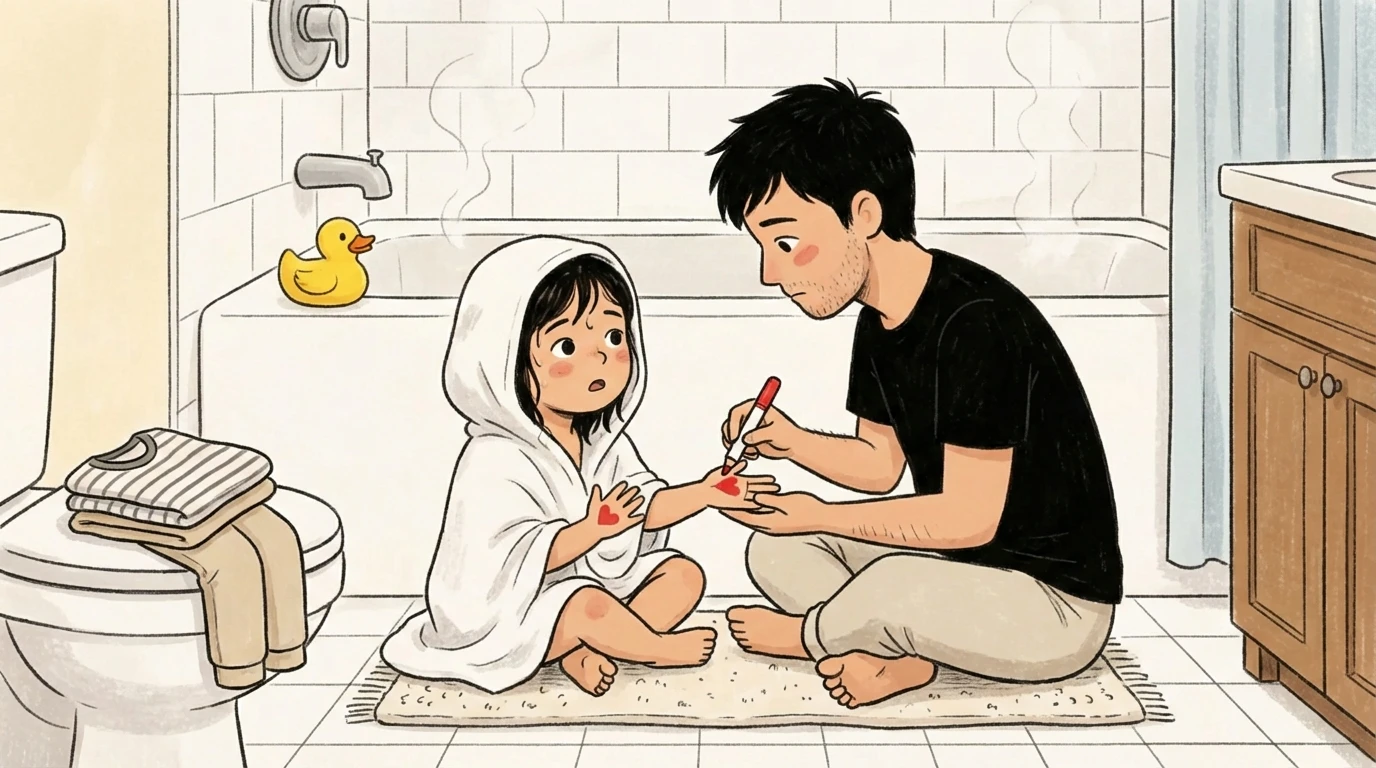
- Draw a heart on your hand and theirs. Tell them the hearts are connected, and when they miss you, they can press their hand. It works because toddlers think concretely, and the heart is concrete.
- Tell the stuffed animal a secret. Whisper (loudly enough that your child overhears): "Take care of them tonight. I'm counting on you." You've deputized the stuffy.
- Tell the invisible string story. There's an invisible string between your heart and theirs, stretching from their room to wherever you are. When babies cry at night, they're pulling on that string.
For older kids (five and up)
- Your t-shirt on their pillow. It smells like you. Scent is the most powerful memory trigger, and it works while they sleep.
- Spray your cologne on their pillowcase. Same principle, less laundry.
- A photo of you together on both nightstands. Put one on theirs, one on yours. Tell them you're both looking at the same picture at the same time.
The gradual withdrawal method
Connection bridges handle the emotional side. You also need a physical plan for leaving the room. Gradual withdrawal works across age groups: start close and slowly increase the distance.
How to gradually withdraw at bedtime
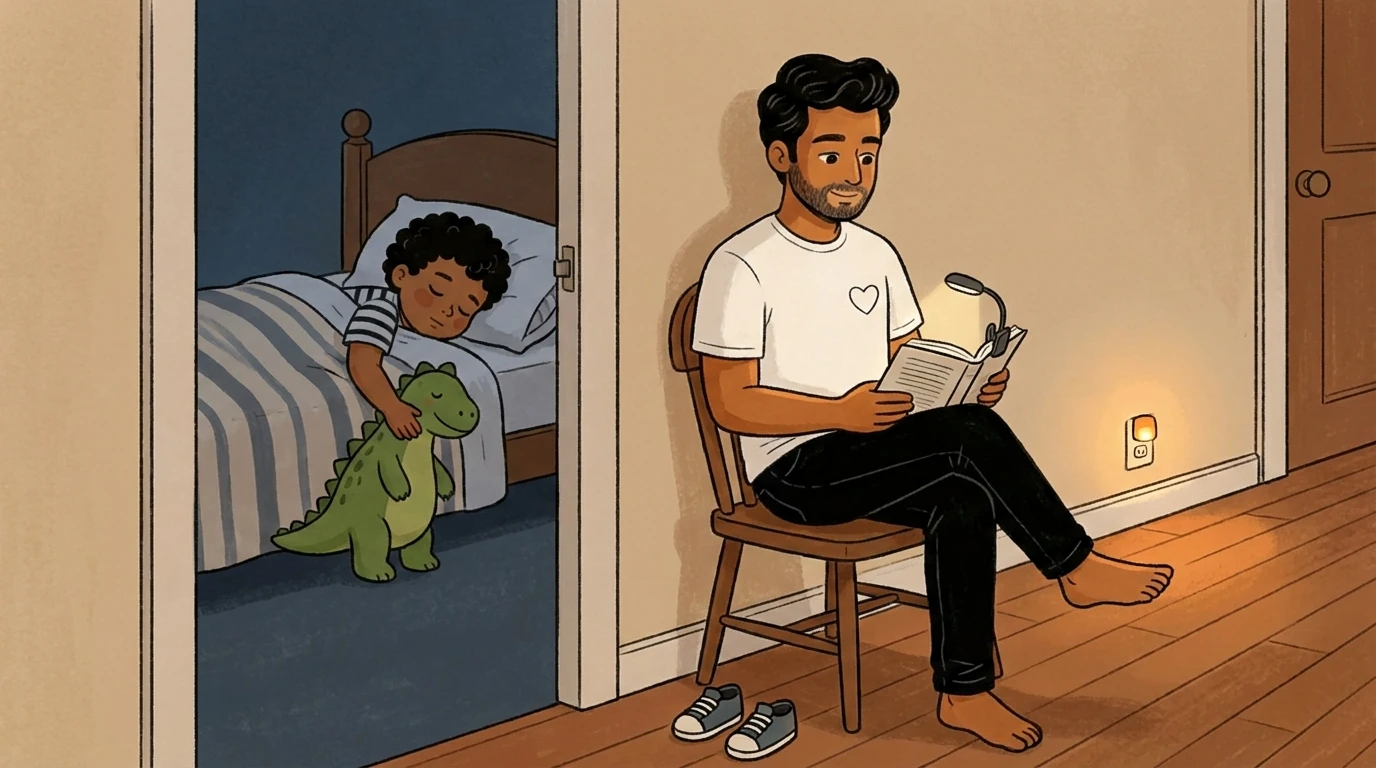
- Start by sitting beside the bedAfter tuck-in, sit right next to them with your hand on their back or holding their hand. Read your own book with a small light. Stay until they fall asleep. Do this for about a week.
- Remove physical contactSit beside them without touching. Give extra hugs before lights out to front-load the affection. If they reach for you occasionally, allow it, but most nights they go without.
- Move your chair farther awayShift a few feet each night. Next to the bed, then halfway across the room, then the doorway, then just outside. Keep the door open. Stay calm and predictable.
- Introduce brief departuresTell them you need to check on something and you'll be back in five minutes. Then come back in five minutes. Reliability builds the trust that makes longer separations possible.
- Let them fall asleep independentlyOver weeks, the departures get longer. They start falling asleep before you return. One night you'll realize they haven't called for you at all.
The timeline varies. Some kids move through this in two weeks. Others take two months. Both are normal.
A few details that matter: give them control over a nightlight. A child who can turn on their own light when they wake up scared feels less helpless, and helplessness fuels nighttime anxiety. Play the same music every night. Eventually, just hearing it triggers drowsiness through conditioning.
If they backslide and need you closer one night, let them. It won't undo your progress.
What makes separation anxiety worse
A few common moves that feel helpful but aren't:
Leaving them to cry it out after a disruption. If a vacation, illness, or parent's work trip triggered the anxiety, leaving them alone compounds it. They already experienced you disappearing. Disappearing again at bedtime confirms the fear. Separation anxiety after disruptions requires more presence, not less.
Changing the sleep setup during a rough stretch. Transitioning from crib to toddler bed while your child is already anxious about separation adds a second layer of insecurity. Wait until the anxiety has settled before making physical changes to their sleep environment.
Expecting quick results. Rebuilding trust after a significant separation can take weeks. They're running a biological security check, and they need the check to pass multiple times before they update their threat assessment.

When separation anxiety follows a real separation
Sometimes the bedtime panic is a specific response to a specific event: a parent's hospitalization, a week with grandparents, a family emergency that pulled you away.
Children under two haven't developed object constancy yet. When you left for a week, they genuinely didn't know if you were coming back. At bedtime (the longest daily separation), that memory activates.
The approach shifts:
Move bedtime earlier. When kids stay up past their natural sleep window, their body produces cortisol and adrenaline to keep them awake. Now you're fighting stress hormones on top of separation anxiety.
Stay in the room until they're asleep. Since the problem is separation-based, leaving them alone to "learn" just re-teaches them that bedtime means losing you.
Play separation games during the day. Hide behind the couch for three seconds, then burst out with exaggerated relief. "I missed you! Let me try again." Pair this with a predictable bedtime routine and the anxiety surfaces in manageable doses.
Let them cry with you, not alone. Crying alone re-traumatizes. Crying in your arms while you say "you're safe, I'm right here, I'm not going anywhere" is how the panic gets processed and dissolves.
The realistic timeline
Here's what you can expect:
Week one to two: You're sitting by the bed every night. They fall asleep within fifteen to twenty minutes. They might still wake once at night.
Week three to four: You're in the doorway. Night wakings decrease because they're learning to fall asleep without your physical presence, which means they don't need it when they wake mid-cycle.
Month two to three: You're leaving the room for check-ins. Most nights, they're asleep before the second check-in.
The setback nights: They will happen. After illness, travel, or a rough day. Go back to wherever they need you, stay one or two nights, then resume. Setbacks are a pause in the process, and you pick up where you left off.
FAQ
Yes. Many seven and eight-year-olds are not comfortable falling asleep alone, and that's within the developmental range. The goal is gradual progress toward independence, not hitting an age-based deadline. If your child is moving in the right direction, even slowly, you're on track.
Not necessarily. Many parents let their child into bed for night wakings during the gradual withdrawal process without losing progress. The key distinction is what happens at the start of the night. If you're steadily reducing your presence at bedtime, mid-night co-sleeping won't undermine that.
Look for a specific trigger: a parent traveling, illness in the family, a scary scene in a show, or a disruption to routine. Sudden-onset bedtime anxiety almost always has a cause. Identifying it often points directly to the solution.
Cry-it-out removes parental presence entirely. This method maintains your presence while systematically reducing it. The child builds confidence because each step forward happens with your support, and they never face the fear alone.
Then it takes months. Some kids need two weeks, some need twelve. Pushing faster than the child is ready for creates setbacks that cost more time than patience would have. The process is slow and boring. The result is a child who feels genuinely safe falling asleep alone.