TLDR
- Monster spray makes it worse. Checking under the bed or spraying away monsters tells your kid the threat might be real. Now they need the ritual every night to feel safe.
- Three things cause most bedtime fears. A growing imagination (ages 2-3), stressful life changes, and unsettling content absorbed during the day. The fix depends on which one you're dealing with.
- Nighttime is when the day's stress surfaces. Kids process anxiety when the house goes quiet. A parent traveling, a new sibling, or a scary scene from a movie all show up at lights-out.
- Get curious before you get frustrated. Ask what happened today. Ask what they saw. Ask without judgment. Most bedtime battles dissolve once the real worry comes out.
- Gradual independence beats cold turkey. Teach your child to fall asleep alone by slowly withdrawing your presence over weeks, not by shutting the door and hoping for the best.
Why your kid suddenly can't handle bedtime
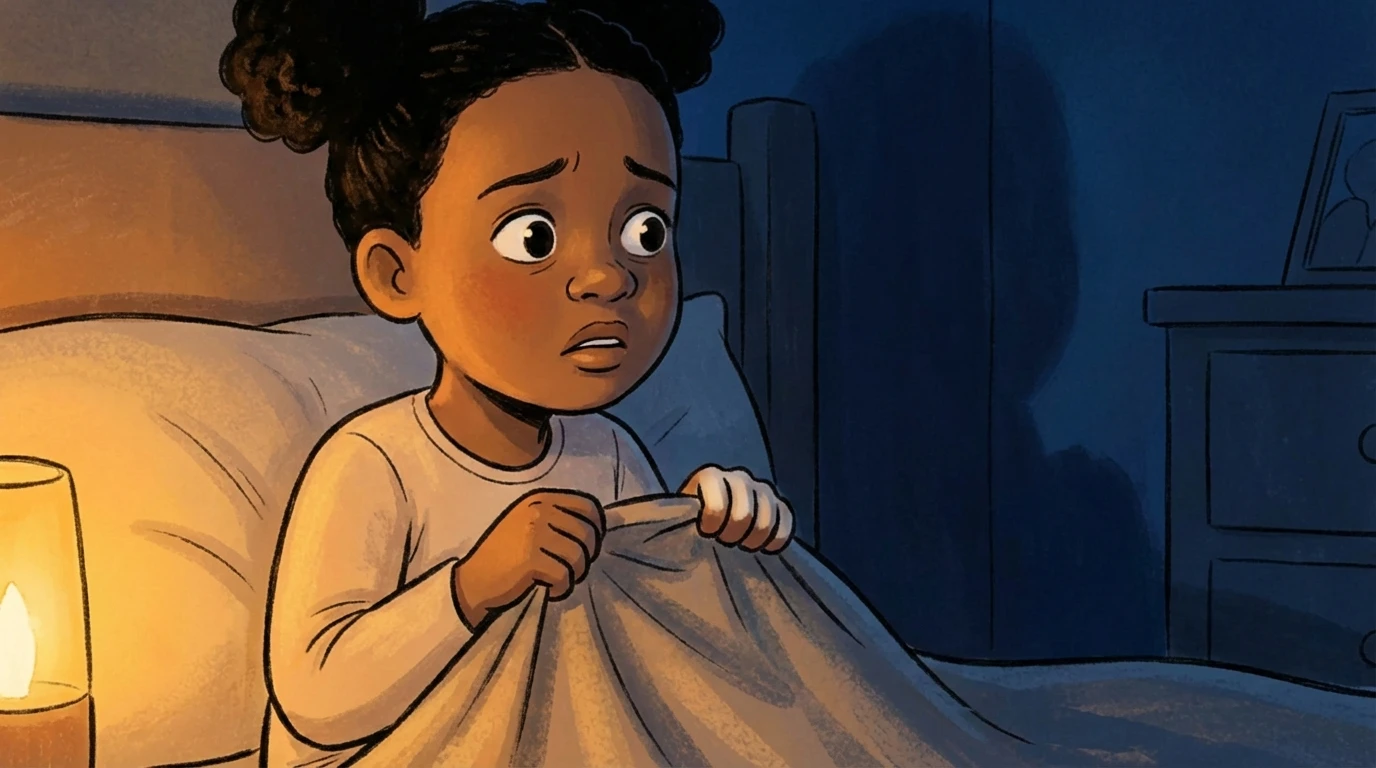
Your three-year-old slept fine for months. Then one Tuesday, bedtime turned into a hostage negotiation. Monsters. Wrong shadows. Something under the bed. You're standing in the hallway at 9:15 PM thinking, what happened?
What happened is their imagination came online.
Between ages two and three, kids develop the ability to imagine things that aren't there. During the day, that's wonderful: playing restaurant, building fictional worlds out of couch cushions. At night, with the lights off, that same imagination turns shadows into threats. This is normal brain development, not a sleep regression. The upgrade has a nighttime side effect.
Here's the part that trips up most parents: the instinct to prove the fear wrong.
Something in the closet
The Sleep Solutions course will show you how to shrink bedtime fears
You'll respond in a way that calms the fear without accidentally feeding it, night after night.
Why monster spray backfires
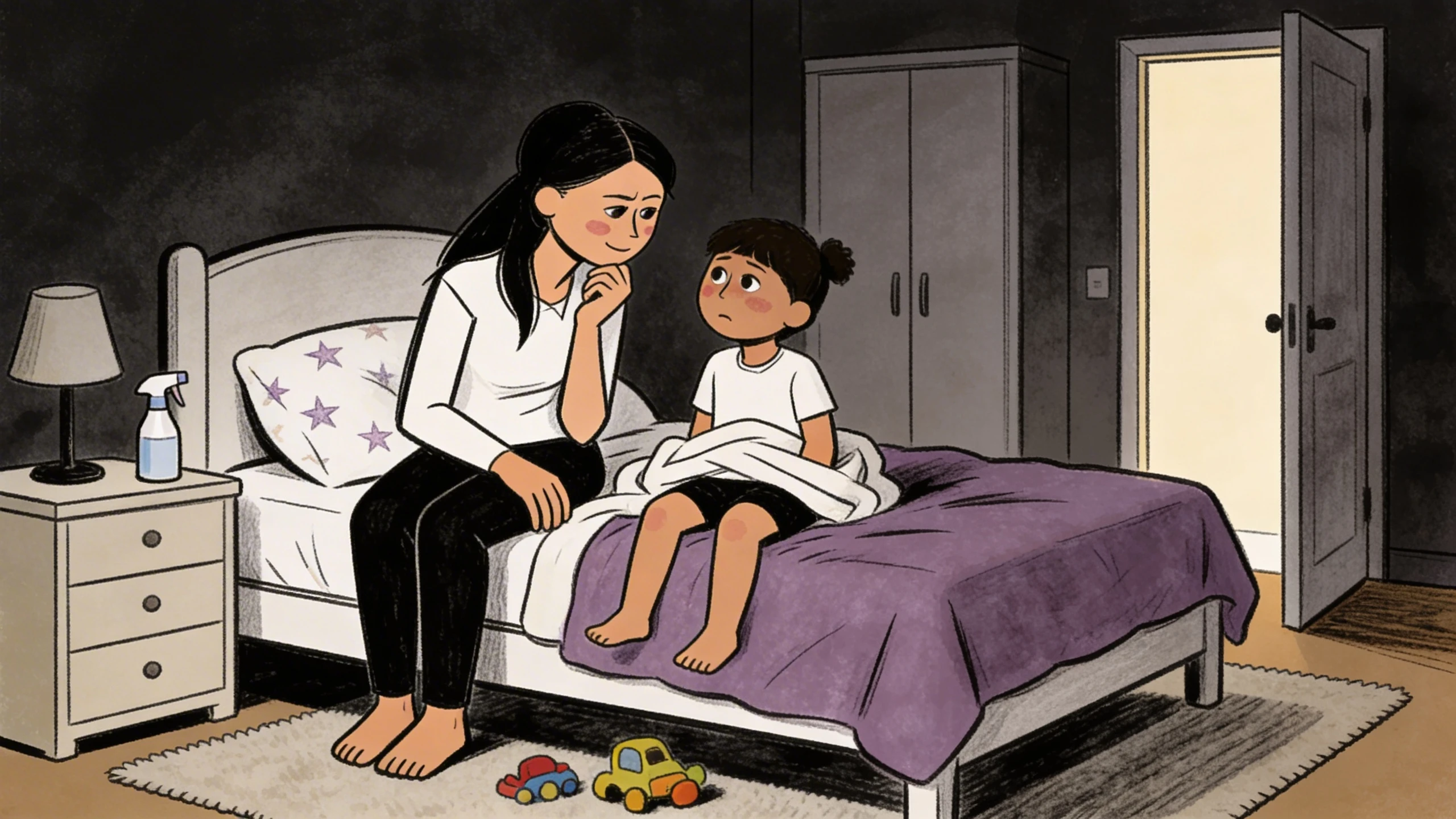
You check under the bed. You spray "monster spray" around the room. You open the closet and show them it's empty. Problem solved, right?
Three problems. First, checking under the bed confirms that something could be under the bed. If there were truly nothing to worry about, why would you check? Your kid picks up on that logic even if they can't articulate it.
Second, you've created a dependency. Now they can't feel safe without the nightly sweep. Miss a step, and the whole thing unravels.
Third, you skipped past the real issue. The fear of monsters is almost never about monsters. It's about feeling unsafe when separated from you. Address the need for security directly, and the monsters lose their power.
The three root causes (and what to do about each)
Not all bedtime fears look the same. The fix depends on what's driving them.
Growing imagination
For the two-to-three-year-old crowd, this is the most common trigger. Their brain just unlocked vivid mental imagery, and it doesn't have an off switch yet.
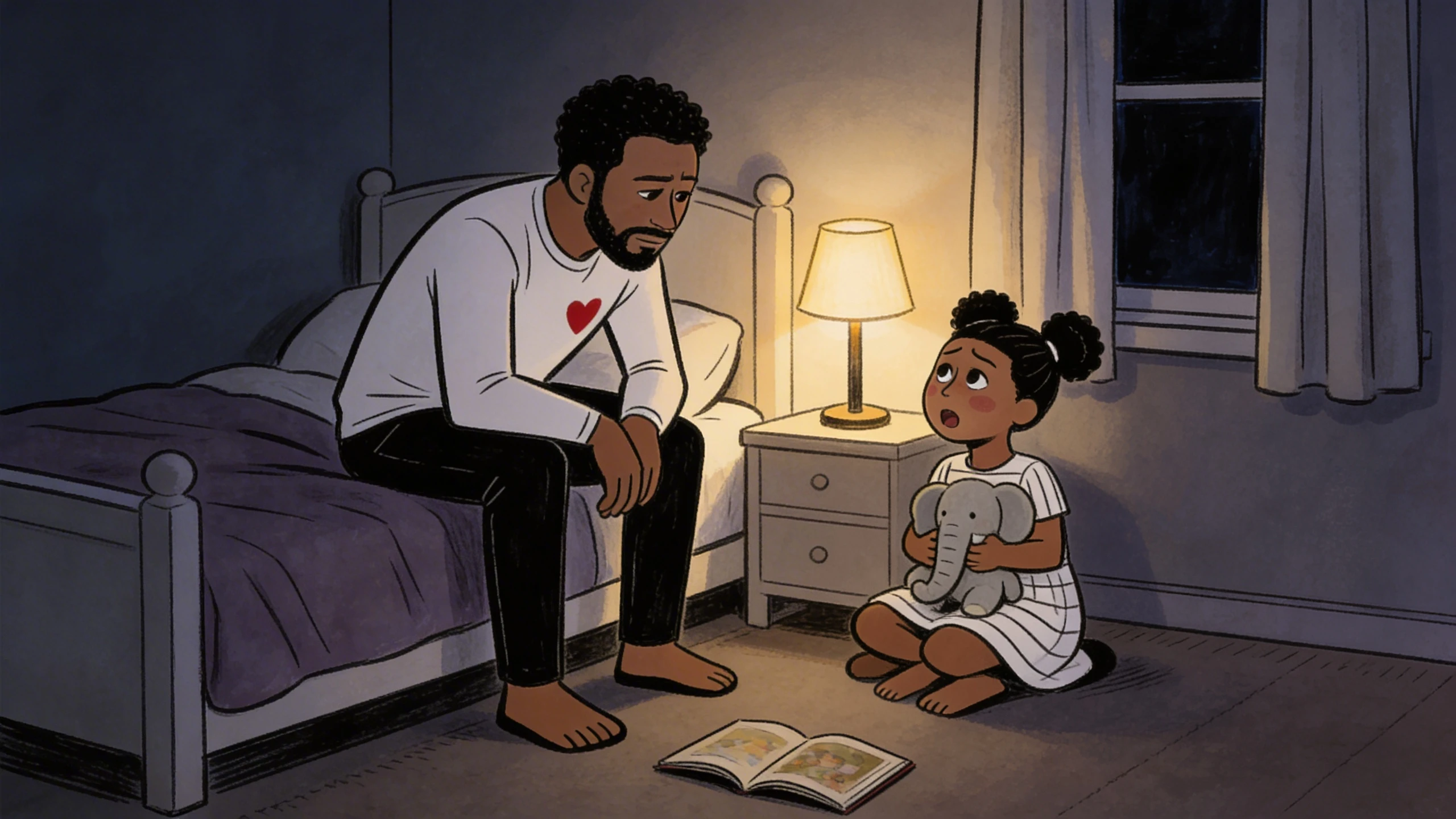
What works: Skip the monster-hunting rituals. Build safety into the room itself. A nightlight the child controls, a stuffed animal designated as their "protector," consistent sleep music that becomes a conditioned cue for drowsiness.
When specific fears like darkness or strange noises keep coming up, name them plainly. "I know the dark feels scary. Your room is safe. I'm right down the hall." Boring, repetitive, reassuring.
Life transitions and stress
A new sibling. A parent traveling. Moving houses. Switching from crib to bed. Any disruption to predictability can show up as bedtime resistance.
This is true across every developmental stage, not just toddlers. Seven-year-olds who slept fine for years can fall apart at bedtime after a family change. Nighttime gives anxiety nowhere to hide.
What works: A visual bedtime schedule (pictures of each step: bath, pajamas, book, song, lights out) gives the child something to count on when everything else feels wobbly. The routine becomes the anchor.
Absorbed content from the day
Kids have absurdly absorbent brains. A Disney villain, a news snippet in the background, a scary story from school. They take it all in, and they process it at bedtime when the stimulation stops.
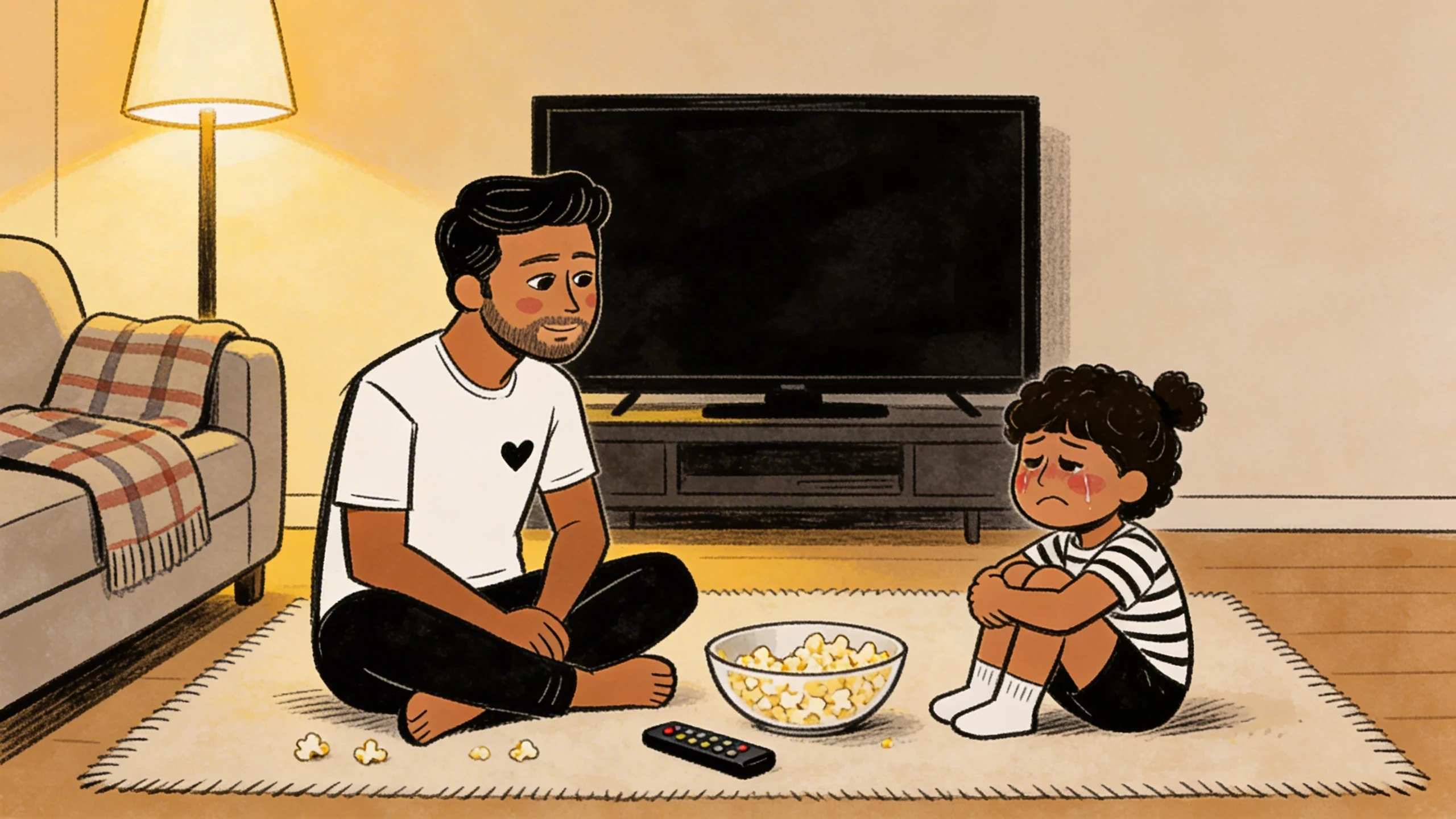
A child who seems angry or wired before bed might be trying to process something that got stuck. They don't always have the vocabulary to tell you what's bothering them. Sometimes they don't even know.
What works: Get curious. Ask open-ended questions during the bedtime routine, before the lights go off:
- For younger kids: "Did anything feel tricky today?" or "Did you see something today that was uncomfy for you?"
- For older kids: "You can tell me if you heard or saw something that bothered you. You won't get in trouble for telling me."
That last part matters. Kids will sit on a fear for weeks if they think sharing it means getting in trouble. Make it safe to tell you, and most fears start shrinking on their own.
How to teach your kid to fall asleep alone
You've addressed the underlying fears. Your kid still wants you in the room. That's a skill deficit, not a character flaw. They haven't learned how to self-regulate into sleep without your presence. You can teach this without tears or door-shutting.
How to gradually build independent sleep
- Have the conversation firstTell your child you're going to help them learn to fall asleep on their own. Promise you won't leave them in the dark before they're ready. Set the rules so they know what's coming.
- Get a transitional objectLet them pick a stuffed animal or blanket that becomes their nighttime protector. The object transfers your protective presence into something they control.
- Sit next to the bed, then readAfter tuck-in, sit by their bed with your hand on them while you read your own book. Use a small light. When they fall asleep quickly at this stage, move to the next.
- Stay present but stop touchingSit beside them without physical contact. Give extra hugs before lights out to front-load the affection. If they reach for you occasionally, allow it, but most nights they go without.
- Move your chair toward the doorShift a little farther away each night. Next to the bed, then halfway across the room, then the doorway, then just outside. Keep the door open. Stay calm and predictable in your chair.
- Start brief departuresTell them you need to check on something and you'll be back in five minutes. Then come back in five minutes. Reliability is the whole game here. Leave your chair in the doorway as a visual anchor.
This takes weeks, sometimes a couple of months. The pace should stretch your kid slightly but never panic them. If they regress after a bad day, go back one stage. The trajectory matters more than any single night.

The roughhousing trick nobody talks about
When kids carry anxiety into bedtime, sometimes the best intervention happens an hour before.
Ten to fifteen minutes of physical play that gets your child genuinely laughing releases anxiety like a pressure valve. Wrestling, pillow fights, chase games, airplane rides on your legs. The goal is real, uncontrollable giggling.
Do this before pajamas and stories, not after. A child who has burned off anxious energy through play arrives at bedtime lighter. The fears don't vanish, but they lose their grip.
What to do when your kid won't tell you what's wrong
Some kids clam up. You ask what's bothering them and get "nothing" or "I don't know." That's frustrating, but it's usually not defiance. They genuinely might not have the words.
Try storytelling instead of questioning. Make up a bedtime story where a character (who looks suspiciously like your kid) encounters something scary and finds a way through it. Transform the feared thing into a protector by the end. Kids who won't answer direct questions will sometimes volunteer everything in response to a story, because stories feel safer than interrogation.
You can also try helping them face fears in small doses during the daytime. Sit in a dimly lit room together for a few minutes. Read books about nighttime. Normalize the dark when the stakes are low.
When to worry (and when to wait it out)
Most bedtime fears peak between ages three and six and fade gradually. If the fear started suddenly after a specific event, address that event. A parent leaving for a work trip, an illness, exposure to something scary. Find the trigger and you'll often find the fix.
If the fear has always been there and it's not worsening, you're dealing with temperament (some kids are more sensitive to nighttime) rather than something requiring professional help. The gradual approach works. It just takes patience.
Seek support if the anxiety affects daytime functioning, worsens despite consistent intervention, or involves distress well beyond typical bedtime resistance.
FAQ
Co-sleeping solves the immediate fear but can delay independent sleep skills. If you want to transition, use the gradual approach: start in their bed with full presence, then slowly withdraw over weeks. Cold-turkey switches tend to backfire.
Common under age five. They feel the fear but lack vocabulary for it. Try storytelling, offer general reassurance ('Your room is safe, I'm close by'), and build in a check-in question like 'Did anything feel tricky today?' The specifics often emerge over time.
There's no universal cutoff. Many seven and eight-year-olds still need a parent nearby. The goal is gradual progress toward independence, not hitting an arbitrary milestone. If your child is moving in the right direction, even slowly, you're on track.
No. A nightlight is a reasonable accommodation, not a crutch. Many adults sleep with some ambient light. Give your child control over the light so they can turn it on if they wake up scared. Control over their environment reduces helplessness, which is what drives most nighttime anxiety.