TLDR
- Overtired and undertired look almost identical. Both produce a wired, restless child at bedtime. The difference is in the daytime behavior: overtired kids are clingy and fragile, undertired kids are playful and bouncing off walls.
- Stress hormones are the real villain. When kids blow past their tiredness window, cortisol and adrenaline flood in. Those hormones stay in the bloodstream for over 24 hours, making the next night harder too.
- Moving bedtime earlier often works better than later. Parents instinctively push bedtime later hoping the child will be more tired. But a later bedtime just means more stress hormones and a worse spiral.
- The emotional backpack fills up all day. Kids store unprocessed feelings that surface when they finally lie still. Those feelings drive the stalling, the water requests, the one-more-hug cycle.
- Laughter before bed beats lectures about sleeping. Ten minutes of roughhousing earlier in the evening reduces stress hormones and empties the emotional backpack. Do it after dinner, not during the wind-down.
The two-hour bedtime and what your child's body is doing
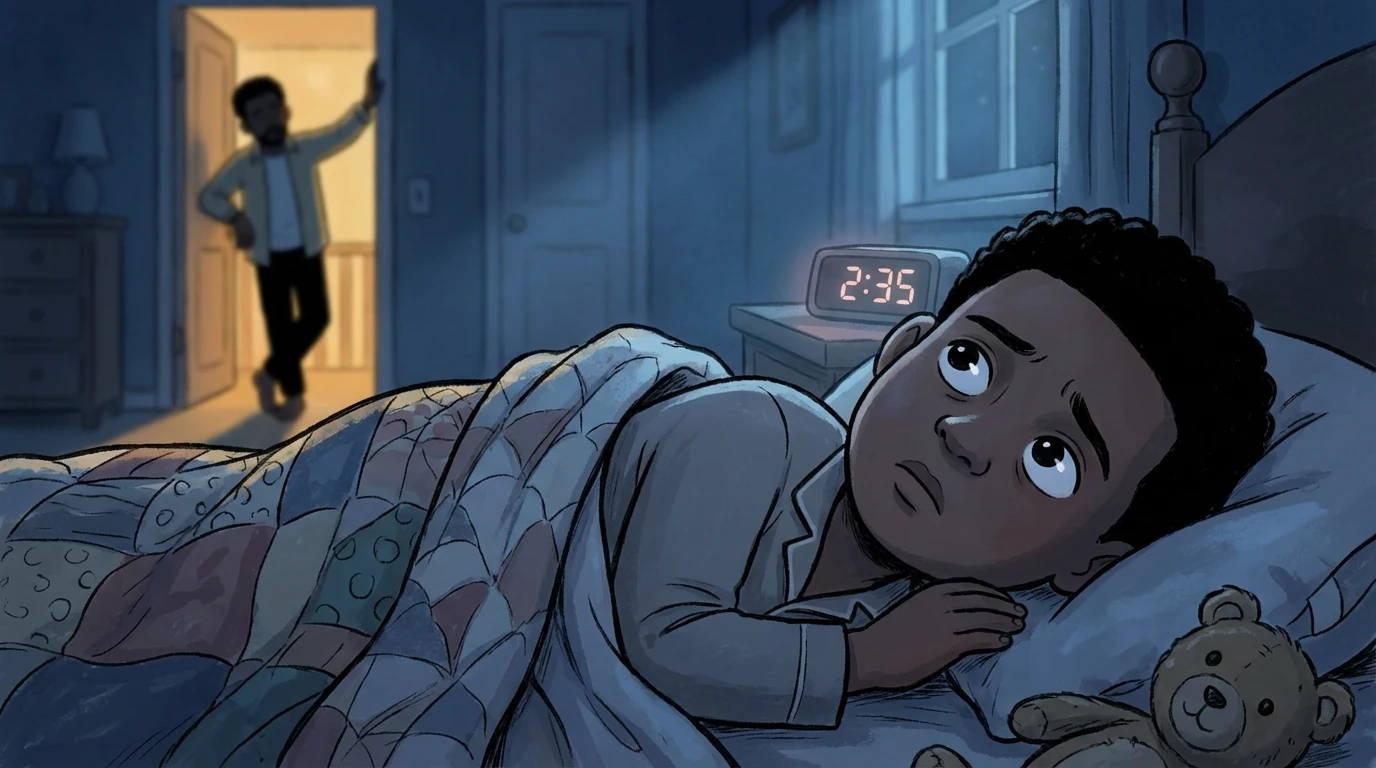
You've done the bath. You've read the books. You've sung the song. And your child is lying there, eyes open, kicking the sheets, asking about dinosaurs.
Here's what is happening inside their body. Sleep depends on something called sleep pressure, the biological feeling of tiredness that builds while your child is awake. Think of it like a tank filling up. When the tank is full enough, the body is ready to sleep. When it's not, no amount of singing or threatening will make sleep come.
The problem is that the tank has a sweet spot. Too little pressure and your child genuinely cannot sleep. Too much pressure and the body panics, dumps cortisol and adrenaline into the bloodstream, and your child goes into what looks like a second wind. Both scenarios produce the same result at bedtime: a child who will not fall asleep. But they require opposite fixes.
If you've been trying to figure out why bedtime is such a battle, this distinction is where it starts.
Ninety minutes in the dark
The Sleep Solutions course will teach you the wind-down sequence
You'll get them from wide awake to asleep in a fraction of the time, without lying next to them.
Undertired vs. overtired: how to tell the difference
A child who is undertired at bedtime acts silly. They're playful, chatty, restless, doing gymnastics on the mattress. They aren't fighting you. They just aren't sleepy.
A child who is overtired acts like they're falling apart. Clingy, fussy, rubbing their eyes, then suddenly giggling uncontrollably (that last one is the weirdest overtired tell). Their body needed sleep an hour ago and has since switched to stress-hormone fuel to keep running.
The undertired fix
Your child's last nap may be too long, too late, or both. A two-year-old who naps until 3 PM and has a 7 PM bedtime only has four hours of wake time to build sleep pressure. That is not enough. Shorten the nap or end it earlier so the gap between waking and bedtime stretches to five or six hours.
For a child who has dropped naps entirely, push bedtime a bit later. A preschooler who wakes at 6:30 AM needs roughly 12 to 13 waking hours before their body is ready for sleep. Do the math backward from wake time, not forward from dinner.
The overtired fix
Move bedtime earlier, even though every instinct tells you to do the opposite. When kids stay up past their window, they produce stress hormones that linger for more than 24 hours. Last night's late bedtime makes tonight's bedtime worse. An earlier bedtime breaks the cycle. Start the wind-down routine 30 to 45 minutes before you want lights out, and aim for lights out 20 to 30 minutes before you expect sleep.

The emotional backpack problem
Some kids are tired at the right time, in a dark room, with the perfect routine, and still cannot fall asleep. The issue is what happens when their body finally gets still.
All day long, your child stores small fears, frustrations, and upsets they did not have time to process. A friend who wouldn't share. A moment when they got in trouble. A noise that startled them. These feelings get stuffed into what researchers call the emotional backpack. During the day, activity and distraction keep the lid on. At bedtime, the lid comes off.
Your child runs from those feelings by stalling. The water requests, the bathroom trips, the flopping around the bed, the sudden need to tell you about something that happened at lunch. It is avoidance of feelings that do not feel good.
What to do about the backpack
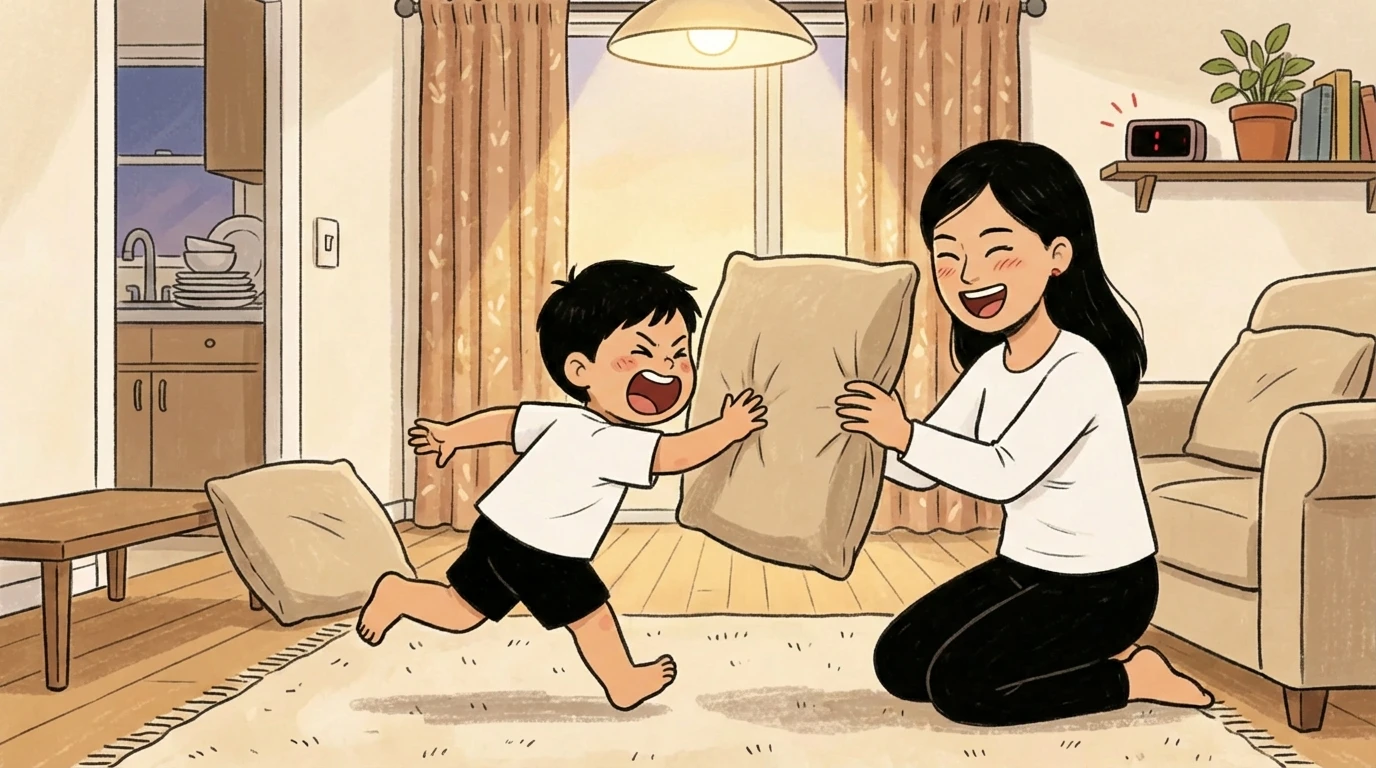
Get your child laughing hard for ten to fifteen minutes every day. Pillow fights, chase games, wrestling on the carpet. Laughter physically reduces stress hormones and increases bonding hormones. Do this after dinner, well before the bedtime routine starts. If you do it too close to lights-out, you'll wind them up instead of winding them down.
For kids who carry anxious thoughts that spiral at bedtime, the stillness of lying in bed is when the worry machine fires up. A body-part relaxation exercise can help: talk your child through noticing each part of their body from toes to head, describing each one as heavy and sinking into the mattress. It sounds silly. It works because it gives the racing mind a boring task to follow.
Sensory sensitivities that keep kids wired
Some children's nervous systems process stimulation differently. The same tag on a shirt that one kid ignores will keep another kid itching for an hour. At bedtime, when the house is quiet, every small sound registers louder. A ticking clock. A sibling's footsteps. The hum of the fridge.
If your child complains about noises or lights at bedtime, they are probably telling the truth. Sensory sensitivity intensifies when the child is already tense. On calm nights the same sounds are tolerable. On rough nights they are unbearable. It is a neurological reality that gets worse with sensory overload throughout the day.
Practical fixes: blackout curtains, earplugs (yes, for kids), a sleep mask. Do not argue about whether the sound is really that loud. Block it and move on. A child who has practical tools to manage sensory input falls asleep faster than a child who has been told the noise is not a big deal.
The routine that helps (and the mistake that undoes it)
A consistent bedtime routine works because it creates conditioned cues. After your child falls asleep to the same sequence enough times, the sequence itself starts triggering sleepiness. Bath, pajamas, books, one song, lights out. The body learns the pattern and begins releasing melatonin before you even finish the first page.
What undoes it
Screens within two hours of bedtime suppress melatonin production. The light from a screen tells the brain it is still daytime. No amount of routine can overcome a brain that has just been told not to sleep yet.
The other mistake: inconsistency. If bedtime is 7:30 on weeknights and 9:30 on weekends, you are resetting the biological clock every Monday. Keep the range within 30 minutes, even on weekends.
How to shorten the time it takes your child to fall asleep
- Track the pattern for three daysWrite down wake time, nap time, nap length, bedtime, and when your child falls asleep. You need data before you change anything. Look for whether your child seems undertired or overtired at lights-out.
- Adjust the schedule firstIf undertired: shorten the last nap or push bedtime later by 30 minutes. If overtired: move bedtime earlier by 30 minutes and start the routine sooner. Give each change five days before deciding it did not work.
- Add roughhousing after dinnerTen minutes of physical play that produces real laughter. Chase, tickle, pillow fights. Do not skip this. It reduces stress hormones and empties the emotional backpack so your child arrives at bedtime lighter.
- Cut screens two hours before bedReplace screen time with low-key activities: drawing, puzzles, building. The melatonin suppression from screens is measurable and takes about two hours to clear.
- Use a body relaxation script at lights-outTalk your child through each body part from toes up. Describe each one as heavy and warm and sinking into the bed. This gives a racing mind something boring to follow and a tense body permission to let go.
When the hours-long bedtime is really about you
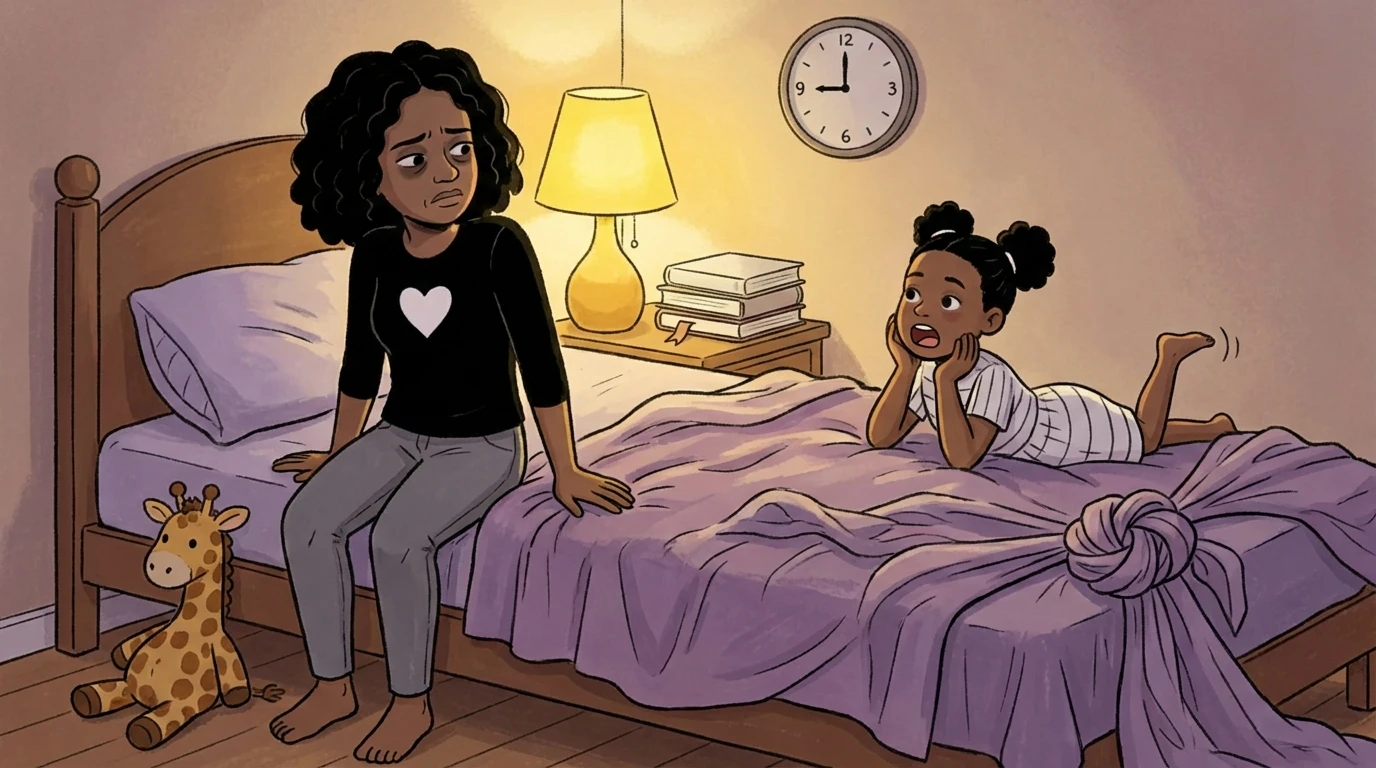
Let's be honest about the part nobody talks about. After an hour of lying next to a child who will not sleep, the burnout hits hard. You had things to do. You are touched out. You can feel your patience draining by the minute, and your child can feel it too.
Your tension makes their tension worse. A child's nervous system is tuned to yours. If you are lying there rigid with frustration, they are absorbing that signal and it is keeping them awake. The most effective thing you can do in that moment is boring. Slow your breathing. Stop talking. Let your body go slack. You are genuinely giving up the fight, and your child's body will follow.
If the nightly bedtime battle is wearing you down to the point where you dread 7 PM, that is information worth paying attention to. Tag-team with a partner. Alternate nights. Do whatever keeps you above the line where you can still be a steady presence instead of a resentful one.
The long view on bedtime
This is a phase. A long, boring, sanity-testing phase, but a phase. As your child's brain matures and their wake windows lengthen, the gap between "lights out" and "asleep" shrinks. Toddlers routinely take 30 to 45 minutes. Preschoolers average 20 to 30. School-age kids often drop to 15.
Your job right now is to create the conditions where sleep can happen on its own, and then get out of the way.
FAQ
Yes. Sleep researchers consider 30 to 45 minutes a normal range for toddlers aged one to three. If your child is happy and playful during that time rather than distressed, their body is likely just transitioning at its own pace. Concern starts when the time consistently exceeds an hour or the child is visibly upset.
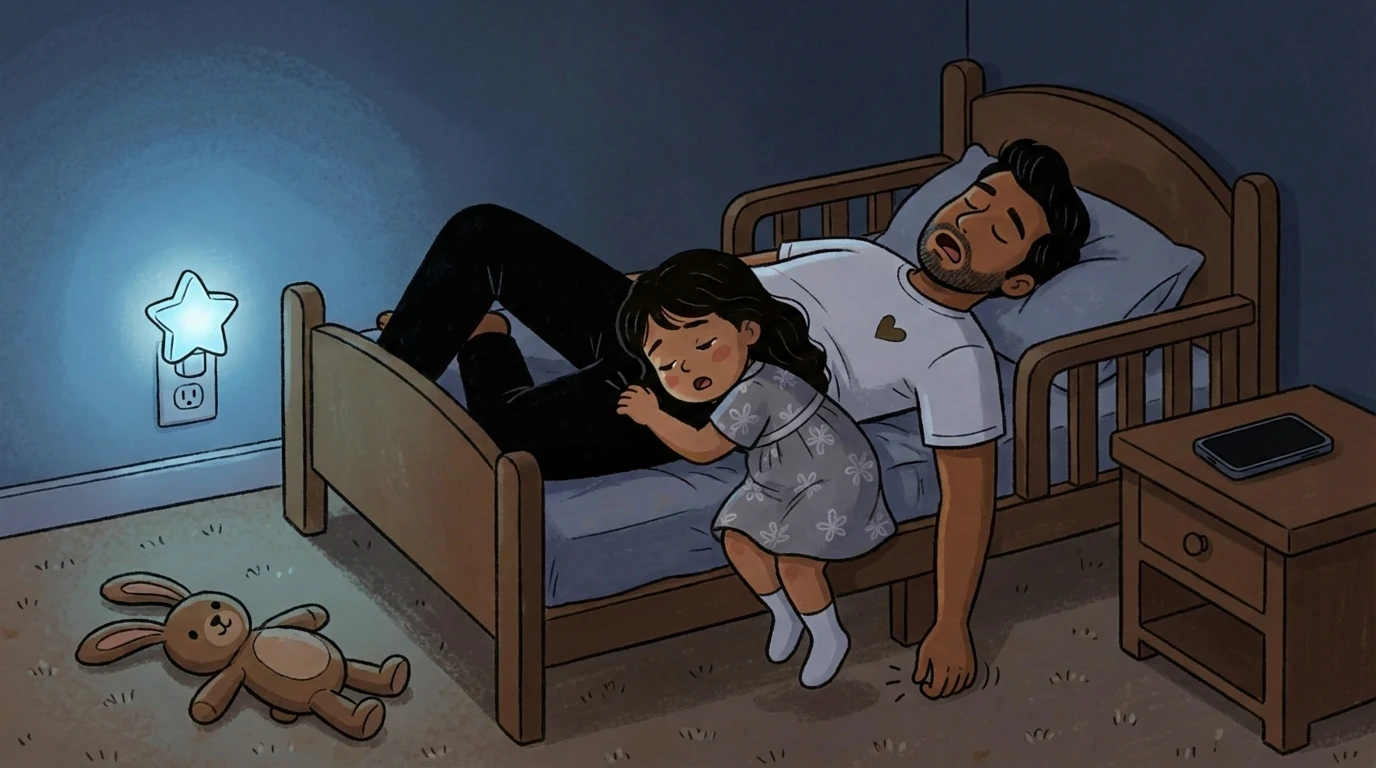
For young children, your presence provides the felt safety their nervous system needs to let go into sleep. Your presence is part of normal development. As they get older and more confident, you can gradually move from the bed to a chair to the doorway. The goal is building independence over weeks, not forcing it overnight.
A second wind means your child has blown past their tiredness window and their body has released cortisol and adrenaline to keep them going. They look energized but are running on stress hormones. Move bedtime 30 minutes earlier for a week and see if you can catch them before the hormones kick in.
Melatonin can help with the timing of sleep onset but does not address the underlying causes like wrong bedtime, sensory issues, or emotional backlog. Talk to your pediatrician before using it. It works best as a short-term bridge while you fix the schedule and routine, not as a permanent solution.