
TLDR
- Logic fails during meltdowns because of brain architecture, not defiance. The prefrontal cortex goes offline when a toddler is overwhelmed. The neural wiring between the emotional and rational brain is still under construction.
- Your nervous system is the tool, not your words. Co-regulation works through your breathing, posture, and physical presence. These signals speak directly to the child's limbic system, bypassing the rational brain that's already shut down.
- Co-regulation builds the wiring for self-regulation. Every time you lend your calm, you're helping construct the neural pathways they'll eventually use to calm themselves. You're building infrastructure, not just managing a moment.
- You have to regulate yourself first. You cannot lend calm you don't possess. If you're dysregulated, the child's nervous system picks up on that and escalates.
- Meltdowns don't disappear, but they change over time. Consistent co-regulation reduces meltdown frequency and intensity gradually. The capacity for emotional regulation grows with every episode you weather together.
The brain that can't hear you
You're in the cereal aisle. Your three-year-old wanted the box with the tiger. You picked the parrot. Now the world is ending.
So you explain. "They're the same cereal, just different boxes." You might even open both boxes right there if you're desperate enough.
None of it registers. The part of their brain that processes logic has gone dark.
The prefrontal cortex, responsible for reasoning, language processing, and impulse control, is still under construction in your toddler. Dr. Daniel Siegel describes this wiring as incomplete until well into childhood. During a meltdown, the connections between the limbic system (where emotions run hot) and the prefrontal cortex (where reasoning lives) disconnect. The emotional brain takes over completely.
Your perfectly sound spaghetti-measurement argument won't work when your child is screaming about portion sizes. The neural pathway required to receive your logic is offline. The lights are off in that room.
Your calm settled their meltdown
The Science of Parenting course will teach you why that worked
You'll understand the neuroscience well enough to co-regulate on purpose, not just when you happen to keep it together.
What co-regulation is
If logic won't work, what does?
Co-regulation is lending your regulated nervous system to your child's dysregulated one. You're not calming them with words or reason. You're calming them with your biology.
When you stay calm during your child's meltdown, your slow breathing, relaxed posture, and steady voice send signals to their nervous system. These signals don't go through the prefrontal cortex (offline, remember). They go through the limbic system directly. Your child's brain reads your body before it reads your words.
This is why shouting "CALM DOWN" has never once in human history produced a calm child. Your elevated voice and tense body tell their limbic system the situation is more dangerous than they thought.

The nervous system conversation
Two nervous systems in a room. One is on fire. One is steady. If the steady one stays steady long enough, the one on fire starts to calibrate toward it. Nervous systems are socially contagious, and this works in both directions. That's why mindfulness practices matter so much for parents. Your regulation capacity is the raw material your child borrows from.
What co-regulation is not
Co-regulation doesn't mean stopping the tears. It doesn't mean your child should immediately feel better. It doesn't mean you're failing if the meltdown lasts twenty minutes.
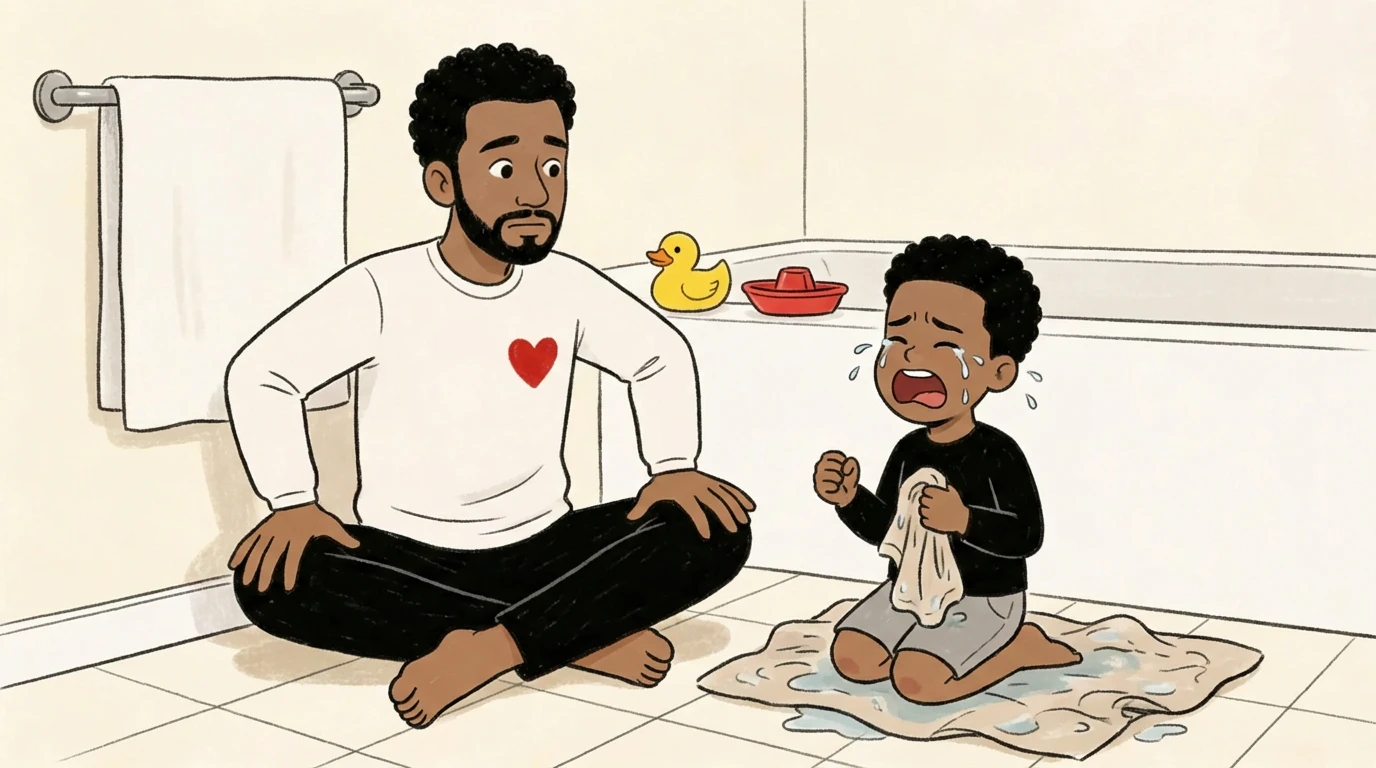
It means being a stable presence while the emotional storm runs its course. The tears are the process. Your job is to make the process safe.
Why some kids need it more
Every child needs co-regulation, but kids with sensory sensitivities and big reactions need it with particular consistency. Their nervous systems fire hotter and faster. The same situation that mildly annoys one child sends another into complete overwhelm.
These kids aren't being dramatic. Their neurological threshold for distress is lower, which means they hit prefrontal shutdown more quickly and more often. Your co-regulation practice does double duty: helping through each episode and giving their nervous system more data points for how "calm" feels.
The long game: building self-regulation
Here's where it gets interesting. Co-regulation is not permanent.
The neural pathways connecting the emotional brain to the rational brain strengthen with use. Each co-regulated meltdown is a repetition. Each repetition lays down more myelin on those connections. Over months and years, the pathways get faster, stronger, and more automatic.

Picture your child at twenty-five, coming home from a terrible day at work. Instead of snapping at their partner or numbing out with a screen, they sit down, take a breath, and say, "I need to talk about something that happened today."
That skill was built, repetition by repetition, in those moments when you sat on the floor and breathed slowly while they screamed about the wrong color cup.
The prefrontal cortex isn't fully developed until the mid-twenties. But children who receive consistent co-regulation show reduced meltdown frequency and faster recovery by preschool age. The investment pays out gradually, then all at once.
The hardest part (honestly)
The hardest part of co-regulation in practice is doing it when you're running on four hours of sleep and your child has had their sixth meltdown before noon - not mastering the technique itself.
You cannot lend calm you don't have. If your nervous system is fried, your child's nervous system will read "fried" from your body no matter how gentle your voice sounds.
How to co-regulate during a meltdown
- Regulate yourself firstTake two slow breaths. Drop your shoulders. Unclench your jaw. You cannot lend calm you don't have. Your nervous system needs to be the steady one before you engage.
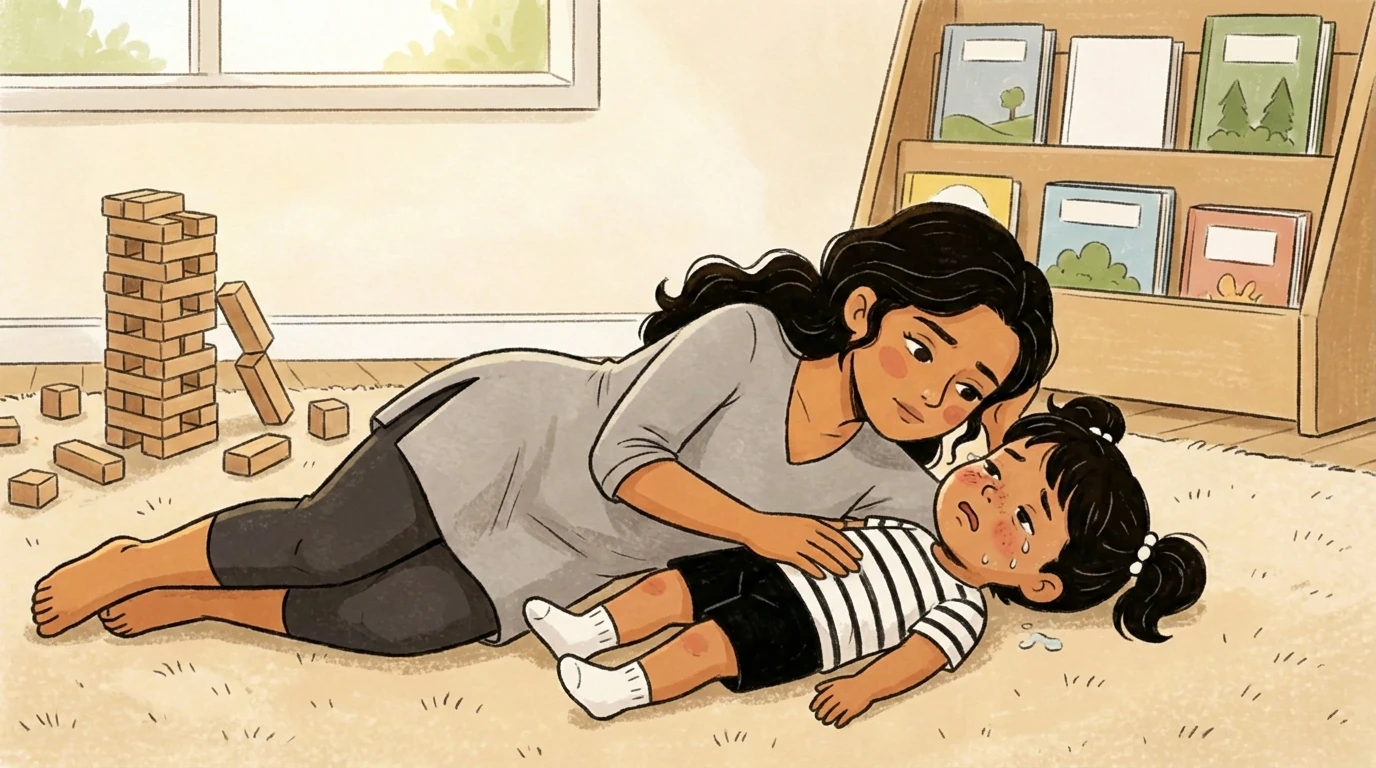
- Get low and closeCrouch or sit at their eye level. Physical proximity without towering over them signals safety to the limbic system. Stay within arm's reach even if they haven't asked for contact.
- Validate with few wordsSay something short: 'You're really upset. I'm here.' Avoid explaining or problem-solving. During dysregulation, fewer words work better because the language-processing brain is offline.
- Offer physical comfort if welcomeOpen your arms or place a hand on their back. If they pull away, stay close without forcing contact. Physical touch activates the parasympathetic nervous system and signals safety.
- Stay until the storm passesDo not leave, check your phone, or start tidying up. Your continued quiet presence signals that their big feelings haven't scared you away. Consistency through the full episode builds the neural pattern.
What happens between meltdowns
Co-regulation during a meltdown is the headline skill. But what you do between episodes shapes how effective it will be.
Practice calming techniques when everyone is already calm. Deep breathing won't work as a meltdown intervention if your child has never done it before. But if you've practiced slow breaths together at bedtime or during car rides, the pattern is already loaded when they need it.
Narrate your own regulation
"I'm feeling frustrated right now, so I'm going to take some deep breaths." Say this out loud, in front of your child. You're giving them a live template of what self-regulation looks like from the inside. They can't see your internal process unless you make it visible. You can also name specific body sensations: "My chest feels tight and my hands are squeezy, so I'm going to shake them out." Or narrate a decision to step away: "I'm going to go outside for a minute because I need some fresh air to think straight." The more specific you are about what you feel and what you're doing about it, the more usable the template becomes for your child.
Notice the small wins
When your child manages a frustration without melting down, say something specific. "You were really upset that the puzzle piece didn't fit, and you kept trying." You're pointing out that their brain did something new, and it worked. These moments are easy to miss because your attention naturally gravitates toward the explosions, not the quiet victories. But each time your child rides out a frustration without falling apart, that's a neural pathway firing successfully - one that you helped build. Over weeks and months, these small wins stack. The meltdowns don't vanish, but the ratio shifts. More managed moments, fewer total collapses.
The bottom line
Your child's brain is under construction. The wiring between feeling and thinking is incomplete, and during big emotions it disconnects entirely.
What reaches them is you. Your breathing. Your posture. Your physical presence. Your regulated nervous system speaking directly to their dysregulated one. Every meltdown you sit through calmly is a brick in that foundation. You're wiring the adult they'll become.
FAQ
No. Co-regulation means managing your response enough to be a stabilizing presence during their distress. You can be frustrated, tired, or annoyed. What matters is that you don't add your dysregulation on top of theirs. Regulate yourself first, then help them.
The prefrontal cortex continues developing into the mid-twenties. But children start showing increasing self-regulation capacity around age five or six. Toddlers have almost none. By school age, kids who had consistent co-regulation begin using those internalized patterns independently.
Co-regulation is a long game. You won't see results during the meltdown itself. The changes show up over weeks and months as reduced intensity and faster recovery. If your child pushes you away, stay nearby without forcing contact. Your calm presence still registers.
Any consistent caregiver can co-regulate. Grandparents, partners, daycare teachers. What matters is that the adult is regulated themselves and the child trusts them. More adults who can co-regulate means more opportunities to build those neural pathways.