
TLDR
- Your body decides before your brain does. The vagus nerve reads threat cues faster than conscious thought. By the time you're 'deciding' how to respond to a tantrum, your nervous system has already picked a lane.
- Three states explain most parenting chaos. Ventral vagal (safe, connected), sympathetic (fight-or-flight), and dorsal vagal (shutdown, collapse). Your child cycles through all three. So do you.
- Defiance is usually a nervous system in protection mode. What looks like a power struggle is often a kid whose body has detected threat. Punishment adds more threat. Connection signals safety.
- Co-regulation only works if you go first. You cannot calm a child from your own fight-or-flight state. Your nervous system sets the tone for theirs. Regulate yourself, then reach for them.
- Play is nervous system medicine. Laughter and roughhousing train the vagus nerve to shift flexibly between activation and calm. This builds lasting resilience, not just a fun afternoon.
Your nervous system has a mind of its own
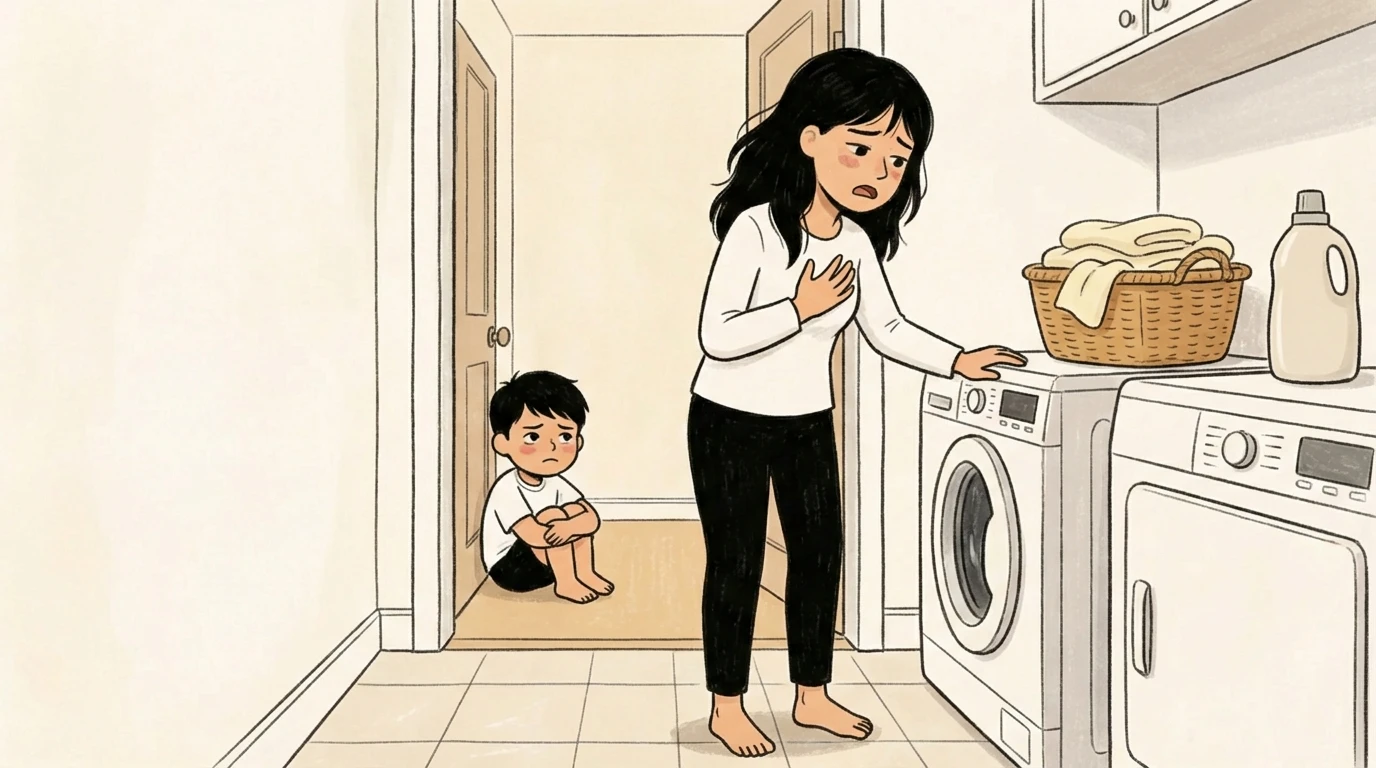
You're standing in the kitchen. Your four-year-old has just thrown a plate of pasta on the floor for the second time this week. And something happens in your body before you can form a single rational thought.
Your jaw clenches. Your chest tightens. Your voice comes out louder and sharper than you intended. Your nervous system chose it for you, in about a fifth of a second, based on signals you had no awareness of.
Polyvagal theory, developed by neuroscientist Stephen Porges, explains why. Your autonomic nervous system is constantly scanning for danger (a process Porges calls "neuroception"), and it responds faster than your conscious mind can intervene. The screaming, the thrown food, the whining at a pitch that seems designed to trigger something primal in your body: your nervous system reads all of it as threat data.
And once it picks a response, you're along for the ride. At least until you learn to recognize what's happening.
They froze and went silent
The Science of Parenting course will help you read their nervous system
You'll recognize shutdown versus defiance and respond to the biology instead of the behavior.
The three states (and why they matter at bedtime, breakfast, and beyond)
Polyvagal theory describes three nervous system states. You cycle through all of them daily. So does your child.
Ventral vagal: safe and social
This is the state where connection happens. Your body is relaxed, your voice has natural melody, your face is expressive. You can listen, think clearly, and respond with flexibility. When both you and your child are in this state, parenting feels almost easy.
This is also the only state where learning happens. If you want your child to absorb a lesson about why we don't throw pasta, they need to be here first.
Sympathetic: fight or flight
Heart rate spikes. Muscles tense. The body mobilizes for action. In your child, this looks like screaming, hitting, running away, or arguing with a ferocity that seems wildly disproportionate to the situation. In you, it looks like yelling, snapping, or that rising heat you feel when your patience evaporates.
In fight-or-flight, the thinking brain goes offline. Your child cannot process "we use gentle hands" while their body is preparing for battle. And you cannot deliver that message calmly while your own system is in the same state.
Dorsal vagal: shutdown
This is the oldest, most primitive response. When the threat feels inescapable, the nervous system collapses. In children, this looks like going blank, freezing, or an eerie stillness that parents mistake for compliance. The child who stops crying abruptly and stares at nothing has dropped into dorsal shutdown.
In parents, this shows up as emotional numbness or that feeling of "I just can't do this anymore" where you want to walk out and never come back.

Why "just calm down" doesn't work (for either of you)
Here's what polyvagal theory explains that most parenting advice skips: you cannot think your way out of a nervous system state. Telling yourself "stay calm" while your sympathetic system is firing is like telling your heart to stop beating faster.
The shift has to happen through the body. Slow exhales (longer out-breath than in-breath) directly stimulate the vagus nerve. Physical grounding (feet on floor, hand on a cold surface) sends safety signals. Changing your posture from rigid to open can nudge your system back toward ventral vagal.
And here's the part that matters most for parenting: your child's nervous system is reading yours. Constantly. Before they process your words, they process your tone, your facial tension, your breathing rate. If your body is broadcasting "threat," their body will respond to that signal regardless of how reasonable your words sound.
This is co-regulation. A child's nervous system learns to regulate by syncing with a regulated adult. A child who has never experienced a calm presence during their own distress hasn't learned what "calm" feels like from the inside.
What your child's behavior is telling you
The polyvagal lens changes how you read behavior. That defiant "NO" is a sympathetic nervous system mobilizing to protect, not a power play. The child who shuts down after being scolded has entered dorsal vagal collapse, not quiet reflection.
Behavior is a report on nervous system state, not a reflection of character. A three-year-old who hits is a small mammal in fight mode. A five-year-old who refuses to speak after a conflict has dropped below the threshold where speech is available.
If behavior reflects state, then changing the state changes the behavior. You change the state not through consequences or lectures, but through signals of safety: your tone, your proximity, your regulated presence.
When parents who carry their own unprocessed stress responses encounter a child in full sympathetic activation, both nervous systems lock into a feedback loop. The parent reads the child's distress as danger. The child reads the parent's tension as danger. Nobody can exit.
Breaking that loop starts with one person shifting state. Since your child's prefrontal cortex won't be fully developed until their mid-twenties, that person has to be you.
How to use your nervous system to calm the room
- Notice your body firstBefore you respond to your child, scan yourself. Tight jaw? Shallow breathing? Hot chest? These are signs your sympathetic system has activated. Name it silently: 'I'm in fight-or-flight right now.'
- Lengthen your exhaleBreathe in for four counts, out for six or eight. The extended exhale stimulates the vagus nerve and signals safety to your own system. Do this two or three times before you say a word to your child.
- Drop your voice and slow downPitch and pace carry more information than words. A low, slow voice tells your child's neuroception system that the environment is safe. A sharp, fast voice confirms threat.
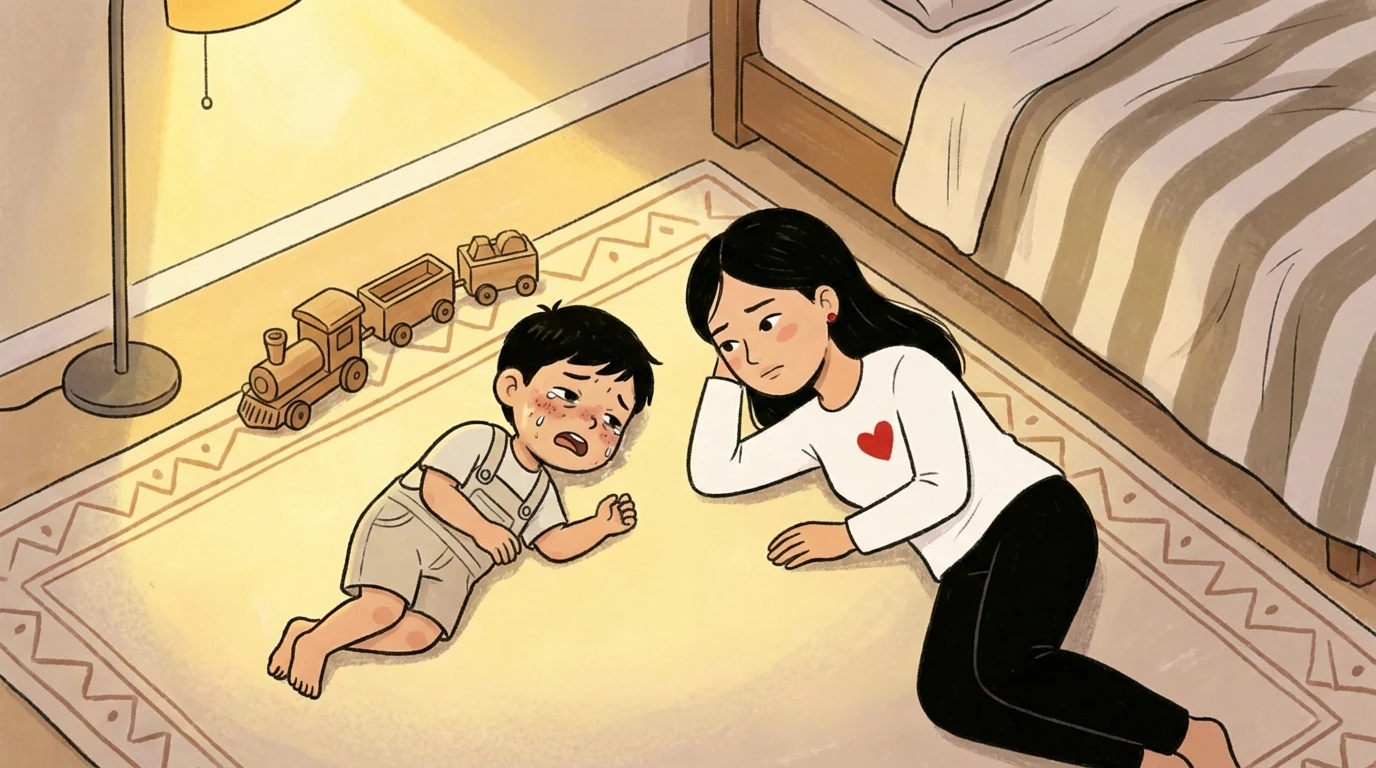
- Get low and get closeCrouch down to their level. Physical proximity with a regulated body is the most direct co-regulation signal. Stay within arm's reach but don't force touch if they pull away.
- Wait for the shiftCo-regulation takes time. Stay present and regulated for longer than feels necessary. You'll see the shift: shoulders drop, breathing slows, eyes soften. That's ventral vagal coming back online.
Play as nervous system training
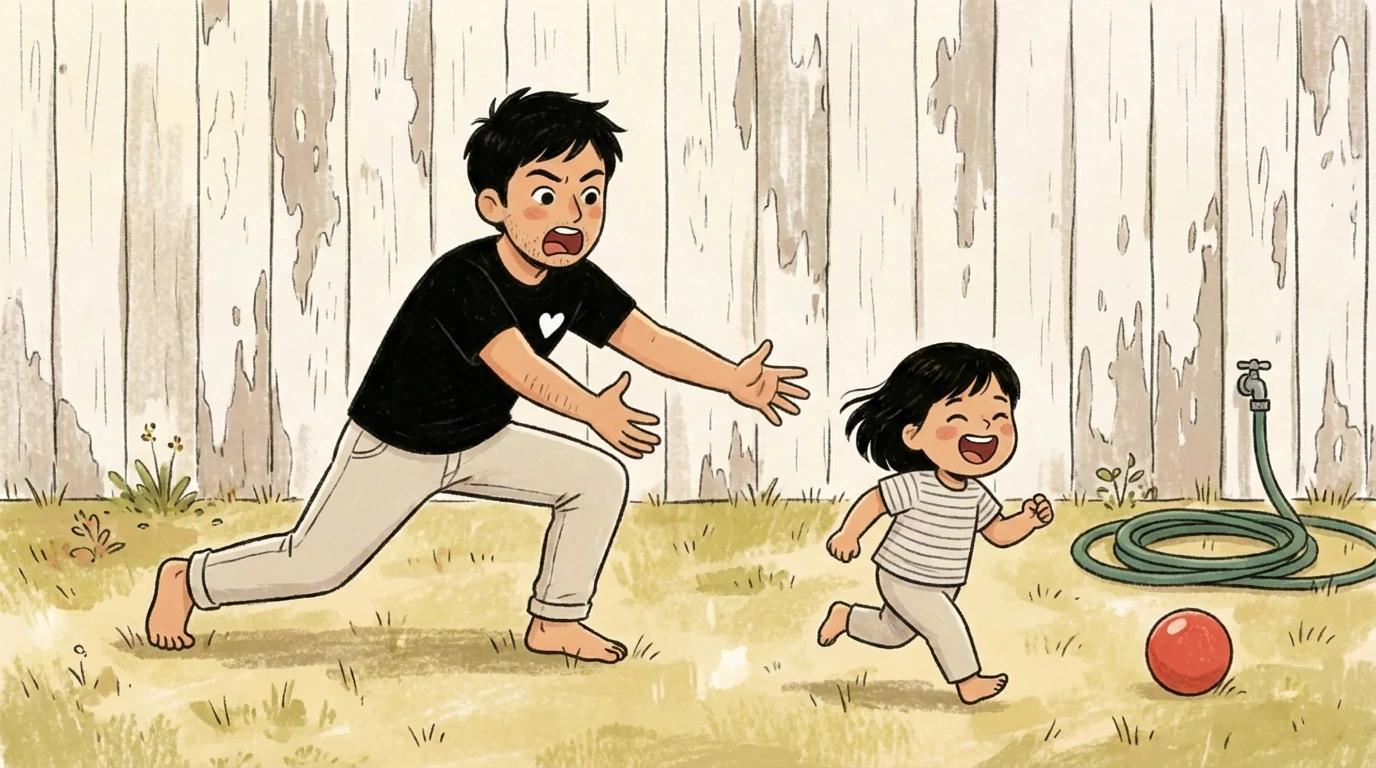
Play does something specific to the nervous system that nothing else replicates. During roughhousing, chase games, or peekaboo, a child's system rapidly cycles between activation (excitement, mild alarm) and safety (laughter, connection). This cycling builds vagal tone, the nervous system's ability to shift flexibly between states.
A child with strong vagal tone can get upset and recover. A child with weak vagal tone gets stuck: stuck in meltdowns, stuck in shutdown, stuck in anxiety that doesn't resolve.
Play with you does double duty. It builds vagal flexibility and strengthens the sense of safety that makes co-regulation possible. Twenty minutes of connected play per day does more for emotional regulation than any behavior chart.
The long game
Every time you calm yourself before responding to your child's distress, you're doing two things. You're handling the immediate situation. And you're building your child's nervous system architecture for the next several decades.
Children who experience consistent co-regulation develop stronger vagal tone. They become adults who can handle stress, recover from setbacks, and maintain relationships under pressure. Repeated experiences of "I was overwhelmed, and then a safe person helped me return to calm" shape how the vagus nerve functions.
You don't need to be perfect at this. You need to be good enough, often enough. Some days that means breathing through the pasta incident. Other days it means tagging in your partner while you sit on the bathroom floor for three minutes.
The nervous system learns through repetition. Every time you regulate yourself first and then reach for your child, you're adding another rep to their vagal tone training. That's the long game, and it's worth every effortful exhale.
FAQ
Fight-or-flight is high energy: screaming, hitting, running, arguing, thrashing. Dorsal shutdown is low energy: going blank, freezing, refusing to speak, sudden stillness, or an eerie compliance. Both are stress responses, but they need different interventions. Fight-or-flight needs calm presence and space. Shutdown needs gentle, warm reconnection to bring the system back up.
Yes. Vagal tone improves with practice at any age. Slow breathing with extended exhales, cold water on the face, humming, singing, and regular physical exercise all strengthen vagal function. Consistent meditation practice has been shown to increase vagal tone over weeks. You're training a nerve, and nerves respond to repetition.
Limits are essential. Polyvagal theory doesn't say avoid all activation. It says deliver limits from a regulated state so your child's nervous system reads 'safe adult holding a boundary' rather than 'threat.' A firm, calm 'no' from a regulated parent feels completely different to a child's nervous system than an angry, sharp 'no' from a dysregulated one.
This happens to everyone. If neither parent can regulate, the priority is reducing stimulation. Put physical distance between yourselves and the child if they're safe, turn down noise and lights, and focus on your own breathing. Even a partial shift toward calm helps. Tag-team if possible: one parent steps away, regulates, then returns to co-regulate the child.