TLDR
- Shame says 'I am bad.' Guilt says 'I did something bad.' Guilt motivates repair. Shame motivates hiding. The words you choose after a kid messes up determine which one takes root.
- Kids can't distinguish behavior from identity yet. Before age seven or eight, children lack the cognitive development to separate what they did from who they are. 'You hit your brother' and 'you're a mean kid' land in the same place.
- Shame passes between generations without anyone noticing. The phrases your parents used on you live in your muscle memory. They come out under stress before you've had time to choose different words.
- Repair is the antidote, every single time. When you overcorrect or say something harsh, coming back to say 'I was wrong to say that' teaches your child that mistakes don't define a person.
- Labels stick harder than you think. Calling a child 'the difficult one' or 'the troublemaker' gives them a role to live into. Describe the action, never the actor.
The face that stops you in your tracks
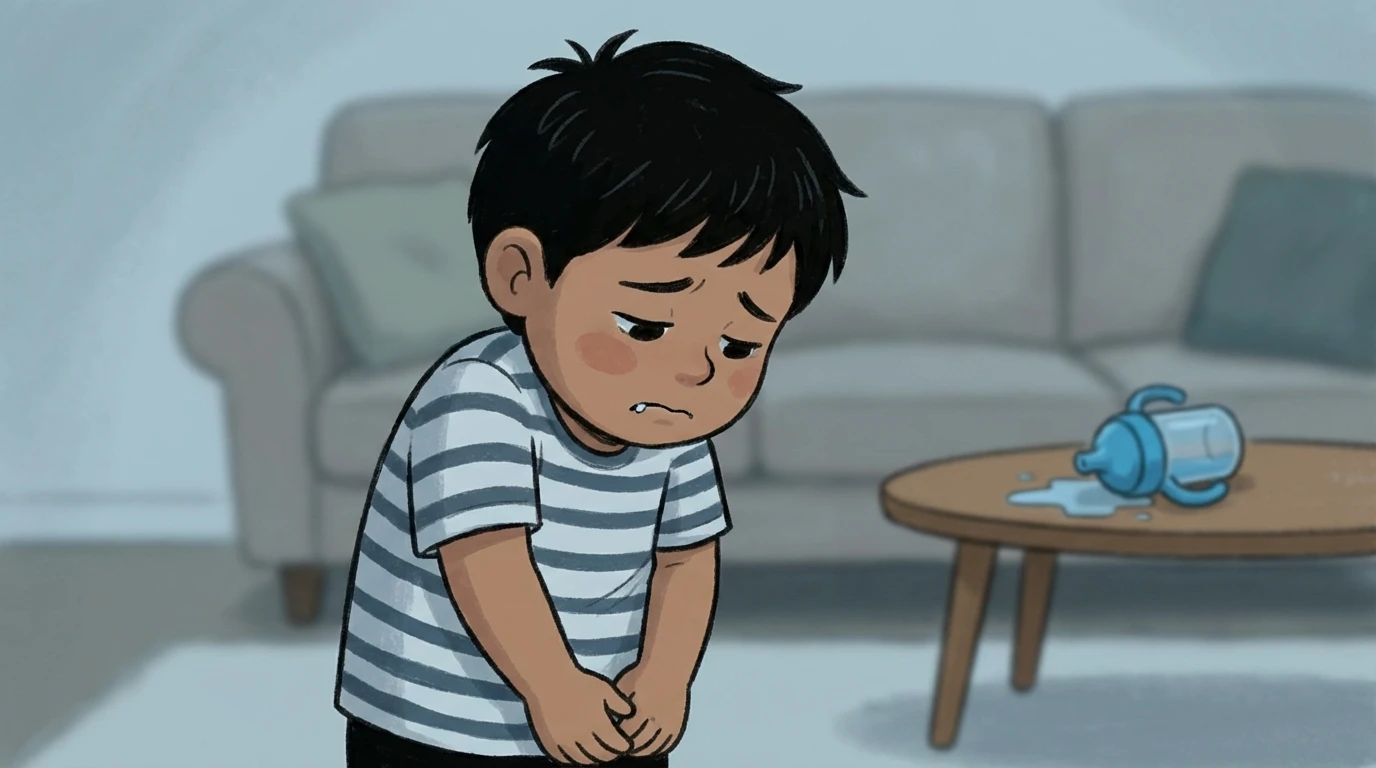
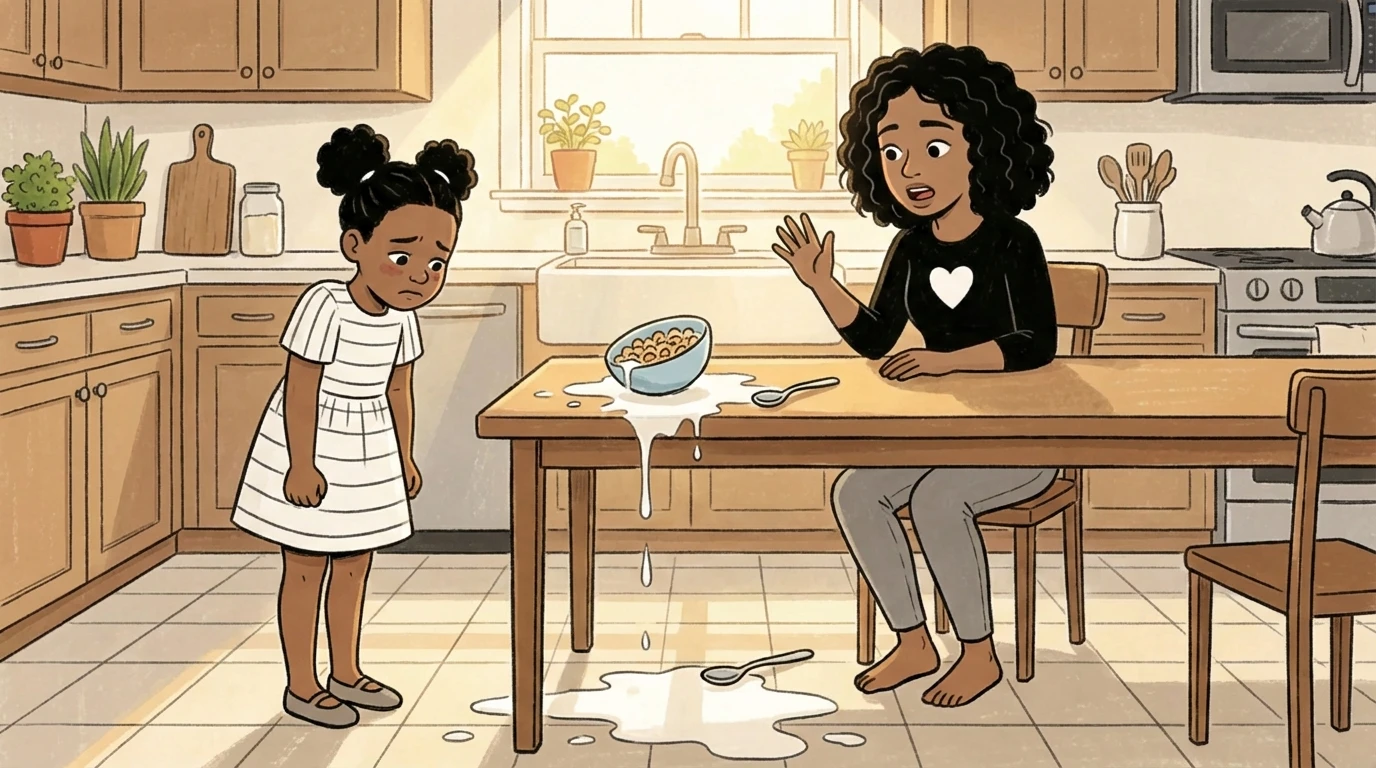
You know the one. Your kid does something wrong, you correct them, and their whole face collapses. Shoulders curve inward. Eyes drop to the floor. They look like they've been told something unforgivable, and all you said was "we don't throw food at the table."
That collapse is shame arriving. And it's worth understanding, because shame and guilt are two completely different experiences inside a child's brain, even though adults use the words interchangeably.
Guilt says: I did a bad thing. Shame says: I am a bad thing.
Guilt is productive. It motivates a child to fix what they broke, apologize, try differently. Shame does the opposite. It makes a child want to disappear, lie, hide, or shut down. When you see that crumpled face, you're watching a child absorb a message about who they are, not what they did.
That crumpled face again
The Intentional Parenting course will teach you to correct without shaming
You'll say what needs saying and your child's face won't collapse, because you'll know how to separate the behavior from the kid.
How shame develops (it's earlier than you'd expect)
The developmental window
Children start experiencing something resembling shame as early as fifteen to eighteen months. By age two, they can feel the full weight of it. The catch: they don't yet have the cognitive equipment to process it. A toddler can't think, "My parent is upset about the marker on the wall, but I'm still a good person." That kind of reasoning doesn't come online until age seven or eight.
So when a two-year-old hears "bad kid" after drawing on the couch, they store it wholesale. The behavior and the identity merge into one file.
Where it comes from
Shame doesn't appear out of nowhere. It's built, interaction by interaction, through a few specific patterns:
- Global labeling. "You're so naughty" or "why are you always like this?" assigns an identity rather than addressing a behavior.
- Withdrawal of affection. Turning away, refusing to speak, giving the silent treatment. The child learns: when I mess up, love disappears.
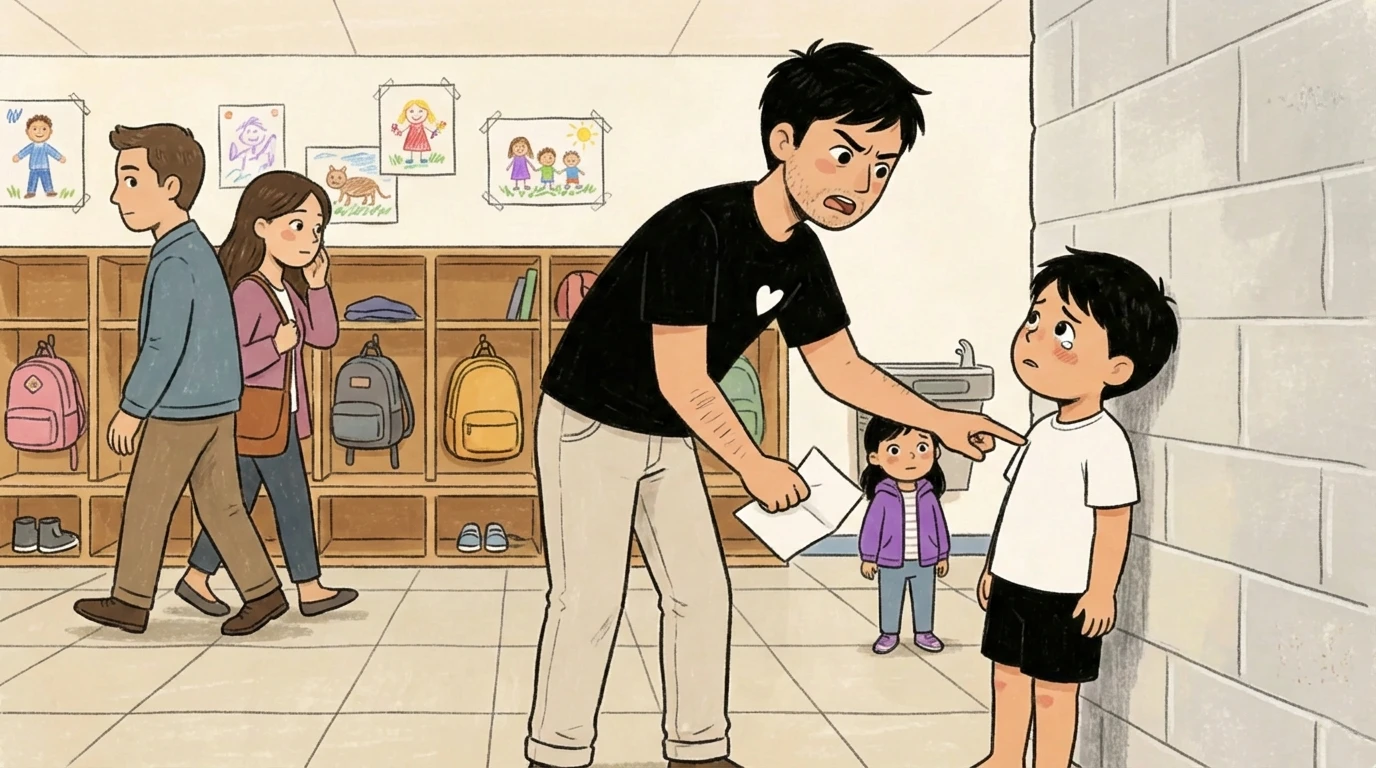
- Public correction. Scolding a child in front of siblings, other parents, or classmates adds humiliation to the correction.
- Comparisons. "Why can't you be more like your sister?" tells a child that they are deficient as a person.
None of these require yelling or cruelty. Some of the most shame-inducing moments happen in a perfectly measured tone.
What shame does to a brain that's still under construction
When a child experiences repeated shame, their stress response system recalibrates. Cortisol (the stress hormone) spikes during shame episodes, and the developing brain adapts to expect those spikes. Over time, the child's baseline anxiety increases. They become hypervigilant to disapproval, reading danger into neutral facial expressions.
Shame rewires the developing nervous system toward threat detection. A child who grows up marinating in shame doesn't just "feel bad about themselves." Their brain builds architecture optimized for scanning every room for signs that someone is about to be disappointed in them.
This is how shame-based parenting passes from one generation to the next. The child grows up, has their own kids, and under stress, the old scripts fire before the new ones have a chance. "What is wrong with you?" leaves your mouth and you hear your own parent's voice.
The inner critic arrives
By age five or six, external shame starts to become internal. The child no longer needs a parent to say "you're bad." They start saying it to themselves. I'm stupid. Nobody likes me. I always ruin everything.
That's negative self-talk taking root, and it sounds a lot like the voices the child has been hearing from adults. The phrases may shift slightly, but the message is preserved: something is wrong with me.
How to correct without shaming
Here's the good news. You can hold firm limits, address bad behavior, and teach right from wrong without ever making a child feel like they're defective. The distinction between punishment and discipline matters here. Punishment says: you'll suffer for this. Discipline says: let's fix this.
How to correct without triggering shame
- Name the behavior, not the childSay 'hitting hurts' instead of 'you're being mean.' Describe what happened in neutral terms. The child learns that the action is the problem, not their existence.
- Stay physically close during correctionDon't withdraw your body when you're correcting. Get on their level, maintain proximity. Physical distance during correction signals that your love has conditions attached.
- Use 'you did' instead of 'you are''You pushed your friend' addresses the moment. 'You're a bully' defines a character. Train yourself to conjugate behavior as a verb, never a noun.
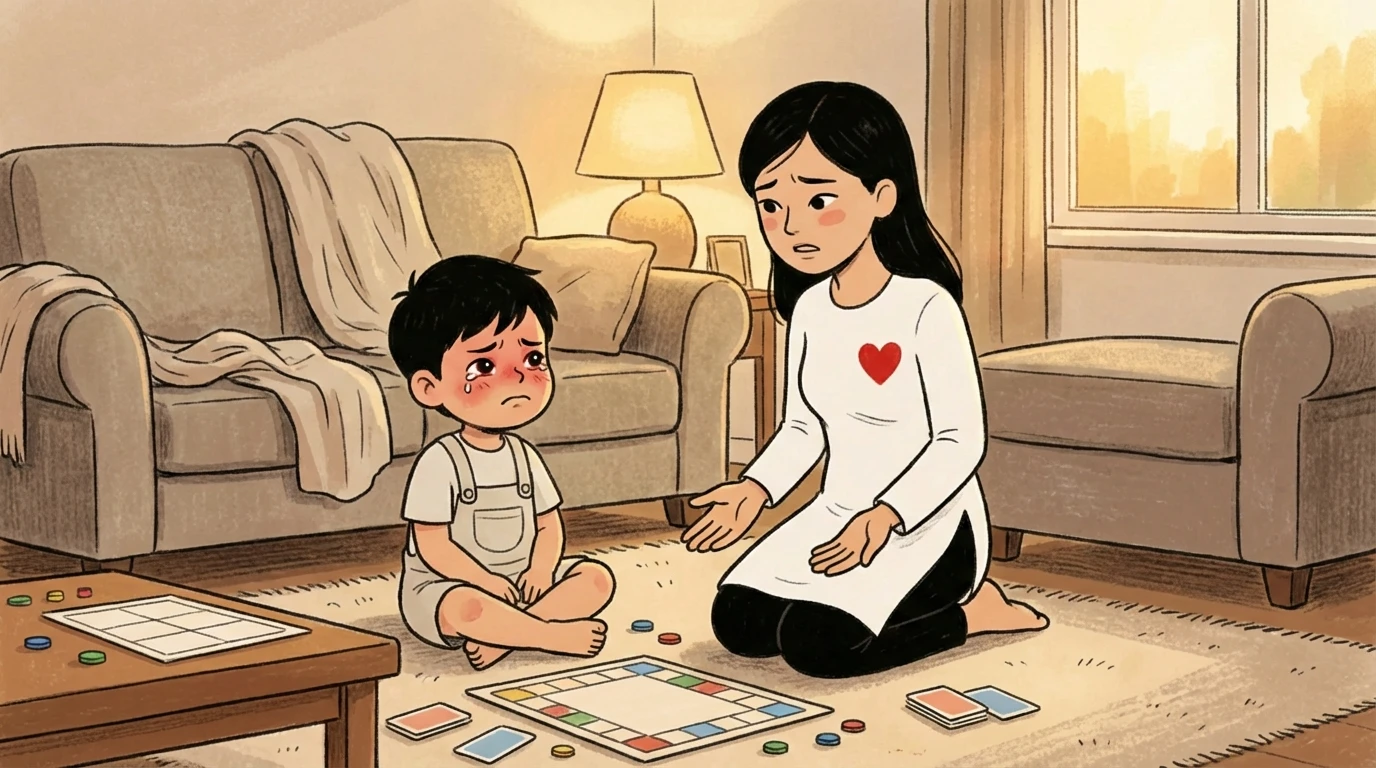
- Repair when you overshootYou will say something too harsh. Go back and say 'I was frustrated and I said that wrong. You're not bad. What you did was not okay, and I love you.' The repair teaches more than the correction.
- Skip the audienceCorrect in private when possible. Pull the child aside, crouch down, say what needs saying without witnesses. Save their dignity. The lesson lands better without the humiliation.
That repair step deserves extra attention. A lot of parents think apologizing to their child undermines authority. The opposite is true. When you model owning a mistake, you teach your child that errors are fixable, not fatal. They learn: people who love me can mess up and still come back. That's the foundation of psychological safety.
The labels problem
Every family has them. The easy one. The difficult one. The dramatic one. The shy one. Parents assign these labels casually, sometimes even affectionately, and kids absorb them like sponges.
A label becomes a self-fulfilling prophecy. The child labeled "the troublemaker" stops trying to behave well because the role has been assigned. The child labeled "the sensitive one" learns that their big feelings are a character flaw rather than an experience everyone has.
Watch for labels that seem positive too. "The smart one" creates pressure to never struggle. "The good one" creates terror of making a single mistake. All labels, positive or negative, reduce a complex kid to a single trait.
What to do instead
Describe what you see in the moment. "You worked really hard on that drawing" beats "you're so talented." "You shared your crackers with your friend" beats "you're such a good kid." The description is specific and temporary. The label is global and permanent.
When you catch yourself mid-shame
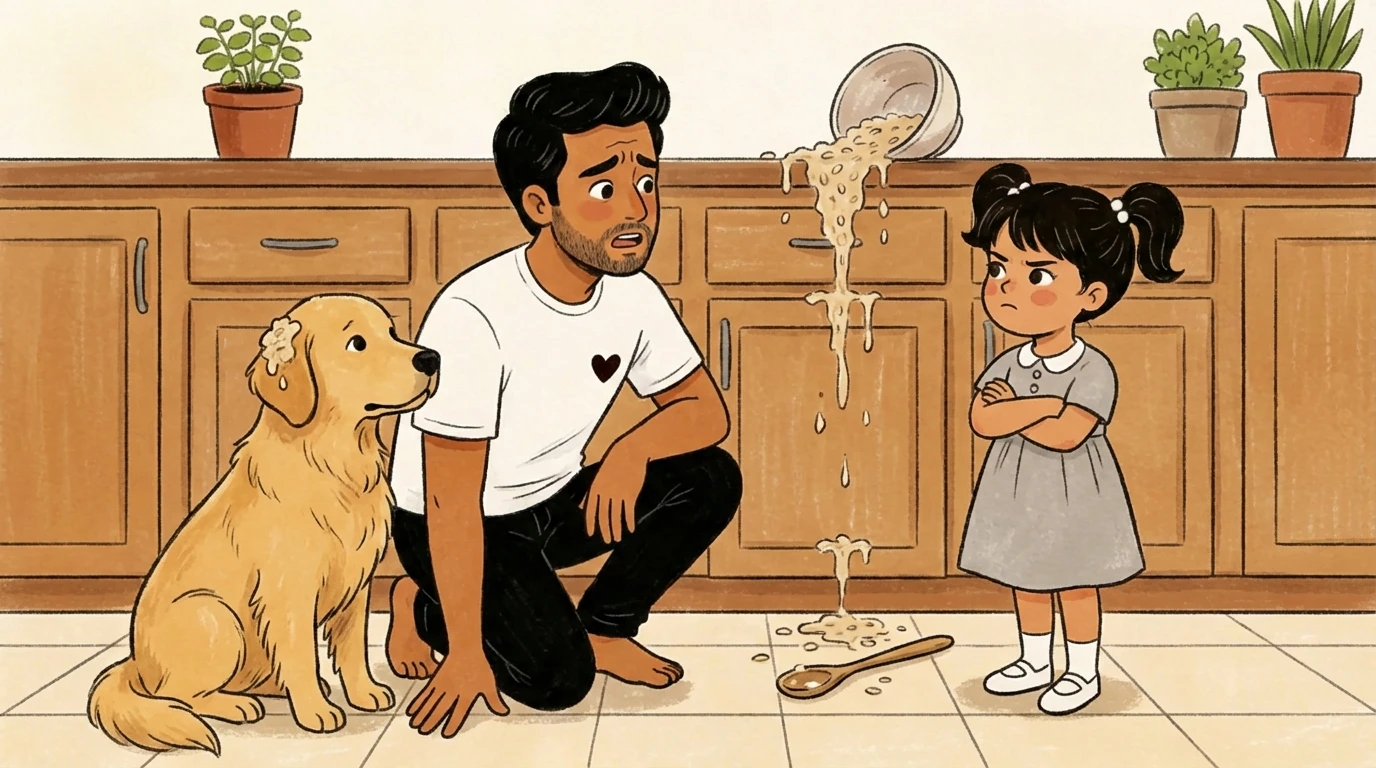
It happens. You're exhausted, your kid just dumped an entire bowl of oatmeal on the dog, and "what is wrong with you?" flies out before you can stop it.
Here's what matters: the next sixty seconds count more than the one that just passed. Stop. Take a breath. Then try this script:
"I said that wrong. There's nothing wrong with you. I'm frustrated about the oatmeal, and I took it out on you. I'm sorry."
Your child just watched an adult catch a mistake in real time and repair it. That's more valuable than a hundred perfectly worded corrections, because it proves that shame doesn't have to be the final word. Anybody can come back from a bad moment.
The long game with shame
Preventing shame is a practice, not a destination. You will mess up. You will hear your own parents' words come out of your mouth at 7 AM when you haven't slept. What matters is whether you repair, redirect, and keep showing your child that their worth is separate from their worst moments.
Kids who grow up with correction minus shame develop something specific: they can tolerate making mistakes. They don't crumble when they get a bad grade or lose a friendship. They feel bad about what happened (guilt) without deciding they're broken at their core (shame).
That's the difference between a child who can try again and a child who stops trying. Every time you separate the behavior from the kid, you're building that resilience.
FAQ
Children experience shame-like responses as early as fifteen to eighteen months. By age two, they feel the full weight. They lack the ability to separate identity from actions until around age seven or eight, making early childhood a sensitive window.
Yes, in appropriate doses. Guilt is the feeling that you did something wrong, and it motivates repair. A child who feels guilty about hitting a friend is more likely to apologize and try differently. Guilt becomes harmful only when it tips into shame, where the child concludes they are the problem.
Check your language. If your correction describes the behavior ('hitting hurts'), that's discipline. If it describes the child ('you're mean'), that's shame. Watch your child's body language too. Shame shows up as collapsing inward, avoiding eye contact, and shutting down rather than engaging.
Yes. Shame responses are built through repeated patterns, and they can be rebuilt through consistent repair, specific praise, and correction that targets behavior instead of identity. The brain remains plastic throughout childhood. Start repairing now, and the new pattern will gradually overwrite the old one.
Start by modeling the alternative. Correct behavior without labeling the child, repair openly when you make mistakes, and talk with your partner privately about the difference between shame and guilt. Share specific examples rather than criticizing their approach. Change often comes from seeing a different method work.