TLDR
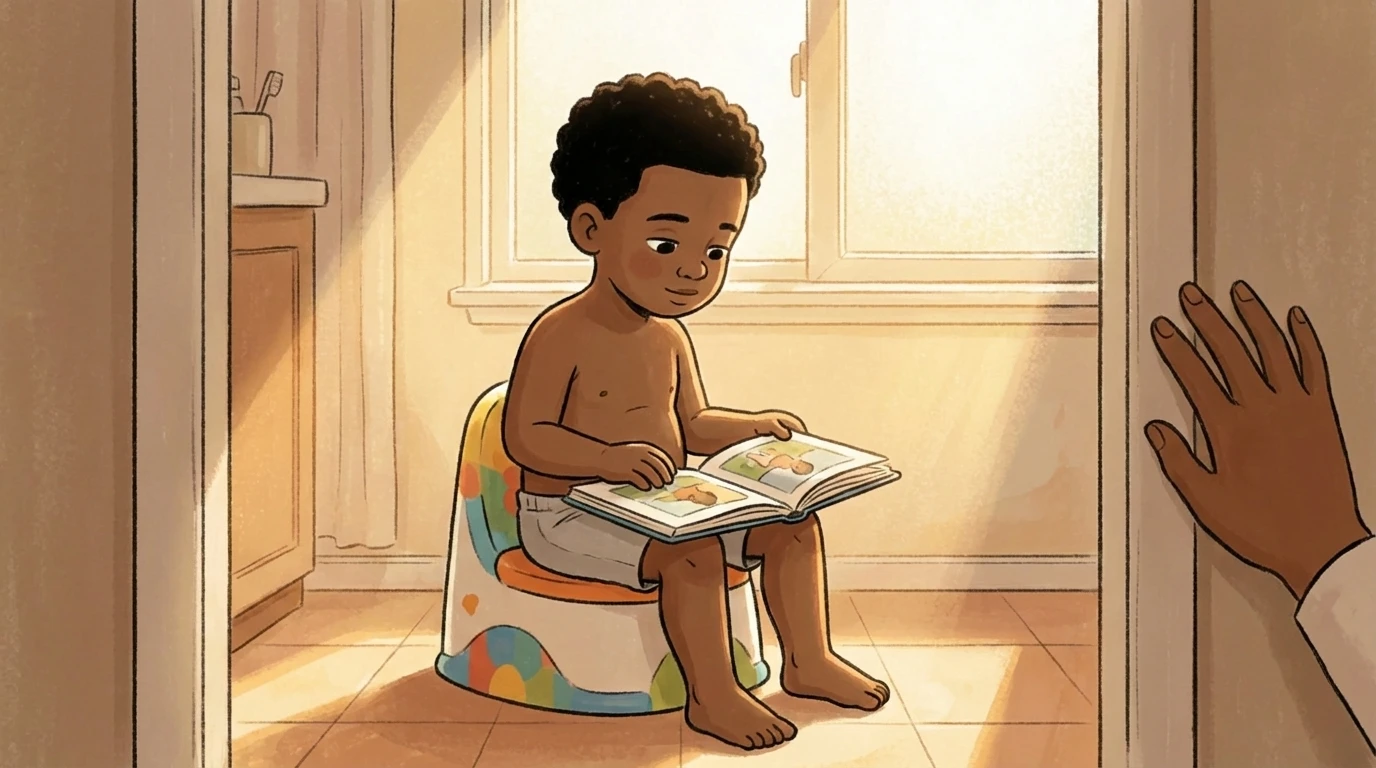
- There is no critical window for potty training. Every child gets out of diapers when their body and brain are ready. Pushing before that point creates power struggles you cannot win.
- The child controls this process, not you. They control their own sphincter muscles. That's just anatomy. Your job is environment setup and cheerful patience.
- Punishment makes accidents worse. Fear shuts down the learning centers of the brain. Shame around toileting can cause withholding, constipation, and months of setbacks.
- Bare-bottom practice beats pull-ups. Pull-ups mask the sensation of an accident. Real underwear (when the child asks for it) provides immediate feedback that speeds learning.
- Smooth potty training looks boring from the outside. No drama, no charts, no battles. Just a kid who woke up one day ready and a parent who'd been quietly preparing the ground.
Why "training" is the wrong word
You train a dog. You train for a marathon. Both imply one party imposing structure on another (or on themselves). Potty learning is different because the person doing the learning is also the only person who controls the relevant muscles.
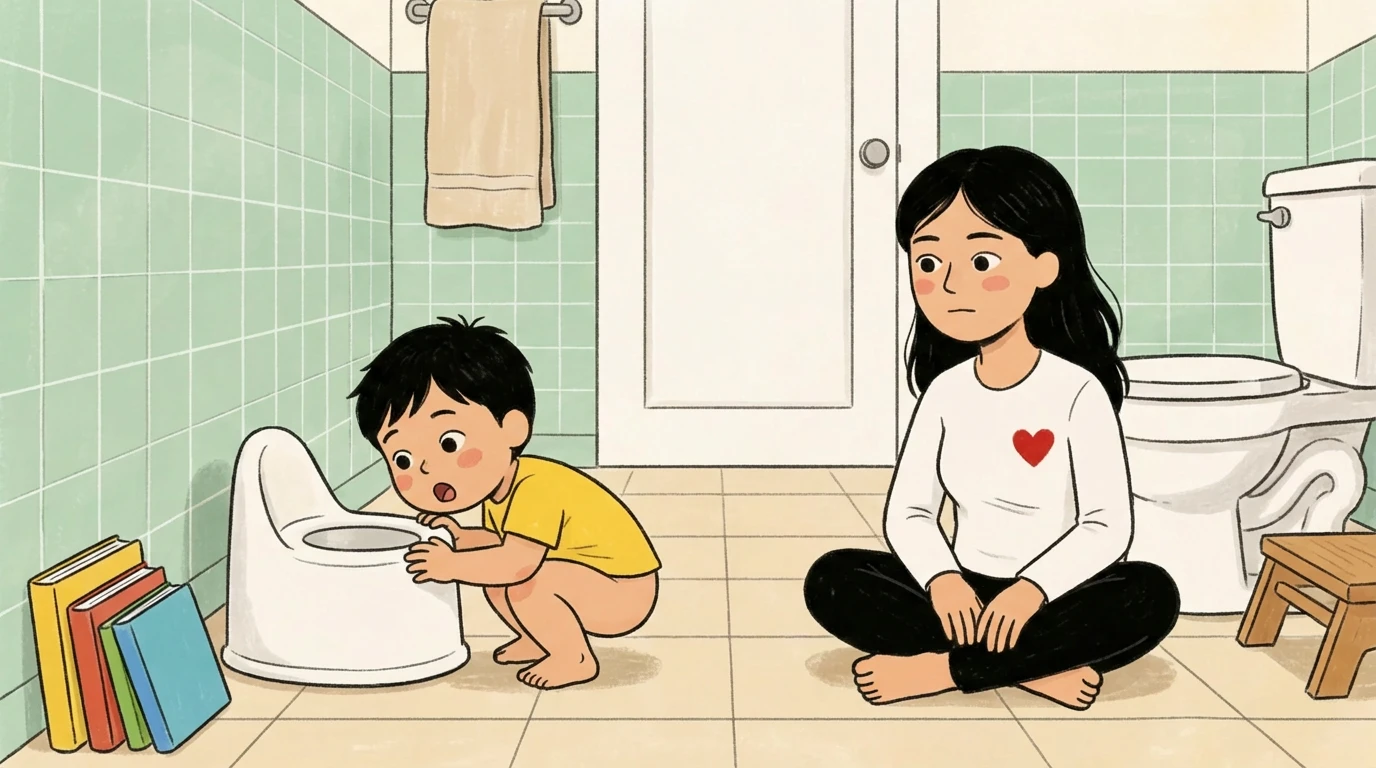
That's worth sitting with for a second. You can lead a toddler to the potty, but you cannot make them release. Fights with your child about their body are fights you will never win. This is physics, plain and simple.
Child-led potty learning works with this reality instead of against it. You create the conditions. You model the behavior. You wait. And when your child is ready, the whole thing clicks into place with surprisingly little fanfare.
The readiness myth
There's a persistent idea that there's a "critical window" for potty training, and if you miss it, you've made everything harder. No research supports this. Zero studies have identified a developmental window that closes.
Children who start before they're ready take longer, have more accidents, and experience more distress. Children who start when they're ready often pick up on their own readiness cues and move through the process in weeks. Not sure where your child stands? Our potty training readiness quiz can help you read the signals.
The "window" pressure comes from preschool deadlines and relatives who trained their kids at 18 months in 1987.
Still not interested at three
The Potty Training course will show you when to follow and when to nudge
You'll stop second-guessing the wait and know which gentle prompts move things forward without pressure.
Setting up the environment
Before your child shows any interest, you're laying groundwork. This is the boring part that makes the exciting part possible.
Potties everywhere
Put a small potty in every bathroom plus whatever room your child spends the most time in. Living room potty looks weird to guests. You will not care about guests when your toddler announces "I need to go" and you have four seconds to make it happen.
Books and modeling
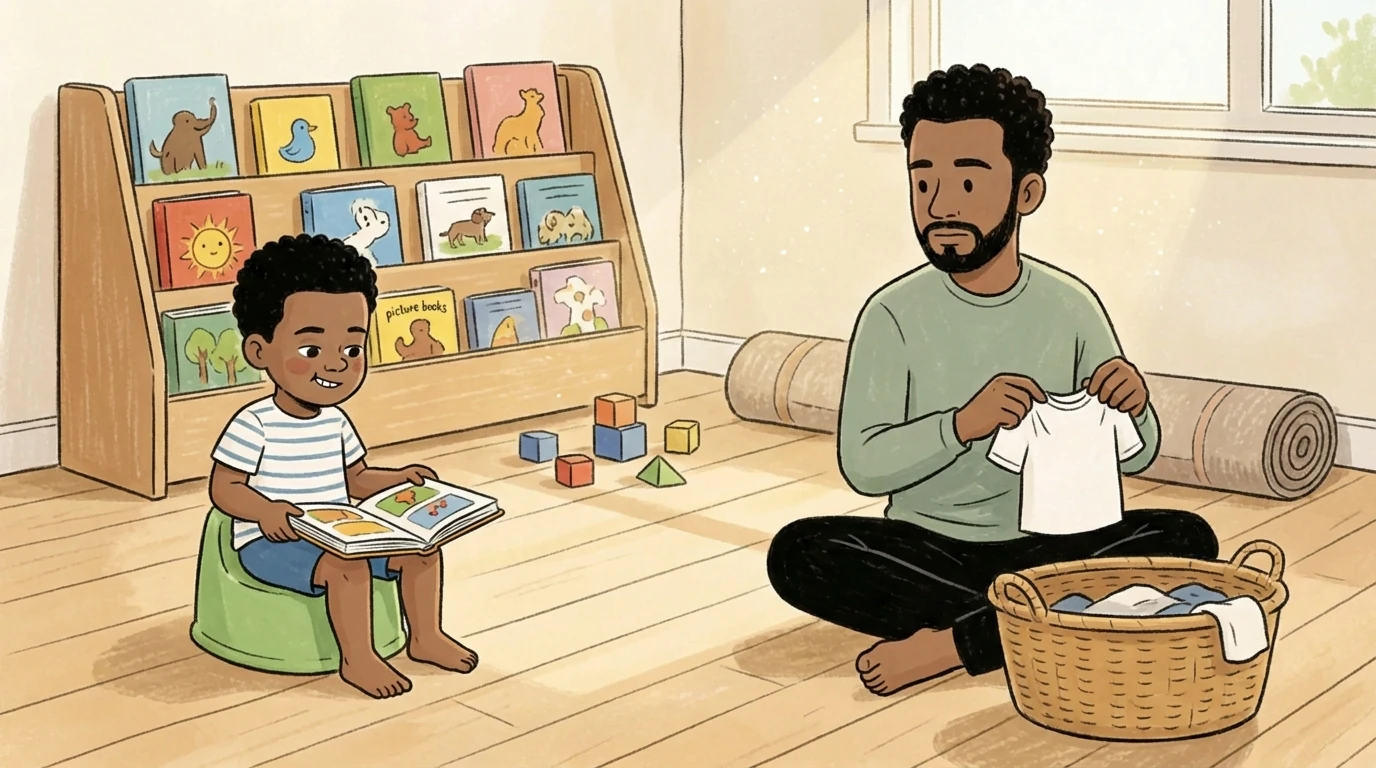
Read potty books together. Leave them next to the potty. Let your child see you use the toilet (yes, every time they barge in counts). Older siblings or cousins are even better models. Toddlers learn more from watching other kids than from watching adults.
The foot stool situation
When a child's feet dangle, their rectal muscles tighten. They physically cannot release while their legs swing in midair. A sturdy stool that lets feet rest flat changes everything. The small floor potty has this built in, which is one reason kids prefer it.
The active learning phase
Your child starts showing interest. They follow you to the bathroom. They tell you when their diaper is wet. They sit on the potty (clothed, then maybe not). This is where gentle parenting philosophy and potty learning intersect: you're responding to their initiative, not imposing your timeline.
Let underwear be their idea
This is the hardest part for goal-oriented parents. You want to buy the cute underwear and make a big deal of it. Instead, wait. When your child asks for underwear (or refuses a diaper), that's your green light.
Bare-bottom time at home is more effective than pull-ups. Pull-ups feel like diapers and mask the sensation of an accident. When a child is bare-bottomed and pees on the kitchen floor, they notice immediately. That feedback loop is the actual learning mechanism. Roll up your rugs. Accept that your floors will need mopping. It's temporary.
Celebrate without bribing
Here's where it gets tricky. You want to acknowledge success without creating a reward dependency. A big goofy dance, a silly song, a high-five: these are celebrations. A sticker chart with a prize at the end is a reward system that can backfire. The difference matters because external rewards can shift a child's motivation from "I'm proud of myself" to "What do I get?"
So when your kid uses the potty, lose your mind a little. Sing the potty song. Do the potty dance. Be ridiculous. Then move on with your day.
How to support child-led potty learning
- Place potties in every high-traffic roomSmall floor potties in bathrooms and main living areas. When the urge hits, distance to the nearest potty determines success or failure. Four seconds is not an exaggeration.
- Read and model without pressurePotty books, letting your child observe bathroom use, and casual conversation about what bodies do. No quizzing, no 'Don't you want to try?' Just exposure.
- Watch for readiness signalsStaying dry for two-hour stretches, hiding to poop, pulling at wet diapers, announcing eliminations. These signals mean the nervous system is maturing.
- Start with bare-bottom time at homeSkip pull-ups. Let your child go bare below the waist during low-stakes hours at home. The immediate feedback of feeling wetness teaches faster than any verbal instruction.
- Celebrate successes with enthusiasm, not prizesSilly dances, songs, high-fives. The joy is the reward. Avoid sticker charts or candy that shift motivation from internal pride to external payoff.
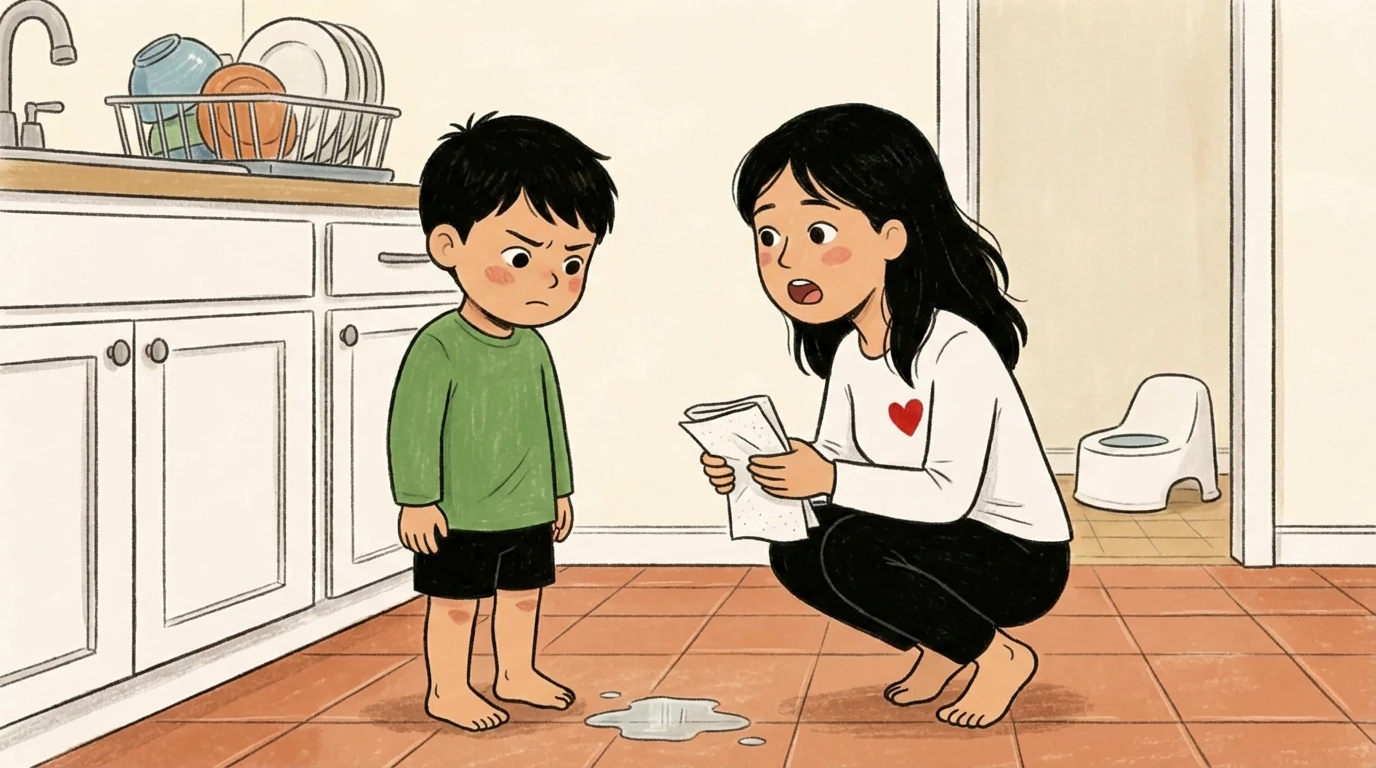
- Handle accidents with a shrugSay 'Oops, accidents are how we learn' and clean up together. No sighing, no disappointment face, no 'Maybe next time.' Shame creates fear, and fear creates withholding.
When things stall (and they will)
Your child uses the potty for two weeks and then suddenly wants diapers again. This is a toddler brain that got bored, overwhelmed, or is processing something else (new sibling, new room, a cold, teeth).
The constipation trap
Watch for this one carefully. A child who had one painful bowel movement may start avoiding the potty entirely. Withholding leads to harder stools, which leads to more pain, which leads to more withholding. Built-up fecal matter can deaden the nerve signals that tell them they need to go, and it pushes on the bladder causing seemingly random pee accidents.
If your child is straining, avoiding, or having hard pellet stools, talk to your pediatrician before doing anything else. This is a medical issue masquerading as a behavioral one.
Fear of the potty
Some kids develop a genuine fear, especially of the big toilet (loud flush, swirling water, the perceived risk of falling in). Playfulness is your best tool here. Put the potty on its side and pretend it's a boat. Let a stuffed animal "use" it first. Make fart noises and laugh together. Laughter deactivates the fear response in the brain faster than reassurance does.
What you must never do
The American Academy of Pediatrics notes that potty training is when children are most vulnerable to physical abuse, because parental frustration escalates. That statistic alone justifies the child-led approach.
Never punish accidents. Not with time-outs, not with disappointed sighs, not with "big kids don't do this." Fear shuts down the prefrontal cortex. A scared child cannot learn.
Never start during major transitions. New baby, new house, new daycare. Your child's brain is already maxed out on adaptation.
Never start because of external deadlines. The preschool requires it by September? Talk to the school. Most will work with you.
The timeline question everyone asks
"How long will this take?" Three days to several months. That's the only honest answer.
Children who start when they're genuinely ready often surprise parents with speed. Children pushed before readiness can take six months of miserable back-and-forth. The investment in waiting pays off in speed once you start.
Complete means your child self-initiates. They feel the urge, walk to the bathroom, and handle it (with help on wiping for a while, obviously). If you're reminding them every 45 minutes, you're not done yet.

You are the junior partner
Potty training is a partnership, and you're the junior partner. Your child's body, your child's timeline, your child's decision. You bring the potties, the books, the clean-up supplies, and the willingness to wait.
That waiting is the hardest part. Every other parent at the playground seems to have a kid who trained in a weekend using some TikTok method. (They didn't. Or they're not telling you about the six weeks of regression that followed.)
Your child will get out of diapers. Every single child does. The only variable is how much stress accumulates along the way. Child-led learning keeps that stress as close to zero as the real world allows.
FAQ
There's no correct age. Most children show readiness between 2 and 3.5 years old, but the range is wide. Instead of watching the calendar, watch your child. Staying dry for two-hour stretches, showing interest in the bathroom, and announcing wet or dirty diapers are more reliable signals than any birthday.
Pull-ups mask the wet sensation that teaches children to recognize accidents. They feel like diapers and send mixed signals. Bare-bottom time at home and real underwear (when your child requests them) provide the immediate feedback that speeds learning. Use pull-ups only for car trips or situations where bare bottom isn't practical.
Regression is normal and expected. Illness, new siblings, schedule changes, or even a growth spurt can cause a child to temporarily lose interest. Back off completely, return to diapers without any guilt or commentary, and wait for readiness to reappear. Pushing through regression creates power struggles.
Acknowledge their concern and hold your boundary. You can say 'We're following our pediatrician's guidance and letting them lead the process.' Most preschools will work with families on flexible timelines when you communicate early. Relatives mean well but are often working from outdated information.