TLDR
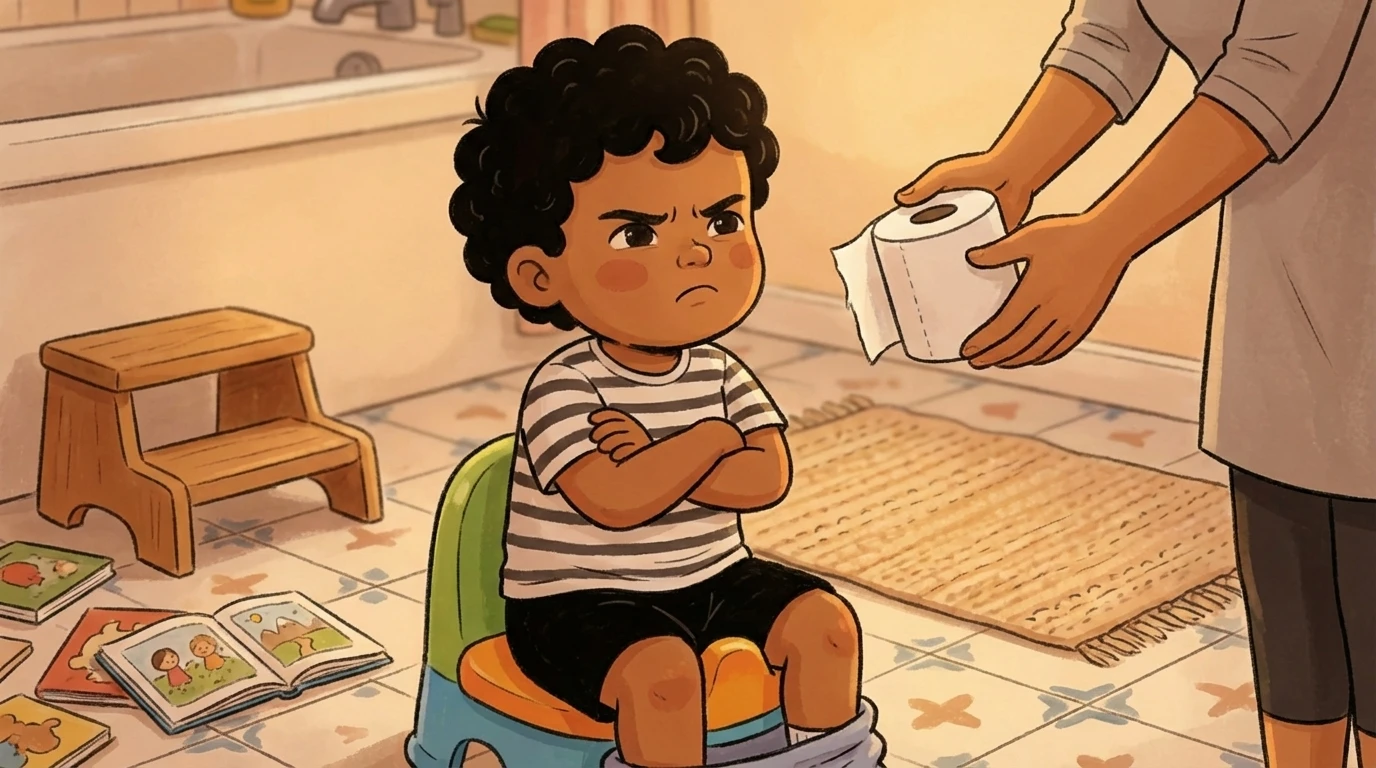
- You will never win a fight about your child's body. They control when and where they go. If toileting becomes a battle of wills, the child has the final say every time. Every time.
- Your frustration is fuel for the resistance. Children sense parental anxiety and emotional investment. The more you care visibly, the more potty use becomes a tool for asserting autonomy.
- Offering the choice to go back to diapers often ends the standoff. When there's nothing to resist against, most kids choose the toilet on their own. The power struggle needs two participants.
- Over 80% of children experience setbacks during training. Accidents and refusal are the normal path to mastery. The 3-to-12-month timeline for daytime independence is standard.
- Physical causes hide behind behavioral explanations. Constipation, body mechanics, and fear of pain drive more refusal than defiance does. Rule out the body before blaming the attitude.
Why the toilet becomes a battlefield
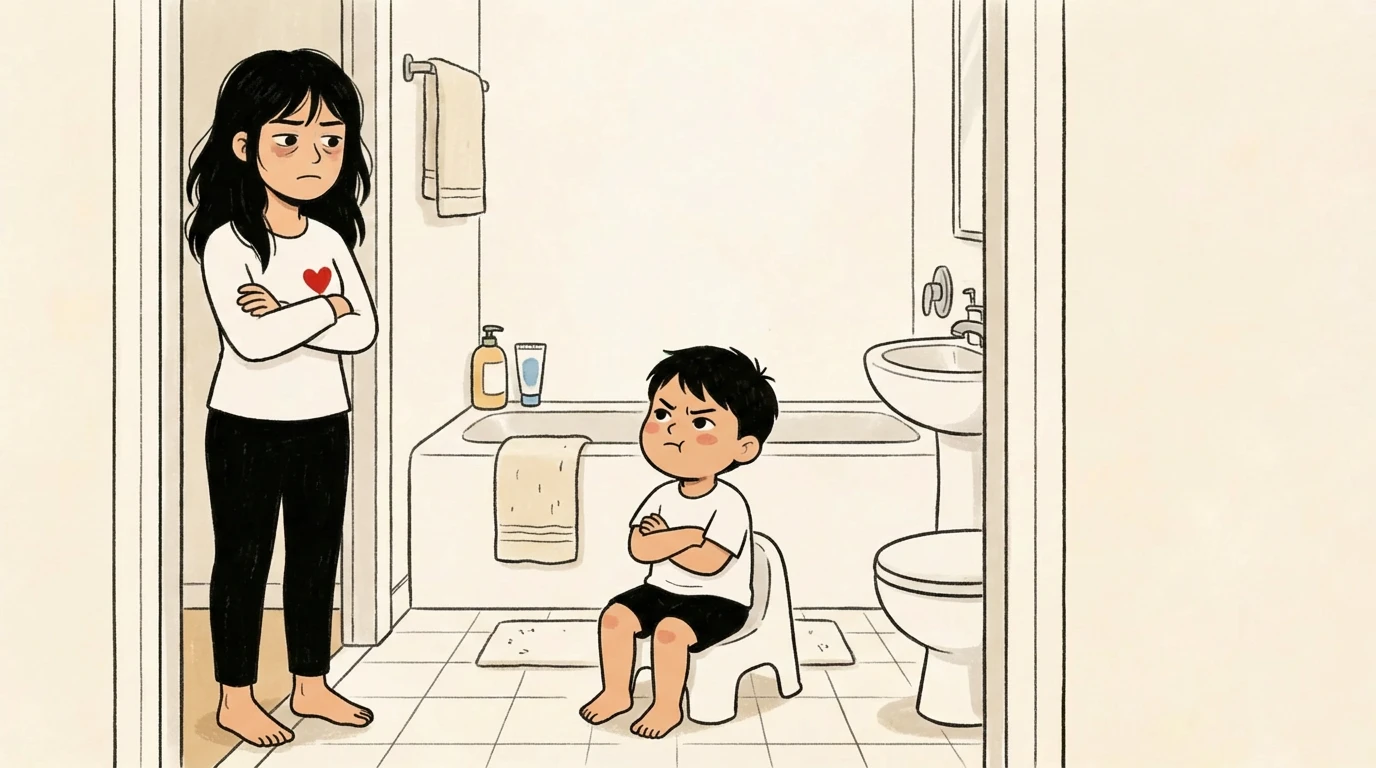
Two-year-olds are in the business of establishing one thing: that they are separate people with their own will. They say no to shoes, no to dinner, no to the coat they loved yesterday. The potty is just another arena.
But the potty is uniquely dangerous for parents because your child has absolute control over the outcome. You can lead a toddler to a toilet. You cannot make them go. The moment your child senses you really want them to perform, you've handed them power they didn't know they had.
Here's how the cycle starts. You ask. They refuse. You ask again with an edge. They refuse harder. You bribe, threaten, plead. They dig in. Then they have an accident on the kitchen floor five minutes after you gave up asking.
That pattern tells you something specific. The plumbing works. The problem is who's in charge of it.
The pressure paradox
Your child needs to want to use the potty. When the pressure feels too heavy, they won't even try. This creates a paradox where pushing harder guarantees less progress. Every visible sigh, every "just try for me," every disappointed look teaches your child that the toilet is where your emotions live. And a two-year-old will poke at that spot repeatedly, not out of malice, but because testing boundaries is their entire developmental job.
Screaming NO at the toilet
The Potty Training course will teach you to defuse the standoff
You'll remove the pressure so your child stops refusing and starts cooperating on their own terms.
Reading the signs wrong
Defiance versus fear
Not every refusal is a power play. Some children refuse because they're genuinely afraid of something about the toilet. A single painful bowel movement from constipation can create enough fear that a child regresses completely. They say "it hurts" even when nothing hurts right now, because their body remembers that it hurt once.
If your child cries, sweats, or goes rigid on approach to the toilet, that's fear. Fear and defiance look different. Defiance comes with attitude, eye contact, and a certain smugness. Fear comes with tension, avoidance, and sometimes panic.
A fearful child needs laughter, not limits. Silly potty games, parents pretending to be scared of the toilet, songs about body functions. Laughter physically releases the muscle tension that fear creates, and that tension is what makes going impossible.
Readiness versus willingness
Physical readiness and psychological readiness are different things. Your child might stay dry during naps and show every sign of bladder control. None of that means they're psychologically ready to interrupt play, walk to the bathroom, and perform on request.
If the potty training readiness quiz suggests your child might not be there yet, believing it will save you months.
How to end the standoff
Drop the emotional temperature
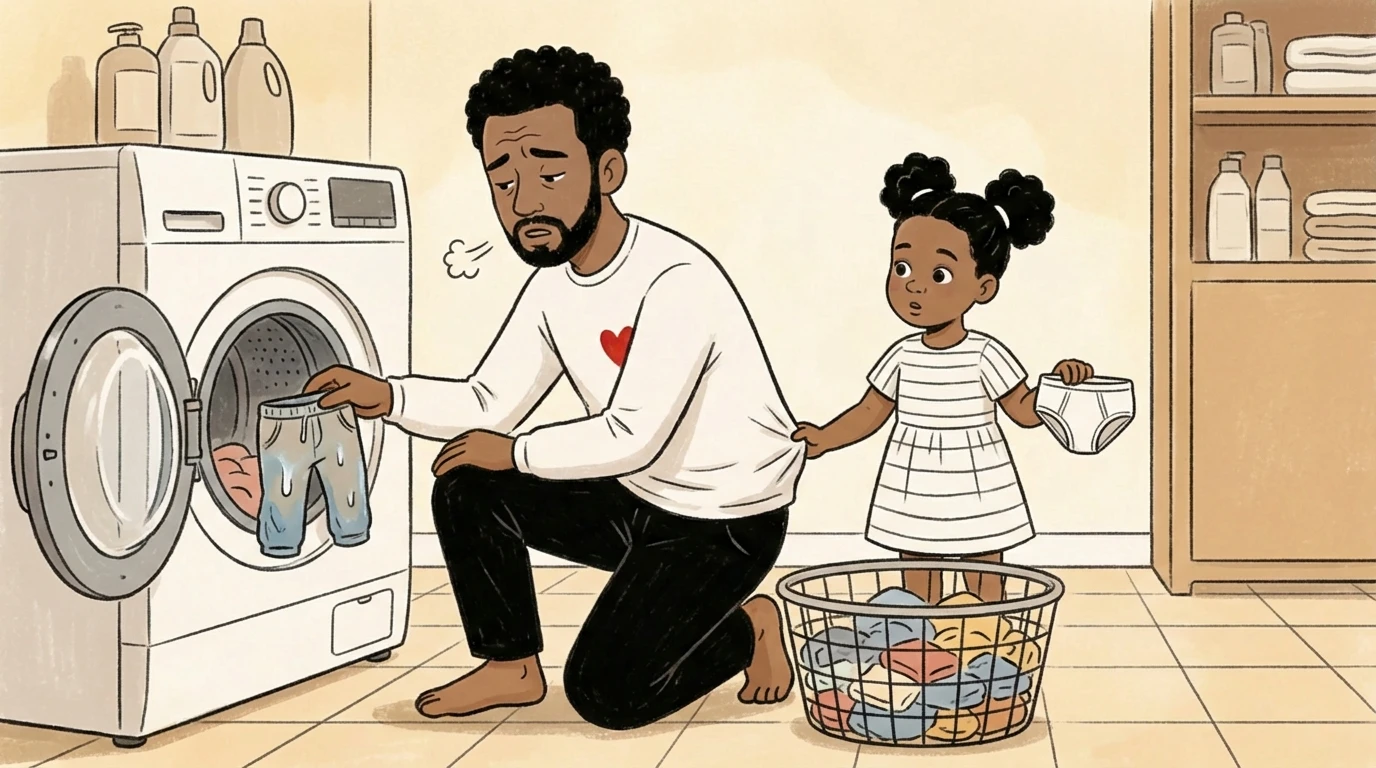
Both parents need to get on the same page. Research consistently shows that negativity after accidents produces more accidents. If one parent stays calm while the other sighs or scolds, the child notices the inconsistency and the pressure remains.
Talk to your partner. Agree that accidents get a flat, boring response: "Let's get you cleaned up." No disappointment. No "I thought you were past this." No comparing to siblings or daycare peers. Boring is the goal.
Give the choice back
This is the counterintuitive move that resolves most power struggles. Offer your child the option to go back to diapers. Not as a threat. Not with a sad face. As a genuine, low-stakes choice.
Script: "Would you rather wear diapers or use the potty? Either one is fine."
When parents tried this, the result was consistent. Within a week, the child chose the potty on their own. The power struggle needs two participants. Remove yourself as the opponent and there's nothing left to fight about.
If they choose diapers, accept it. Wait two months. Try again. Forcing the timeline creates exactly the dynamic you're trying to escape.
How to defuse a potty training power struggle
- Stop asking them to goReplace direct requests with routine-based language. Say 'We always try before we get in the car.' That is structure, not pressure. Connect bathroom visits to transitions, not to your anxiety.
- Match your reaction to boringAccidents get a flat, matter-of-fact cleanup. No sighs, no disappointment, no comparisons. Both parents must agree on this. Your child reads your face before they hear your words.
- Offer the choice to stopAsk whether they would rather wear diapers or use the potty, and mean it. Giving genuine choice removes the resistance. Most children choose the toilet when nobody is making them.
- Rule out physical causesConstipation, fear from a painful bowel movement, wrong toilet height, dangling feet. If their knees are not higher than their bottom on the potty, the body mechanics make pushing difficult. Fix the equipment before fixing the behavior.
- Model instead of instructUse the toilet yourself at transition points and narrate without directing. When your child is ready, they will copy you. Imitation beats instruction with toddlers every time.
Build structure, not pressure
Schools succeed with potty training partly because they have scheduled bathroom breaks. Nobody asks a question ("Do you need to go?"). The children follow a routine that applies to everyone.
Replicate this at home. Before meals, after meals, before leaving the house, before bed. Connect bathroom visits to transition points, not to your emotional radar. "We always try before we get in the car" is different from "Do you need to go potty?" The first is a fact about how your household operates. The second is a question with a wrong answer.
When your child refuses, don't escalate. Use the toilet yourself. Say "We always try before we leave. Someday you'll be ready too." Then drop it. Setting limits without triggering a control battle takes practice, but the toilet is where you learn it.

When the struggle is really about something else
Sometimes potty refusal is part of a broader pattern of defiance that has nothing to do with toilets. If your child is saying no to everything, pushing back on all requests, testing every boundary, then the potty is just the most visible front in a larger campaign for autonomy.
Address the relationship, not the toilet. More one-on-one time. More choices throughout the day where their "no" gets respected. More physical play that gives them a sense of power. When a child feels enough control over their life in general, the toilet stops being worth fighting about.
And if you feel your own temper rising over wet pants for the fourth time today, that's information too. Your frustration is valid. It's also making the situation worse. Step away. Let the other parent handle cleanup. Your emotional state during potty training has a direct, measurable effect on the outcome.
The body mechanics nobody mentions
A child sitting on a standard toilet with feet dangling cannot push effectively. The rectal muscles tighten when feet don't touch a surface. This is physics, not behavior. A child who "refuses" to poop on the toilet might be a child whose body can't do what you're asking in that position.
Get a low potty where their knees sit higher than their bottom. Or get a stool for the big toilet that puts their feet flat. Kids who resisted for months sometimes start going within days after a simple equipment change.
The timeline is longer than you think
The normal range for daytime toilet independence is 3 to 12 months from the start of training. Over 80% of children experience setbacks along the way. If you expected a weekend bootcamp to produce a fully trained child, the months of accidents that follow feel like failure. They aren't. They're the standard path.
If your child has tantrums or cries over potty training, or if you find yourself getting angry, stop training. Come back to it in one to two months. The emotional temperature of potty training is a reliable signal about whether your current approach works. When the temperature is high, the approach is wrong. Every time.
FAQ
The plumbing works. Your child follows the daycare routine because it applies to everyone and has no emotional charge. At home, they sense your investment in the outcome. Match the daycare approach: scheduled times, no questions, no emotional reaction to refusal. Boring structure beats enthusiastic encouragement.
Rewards can bridge a rough patch with a physically ready child, but they can't overcome fear or end a power struggle. If your child is resisting on principle, a sticker chart adds pressure. If they're willing but inconsistent, small experience-based rewards like extra playground time can help. Skip candy and toys.
Check whether the refusal is specific to you or universal. A child who uses the potty at school but not at home is ready but resisting your approach. A child who has accidents everywhere may not be there yet. Also check: do they notice when they're wet? Can they stay dry during naps? Physical readiness is the baseline.
Offer diapers back as a genuine choice. Say it cheerfully, not as punishment. Most kids resist the diapers and choose the potty within a week once the pressure disappears. If they accept diapers, wait two months and start fresh. The fastest path forward sometimes runs through a strategic retreat.