TLDR
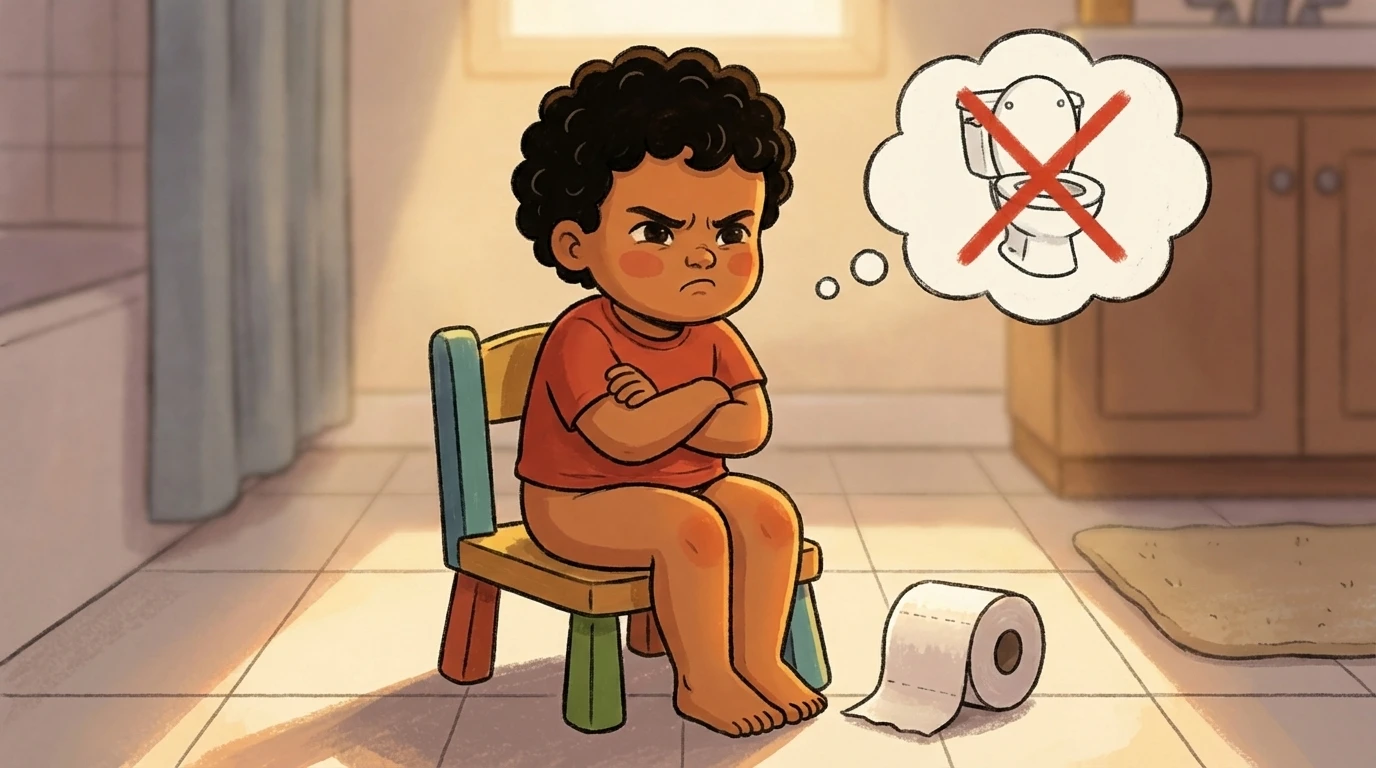
- Pooping requires more trust than peeing. Peeing is quick and automatic. Pooping means sitting, relaxing, and pushing. Kids who squat privately in their room are following a biological instinct, not being difficult.
- One painful poop can create months of refusal. A single constipation episode teaches the brain that pooping equals pain. The child avoids the toilet to avoid repeating that experience, even long after the pain is gone.
- Fear lives in the body, not the mind. Logical explanations and rewards cannot override a fear response. Laughter physically releases the tension that fear creates, which is why silly potty games work better than sticker charts.
- Pressure from parents adds a second layer of fear. When kids sense that pooping on the potty matters enormously to you, accidents become high-stakes events. Dial back visible investment in the outcome.
- A stool softener is step one, not a last resort. Remove any physical basis for the fear before doing anything else. If pooping hurts even a little, no amount of psychological work will stick.
Why peeing works but pooping doesn't
Your kid pees on the potty like a professional. Then the urge to poop hits, and they disappear into their bedroom, crouch behind the curtain, or wait for the bedtime diaper.
This pattern is so common that pediatric researchers have a name for it: stool toileting refusal. Up to 22% of children who are otherwise potty trained refuse to poop on the toilet. Your kid is statistically, boringly normal.
Here's what's different about pooping: peeing is fast and mostly involuntary. You sit, it happens, you leave. Pooping requires sitting still, relaxing the pelvic floor, and bearing down. That sequence demands trust that many toddlers have not built yet.
The squatting instinct
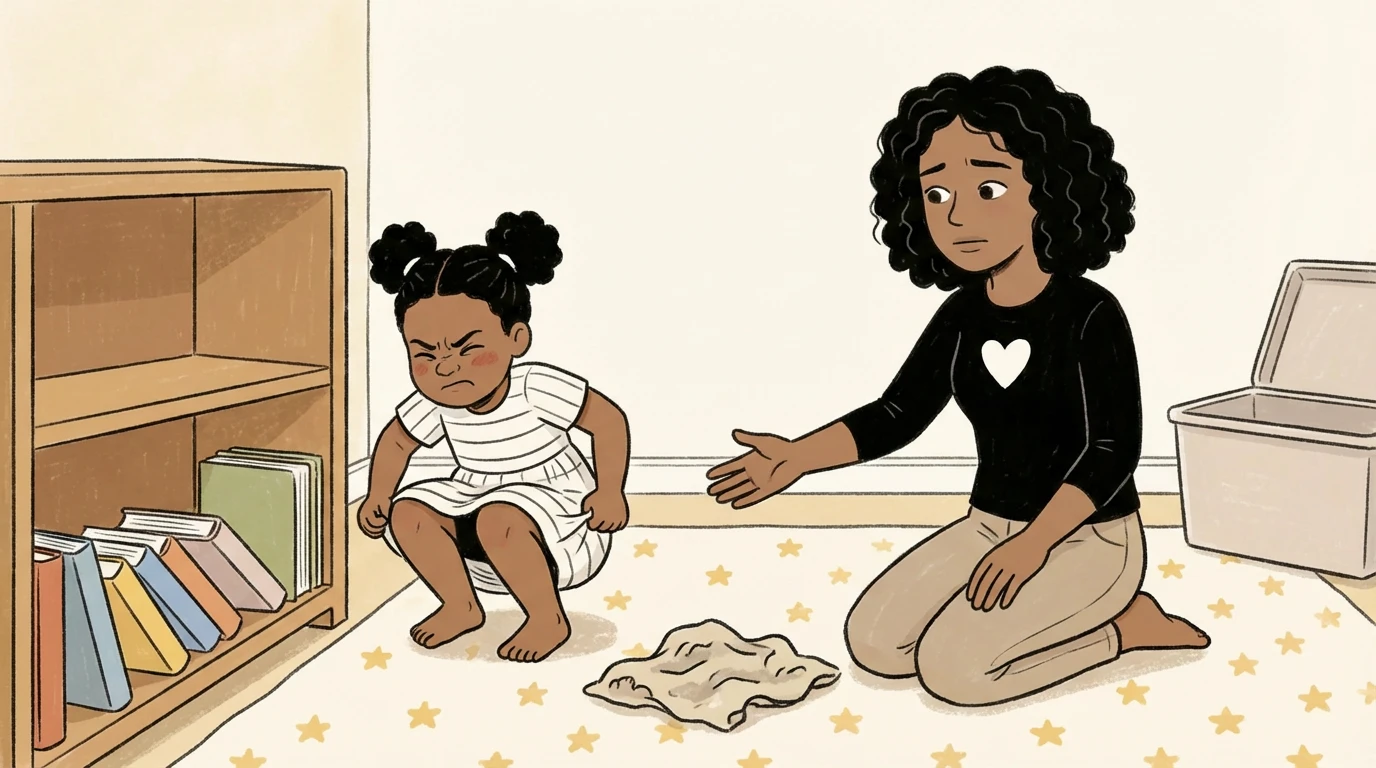
Watch where your child goes to poop. If they retreat to a corner or squat behind furniture, they are following a biological preference. Squatting is the natural human position for defecation. Sitting on a toilet with dangling legs tightens the rectal muscles and makes pushing harder.
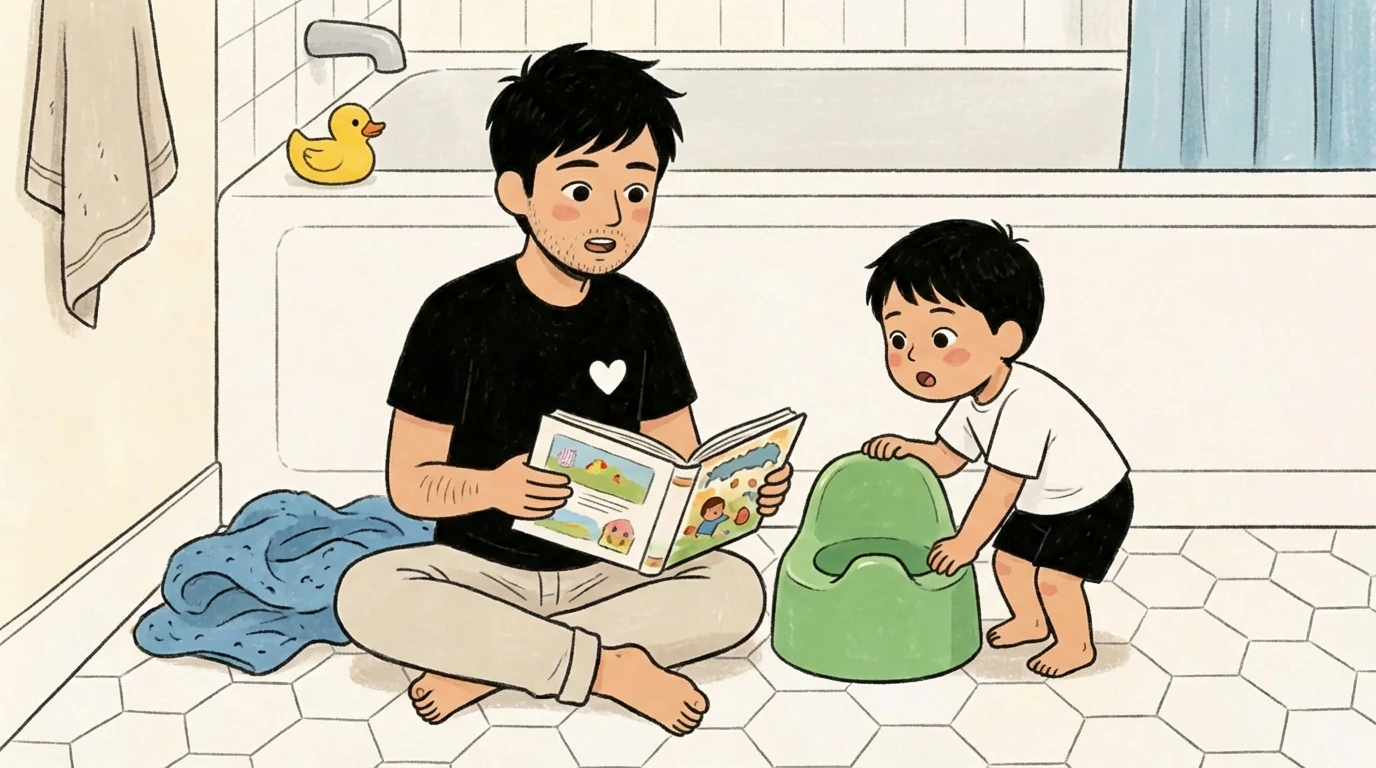
A low potty or a sturdy footstool that lets their feet press flat changes the mechanics entirely.
The fear that one bad poop built
A single episode of hard, painful stool can wire a child's brain to avoid the toilet for months. Constipation causes pain, pain creates fear, fear causes holding, holding causes more constipation. The cycle feeds itself, and the original painful event may have happened so long ago that you've forgotten it.
The child says "it hurts" even when the stool is soft now. Their body stored the pain, and the toilet triggers the memory.
Asking for a diaper to poop
The Potty Training course will help you bridge the pee-poop gap
You'll understand why pooping feels different to them and ease the transition without forcing it.
What fear looks like (when it doesn't look like fear)
A child who has a genuine phobia of the toilet will tell you directly. But most poop refusal is subtler.
Signs the refusal is fear-based:
- They were pooping on the potty and then stopped (that's regression with a specific trigger)
- They hold it until a diaper goes on at bedtime
- They get close to going, then cry or climb off
- They poop during naps or overnight when conscious control drops
If your child can poop in a diaper but not on the potty, the plumbing works. The issue is where, not whether.
The stool softener comes first
Before you try any strategy, remove pain from the equation. A child-safe stool softener (ask your pediatrician which one) ensures that every poop is soft and painless. Start here before trying anything behavioral.
You cannot convince a child to relax on the toilet if relaxing on the toilet still hurts. Get three to four weeks of consistently soft stools before expecting any behavioral change. The body needs time to unlearn the pain association.
Laughter does what rewards can't
You've tried sticker charts. You've tried candy. You've tried promising a trip to the zoo. None of it worked, and here's why: rewards cannot override a fear response that operates below conscious control. Your child is gripped by something they cannot reason their way out of.
Laughter works because it physically releases the muscle tension that fear creates. A laughing child is a relaxing child, and relaxing is exactly what pooping requires.
The parent-plays-scared game
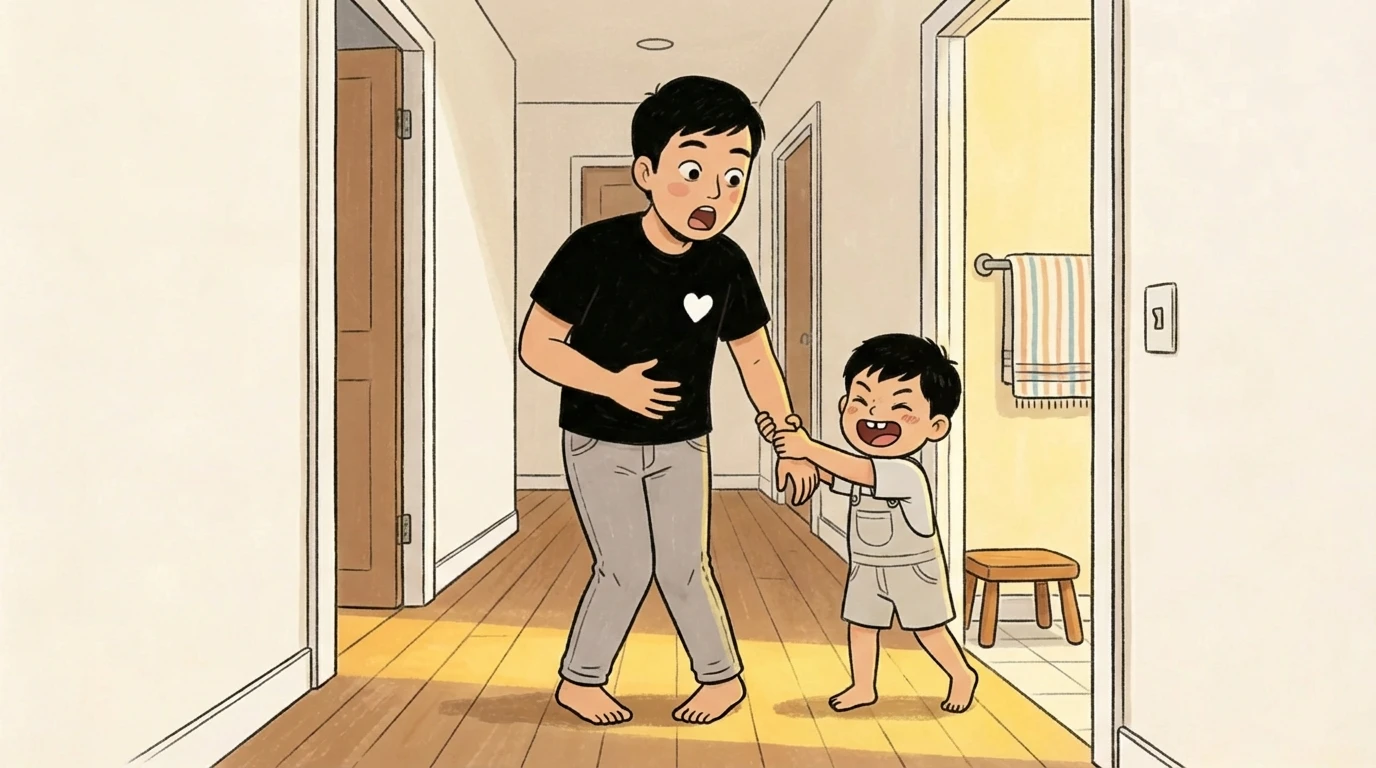
This is the single most effective technique. You, the adult, pretend you desperately need to use the bathroom but are too terrified to go. Dance around. Hold yourself dramatically. Beg your child for help. Let them take your hand and lead you to the toilet. Ham it up.
When your child giggles at your exaggerated fear, they are processing their own. The power reversal matters: they become the brave one helping the scared parent, which is the opposite of how they normally feel.
Bathroom humor as medicine
Make up ridiculous songs about poop. Put a diaper on your head. Let your child drop cereal into the potty for you to pee on. The sillier, the better. Every laugh loosens the knot of anxiety that sits between your child and that toilet.
How to help your child poop on the potty
- Start a stool softenerAsk your pediatrician for a child-safe option. Keep stools soft for three to four weeks before expecting any behavioral change. Pain must be fully off the table first.
- Drop all pressure completelyStop asking if they need to poop. Stop hovering near the bathroom. Stop reacting to accidents with anything other than a shrug and a change of clothes. Pressure amplifies fear.
- Play the scared-parent game dailyPretend you need the bathroom desperately but are too afraid. Let your child lead you there. Their laughter releases the exact tension that is blocking them.
- Fix the physical setupUse a low potty or a sturdy footstool so their feet press flat. Dangling legs tighten rectal muscles. Squatting position makes pushing possible.
- Build potty comfort without expectationsLet them sit on the potty clothed, then naked, with books or songs. Make the potty a place they enjoy being. Never force them to stay.
- Celebrate the body, not the performanceWhen it happens, say 'You must be so proud of yourself' instead of 'I'm so proud of you.' Internal pride sticks longer than your approval.
What not to do
Do not put a nearly-trained child back in diapers. A child who pees on the potty and wakes up dry has the physical control. Pull-ups at night are fine. Daytime diapers for a child this close to trained are counterproductive.
Do not take away toys as punishment. Punishment adds negative emotion to a situation already drowning in it. Consequences for fear teach a child to hide it, not overcome it.
Do not interpret private squatting as defiance. The child who sneaks to their room to poop is following an instinct. They need a different physical setup, not a lecture.
The pressure trap parents fall into
Here's the part nobody warns you about: your visible investment in the outcome is itself a source of pressure. When your child senses that successful pooping is incredibly important to you, every accident becomes a higher-stakes event.
You cannot give a child too much love. But you can make them feel too much responsibility for your emotional state. If your face lights up at a successful poop and falls at an accident, your child is managing your feelings on top of their own fear.
The fix: be boring about it. Your child needs to feel that your love is not contingent on where the poop lands.
When to check readiness again
If none of this is working after four to six weeks of consistent soft stools and zero pressure, your child may not be ready for this step yet. The potty training readiness quiz can help you reassess whether the timing is right or whether backing off for a month would serve everyone better.
The timeline nobody wants to hear
Most children who refuse to poop on the potty resolve it within a few weeks to a few months once pain is removed and pressure is dropped. Some take longer. The research consistently shows that children who are not pushed through this phase have fewer long-term toileting problems than children who are forced.
Your child will poop on the potty. The wiring is there. Something is blocking the signal, and that something is almost always fear, pain, or both. Remove those two things, add laughter, and wait.
FAQ
Not yet. The bedtime diaper is their safe space right now. Taking it away before the fear is resolved will cause holding, which leads to constipation and makes everything worse. Work on the fear during the day through laughter and play. The diaper will become unnecessary once the toilet feels safe.
Twenty minutes maximum, then take a break and try again later. Marathon bathroom sessions increase anxiety and create negative associations. Short, frequent, low-pressure visits work better than long stressful ones. If they want to leave sooner, let them.
Rewards can help a child who has mild reluctance but no real fear. For a child with genuine anxiety about pooping on the toilet, rewards alone cannot override the fear response. Use them as a supplement to the laughter work, not as the primary strategy.
Yes. Modeling is one of the most effective tools for normalizing toilet use. Let your child see you sit on the toilet and narrate casually what you are doing. Children learn through observation, and seeing a parent do the scary thing without distress makes it less frightening.
See your pediatrician if your child has not pooped in three or more days, complains of stomach pain, has visible straining with no result, or shows small smears of stool in their underwear between bowel movements. These can indicate impaction or encopresis, which need medical treatment before behavioral approaches will work.