TLDR
- Regression and incomplete training are different problems. If your child was fully trained and is now having accidents, that's regression. If they never quite got there, that's incomplete mastery. The approaches differ.
- Stress is the most common trigger. New siblings, moves, school changes, or even things that seem trivial to adults can throw a child's bathroom habits off track.
- Punishment makes accidents more frequent. Research consistently shows that punishing accidents increases them. Shame creates tension, and tension interferes with the physical process of elimination.
- Hidden constipation causes mysterious leaking. A backed-up colon presses on the bladder and causes urine leakage that no amount of willpower can fix. This is medical, not behavioral.
- Matter-of-fact is your entire personality now. Clean up without drama, express confidence in their ability, and add some structure. The regression will pass.
First, figure out what kind of problem you have
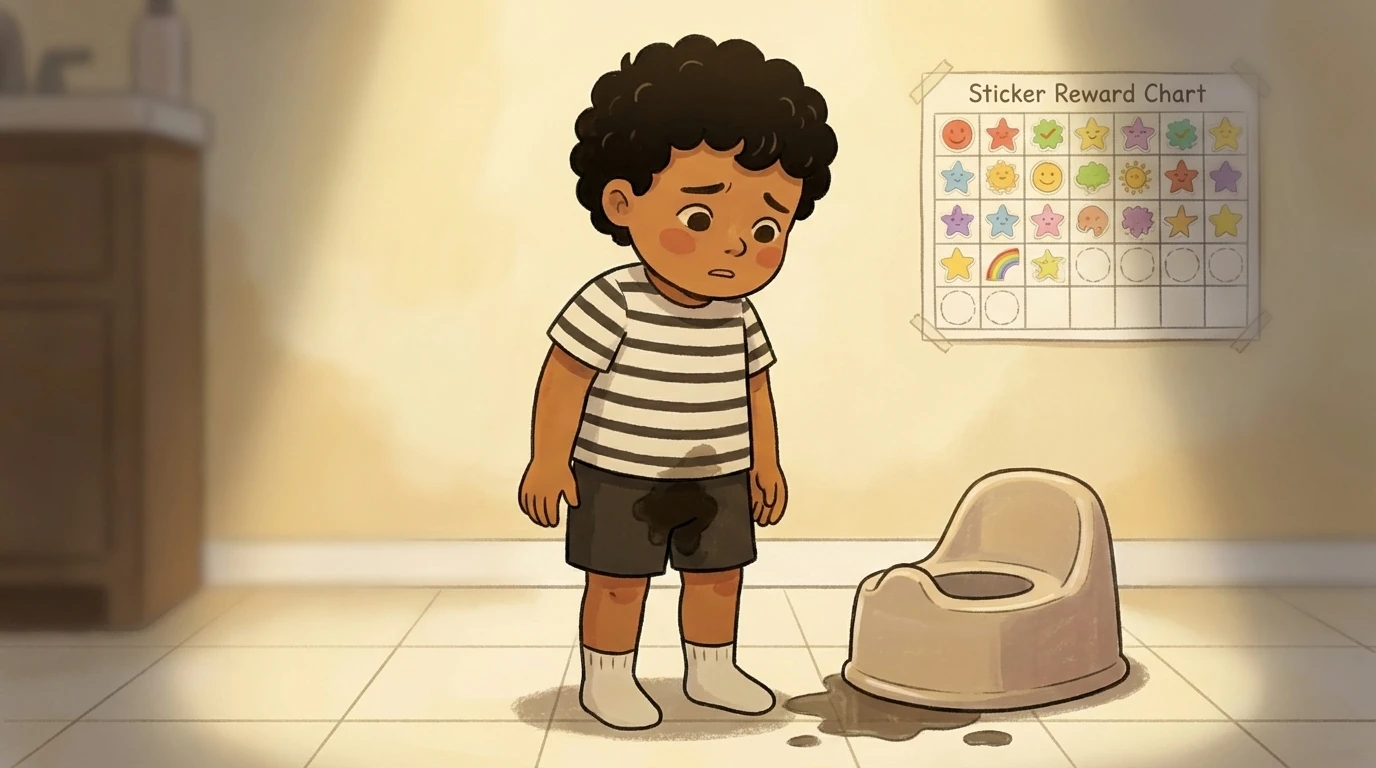
Your four-year-old was using the toilet like a pro. Now there's a puddle on the kitchen floor and a confused look on everyone's face.
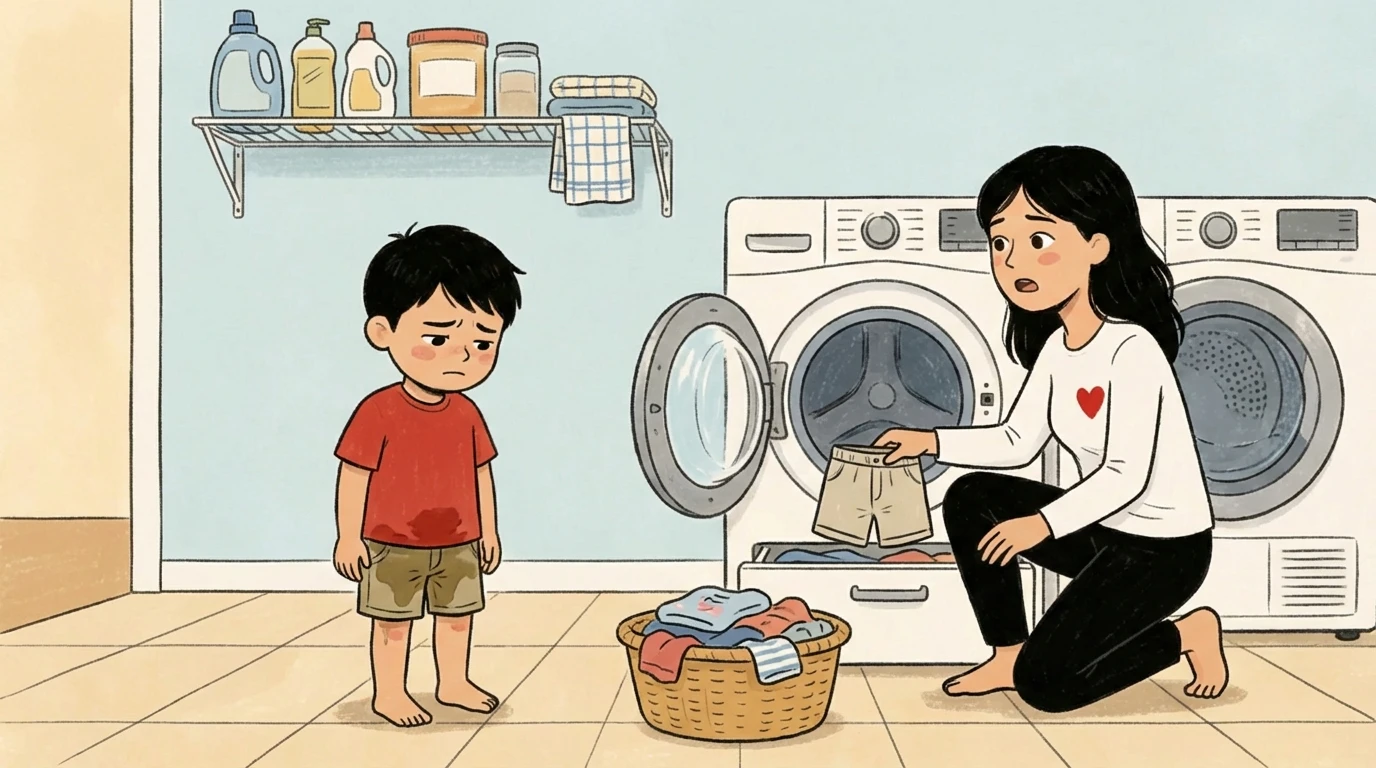
A child who was consistently dry for weeks and is now having accidents has regressed. A child who always had occasional accidents never finished training. These two situations need different responses.
Here's a useful test: if your child stays dry at school but has accidents at home, the plumbing works fine. Kids hold it together at school because peers provide natural social pressure. At home, they let their guard down. This pattern is incredibly common in four and five-year-olds, and it tells you something reassuring: the physical ability is intact.
If accidents happen everywhere, with leaking shortly after using the toilet? That's a body telling you something. Doctor visit before anything else.
Why trained kids regress
The stress response
The number one cause is stress. And here's what catches parents off guard: the stressor can look completely insignificant from an adult perspective.
A new baby arriving is an obvious trigger. So is adjusting to a move or starting a new school. But sometimes it's a friend leaving daycare or a parent traveling for work. Four-year-olds can't articulate what's bothering them. Their bodies do the talking.
If potty regression coincides with a sleep regression, you're looking at a broader stress response. One underlying issue is driving everything. Pay attention to what changed in the week or two before accidents started. The trigger often becomes obvious in hindsight.
Wet pants after months dry
The Potty Training course will show you how to reset without starting over
You'll pinpoint what triggered the regression and restore dry days without re-doing the whole process.
They're too absorbed to stop
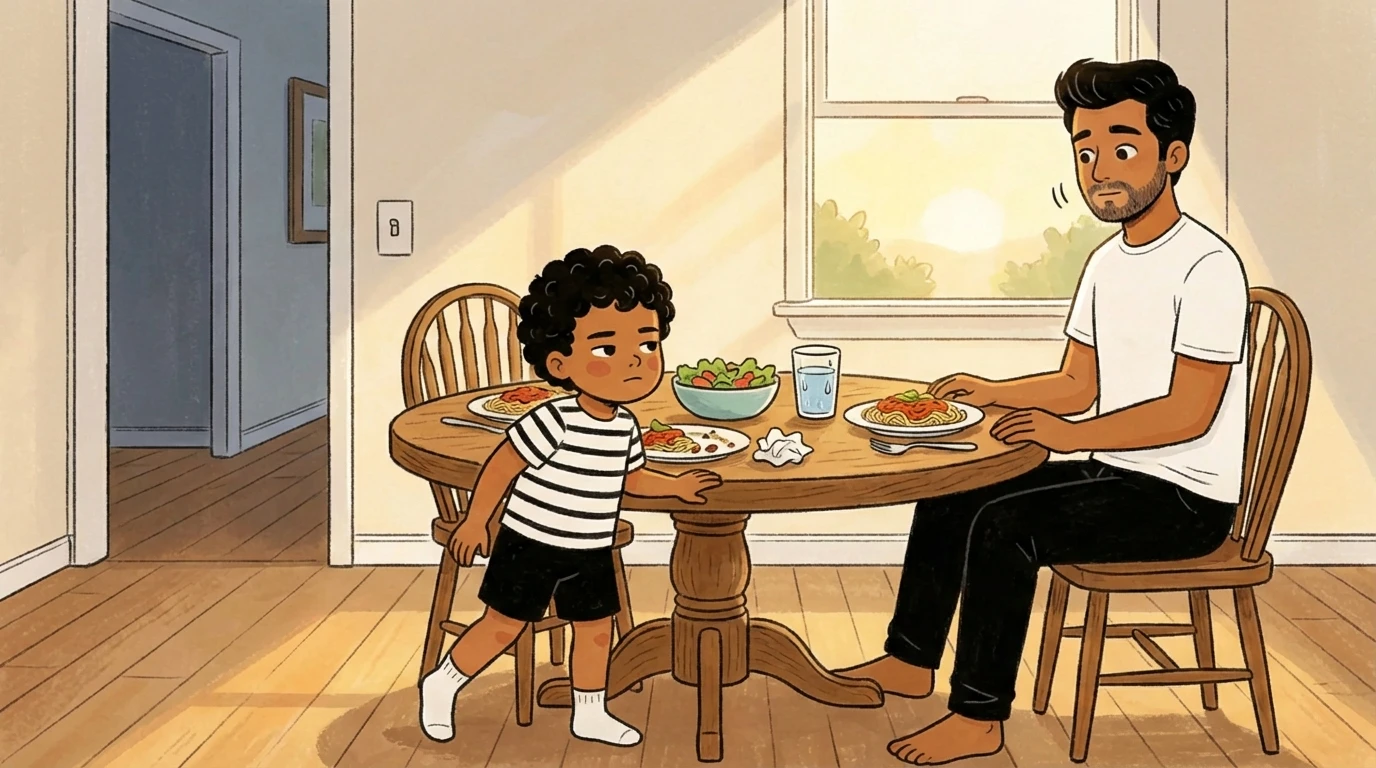
Four and five-year-olds get deeply absorbed in what they're doing. They feel the urge, calculate they have a few more minutes, and miscalculate. Learning how long you can wait before running to the bathroom is a skill that develops through experience. Your child is still calibrating. This is especially true during screen time, play dates, or any activity with high engagement. The prefrontal cortex, which handles planning and impulse control, is still years from maturity.
The constipation nobody noticed
A child who routinely holds in their poop can end up with a colon full enough to press on the bladder. The result is small amounts of urine leaking out, sometimes twenty minutes after they used the toilet. Parents often chalk this up to laziness or defiance, but the child has zero control over it.
Signs that constipation might be driving the accidents:
- Leaking shortly after using the toilet
- Accidents that get worse as the day goes on
- Soaked diapers after naps
- Your child will only poop with one specific caregiver
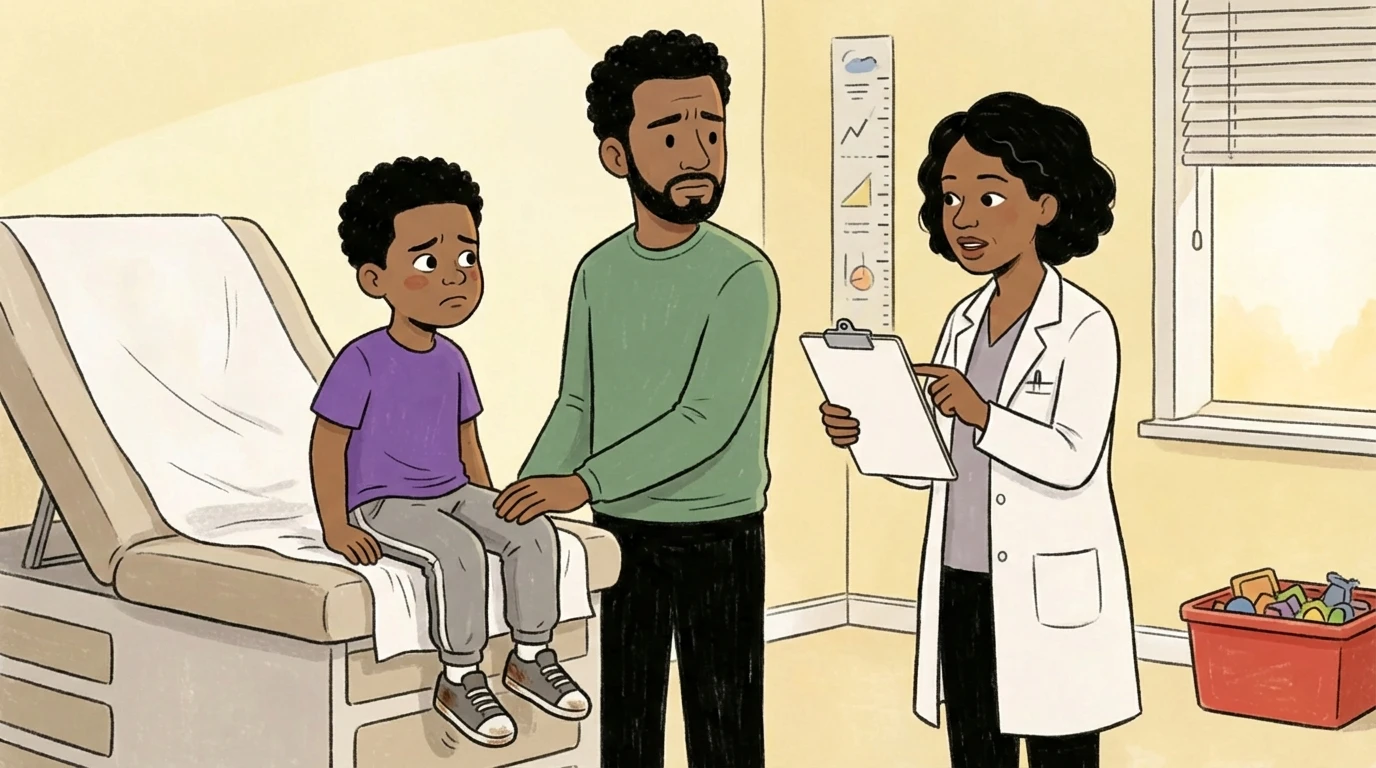
If this pattern fits, a pediatric gastroenterologist can x-ray the colon. A regular pediatrician might dismiss it. Push for the specialist.
What to do when regression hits
The matter-of-fact cleanup
Your entire response should communicate: this is temporary, you're capable, we're moving on.
Script: "Oh, let's get you cleaned up. You'll be making it to the toilet again, just like you used to."
That sentence skips the drama, references their past success, and expresses confidence. What you must hide: disappointment, frustration, disgust. Making a big deal of accidents can teach a child that accidents are an effective way to get your attention. Even negative attention counts. Your tone of voice matters more than your words here.
Build in bathroom structure
School environments schedule bathroom breaks, which is one reason kids do better there. Replicate it at home. Before and after every meal. Before leaving the house. Before bed. If you see fidgeting, remind them immediately.
If your child resists, frame it as temporary: "As soon as you've been dry for a week, you can skip these. Until then, everyone goes at these times." Do them yourself too. Solidarity matters more than logic to a four-year-old.
How to handle potty training regression
- Rule out physical causes firstSee your pediatrician. Constipation, urinary tract issues, or fecal retention can cause accidents that look behavioral but are medical. If your child leaks shortly after using the toilet, a pediatric GI specialist can check for a backed-up colon.
- Identify the emotional triggerNew sibling, a move, starting school, parental conflict, even a schedule change. Ask your child what feels different. Things that seem small to adults can throw a four-year-old completely off course.
- Drop all punishment and pressureHide your frustration. Clean up matter-of-factly. Say 'Let's get you cleaned up. You'll be making it to the toilet again soon, just like before.' Punishment increases accidents every single time.
- Add scheduled bathroom breaksBefore and after meals, before leaving the house, before bed. Use the same structure that works at school. Do them yourself too so your child does not feel singled out.
- Wait it out with confidenceExpress calm certainty that this is temporary. Your child was trained before, and they will be again. That confidence is contagious, and your child needs to borrow it right now.
Teach the "as soon as" rule
Kids delay because whatever they're doing feels more important than the bathroom. Teach them explicitly: when you feel the urge, you go right then. Whatever you're doing will still be there when you get back. Three minutes.
Ditch the pull-ups during the day
Absorbent underwear masks the early warning signals. Pull-ups remove the feedback loop that teaches timing. Your child needs to feel when an accident starts.
Exception: pull-ups at night are fine. Nighttime dryness develops on a separate biological timeline. Some kids don't achieve consistent nighttime dryness until age six or seven, and that's completely normal.
The power struggle trap
Your child has an accident. You react with frustration. They feel shame. Shame creates body tension. Tension makes elimination harder. More accidents follow. You get more frustrated. They get more ashamed.
This cycle turns a two-week regression into a six-month ordeal. When bathroom trips become a power struggle, you've lost before you started. The research is unambiguous: punishment increases the frequency of accidents. Consistently.
When to talk to your kid about it
Have a real conversation. Ask what feels hard about the potty right now. You might get a nonsensical answer ("the toilet is too cold"), but you might also get a real one. Either way, the act of asking tells your child that their experience matters and that you're on their team, not policing them.
For fear-based resistance, play is your way in. Stuffed animals who are terrified of the potty and make dramatic scenes about falling in. The sillier, the better. Laughter releases tension that serious conversations can't touch.
Not sure if your child needs a full reset? The potty training readiness quiz can help you figure out where things stand.
Short-term rewards (used carefully)
Rewards can bridge a rough patch with a child who has the physical capacity to stay dry. Match the reward interval to the accident frequency. If accidents happen once a week, a fun Saturday activity for a dry week makes sense.
Skip candy and toys. Go with experiences. A new book together. Extra playground time. A special outing. And specific praise works as ongoing reinforcement: "You remembered and made it every single time today."
The finish line (again)
Regression ends. Your child was trained before, which means the wiring is already there. Something disrupted the signal. Find the disruption, remove the pressure, add structure, and wait.
If your child can do it at school, they can do it at home. The capacity exists. You're rebuilding the confidence and the routine around it.
FAQ
Most regressions resolve within two to four weeks when you remove pressure and address the underlying cause. If accidents persist beyond a month with no improvement, see your pediatrician to rule out physical causes like constipation or urinary issues. The timeline depends more on whether you've identified the trigger than on any particular technique.
Pull-ups at nap and bedtime are fine during regression. For daytime, keep real underwear if your child was reliably trained before. The wet sensation provides feedback they need. If the regression is severe and your child is distressed, pull-ups during afternoons can reduce shame while you sort out the root cause.
Usually no. Regression is a normal response to stress, life changes, or developmental leaps. However, if your child has leakage shortly after using the toilet, accidents that worsen through the day, or visible straining, see a pediatric gastroenterologist. These patterns suggest a physical cause that willpower alone cannot fix.
Absolutely. A new baby is one of the most common triggers. Your child's world just shifted, and regression is their stress response. Keep bathroom routines matter-of-fact, avoid comparing them to the baby, and give them one-on-one time daily. The regression almost always resolves once the adjustment period settles.