TLDR
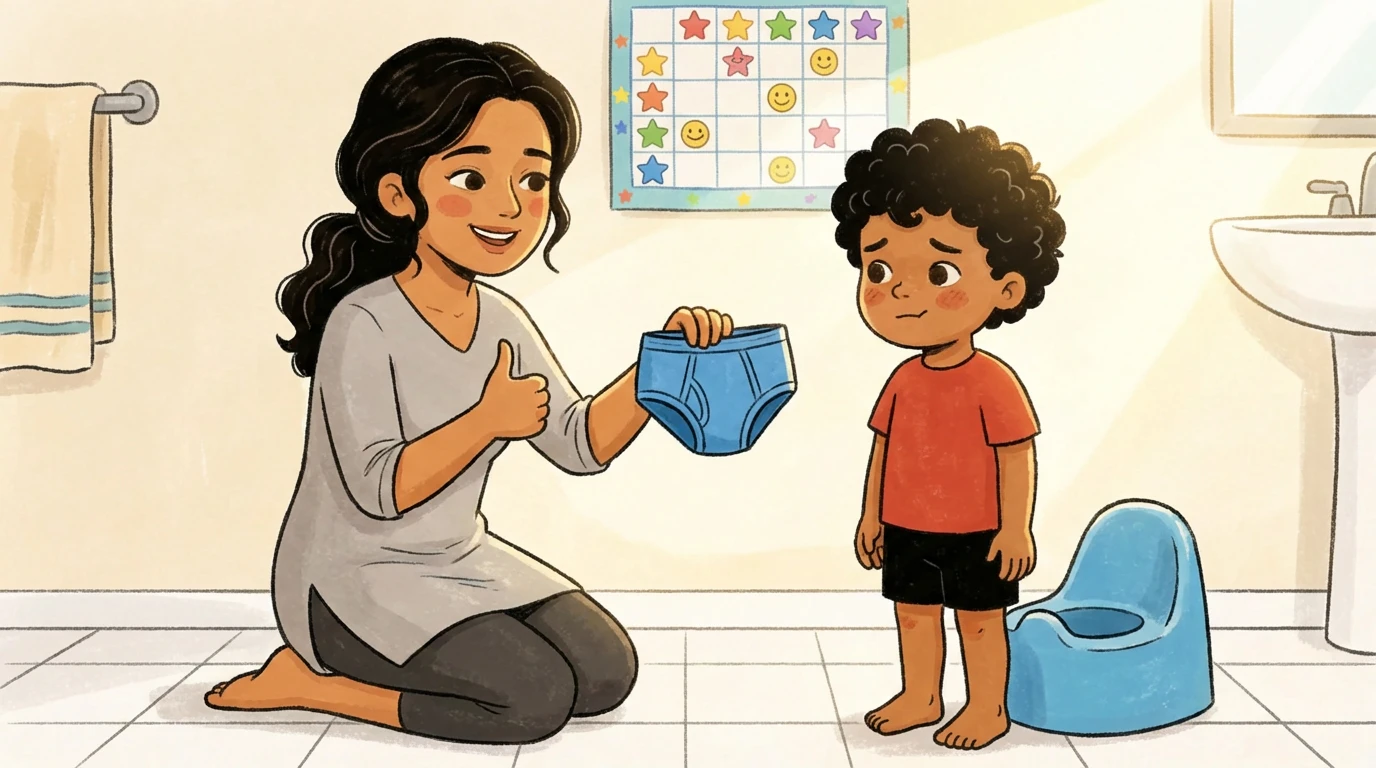
- Constipation is the hidden culprit in most ongoing accidents. 88% of children shown by X-ray to be constipated have no outward signs. A full rectum presses on the bladder and causes leaking the child cannot control.
- Punishment always increases accidents. Research is unambiguous here. When toileting becomes a power struggle, the child stops viewing it as their own achievement and starts viewing it as your demand.
- Your child wants to succeed more than you want them to. A kid sitting in wet underwear without telling you is staying silent out of fear of your reaction, not laziness. That fear is the problem.
- Shame makes the body tighten up. Toileting requires a relaxed body. Anxiety and shame create tension that physically interferes with bladder and bowel control.
- Rule out physical causes before behavioral fixes. See a pediatric gastroenterologist, not just a regular pediatrician. Ask for an X-ray of the colon. If the child is backed up, behavioral strategies alone will not work.
The thing nobody told you about age four
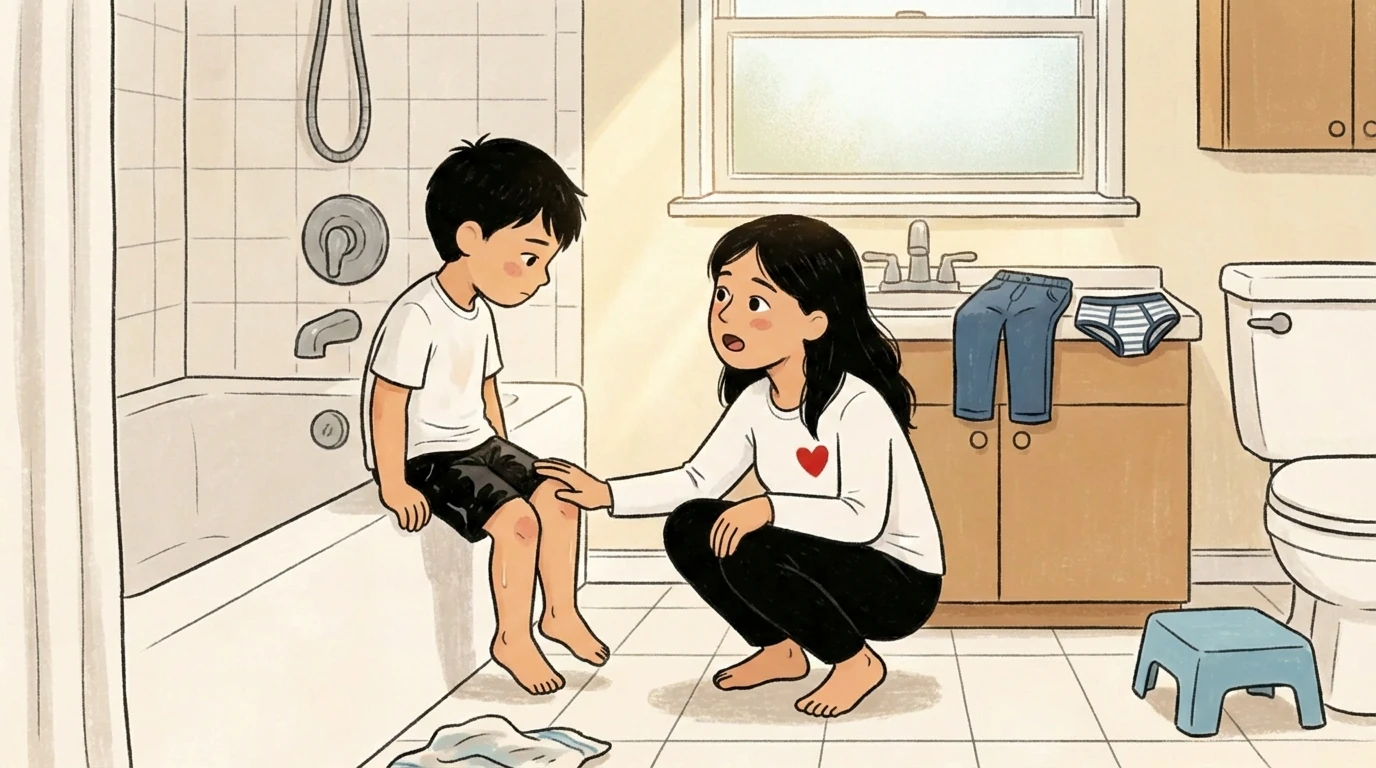
You thought you were done. The diapers were gone, the pull-ups were donated, and you mentally checked "potty training" off the list around age three. Then your kid started having accidents again. Or they never fully stopped. And now they are five, maybe six, and you are quietly Googling "is this normal" at 11 p.m.
The most likely explanation for ongoing potty accidents in older preschoolers is physical, not behavioral. Constipation tops the list. An overfull rectum presses directly on the bladder, making it physically difficult for your child to hold urine. Their plumbing is under real pressure.
Here is the statistic that reframes everything: 88% of children found by X-ray to be constipated showed no outward signs of it. The kids were pooping sometimes, so everyone assumed things were working. They were not.
If your child's stools are not both soft and frequent, ask your pediatrician for an X-ray of the rectum. Not a conversation about "the process." An image.
Why punishment makes every accident worse
Punishing children for toileting accidents always results in more accidents. Every single time. This is one of the clearest findings in child development research.
When a child views using the toilet as their own accomplishment, they are motivated. But the moment punishment enters, ownership transfers. The toilet becomes the parent's demand, not the child's achievement. And four-year-olds do not comply with demands about their own bodies.
What counts as punishment: time-outs for accidents. Taking away toys. Making them wear pull-ups as a consequence. Even ignoring accidents, which the child reads as disappointment.
A child who sits in wet underwear all day without telling you is afraid of your reaction. Sitting in wet clothes feels better than facing it. When that is your child's calculation, the approach has gone wrong.
If the frustration is eating you alive, practicing self-compassion is a prerequisite for keeping your tone neutral. You cannot sound light when you feel like a failure.
Packing extra clothes at five
The Potty Training course will teach you what older accidents mean
You'll address the specific reason your child is still having accidents long after their peers stopped.
The constipation connection you probably missed
When children routinely hold in poop (even if they do go sometimes), the colon stays full enough to press on the bladder. The result: small amounts of urine leaking out, sometimes 20 minutes after using the toilet.
Signs that withholding or constipation might be driving the accidents:
- Urine leaking shortly after using the bathroom
- Waking up soaked from naps or overnight
- Accidents getting worse in the afternoon
- Only pooping with one specific caregiver
- Holding poop until naptime or bedtime when a diaper is on
Think about how hard your child is working. They are squeezing all day at school (maybe one accident every ten days) and falling apart at home because their control is spent. That is a kid giving everything they have.
The fix is medical. See a pediatric gastroenterologist. If the colon is backed up, the doctor may recommend a clean-out. Once the pressure on the bladder is gone, the leaking often resolves on its own.
What to do when your child has an accident
The word that matters most here is "light." Keep your tone light.
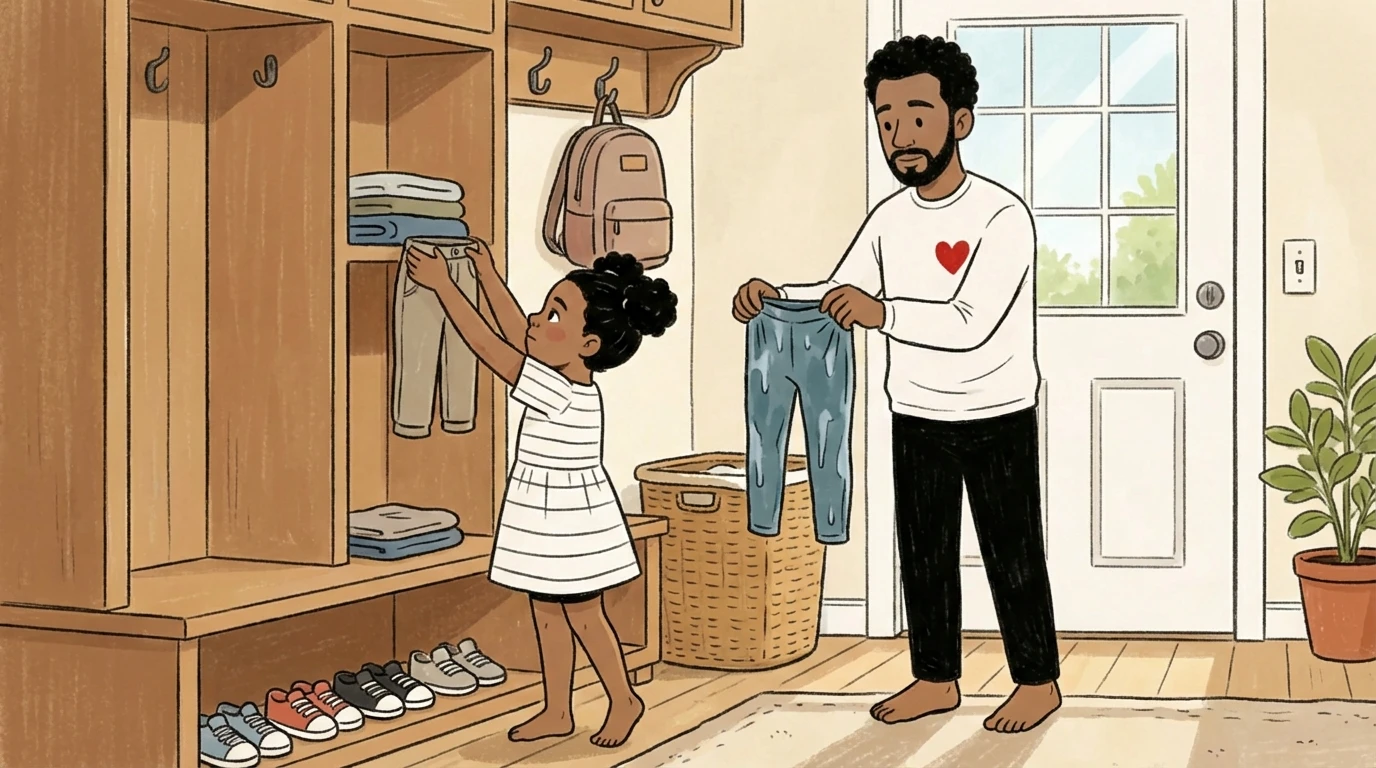
When you find your child wet: "I see you're wet. I know it's hard to get to the toilet every time, but soon you will remember, just like you used to. Go pick some clean underwear and pants, and drop your wet clothes in the hamper."
That script acknowledges the difficulty without blame. It expresses confidence ("just like you used to"). It reminds them that their body belongs to them. And it gives them agency in the solution.
Set up for independence
Make clean clothes accessible so your child can reach them without asking. Put a hamper nearby. Remove yourself from the changing process. When you are not involved in cleanup, the child does not get attention for the accident and you are not inconvenienced. The natural consequence: changing clothes is more hassle than using the toilet.
The hourly bathroom trip
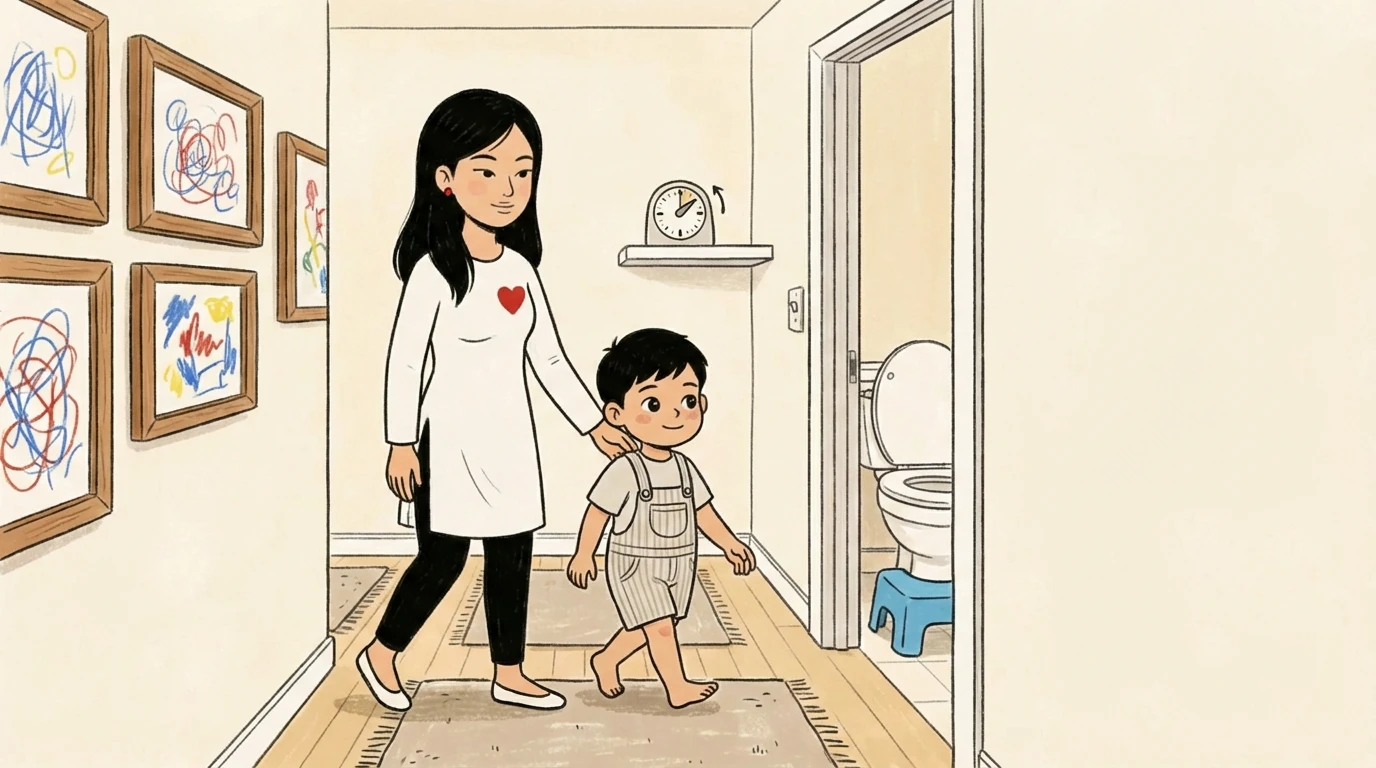
Remind your child to use the bathroom every hour. But here is the part most parents skip: go with them. Both of you, on the hour. This changes the dynamic from "you are the kid who needs reminding" to "this is what we do in this house."
How to respond to ongoing potty accidents
- Rule out constipation firstAsk your pediatrician for a colon X-ray. Do not rely on observation alone. 88% of constipated kids show no outward signs. If the rectum is distended, behavioral strategies alone will fail.
- Drop all punishment immediatelyNo time-outs, no consequences, no disappointed sighs. Punishment increases accidents every time. Treat this like the beginning of toilet training, not a discipline problem.
- Use a light, matter-of-fact toneWhen accidents happen, stay casual. 'I see you're wet. Go grab clean clothes.' Express confidence they will get there. Your tone matters more than your words.
- Go to the bathroom together hourlyMake it a household routine, not a punishment. Both of you go. This removes the shame of being singled out and builds the habit through consistency.
- Set up independent cleanup accessPut clean clothes where your child can reach them. Place a hamper nearby. Let them handle the change themselves. Ownership without spectacle.
- Get a specialist if it continuesSee a pediatric gastroenterologist, not just your regular pediatrician. Ask about fecal retention pressing on the bladder. Early intervention prevents longer-term complications.
When accidents are about feelings, not plumbing
Some accidents are driven by stress, a new sibling, a school change, or feeling over-controlled.
A child who was potty trained and then regresses is telling you something changed. Maybe the baby got older and cuter and is clearly not going away. Maybe discipline got tighter. Whatever it is, the accidents are the signal, and the deeper cause is worth finding.
If your child is anxious about the potty, fear tightens the body and interferes with the physical process of elimination. You cannot willpower your way through anxiety. Neither can a four-year-old.
Flood your child with unrequested positive attention. Set aside daily one-on-one time, even ten minutes. Offer small choices throughout the day so they feel less controlled. If they are acting out in other ways too, the accidents are part of a bigger picture: a kid who needs more of you, not less.
When to worry (and when to stop)
Plenty of normal children are not fully reliable with the toilet until age four. Some take longer. The developmental range is wider than parenting books admit.
Worry when:
- Leaking happens within minutes of using the toilet
- Your child seems unable to control it despite clearly trying
- Accidents are getting worse, not better
- You see signs of social fallout at school
Stop worrying when:
- Your child is making progress, even slowly
- Accidents are mostly tied to being absorbed in play (normal at four and five)
- They care about being dry, even if they do not always succeed
If you are unsure whether something deeper is going on, the potty training readiness quiz can help you sort through it.
The only metric that matters
Your child will stop having accidents. Every single child gets there. What matters is whether they arrive feeling competent and supported, or ashamed and broken.
The research points in one direction. Remove pressure. Treat the physical causes. Keep your tone light even when you are cleaning urine off the couch for the third time this week. Your kid is working harder than you think.
FAQ
If it reduces stress for both of you, yes. Offer pull-ups as a supportive option, never a punishment. Say something like 'Would you like to wear pull-ups until your body is ready to stay dry?' Some kids refuse, and that is fine. Pair underwear with hourly bathroom trips together.
Almost certainly not. Even when a child pees in odd places, the behavior is driven by stress, sensory needs, or feeling over-controlled. The child cannot articulate what is wrong, so the body speaks instead. Address the feelings underneath, and the behavior changes.
If your child leaks urine shortly after voiding, wakes up soaked from naps, or has accidents that are increasing, see a pediatric gastroenterologist. Ask for a colon X-ray. Regular pediatricians sometimes miss the constipation connection.
They spend enormous energy holding it together at school. By afternoon, that control is exhausted. Home is also where they feel safe enough to stop clenching. More accidents at home means more effort at school, less effort is not the explanation.
No. Shaming reliably increases accidents. Toileting requires a relaxed body, and shame creates tension that interferes with bladder and bowel control. After shaming conversations, most parents see accidents spike within days.