
TLDR
- You cannot train nighttime dryness. It depends on brain maturation and the hormone vasopressin. No sticker chart changes the timeline.
- Ages 3 to 7 is the normal range. About 15% of five-year-olds still wet the bed regularly. They are developmentally normal.
- Pull-ups do not delay the process. No evidence nighttime diapers slow brain maturation. They keep sheets dry while biology catches up.
- Bedwetting alarms work best for kids 6+. They condition the brain to associate a full bladder with waking. Success rates run 60-80% over 8-12 weeks.
- Shame makes it worse. Punishing a child for bedwetting increases anxiety, which increases bedwetting.
The thing nobody tells you about dry nights
You potty trained your kid. High fives were exchanged. The daytime diaper went in the trash with ceremony. Then nighttime rolled around and you thought, okay, we're done with this, right?
You are not done with this.
Daytime dryness and nighttime dryness are two separate biological processes. One involves recognizing a full bladder and getting to a toilet. The other involves the brain doing things while unconscious. Comparing them is like comparing walking with sleepwalking on command.
Your kid soaking through a pull-up every night while nailing daytime toileting? Nothing is wrong. Their brain hasn't flipped a switch yet, and you can't flip it for them. This is the part where well-meaning relatives start offering advice about when their kids were dry, and you smile and nod while silently calculating how many more pull-ups are in the basement.
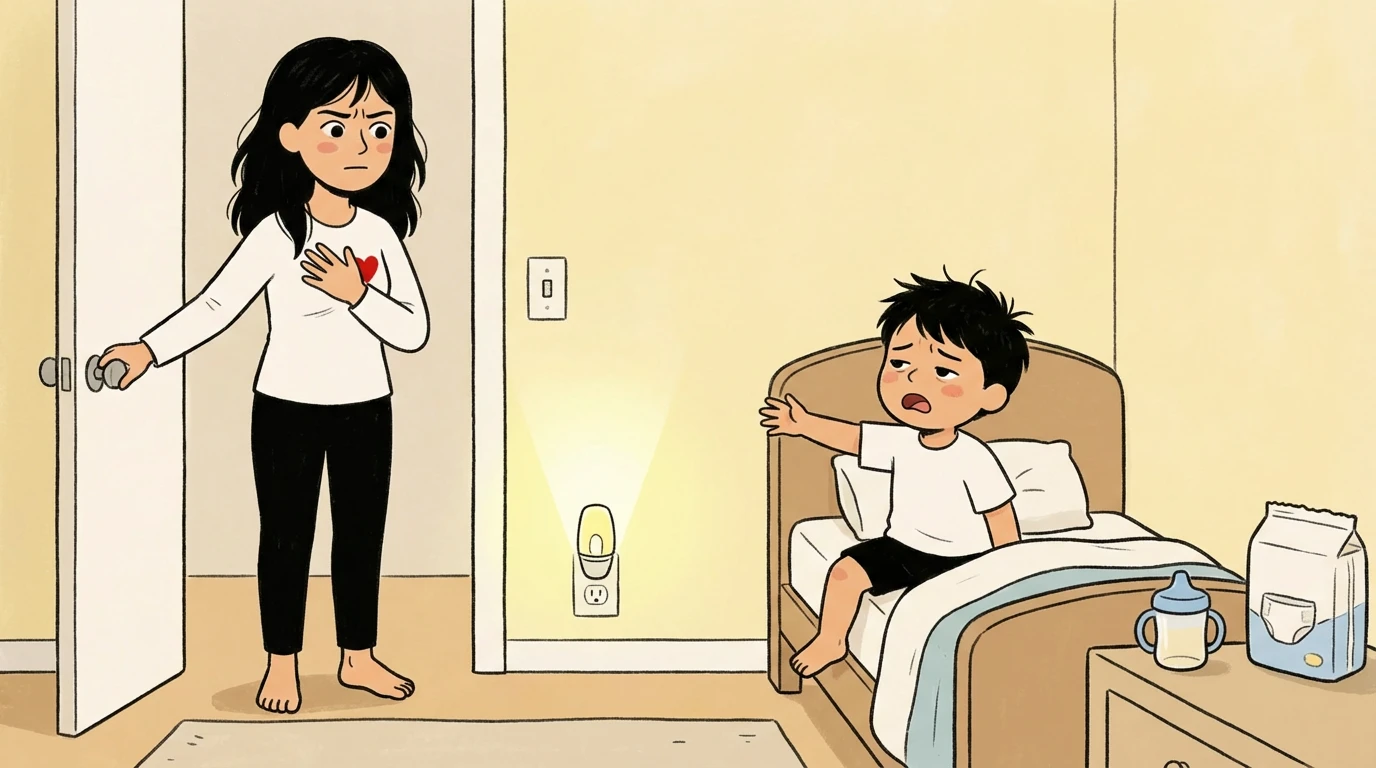
Another 2 AM sheet change
The Potty Training course will help you support nighttime readiness
You'll know what's biological, what you can influence, and how to handle wet nights calmly until their body catches up.
Why nighttime wetting happens
Two things need to happen before a child stays dry overnight. Both are brain maturation milestones, and neither responds to willpower.
The hormone: vasopressin
Your body produces vasopressin (antidiuretic hormone), which tells kidneys to produce less urine during sleep. In young children, this nighttime surge hasn't kicked in yet. Their kidneys keep running at the daytime rate, filling a small bladder overnight. The fix is time. In adults, vasopressin levels rise sharply after falling asleep, cutting urine production to about a third of the daytime rate. A young child's body may not produce that spike reliably until somewhere between ages 3 and 7, and there is no supplement, food, or exercise that speeds it up.
The signal: bladder-to-brain communication
A sleeping child needs to either hold it or wake up. That requires the bladder to send a "full" signal strong enough to rouse a deeply sleeping brain.
You have carried your kid from car seat to bed while they remained unconscious. That deep sleep means the bladder signal gets lost in transit. The brain files "full bladder" under "not urgent," and the bladder empties. Young children spend more time in deep, slow-wave sleep than adults do. That extra deep sleep is good for growth and memory, but it also means the bladder's distress call has to compete with a brain that is thoroughly offline. Some kids are lighter sleepers and reach dryness earlier. Others sleep like they've been sedated, and they take longer. Neither pattern is a problem.

The normal timeline
The numbers, before you start googling "bedwetting 5-year-old abnormal":
- Age 3: About 40% are reliably dry at night.
- Age 5: 80-85% are dry. 15-20% still wet regularly.
- Age 7: 90-93% are dry.
- Age 10: 95% are dry. The rest almost all resolve by puberty.
Bedwetting runs in families. One parent who wet the bed? 40% chance your kid will too. Both parents? 75%. Ask your own parents when you stopped. The answer might be illuminating. And if they don't remember, that tells you something too: it was unremarkable enough that nobody made a big deal of it.
If you're gauging potty training readiness, remember this: a child can be ready for daytime training while nighttime biology is months or years behind. Independent systems. Your three-year-old who uses the toilet like a pro during the day and floods a pull-up every night is right on schedule.
What doesn't work
Fluid restriction before bed
"Stop giving them water after 6 PM!" The evidence is thin. Mild reduction before bed is reasonable, but aggressive restriction doesn't address vasopressin immaturity and leaves kids thirsty and upset. If you're building a solid bedtime routine, include a last bathroom trip. Cutting off water two hours early won't make kidneys mature faster.
Lifting
Carrying your sleeping child to the toilet at 10 PM keeps the bed dry that night. It teaches the brain nothing. The whole point is the brain learning to respond to a full bladder signal. Unconscious child on a toilet = no learning happening. Some parents lift every night for months and then wonder why the wetting resumes as soon as they stop. The brain never had to do the work, so it never built the connection.
Punishment and shame
Punishing a child for wetting the bed is punishing them for something that happens while unconscious. Exactly as logical as punishing someone for snoring.
Shame increases anxiety. Anxiety disrupts sleep. Disrupted sleep increases bedwetting. Your reaction to wet sheets matters more than the wet sheets themselves. Kids who feel bad about wetting are more likely to hide wet pajamas, avoid sleepovers, and lose confidence in areas that have nothing to do with bladder control.
What does work
For kids under 6: wait and protect
Use pull-ups, protect the mattress, and wait. Layer it: fitted sheet, waterproof pad, fitted sheet, waterproof pad. Top layer gets wet at 2 AM? Strip it. Dry layer is already there.
How to handle nighttime wetting without stress
- Use pull-ups without apologyTell your child these are nighttime underwear while their body learns. Same tone as explaining training wheels. Neutral, factual.
- Double-layer the mattressWaterproof pad, fitted sheet, waterproof pad, fitted sheet. Top gets wet? Strip it. Dry layer is underneath.
- Include a bathroom trip at bedtimeLast step before lights out. 'Teeth, pee, story, sleep' gives it the same weight as brushing teeth.
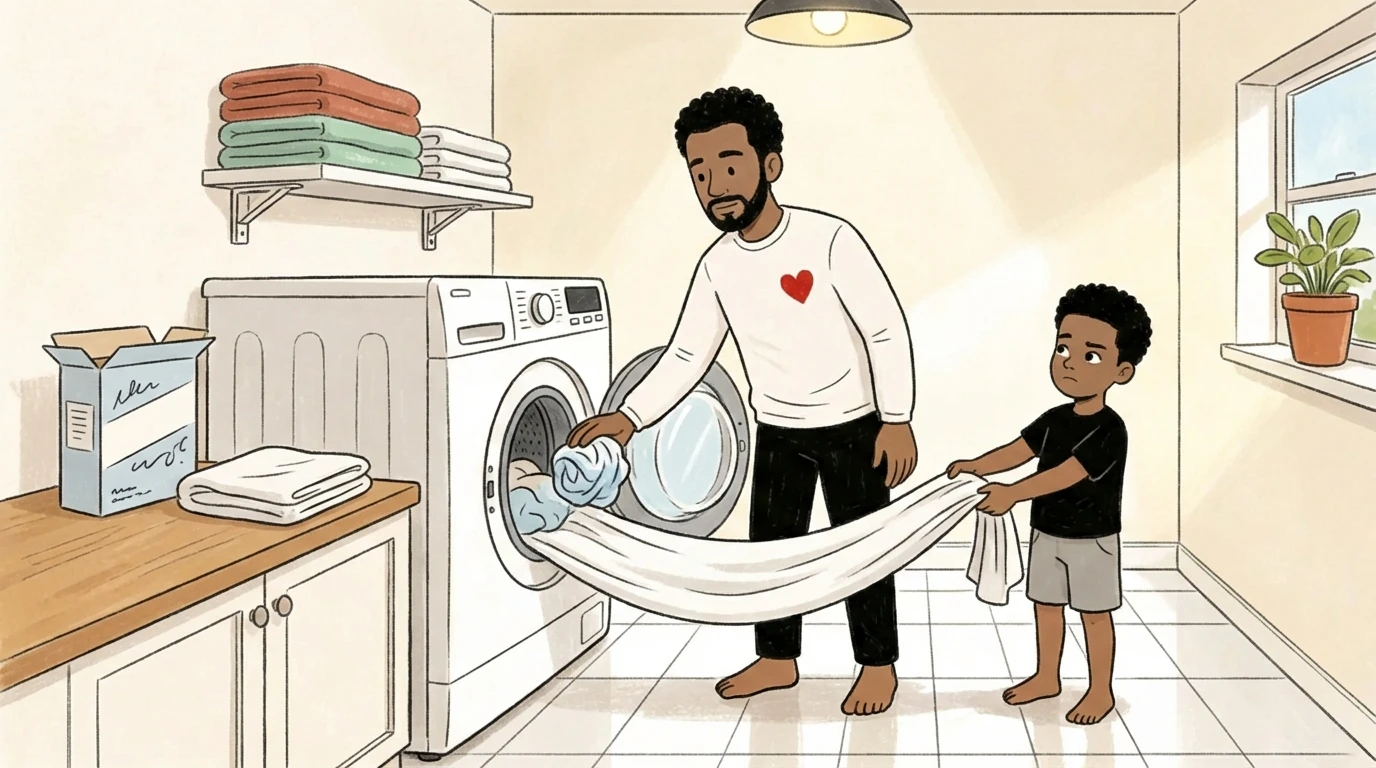
- Keep cleanup matter-of-factWet sheets go in the wash. Your child can help carry the sheet to the basket. No sighing, no commentary.
- Talk about it in daylightIf your child feels upset, talk when everyone is calm. Their body is still learning. Many kids their age are in the same boat.
For kids 6 and older: bedwetting alarms
If your child is 6+, bothered by wetting, and motivated, bedwetting alarms are the most effective intervention. Higher long-term success than medication.
A moisture sensor detects wetness and sounds an alarm. The child wakes, stops the stream, goes to the toilet. Over 8-12 weeks, the brain learns to associate a full bladder with waking. Success rates run 60-80%, and unlike medication, the improvement tends to stick after you stop using the alarm.
- The child must want to use it. Forcing an alarm on an unwilling kid means everyone hates 3 AM.
- It takes 8-12 weeks. Early on, they wake after wetting. Gradually sooner. Then they stop.
- A parent helps at first. Many kids sleep through the alarm initially. You may need to go in, wake them, and walk them to the bathroom for the first few weeks.
When to talk to your doctor
See your pediatrician if your child is 7 or older and still regularly wetting, was dry for 6+ months and started wetting again, has pain during urination or unusual thirst, or is wetting during the day as well. They can check for underlying causes and discuss desmopressin as a short-term option for sleepovers or camp.

What to say (and what to stop saying)
Your child is doing something embarrassing that they cannot control. Words land harder here.
Say this: "Your body is still learning to hold pee while you sleep. Lots of kids your age are working on this too."
Say this: "Wet sheets are no big deal. Let's swap them out."
Stop saying: "You're too old for this." (They aren't. See the statistics above.)
Stop saying: "Your sister was dry at 3." (Congratulations to her vasopressin production.)
The sleepover problem
Your child will get invited to a sleepover. You will lie awake thinking about it more than they do.
Here's what works. Pull-ups under loose pajama pants (kids are less observant than you think). A quiet word with the hosting parent ahead of time. Coming home at bedtime and returning first thing in the morning ("I wanted to come back for pancakes"). Or, if your child is on desmopressin, a dose for the night.
Let your child pick the strategy. They know what feels manageable. Some kids handle it with zero drama. Others need a few dry months under their belt before they're ready. The goal is participation, not perfection. And if one sleepover goes wrong? That's one awkward morning your kid will survive and eventually forget.
FAQ
No. There is no evidence that pull-ups delay the brain maturation needed for dryness. They keep sheets dry while biology catches up. Use them as long as needed.
Lifting keeps the bed dry that night but does not train the brain to respond to a full bladder. The child is not conscious enough to learn. If it helps your laundry situation, go ahead, but it will not speed up dryness.
Primary bedwetting (never consistently dry) is almost always biological. Secondary bedwetting (dry for six months then wetting again) can be linked to stress or medical issues and is worth discussing with your pediatrician.
Talk to your doctor if your child is over 7 and still wetting regularly, was dry for six months and started again, has daytime wetting, or has symptoms like pain or unusual thirst.