
TLDR
- If your child keeps breaking screen rules, the rules aren't the problem. Repeated rule-breaking around screens signals that the pull of the device has outpaced your child's ability to resist it. That's an addiction pattern, and willpower alone won't fix it.
- Remove the temptation entirely before trying anything else. Expecting a child to self-regulate around a screen that's designed to override self-regulation is setting them up to fail. Take it out of the equation.
- A screen reset is support, not punishment. Framing matters. You're removing something that has become bigger than their ability to manage, and that's why the screens are going away for now.
- The hard part is the first 72 hours. Your child will be bored, angry, and convinced their life is over. This is withdrawal, and it passes. Your job is to stay steady through it.
- Reintroduce with a written agreement and small doses. When screens come back, start with short supervised sessions and a signed family contract. Monitor closely and keep talking about it openly.

The moment you realize screens have taken over
You set a rule. One hour of gaming after homework. Your kid agreed. And then you found them playing at 11 PM on a school night with the brightness turned all the way down, headphones in, blanket pulled up like a tent. When you confronted them, they lied about it.
This is the moment most parents start cycling through punishments. Ground them. Take the console for a week. Lecture about trust. Two weeks later, you're back in the same spot.
Here's what's going on. Games like Fortnite, Roblox, and TikTok are engineered to override the parts of the brain that handle self-control. Your child's pulse can race just thinking about the game. Expecting them to resist that pull with willpower alone, especially when the device is sitting right there in their room, is like asking someone to diet while living inside a bakery.
When a child repeatedly breaks screen rules, you're dealing with something closer to addiction than a discipline problem. And addiction requires a different playbook than consequences.
Screens in every gap
The Screen Sanity course will walk you through a full reset
You'll dial back without the withdrawal meltdowns and rebuild a day that doesn't depend on a device.
Why punishment makes it worse
The standard move is to take screens away for a week as punishment. The problem is that punishment puts you on opposite sides. Your kid focuses on being angry at you rather than understanding why screens had to go. The lesson they absorb is "I got caught" rather than "I need help."
The trust framing
There's a better way to think about it. Your child broke a promise. The natural result of breaking a promise is that trust needs repair. That's different from "you're grounded because you disobeyed me."
Try something like this: "You told me you wouldn't play after bedtime, and you did. I get that it was really hard to resist. But you broke your word, and now we need to rebuild that trust together."
Notice what's missing: shame, anger, and the word "punishment." You're naming a fact (trust was broken) and pointing toward a path forward (rebuilding it together). This keeps you on the same team.
Removing screens as support
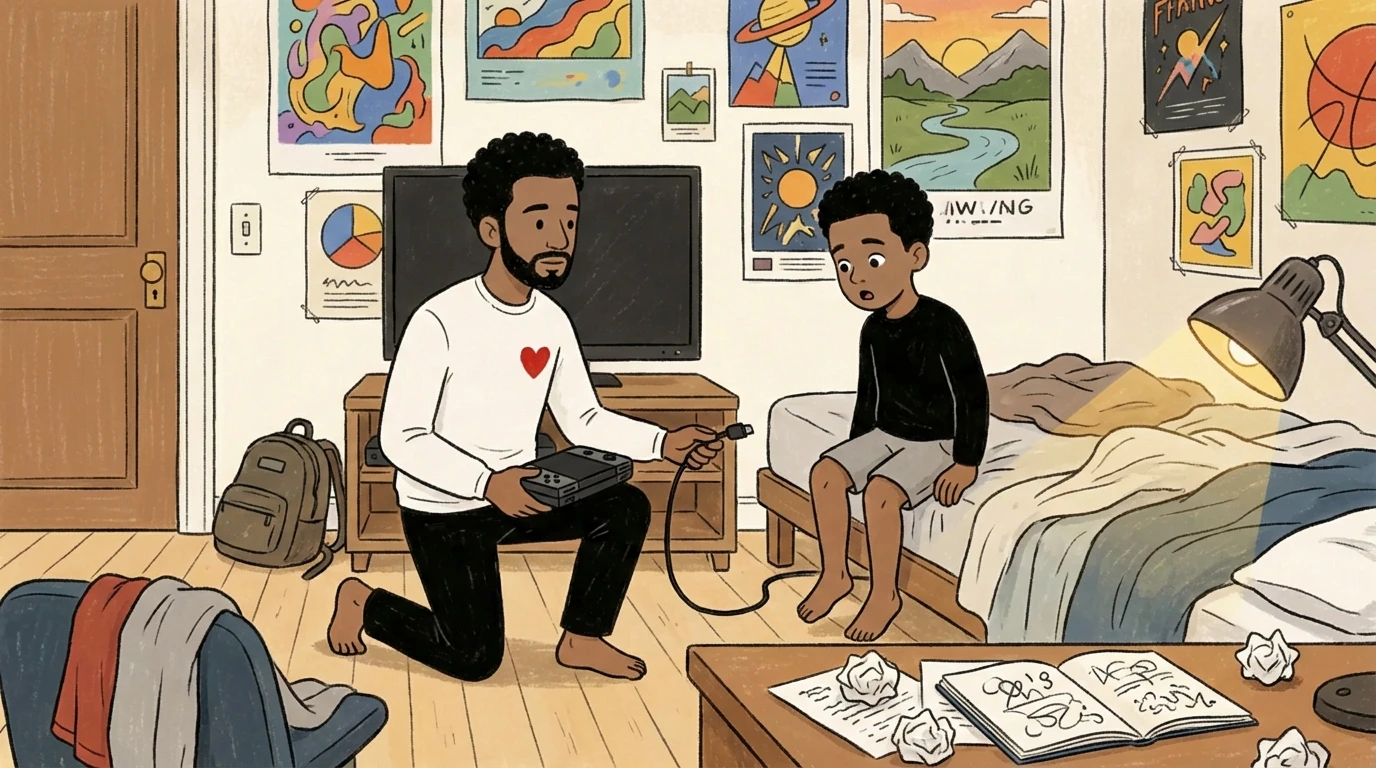
When you take the console out of their room, frame it as help. "I can see this game has a stronger pull than you can handle right now. I'm going to move it so you don't have to fight that battle alone." Video games are designed to be addictive, and acknowledging that out loud takes the moral weight off your kid's shoulders.
How to do a full screen reset
A screen reset means pulling all recreational screens for a set period so your child's brain has time to recalibrate. Take the quiz to see if your child's screen use has reached a level that warrants one. If the answer is yes, here's how.
How to do a screen reset at home
- Name the problem togetherSit down and say it plainly: 'Screens have gotten out of control in our house, and we need a reset.' Don't lecture. Don't list every rule they broke. State the fact and move to the plan.
- Remove all recreational screensConsoles, tablets, phones with games. Put them somewhere your child can't access. Don't rely on their willpower or yours. The point is to eliminate the temptation so nobody has to white-knuckle through it.
- Set a clear timelineA reset works best at two to four weeks. Tell your child exactly how long it will last. 'No recreational screens until March 15th.' Vague timelines create anxiety and constant negotiation.
- Fill the gap with real activitiesBoredom is the hardest part. Have board games, art supplies, books, and outdoor gear ready. You'll need to be more available for the first week. Plan some activities you can do together.
- Reintroduce slowly with a contractWhen screens come back, start small. Thirty minutes, supervised, with a written family agreement about when, where, and how long. Both sides sign it. Revisit the agreement every two weeks.
The first three days
Your child will push back hard. Expect it. They might yell, slam doors, tell you this is the worst thing that's ever happened to them. Some kids bargain. Some go silent. A few will try to sneak screens from friends.
This is withdrawal, and it's temporary. The dopamine system that got accustomed to constant stimulation is recalibrating. By day three or four, most kids start finding other things to do. By week two, you'll notice them reading, building something, or talking to you at dinner.
Your job during this phase is to stay calm and not take the bait. When they say "I hate you," what they mean is "this is really uncomfortable and I don't know what to do with this feeling." Hold the line.
After the reset: rebuilding screen rules that stick
The reset is the foundation for a new arrangement. When screens come back, everything about how they're used changes.
The family screen contract
Sit down together and write it out on paper, with both of you signing at the bottom. Include: which devices, how long per day, which times of day, where in the house (common areas only, never bedrooms), and what happens if the agreement gets broken.
The contract works because your child helped create it. They have ownership. And when a rule gets broken later (it will), you don't need to argue. You both look at the piece of paper.
Start with tiny doses
Thirty minutes a day for the first week. Then forty-five. Watch what happens to their mood, sleep, and behavior after each session. If you see irritability spiking or rules bending, dial it back. You're titrating, not just hoping for the best.
Keep talking about it. Ask them directly: "Do you feel like you're in control of how much you play, or does it feel like the game is in control of you?" That question, asked without judgment, teaches them to monitor their own relationship with screens.
When your child lies about screens
Every kid experiments with lying. That's developmentally normal. But when the lying is specifically about screens, it tells you how powerful the pull is. A child who lies about screen use is a child whose desire for the screen has overridden their values.
Don't respond to the lie with interrogation. Respond with honesty: "I can see you weren't truthful about the game. That tells me the pull is really strong right now. Let's figure this out together."
The natural consequence of lying is reduced trust. Not as a punishment you impose, but as a reality you name. "When you lie to me, I trust you less. That's how trust works. And you can earn it back."
Ask your child what they'll do to repair it. Kids who generate their own repair strategy follow through more than kids who have one imposed on them.

The long game
A screen reset is a single event. What matters more is the ongoing conversation. Your child needs to develop the ability to manage their own relationship with technology, because you won't always be the one holding the console.
Every time you talk openly about why screens are hard to resist, you're teaching them to think about their own impulses. Every time you acknowledge that the game is designed to be addictive, you take the shame off their plate and replace it with awareness.
The goal is raising a child who notices when screens are using them.
FAQ
Two to four weeks is the sweet spot for most families. Shorter than two weeks and the brain doesn't fully recalibrate. Longer than four and you risk the reset feeling like indefinite punishment rather than a temporary recalibration. Set a specific end date and stick to it.
Whole family works better. If siblings are gaming in the next room, the child on reset feels singled out and resentful. When everyone participates, it becomes a family project rather than a punishment aimed at one kid. Parents included, if you can swing it.
School-required screen use stays. The reset applies to recreational screens only. Set up a dedicated homework station in a common area where school use happens under your supervision. Remove all games and entertainment apps from the school device if possible.
Acknowledge that it's real. Social exclusion feels terrible, and you're not going to pretend it doesn't. Then help them find other ways to connect with those friends during the reset. Invite kids over for in-person hangouts. The friendships that survive a few weeks without gaming are the ones worth keeping.
If they lie about screen time, break rules repeatedly, have intense meltdowns when screens are removed, and their mood or sleep has changed noticeably, that's your signal. Trust what you're seeing. You don't need a formal diagnosis to recognize that something has shifted.