
TLDR
- Age-match the activity or it flops. A toddler can't build a marble maze. A ten-year-old won't thread cheerios onto spaghetti. Developmental stage determines what holds their attention without you hovering.
- Connect before you expect independence. Ten minutes of your full attention fills the emotional tank enough that your child can play solo for thirty. Skip the connection and they'll follow you around the house whining.
- Boredom complaints are the beginning, not the end. When screens go off, kids complain. This is withdrawal from dopamine input, not proof that nothing else is fun. The boredom passes if you hold the line.
- Older kids can do younger-kid activities too. A seven-year-old still loves sensory play. Activities build cumulatively. Don't gatekeep the playdoh just because your kid can read chapter books.
- Setup is your job. Entertainment is not. Get the materials out, show them the starting point, then leave. Facilitation and entertainment are different things.
The "I'm bored" problem is a dopamine problem
Your kid turns off the tablet and within ninety seconds announces they're bored. You suggest twelve activities. They reject all twelve. You consider giving the tablet back just to stop the negotiations.
Here's what's happening. Screens deliver fast, unpredictable dopamine hits. When that input cuts off, the brain protests. The boredom your child feels after screens is a dopamine gap. Their brain is recalibrating to a lower level of stimulation, and that recalibration feels awful to them.
This is why having activities ready matters. Not because you need to entertain your child (you don't), but because the transition away from screens goes smoother when there's something concrete waiting on the other side. "Go play" is too vague for a brain still coming down from a screen high. "Your water bin is set up in the bathroom" gives them somewhere to land.
Nothing to do without a tablet
The Screen Sanity course will give you a screen-free playbook by age
You'll have go-to activities your kid picks voluntarily, so taking the tablet away stops feeling like punishment.
Toddlers: sensory everything
Toddlers learn through their hands and mouths. The activities that hold them are the ones that let them pour, squeeze, poke, and splash. You don't need Pinterest-level setups. You need a baby bathtub on the floor and some cups.
Water and pouring play
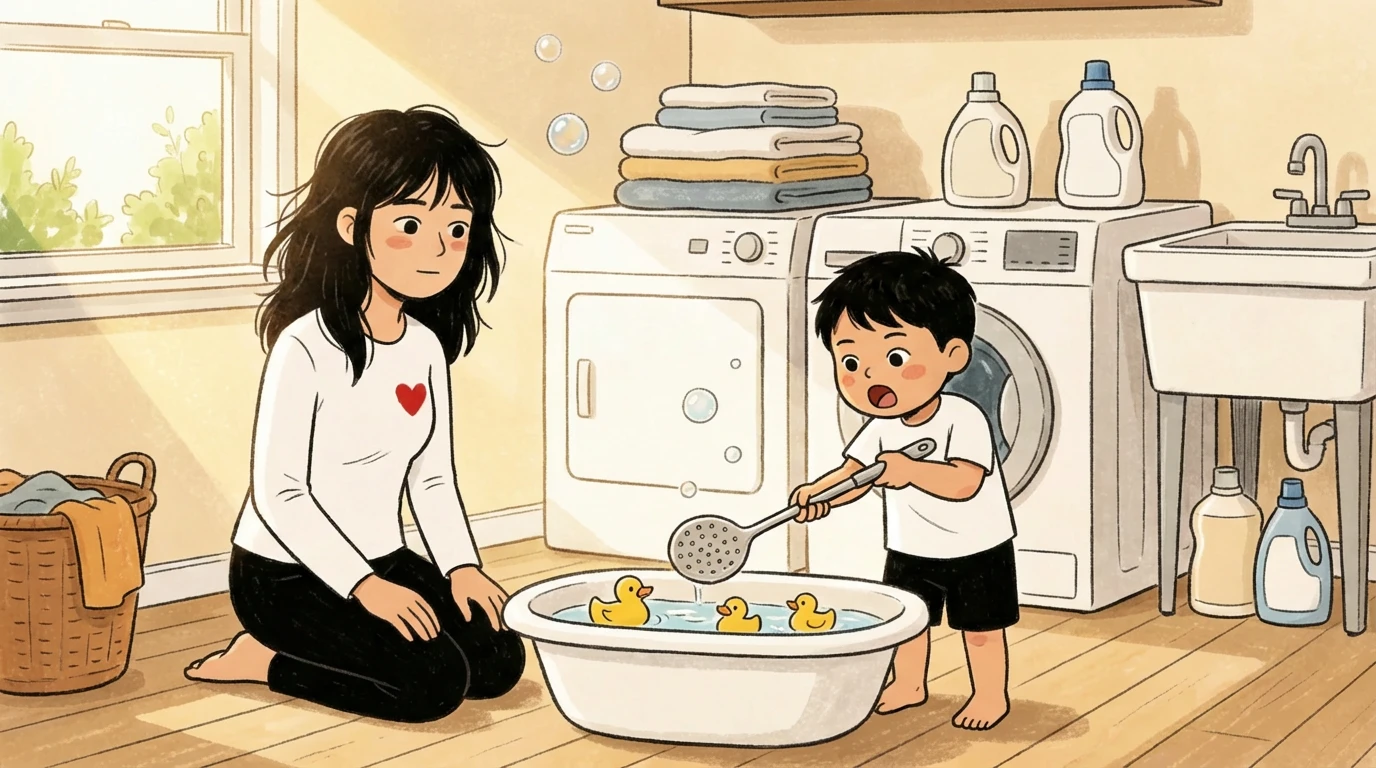
Fill a baby bathtub with a few inches of water and hand them measuring cups, a slotted spoon, and some floating toys. They'll pour from one cup to another for twenty minutes with zero input from you. Add ice cubes and you've got a new activity. Throw in a sponge and it's another one. Rice in a plastic bottle with smaller cups works when you can't deal with water on the floor.
Fine motor challenges
Poke pom-poms through the opening of a water bottle. Thread pasta shapes onto a piece of uncooked spaghetti stuck into clay. Push pipe cleaners into an egg carton with pre-poked holes. These are ten-second setups that buy you real stretches of independent play.
The mess question
Yes, it's messy. Washable markers inside a cardboard box, playdoh on a cookie sheet, soapy water and a sponge on the kitchen cabinets. The mess is the point. Sensory input is how toddlers build neural connections. Contain the mess (bathtub, cookie sheet, box) instead of preventing it.
Preschoolers: building and pretend worlds
Between three and five, kids can handle more complex setups and longer projects. They can follow multi-step instructions and their pretend play gets elaborate. This is also the age where social play with siblings or friends becomes a screen-free goldmine.
Construction projects
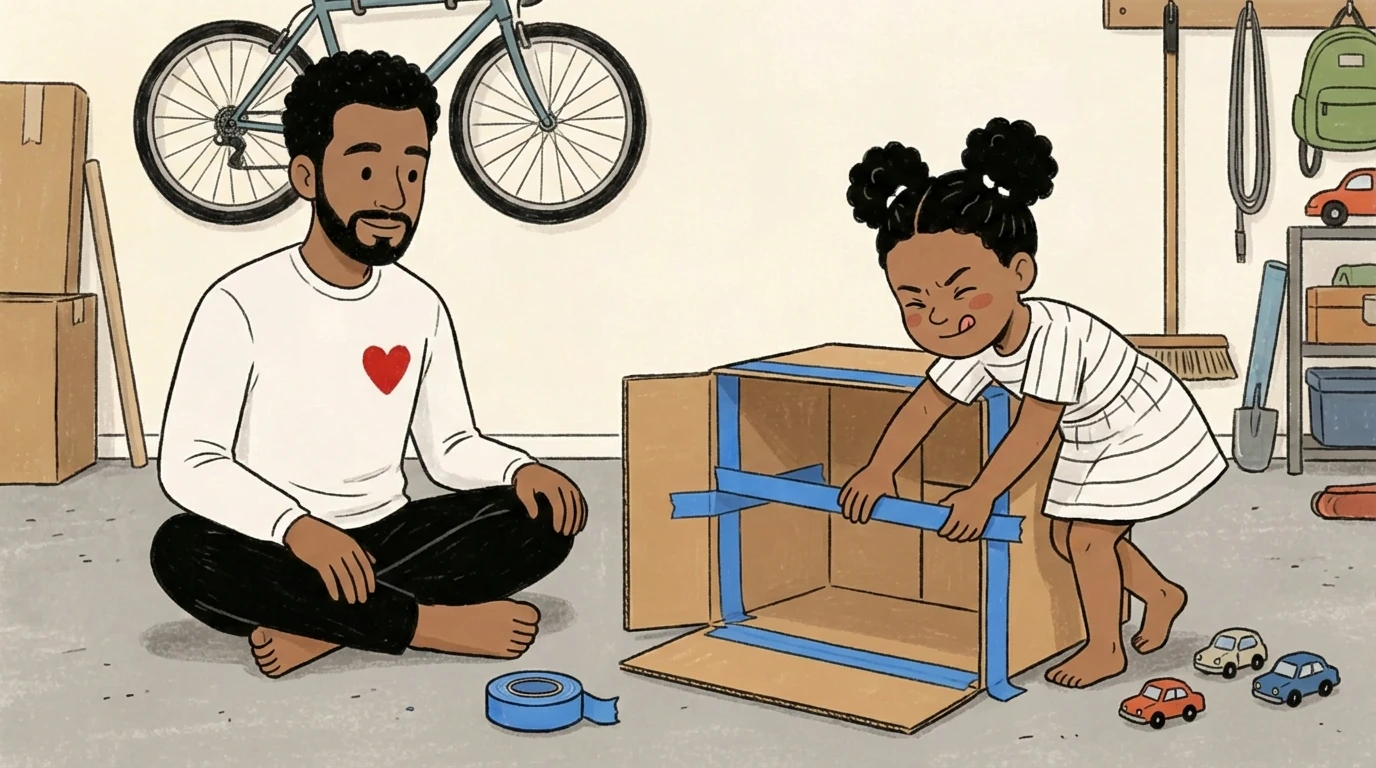
A roll of masking tape and a box of toy cars turns your hallway into a race track. Blankets and pillows become a fort. Cardboard tubes and a marble make a maze. Give them the materials and a starting point, then walk away. The kid who can't think of what to build with tape is the same kid who will cover every surface in your house with it if you just leave them alone for ten minutes.
Physical games that burn energy
Indoor obstacle courses with yarn and tape in a hallway. Sock snowball fights with a sibling. Bowling with toilet paper tubes and a tennis ball. Dancing to music (just put it on and leave the room). On hot days, a wet sponge toss in the backyard with two buckets of water replaces a screen better than any educational app.
The sibling advantage
Preschoolers with siblings have a built-in playmate. Simon Says, freeze tag, blindfolded house tours where they take turns guiding each other. Two kids entertaining each other is the screen-free holy grail, and it requires almost nothing from you except the initial suggestion.
School-age kids: real projects with real results
By elementary school, your kid can cook, build things that work, write stories, and do science experiments that teach them something. The activities that hold their attention are the ones that produce something they care about.
Science and construction
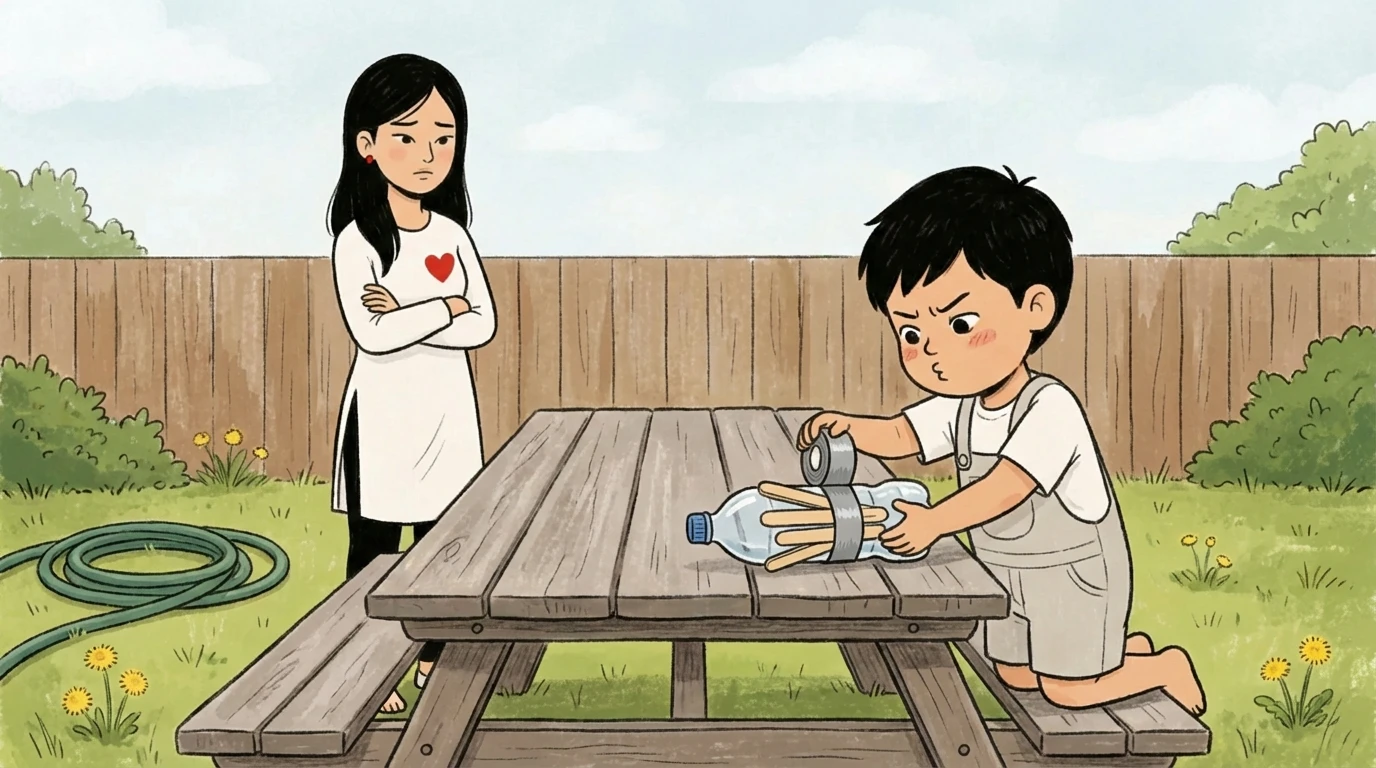
Make a boat from a soda bottle and popsicle sticks, then float it at the pond. Drop food-colored vinegar onto a pan of baking soda. Freeze plastic animals in a giant ice block and excavate them with tools. Build an elevator from a basket and string to hoist stuffed animals up the stairwell. These are engineering problems disguised as play.
Cooking and food projects
Homemade ice cream in a baggie. Popsicles from juice and fruit. A peanut butter sandwich they made themselves tastes better than anything you've ever prepared (according to them). Cooking builds math skills, sequencing, and independence, and it results in something they get to eat.
Writing and literacy projects
A joke book. A letter to a grandparent. A family newspaper. A story about their life. The kid who "hates writing" at school will write three pages about their dog if nobody is grading it. Give them the materials and a reason (Grandma would love a letter) and get out of the way.
Preteens: skill-building that respects their brain
Middle schoolers reject anything that feels babyish, but they're hungry for competence. The activities that work are the ones that build real skills or produce something impressive.
Learning to cook a full meal. Starting a garden. Writing a song. Making jewelry or tie-dyeing shirts. Building something from wood. This is the kind of open-ended play that builds the brain in ways that scrolling never will.
The entrepreneurship angle works too. Organizing a neighborhood car wash. Hiring themselves out as a mother's helper. These give preteens a taste of real-world responsibility that makes screen time feel less appealing by comparison.
How to set up a screen-free afternoon
How to set up a screen-free afternoon
- Connect for ten minutes firstBefore you expect independent play, fill their emotional tank. Play a quick card game, read together, or just sit and talk. A connected child can handle boredom. A disconnected child cannot.
- Set up one activity visiblyDon't announce a list of options. Put materials for one age-appropriate activity on the table or floor. A physical setup is more inviting than a verbal suggestion. Their brain needs a visual starting point.
- Help them start, then leaveShow them the first step if needed: 'Here's the tape and the cars, you could make a road.' Then physically step away. Hovering kills the creative flow. You're a launchpad, not air traffic control.
- Expect the transition dipWhen the first activity ends, they'll come find you. This is normal. Do five minutes of roughhousing or connection, then set up the next activity or invite them to join whatever you're doing.
- Let boredom do its workIf they reject your setup, say 'I bet you'll figure something out' and resist the urge to fix it. Kids who push through the boredom gap discover their own ideas. That discovery is the whole point.
The pattern is: connect, set up, step back, reconnect at transitions, repeat. Each cycle buys you twenty to forty minutes of independent play. Three cycles and you've got a screen-free afternoon. Tolerating that initial boredom complaint is what makes the whole thing work. If you cave and hand back the screen the moment they protest, you've taught them that complaining is the fastest way to get it back.

The long game
Every screen-free afternoon builds something screens can't: the ability to generate your own entertainment. A kid who learns to build a fort at four, cook at eight, and start a project at twelve becomes a teenager who doesn't need a phone to feel okay. That's the real goal here. You're not just filling time. You're building a person who knows what to do with themselves.
FAQ
Stop suggesting. Say 'Screens are off and I'm here if you need me' and go about your day. Most kids start playing within fifteen to twenty minutes once they realize you're not going to negotiate. The refusal is a bid for the screen back, not evidence that nothing else is fun.
No. Tape, cardboard boxes, water, cups, paper, markers, and kitchen staples cover the majority of activities for every age. The best screen-free play uses what you already have. Specialized kits are fine but completely unnecessary.
Set up activities at the younger child's level and let the older child join or do their own thing. Older kids genuinely enjoy younger-kid activities when there's no pressure. A nine-year-old will play in a water bin if you don't make it weird.
Scheduled. Kids (and parents) do better with predictability. Block out specific screen-free windows and stick to them. Once the routine is established, your child stops fighting it because they know when screens come back. The consistency matters more than the duration.