TLDR
- Parallel play is the job, not a warm-up act. When two toddlers sit near each other ignoring each other, they're studying each other. This is the foundation for everything that comes later.
- Your toddler's brain cannot do cooperative play yet. The prefrontal cortex regions responsible for perspective-taking and impulse control are still under construction until well past age three.
- Forced sharing backfires every time. Letting your child decide when to hand over a toy builds genuine generosity. Making them share builds resentment and hoarding.
- Hitting at playdates means overwhelm, not cruelty. Toddlers who lash out are flooded with feelings they can't process. Stay close, offer words, skip the lecture.
- Sensitive kids need smaller doses of social time. One-on-one playdates at home will do more for your child's social skills than a chaotic playgroup ever could.
What parallel play looks like
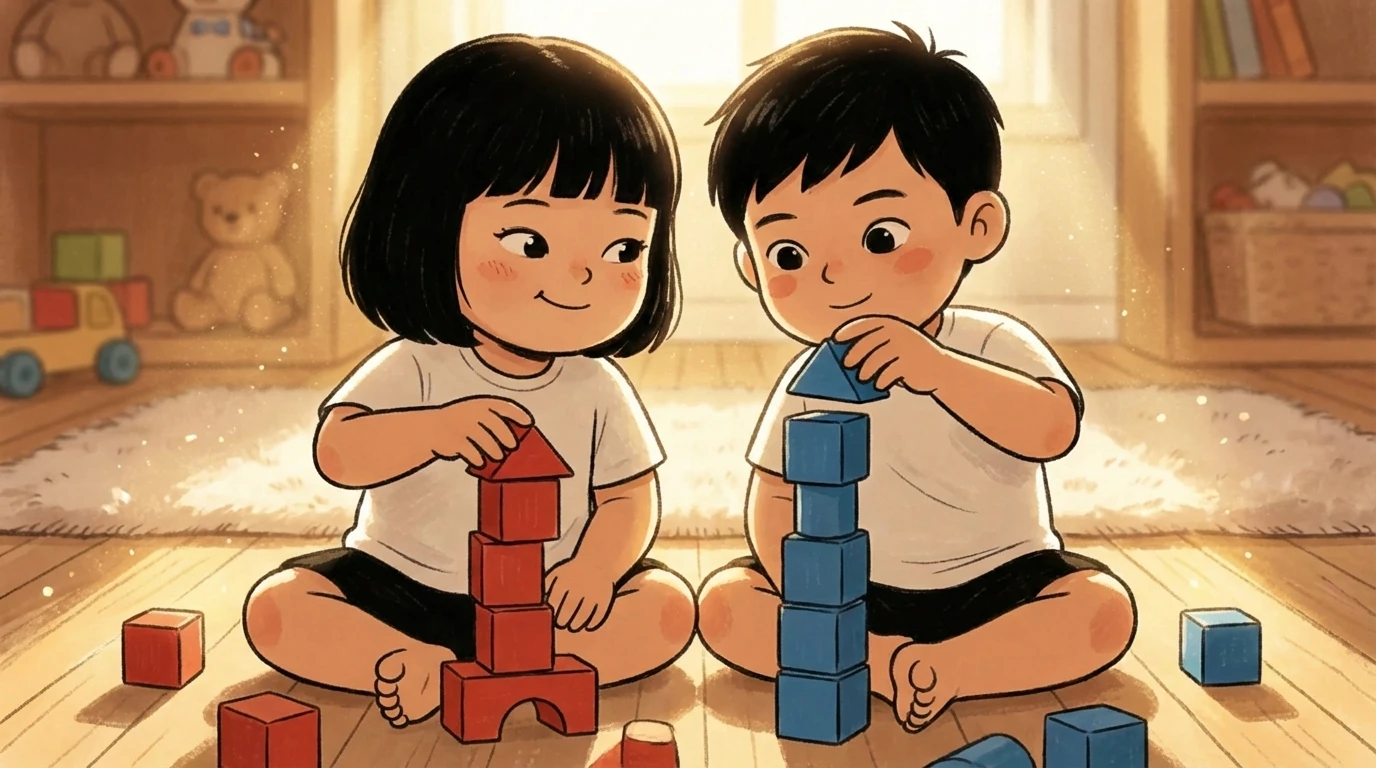
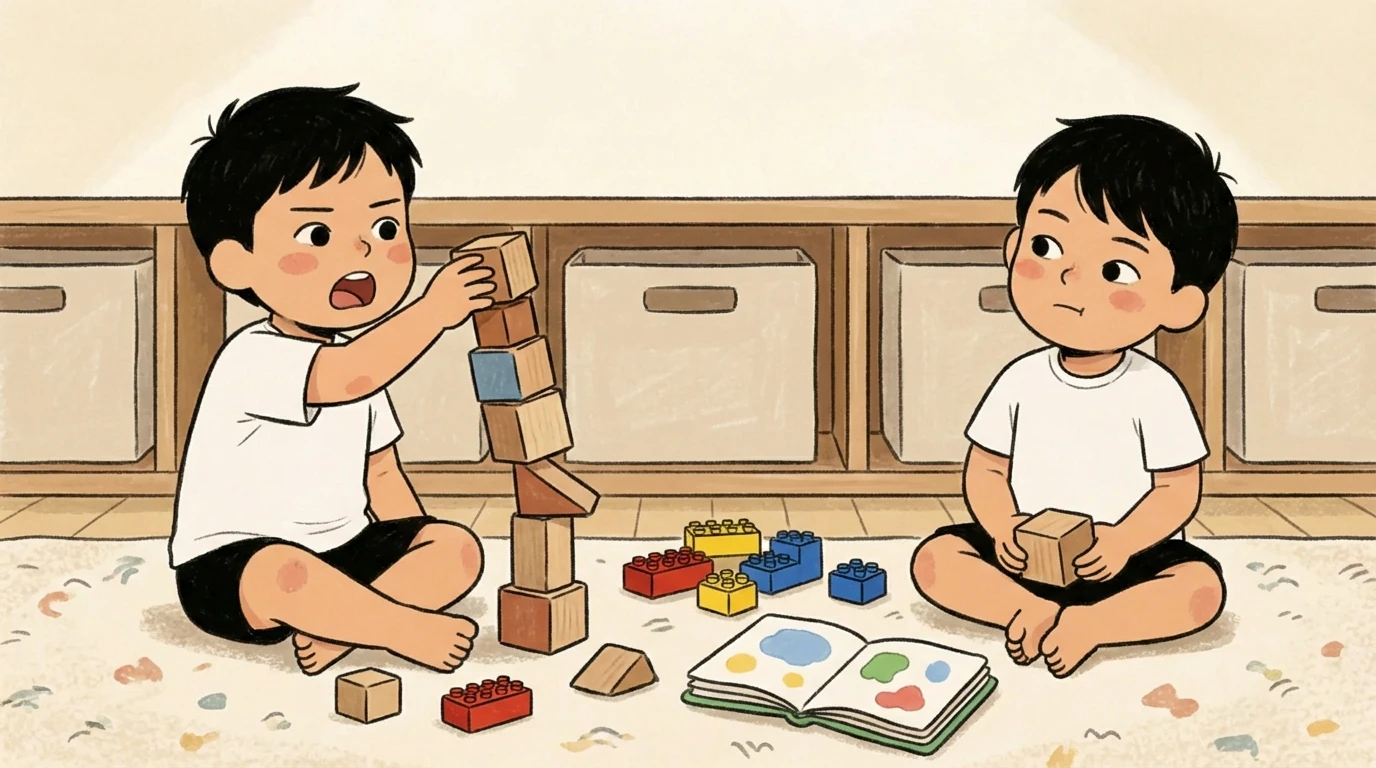
You're at a playdate. Your 20-month-old is building something unrecognizable out of blocks. The other kid is two feet away, doing the exact same thing. They haven't spoken. They haven't made eye contact. You're thinking this is pointless, they're not even playing together.
They are. You just can't see it yet.
Parallel play is the developmental stage between solitary play and cooperative play. It shows up around age two and can last another full year. During parallel play, children sit near each other, watch each other sideways, copy each other's noises, and occasionally grab a toy the other one puts down.
Here's the part most parents miss: children who find a group overwhelming will play nearby without engaging for a long time. This looks like failure. It's a strategy. They're assessing. They're figuring out whether this situation is safe before committing.
Why it matters more than it looks
Research on children entering new social groups found a clear pattern. Kids who observe first and pick up the group's rules get accepted. Kids who skip observation and charge in get rejected. Parallel play is your toddler's version of reading the room. Rushing them past this stage doesn't produce earlier friendships. It produces anxiety.
Side-by-side but separate
The Social Skills course will show you what parallel play is building toward
You'll finally see the quiet signals that mean connection is forming, even when they never share a single block.
The brain timeline you're working against
Your toddler genuinely wants to play with other kids. The desire is there. But the brain regions responsible for perspective-taking and impulse control won't finish developing for years. Your child can want to share a truck and still physically grab it from another kid's hands in the same breath. Both impulses are real. The grabbing one just has a faster circuit.
What this means at playdates
Three things are happening simultaneously in your toddler's brain during social play: Will that kid take my toy? Can I get the ball before they do? If I push them off the trike, will I get away with it?
Your two-year-old's prefrontal cortex went on break about twenty minutes into the playdate. The desire for connection and the self-protective instincts are running on the same hardware, and the hardware is not finished.
Why forced sharing makes everything worse
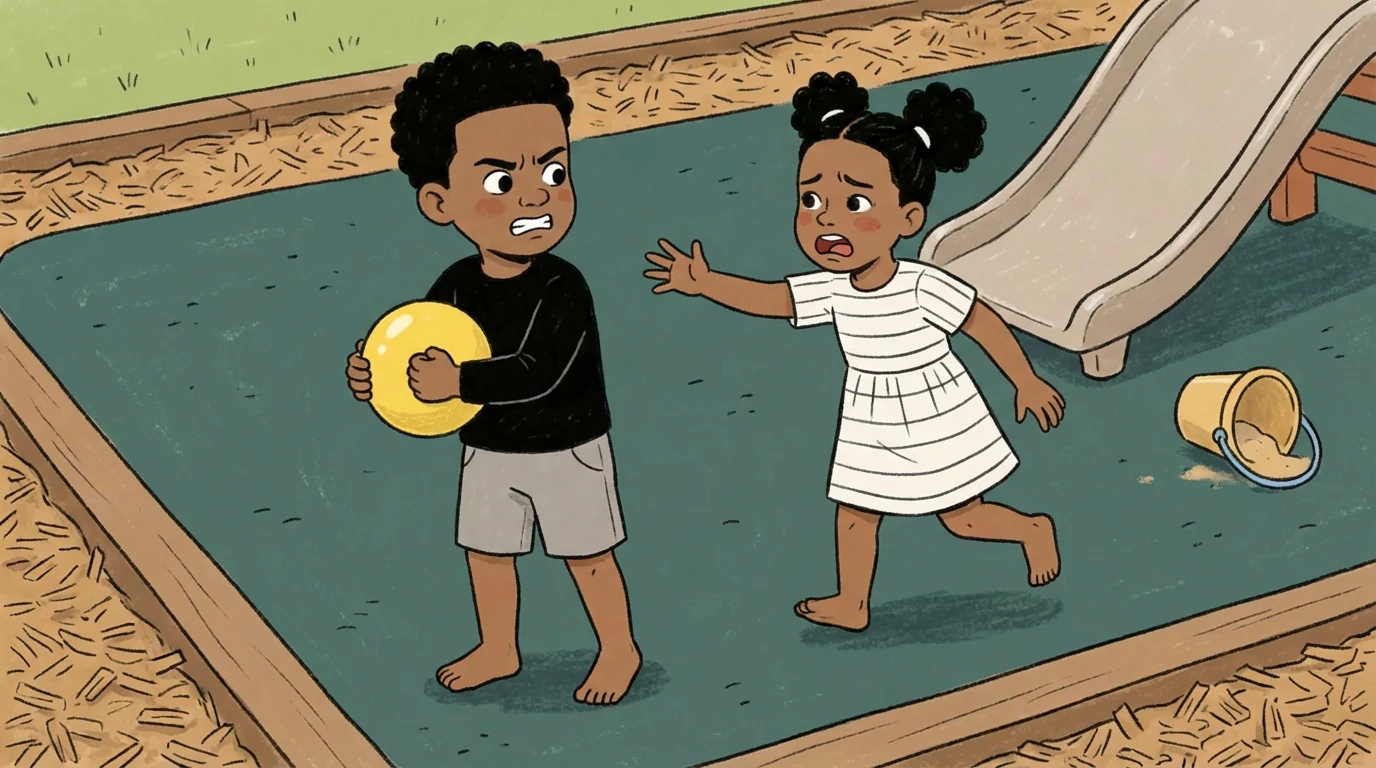
You're at the park. Your kid has been playing with a bucket for three minutes. Another kid walks over and wants it. Every parent within earshot is watching. You feel the social pressure and tell your kid to share.
This is the single most counterproductive thing you can do. When you force a toddler to hand over a toy, you're modeling grabbing behavior. You're teaching them that a bigger person can take your things whenever they decide you've had them long enough. The result is a child who becomes more possessive, not less.
The turn-taking alternative
Instead of sharing, try turns. "It's your turn with the bucket right now. When you're done, it'll be Maya's turn." Then let your child decide when they're done.
When a child hands over a toy on their own timeline, they experience the feeling of giving. That feeling is what builds genuine generosity over months and years. Research shows that when we praise sharing, kids do it more while we're watching and less when we're not. The praise gives them no internal reason to be generous. Letting them experience the warmth of voluntary giving does.
How to handle toy conflicts at playdates
- Stay close enough to intervenePosition yourself within arm's reach during play. Your proximity prevents escalation before it starts and gives your child a sense of backup.
- Narrate what you seeSay 'Sam wants the truck too' out loud. Naming the situation helps both children understand what's happening socially before anyone panics.
- Offer words your child can useGive them the exact script: 'You can say MY TURN.' Practice this phrase at home so it's available when they need it under pressure.
- Let the current holder keep the toyThe child using the toy gets to finish. Tell the waiting child 'You can ask for it when she's done.' Then help them wait by finding something else.
- Acknowledge what workedWhen your child hands the toy over voluntarily, point out the other child's reaction: 'Look how happy he is.' Let them feel the impact of generosity.
When playdates go sideways
Your child hits another kid at a playdate. Your first instinct is to scoop them up, apologize to everyone, and launch into a lecture about keeping hands to ourselves. Skip the lecture.
Toddlers who hit during play are overwhelmed, not mean. Their stress cup was already full from the morning routine, the car ride, and the sheer effort of being near another unpredictable human. The hitting is overflow, not intent.
What helps
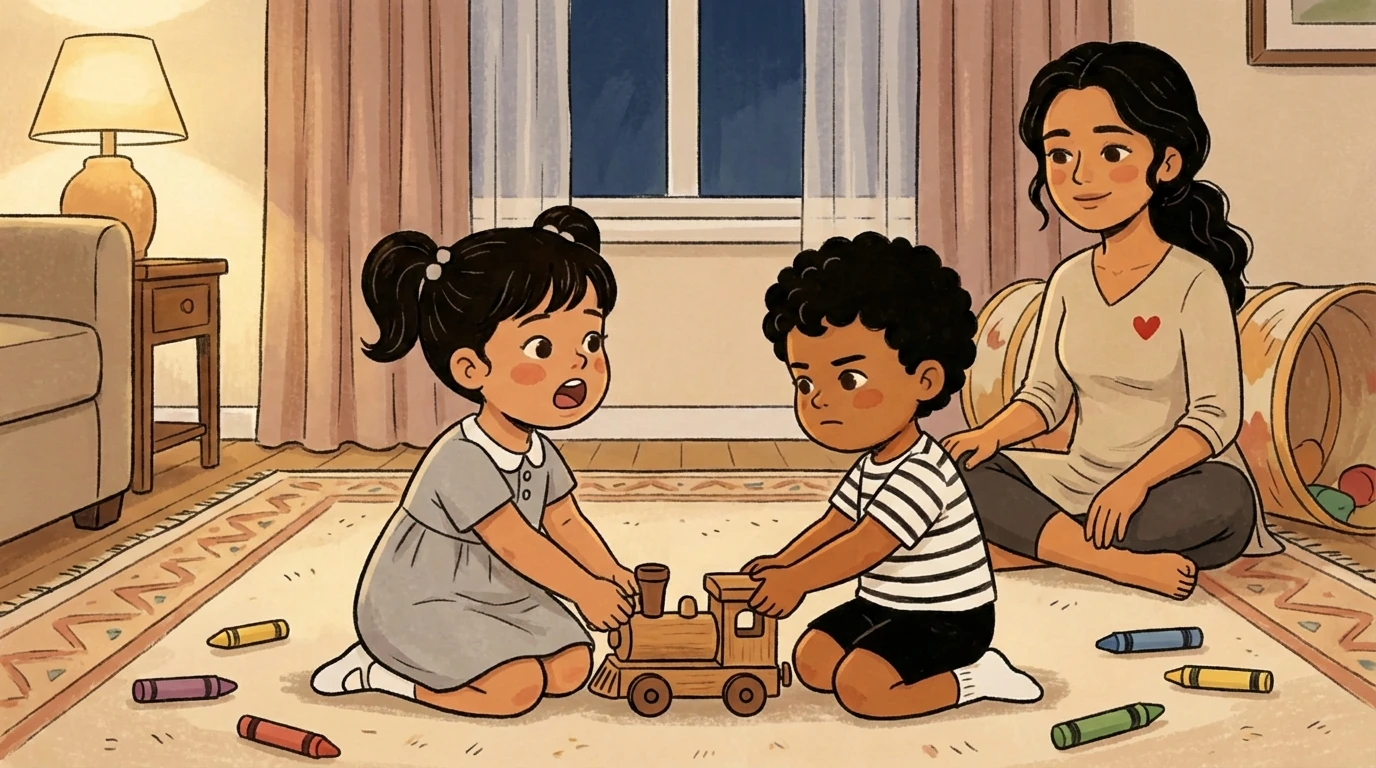
Stay close. When you see tension building (body stiffening, voice rising, that specific look your kid gets right before they lose it), step in with words before hands fly. "You're mad that she took your block. You can say 'give it back.' I'll help."
If the hit already happened, go to your child first. Not to lecture. To connect. "I can see you're really upset. I'm going to help you." Then turn to the other child: "Are you okay? Let me help." Punitive responses, yelling, forced apologies, time-outs in the corner, consistently make kids more aggressive, not less. The research on this is unambiguous.
The sensitive kid at the playgroup
Some toddlers run into a group and start grabbing toys within seconds. Others stand at the edge of the room and watch for forty-five minutes. Neither response is wrong.
Recognizing the easily overstimulated child
A sensitive toddler might:
- Prefer playing alone in a different part of the room
- Run in circles rather than engaging with other kids
- Light up when a single adult gives them one-on-one attention
- Hit or pinch when the group energy gets too high
This sensitivity is a package deal. The same wiring that makes your child overwhelmed in groups often produces early empathy. You may have noticed your toddler rushing to comfort a crying child or offering a toy to someone who's upset. That's the other side of the same coin.
What works for sensitive kids
One-on-one playdates at your house. Your child's home is where they feel safest, and a single peer is manageable in a way that five kids in a church basement is not. Kids who seem uninterested in peers at playgroups often become remarkably social when there's just one other child in a familiar setting. The social skills were there all along. The volume was just too high.
What your toddler needs from you right now
Forget the milestone charts. Here's what moves the needle:
Label emotions out loud. "That big dog's bark was scary, right? You're safe with me." "You're frustrated because your tower fell." Every time you name an emotion, your child's brain shifts one degree from processing it physically (hitting) toward processing it verbally (words). Start early. Start often.
Be the holding environment. Your calm is the container for their chaos. When your kid melts down at a playdate, they need your nervous system to be regulated so theirs can borrow from it. If you're activated too, take three breaths where the exhale is longer than the inhale before you do anything else.
Stop comparing timelines. The other parents at the playgroup can sit on the bench and chat while their kids play independently. You're shadowing your two-year-old through the sandbox like a Secret Service agent. That's because your child needs you closer right now. What toddlers need most is engagement with the adults who matter to them. Peer friendships come later. The fact that your child lights up when you play with them and shuts down in groups of kids is developmentally normal.

FAQ
Completely normal. Most toddlers engage in parallel play, sitting near other kids without interacting directly, until around age three. Solitary play at 21 months is exactly on schedule. If your child connects well with adults one-on-one, the social wiring is there. Peer play comes later.
Not necessarily, but scale down. Try one-on-one playdates in your home instead of group settings. Stay within arm's reach so you can intervene before the hit lands. Your child is overwhelmed, and smaller doses of social time with you close by gives them a chance to practice without flooding.
Don't force it. Switch to turn-taking instead. Let your child use the toy for as long as they want, then they hand it over voluntarily. Before playdates, let them put away their most special toys. Forced sharing creates hoarding. Voluntary giving builds the kind of generosity you want.
If your child avoids eye contact with everyone including familiar adults, shows no interest in any person (not just peers), or has no back-and-forth communication by 18 months, talk to your pediatrician. A toddler who ignores other toddlers but lights up around trusted adults is developing normally.
Your presence is their security system. A toddler who stays glued to you at playgroups is telling you the stimulation level is too high. Try sitting on the floor with them so they can explore from a safe base. Over weeks, the radius of exploration gets bigger. This is healthy attachment, not a red flag.