TLDR
- Delay the smartphone as long as possible. The prefrontal cortex, which handles impulse control, is not fully developed until the mid-twenties. A twelve-year-old with a smartphone is managing adult-level temptation with a half-built brain.
- Alternatives exist that look like real phones. Devices like the Gabb Phone, Pinwheel, and Bark Phone let kids call and text while blocking social media, browsers, and app stores entirely.
- A written phone agreement works better than a lecture. Kids who help negotiate the rules before getting their first phone are measurably more likely to follow them. Start the contract before you hand over the device.
- Treat the first phone as a year-long training project. Daily check-ins about phone use build habits. Handing over a phone with a speech and hoping for the best does not.
- Your own phone habits are the loudest lesson. If you scroll at dinner and sleep with your phone on the pillow, your rules will sound hollow. Park your phone at the charging station with theirs.
The question you are really asking
When your kid starts asking for a phone, the surface question is "which phone should I buy." The real question underneath is bigger: how much of the internet do I let into my child's life, and when?
The answer, backed by pretty much every researcher who studies adolescent brains, is: less than you think, and later than their friends. The prefrontal cortex, the part responsible for impulse control, is still under construction until the mid-twenties. Handing a middle schooler unlimited access to social media and algorithmic content is asking a half-built brain to manage adult-level temptation. Half of kids themselves say they are addicted to their phones.
But your child does need a way to reach you. They are walking to school, staying at a friend's house, getting picked up from practice. The goal is connection without exposure: a device that lets them call and text without opening the floodgates to everything else.
Everyone else has one
The Screen Sanity course will help you decide when and what phone fits
You'll have a clear phone plan instead of caving to peer pressure or stalling until it gets awkward.
What the alternatives look like
Kid-safe phones have gotten much better at not looking like kid phones. The social stigma of carrying an obvious "baby device" used to be a dealbreaker. Now several options look like regular smartphones on the outside while being locked down on the inside.
The locked-down smartphones
The Gabb Phone is the most restrictive. It looks like a standard Android phone (so your kid gets the social credit of appearing to have a real phone), but it has no browser, no app store, and no pathway to social media. Calls, texts, camera, music. That is it. For a first phone where you want near-zero risk, this is the simplest option.
Pinwheel takes a different approach. It starts restrictive but lets you gradually unlock curated apps through a parent dashboard as your kid demonstrates responsibility. Nothing reaches the phone without your approval. If you want one device that grows with your child's independence, this is the one to look at.
The Bark Phone ships with social media blocked by default and offers strong monitoring tools. Texts, calls, location, app use, all visible to you. It also allows the option to add monitored social media later with tight controls, for families who want a middle path.
The intentionally-not-smartphones
The Light Phone II does not try to look like a smartphone at all. E-ink screen, calls, texts, directions, music. No browser, no apps, no color display. For the older tween who would resist anything that feels like a "kid phone," the Light Phone positions itself as minimalist and cool rather than restrictive.
Modern flip phones still exist and still work. Basic calling, some texting, usually no social media risk (check the specific model). The cost is low. The trade-off: some kids will resist the design because it does not match what their friends carry.
How to choose
Ask yourself four questions:
- What does my child need? If the answer is "call me when practice ends," every device on this list covers it.
- How much monitoring do I want? Bark gives maximum visibility. The Light Phone is safe by design since the hardware itself cannot access problematic content.
- Does appearance matter to my kid? Gabb, Pinwheel, Bark, and Wisephone all pass as regular phones. Light Phone and flip phones do not.
- Do I want a device they grow into? Pinwheel and Bark expand over time. Gabb and Light Phone are fixed.
The phone contract nobody thinks they need
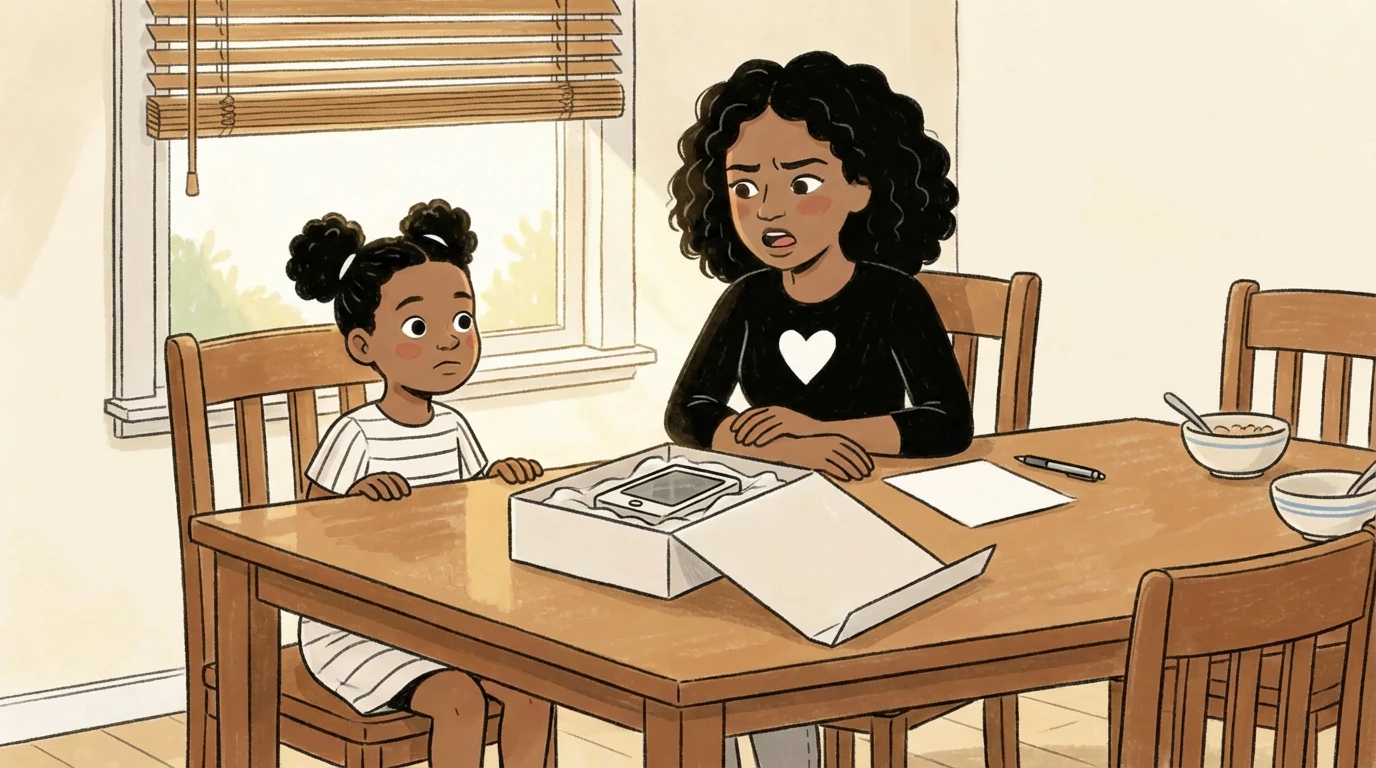
Most parents skip the written agreement. It sounds like overkill. It is the single most effective thing you can do.
When a child helps negotiate the rules before getting their first phone, they own those rules. A lecture lands on the floor. A conversation where they had input sticks.
Sit down before the phone arrives. Ask your kid what they think the rules should be. You will be surprised by how reasonable they are when they feel heard. Then negotiate. You hold fast on the things that matter (setting limits is not optional), and you flex on the things that do not.
Cover: when the phone gets used, where it charges at night (not in their room), what happens if rules are broken, and your right to check messages. Write it down. Both sign it. Revisit every few months as trust builds.

The year-long project nobody warns you about
Do not buy a phone, deliver a speech, and assume your work is done. The first phone is a training project that runs for a solid year.
In the first weeks, review phone use every evening. What calls came in. What texts went out. How it felt to use the phone. Whether anything made them feel left out or weird. These are not interrogations. They build the habit of talking about technology with you instead of hiding it.
After the initial stretch, move to weekly check-ins. But keep an eye on whether rules are holding or quietly eroding. Reserve the right to spot-check messages. Erased messages should raise a conversation, not a punishment.
Role-play the hard stuff
This sounds ridiculous. Do it anyway. "Hey, send me that photo from the sleepover" is coming. Your kid needs to have practiced a response before the pressure hits in real time. Launch into role plays at dinner. Be the pushy friend. Let them stumble through their response. Then try again.
Be the phone parent you want them to become
Here is the part that stings: your kid is watching your phone habits more closely than your phone rules. If you scroll at the dinner table, check your phone in bed, and reach for it the second you are bored, your contract is just paper.
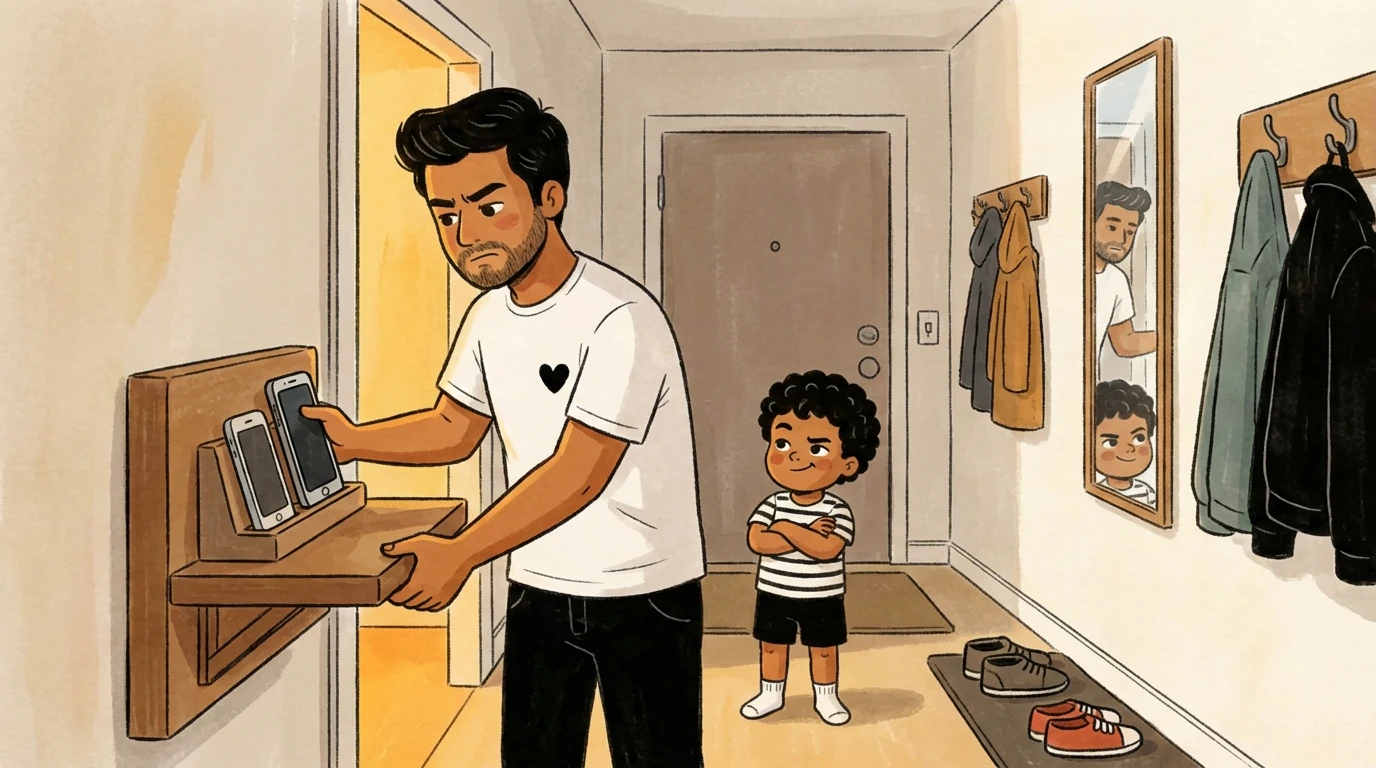
Park your phone at the charging station with theirs. Follow the same bedtime rules. When you catch yourself doom-scrolling, say it out loud: "I just noticed I've been on my phone for twenty minutes and I don't even know why. I'm putting it away." That models the kind of self-awareness about online habits your kid needs to develop.
Know your kid, trust your gut
Research shows that when kids have problems with technology, those problems almost always existed before the phone arrived. A child who is responsible, communicative, and mostly happy will probably handle a phone well, especially with guardrails in place.
If you have a close relationship with your kid and you have done the prep work (contract, conversations, training), you are probably going to be fine. The families who run into trouble are the ones who gave a phone without a plan.
How to introduce the first phone
- Delay until there is a real needIf your child is always with a trusted adult, they do not need a phone yet. The genuine need arises when they start spending time unsupervised and need a way to reach you.
- Choose a device without social mediaPick a phone that blocks browsers and app stores by design. Gabb, Pinwheel, Bark, and Light Phone all do this differently but effectively.
- Write a phone contract togetherSit down before the device arrives. Ask your child what rules they think are fair. Negotiate. Write it down. Both sign it. Revisit every few months.
- Do daily check-ins for the first monthEach evening, talk about what happened on the phone that day. Not an interrogation. A conversation about how it felt and what came up.
- Model the behavior you expectFollow your own phone rules. Park your device at the charging station. Say out loud when you catch yourself scrolling mindlessly.
- Role-play tricky situationsPractice what your child will say when a friend asks for a photo or pressures them to download something. Awkward? Yes. Worth it? Every time.
FAQ
Most experts recommend waiting until at least eighth grade for a smartphone. The need for any phone arises when your child regularly spends time without a trusted adult and needs a way to contact you. Before that, they do not need one.
Less than you fear. Several kid-safe phones look like regular smartphones, so peers cannot tell the difference. The social exclusion argument is real but often overstated. Kids adapt faster than parents expect when the device still lets them text friends.
Yes, especially in the first year. Be transparent about it. Include monitoring rights in your phone contract so there are no surprises. The goal is not surveillance but training. As trust builds, you can reduce how often you check.
You can reopen the conversation at any time. Switching to a simpler device or adding monitoring tools is not punishment. Frame it as a reset. Write a new contract together and start the daily check-in process from scratch.
Built-in controls help but are not enough on their own. Kids are resourceful. Combine controls with ongoing conversations, a phone contract, and your own modeling. The relationship matters more than the software.