TLDR
- The conflict damages kids, not the divorce itself. Children in low-conflict divorced families do better than children in high-conflict intact ones. Your relationship with your ex is the single biggest predictor of how your child adjusts.
- Transitions are the hardest part. Every handoff between homes activates your child's stress response. Make handoffs boring, brief, and warm. The calmer you are at the door, the faster they settle.
- Kids need permission to love both parents. If your child senses that enjoying time with your ex threatens you, they will start hiding half their life from you. Celebrate their relationship with their other parent out loud.
- Two homes need one set of expectations. Bedtimes, screen rules, and homework routines should be as similar as possible across both households. The more consistency, the less your child has to code-switch.
- Your grief is yours to carry. Children absorb parental emotion like a sponge absorbs water. Process your own feelings with a friend, a therapist, or a journal. Not with your seven-year-old.
What your child loses in a divorce
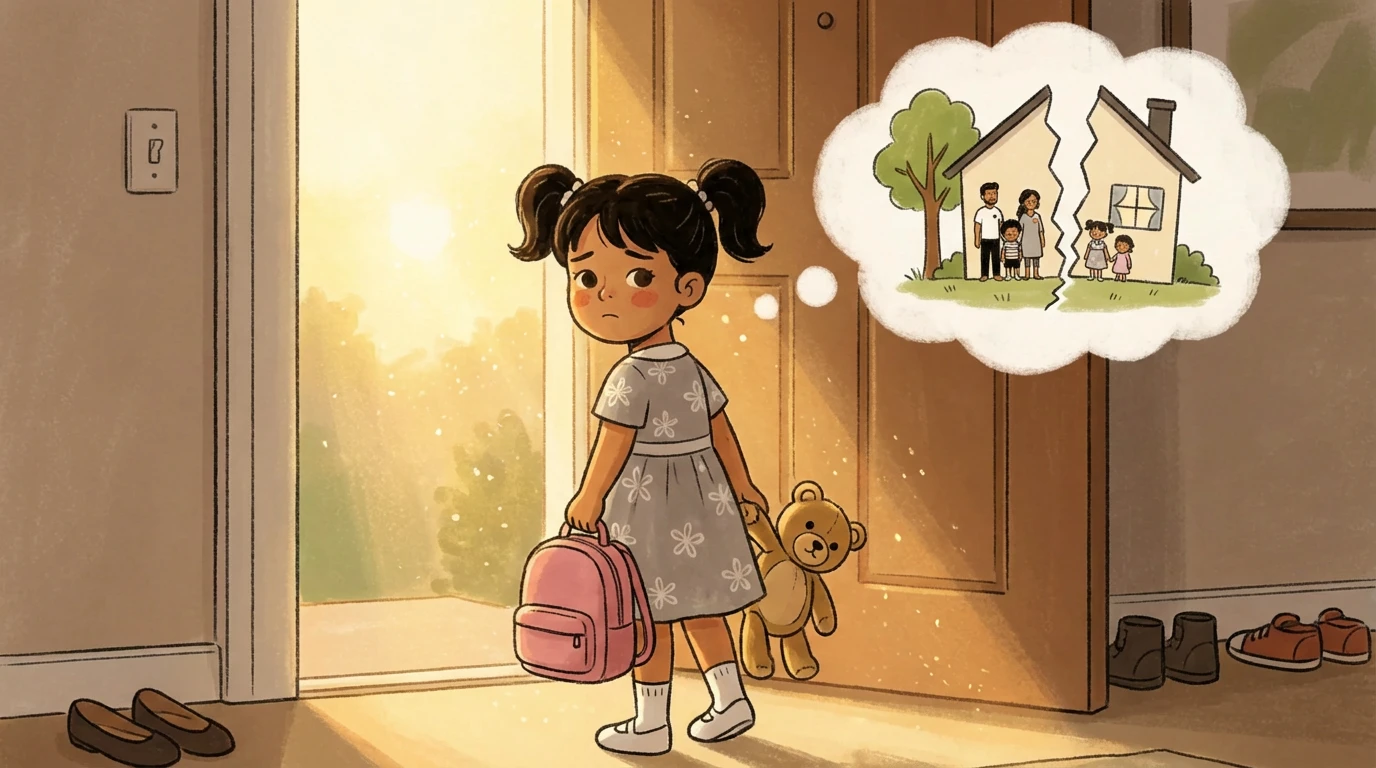
Your child doesn't know what a marriage is. They're mourning the feeling that everyone who loves them sleeps under the same roof, that the world is one predictable place, and that nothing bad enough to split their family apart could ever happen.
That feeling of wholeness is what you're rebuilding, and you're rebuilding it across two addresses now. Research consistently shows children of divorce who grow up with low parental conflict and strong relationships with both parents turn out as well-adjusted as children from intact families. The schedule matters less than the relationship between the people running it.
Telling your child (and what not to say)
Tell them together if you can. Both parents in the same room, delivering the same message: we decided to live in two different homes, we both love you, and this was our decision, not yours.
Children will assume they caused the divorce. Even if your five-year-old has never had that thought consciously, it's running in the background. Address it directly: "This is a grown-up decision. You didn't do anything to cause this, and nothing you do can change it."
What kids need to hear
Three things, repeated as many times as necessary:
- Both parents still love them and that will never change
- They will always have a home with each parent
- They don't need to choose sides or worry about either parent's feelings
That last one is harder to deliver than it sounds. Your kid will worry about your feelings whether you tell them to or not. They'll scan your face during handoffs and notice when you go quiet after a phone call. Your child will become an expert at reading your emotional weather, so make sure what they read is steadiness.
Crying at Sunday drop-off
The Life Transitions course will teach you the two-home routine
Transitions between houses get shorter and calmer when your kid knows exactly what to expect at each door.
What never to say (even when it's true)
Don't explain why the divorce happened in terms that assign blame. "Your father chose to leave" or "Your mother made it impossible to stay" may be factually accurate. Your child does not care about accuracy. They care about whether loving both parents is still allowed.
Don't promise things will be better. They might be, eventually. Right now your child is grieving, and telling a grieving person to cheer up because the future looks bright is dismissal with a smile.
How to make two homes feel like home
The logistics of shared custody are brutal. But the logistics are also the part you can control, and getting them right reduces your child's stress by a measurable amount.
Keep the same rules at both houses
This means having a conversation with your ex that neither of you wants to have. Bedtime. Homework expectations. Screen time. Discipline approach. When parents disagree on discipline, kids learn to exploit the gap. That's normal kid behavior, but it adds chaos to an already chaotic situation.
You don't need identical households. You need enough overlap that your child isn't code-switching every three days.
Make the transition predictable
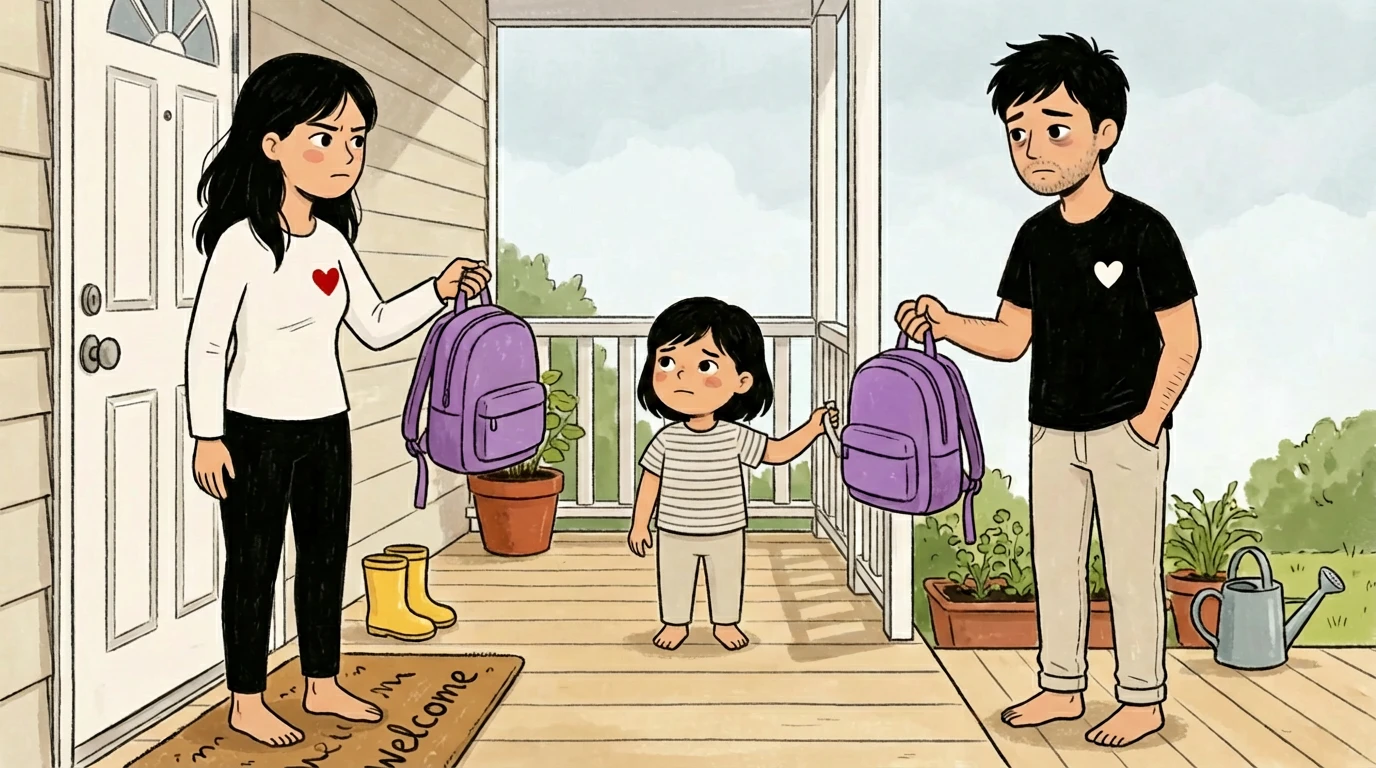
The handoff between homes is the moment your child's stress spikes highest. Their nervous system is reading both parents for signs of danger, and any tension between you registers as a threat.
So make the handoff boring. Same time, same place, same script. A quick hug, a calm goodbye, a cheerful "have a great time with Dad." If you cannot be cheerful, be neutral. If you cannot be neutral, hand off at school instead of at the door so your child doesn't have to watch you struggle to hold it together.
Routines are the anchor
Consistent bedtime routines do more for your child's sense of security than any amount of reassuring words. Same toothbrush order, same stories, same lights-out ritual. Ideally at both houses.
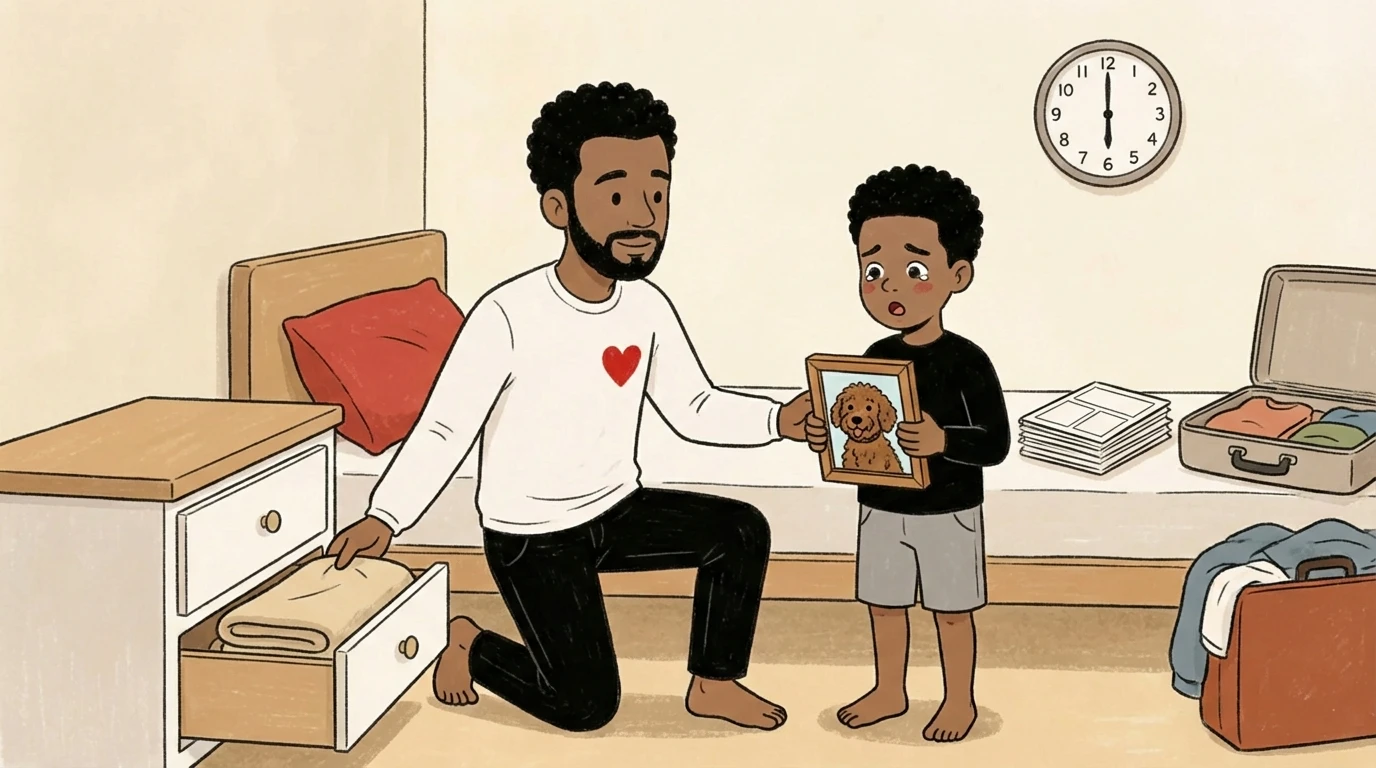
Pack a "transition bag" with comfort items that travel: the stuffed animal, the special blanket, the book you're reading together. These objects carry the feeling of continuity when everything else changes.
What your child is feeling (and can't say)
Children process divorce in cycles, not lines. Your kid will seem fine for three weeks and then melt down over a broken crayon. That meltdown has nothing to do with the crayon. They're carrying a backpack of grief they don't have words for, and the crayon was the thing that finally tipped the weight past what they could hold.
Don't analyze it for them. Don't say "I think you're really upset about the divorce." Just be present with the surface emotion: "That crayon breaking was really upsetting." Let them lead when they're ready to go deeper.
The loyalty trap
Kids in shared custody live in constant fear of betraying one parent by loving the other. If your child comes home talking about how great dinner was at your ex's place, your only acceptable response is: "That sounds awesome." Anything less, any tightening of your jaw or change in your voice, teaches them to edit their stories.
Your child should never have to pretend half their life doesn't exist to protect your feelings. This is the hardest emotional discipline divorce will ask of you. It is also the most protective thing you can do for your kid.
Your own grief (and where it goes)
You are grieving too, and your grief will ambush you at inconvenient moments. The empty side of the bed on a Wednesday when the kids are at their other home. The birthday party you're coordinating with someone you once planned to grow old with.
Staying calm during handoffs and disagreements requires managing emotions your child should never be responsible for. Find your people. A therapist, a friend who has been through this, a support group. Somewhere you can say the ugly truth out loud without worrying about who hears it.
Children who become their parent's emotional support system after a divorce carry that weight for decades. Your seven-year-old is not your confidant. Your nine-year-old deserves a parent who processes adult emotions elsewhere - they are children who need you to be the steady one, even when you don't feel steady at all.
Building the co-parenting partnership
Your ex is your business partner now, whether either of you planned it that way. The business is your child's wellbeing, and it needs to run smoothly regardless of your personal feelings about the other stakeholder.
Communication should be logistical and brief. Text about pickup times, share school calendars, split medical decisions. Save the emotional processing for your therapist. Take the co-parenting quiz if you want a reality check on how the partnership is functioning.
When your ex does something you disagree with
Unless the situation involves safety, let it go. Different parenting styles at two houses are survivable. Two parents locked in constant criticism of each other are not. Your child needs you to model the maturity you're hoping they'll develop.
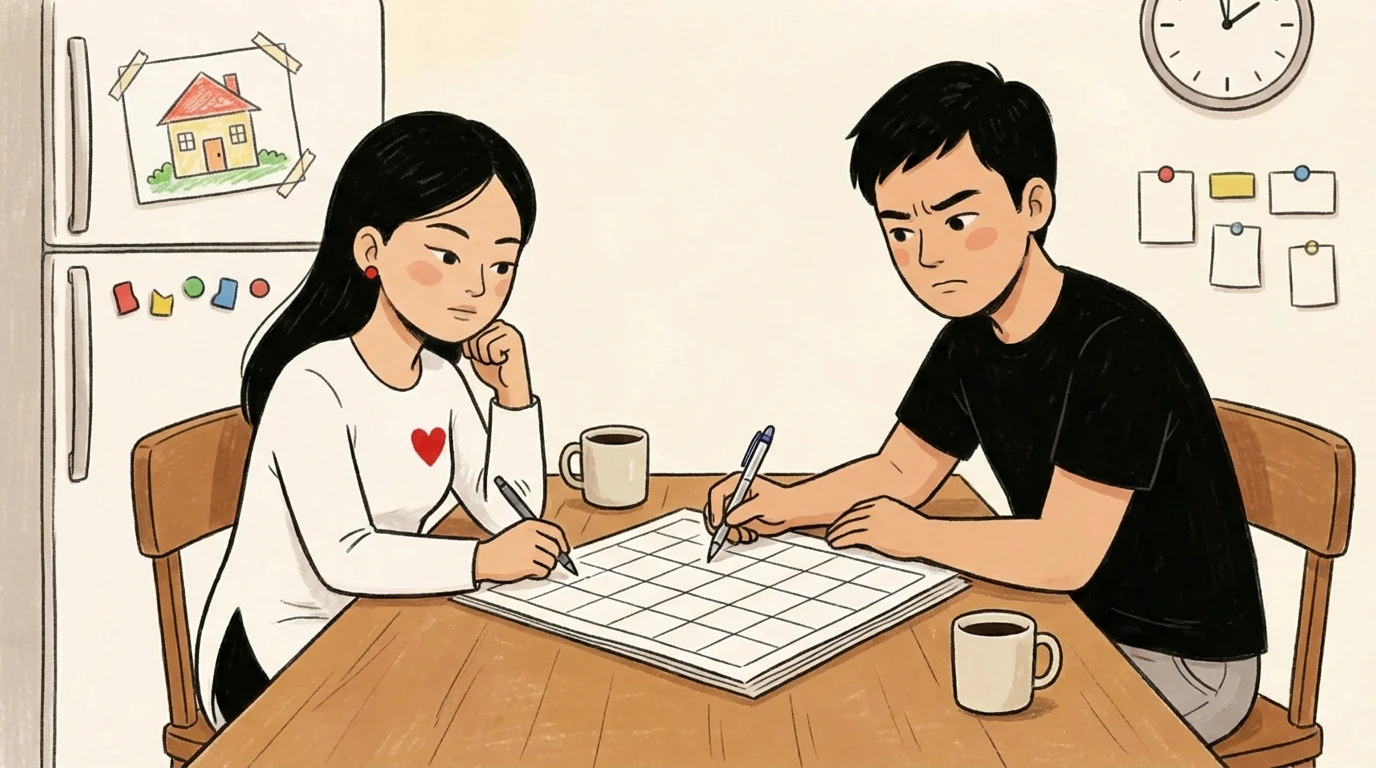
How to help your child adjust to two homes
- Keep conflict invisible to your childNever argue in front of them, never use them as a messenger, never ask what happens at the other house in a tone that suggests you're gathering evidence. Your child needs to feel safe at both addresses.
- Make handoffs boring and predictableSame time, same place, same brief goodbye. A calm transition teaches your child that moving between homes is routine, not a crisis.
- Maintain consistent routines across both homesAlign bedtimes, homework expectations, and screen rules as closely as possible. The more overlap, the less your child has to recalibrate every few days.
- Give permission to love both parentsCelebrate their time with your ex out loud. Ask about it with genuine curiosity. Your child should never feel guilty for having fun at the other house.
- Let them grieve on their own timelineSadness will come in waves for months. Don't rush it, don't analyze it, and don't try to fix it with fun activities. Just be present and let them feel what they feel.
- Get your own supportFind a therapist, a divorce support group, or a friend who has been through it. Your emotional processing cannot happen through your child.
FAQ
There is no ideal age. Toddlers adapt quickly but may regress in sleep or potty training. School-age children understand more but feel the social stigma. Teenagers struggle with loyalty conflicts and identity questions. What matters at every age is low conflict between parents, consistent routines, and permission to grieve.
Week-on, week-off works best for school-age children who can handle longer separations. Younger children do better with shorter, more frequent transitions. Watch your child for signs of stress and adjust accordingly. The best schedule is the one your specific child handles well, not the one that splits time most evenly.
Transitions trigger stress, and stress shows up as meltdowns, defiance, or regression. It usually means the shift between homes is hard, not that something bad happened. Give them 30 minutes to decompress after every handoff before expecting cooperation.
Split the day or alternate years. Be explicit with your child about the plan so they are not hoping for a reconciliation scene. Create one new tradition with each parent that the child can look forward to. What they want most is connection with each of you, not an elaborate celebration.