TLDR
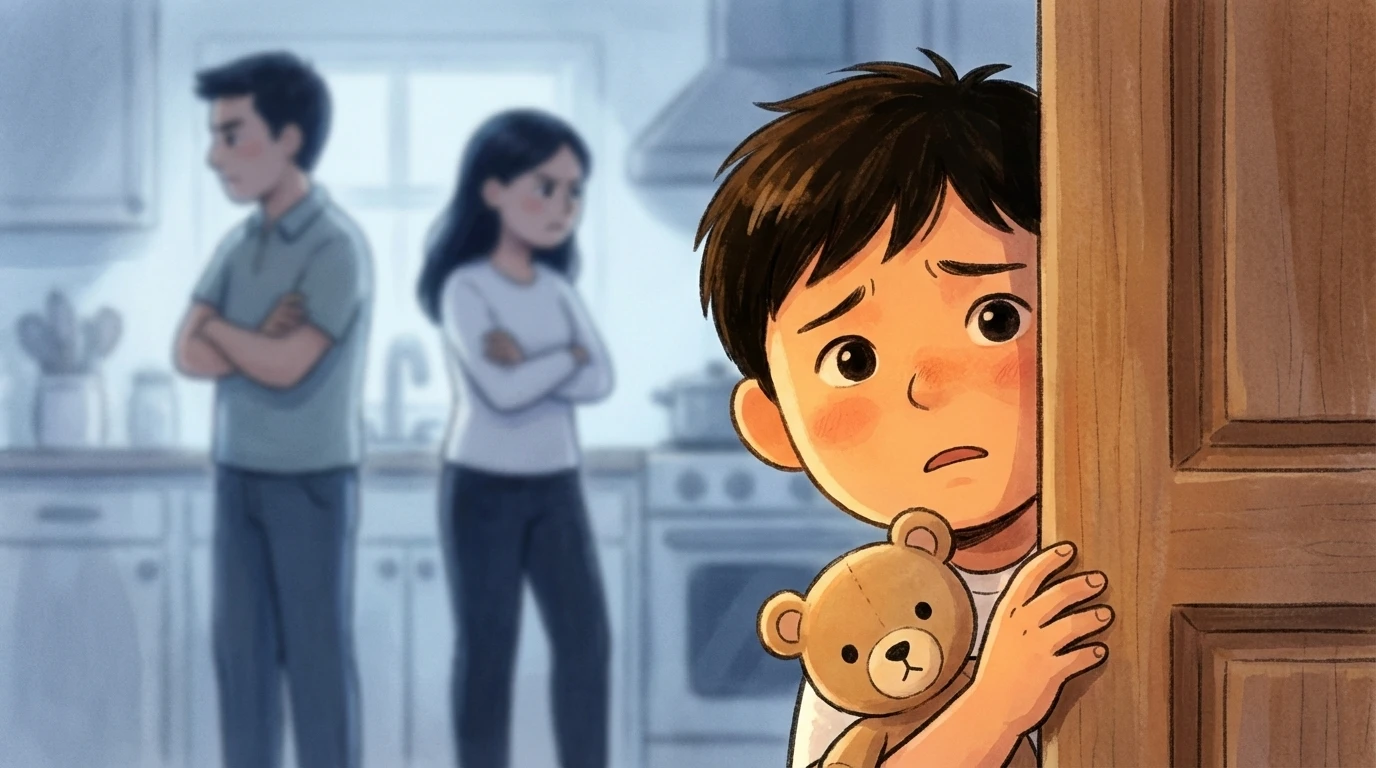
- Respectful disagreement is healthy for kids to see. Yelling is not. Children recover from witnessing calm disagreements followed by affectionate repair. But when voices rise to yelling, making up afterward does not undo the neurological stress response.
- Your child's stress hormones spike instantly and stay elevated for hours. Even sleeping infants register angry voices. The fear doesn't end when the fight does. It lingers as anxiety, sleep trouble, and behavioral fallout.
- A code word is your best exit ramp. Agree on a phrase in advance that means 'this is getting too hot for right now.' Use it before anyone yells, close with a hug, finish the conversation after bedtime.
- Kids who witness conflict need to witness the repair. The next day, name the disagreement, describe the solution, show warmth. Children who see the making-up learn that relationships survive hard things.
- One bad fight is recoverable. A pattern of yelling is not. The risk factor is repeated exposure to hostile conflict. A single incident repaired honestly is a teaching moment.
What happens in your child's body when you fight
You know that sick feeling in your stomach when your parents used to fight? Your kid has it right now.
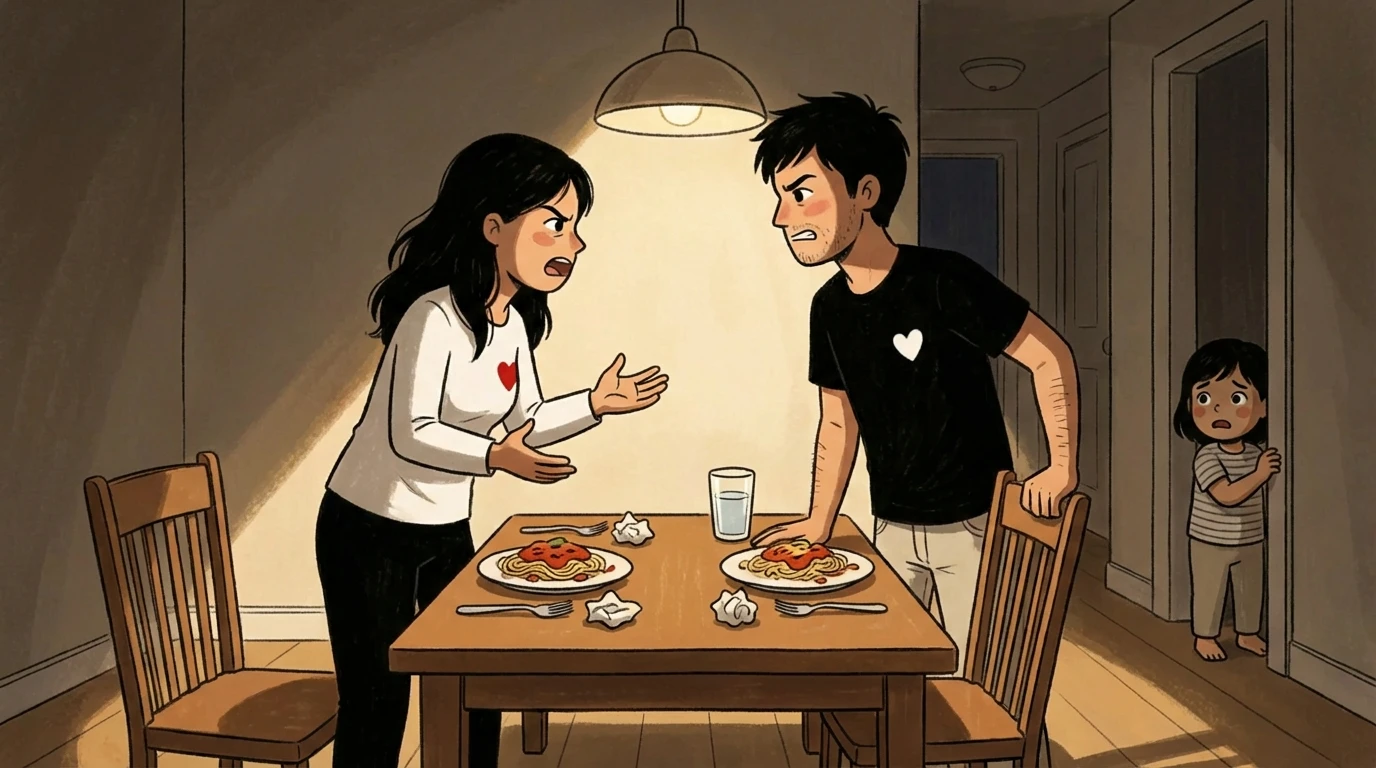
When children hear angry voices, their stress hormones spike immediately. Cortisol shoots up and stays elevated for hours after the yelling stops. Even sleeping babies register hostile voices and experience a flood of stress chemicals. Your infant who slept through the whole argument? Their body didn't sleep through it.
Parents are a child's entire security system. When the two people responsible for keeping them alive appear to be turning on each other, the child's brain reads it as a survival threat. For a small child, everything is at stake.
That anxiety doesn't evaporate when you stop yelling. It leaks out sideways: trouble falling asleep, clinginess the next morning, a meltdown at school over something trivial, or a slow emotional shutdown that you might mistake for resilience.
The modeling problem
Every time your child watches you resolve a disagreement by raising your voice, you're programming their conflict software. They're learning that yelling is what grown-ups do when they disagree.
You will meet this programming again in about eight years, and you will not enjoy it.
They heard the whole fight
The Life Transitions course will show you the repair conversation
You'll know what to say within the hour so the argument doesn't become the thing they remember most.
The line between disagreement and damage
This is where parents get confused, because the research is more specific than the headlines suggest.
Psychologist Mark Cummings studied what happens when children witness parental conflict. The finding that gets quoted everywhere is that kids are fine if they see parents make up. But here's the part that gets left out: in those studies, the parents were disagreeing without yelling. No raised voices, no insults, no contempt.
When yelling and disrespect are involved, making up afterward does not undo the damage. If you've been screaming at each other and then hugging it out in front of the kids, you're running the wrong playbook.
What kids can handle
Children benefit from watching you disagree respectfully. When they see two people they love have different opinions, listen to each other, and work toward a solution without anybody getting mean, they're learning that relationships survive conflict.
The goal is not to hide every disagreement. The goal is to catch yourself before the escalation turns a discussion into a fight.
The code word strategy
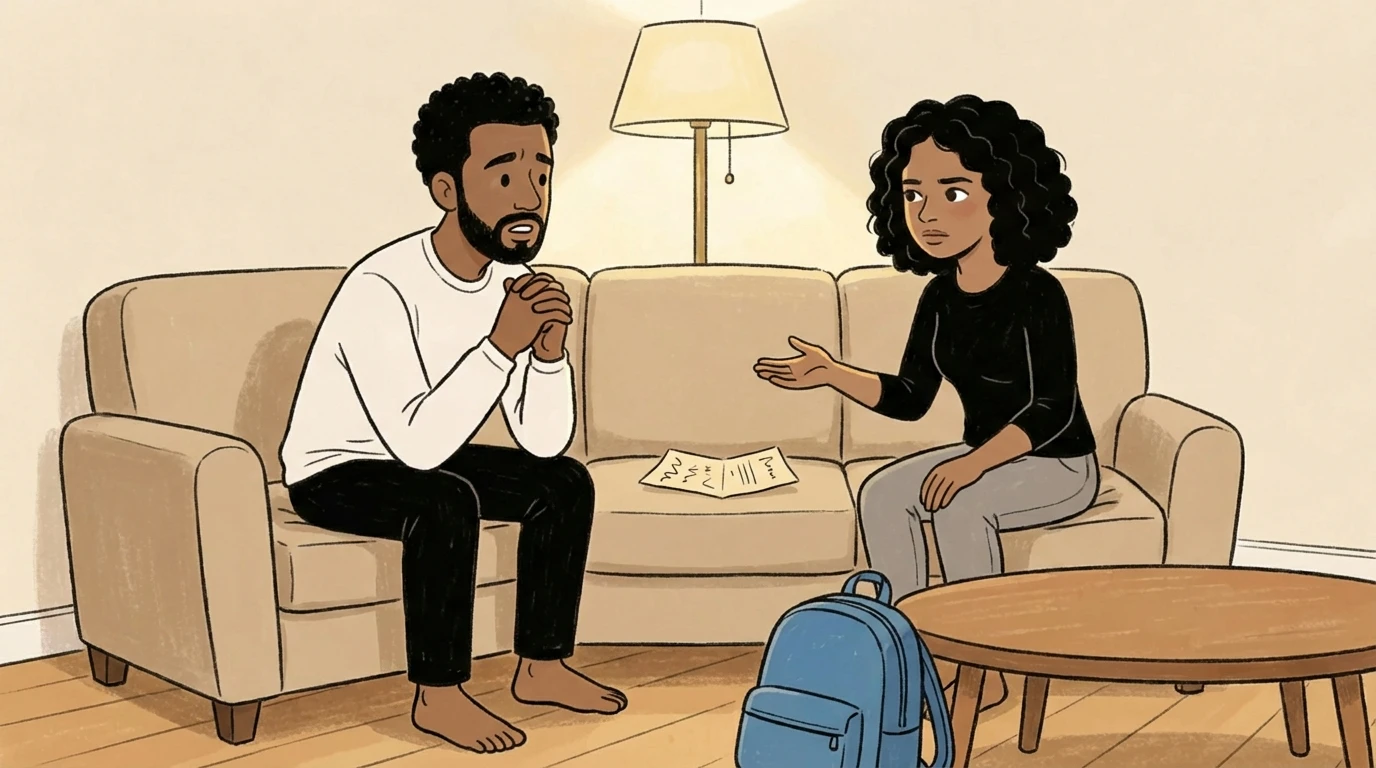
Sit down with your partner during a calm moment and agree on an exit system. Pick a word or phrase that means: I love you, this is getting too hot, the kids are here, let's finish this later.
Some couples use a silly word. Some use "parking lot" (as in, we're parking this). The specific word doesn't matter. What matters is that you both agree to honor it without treating it as a weapon.
How to use it without making things worse
When one of you says the code word, the other stops. Not "after this one last point." Stops. Then:
- Take a breath
- Hug each other in front of the kids (even if you're furious)
- Say something like "We're going to talk about this more later. We're fine."
The hug is for your child's nervous system, not yours. It's visual proof that the two people they depend on are still a team. If you skip the hug, your child will spend the rest of the evening monitoring your faces for signs of ongoing danger.
If you're too angry to hug, say so: "I need a few minutes to cool down, and then I want a hug." Then follow through.
The real conversation (after bedtime)
The code word buys you time. Now use it.
The structure that works: say what you feel, say what you need, don't attack. "I feel overwhelmed doing bedtime alone every night. I need us to split it." That's a solvable problem. "You never help with anything and I'm done" is a grenade.
This is where couples who had a baby recently struggle most. Sleep deprivation makes every disagreement feel existential. Name that reality: "We're both exhausted and that's making this harder than it needs to be."
Write down whatever you agree on. Tape it inside a cabinet door. Revisit it in a week to see if it's working.
Closing the loop with your kids
This is the step most parents skip, and it matters most.
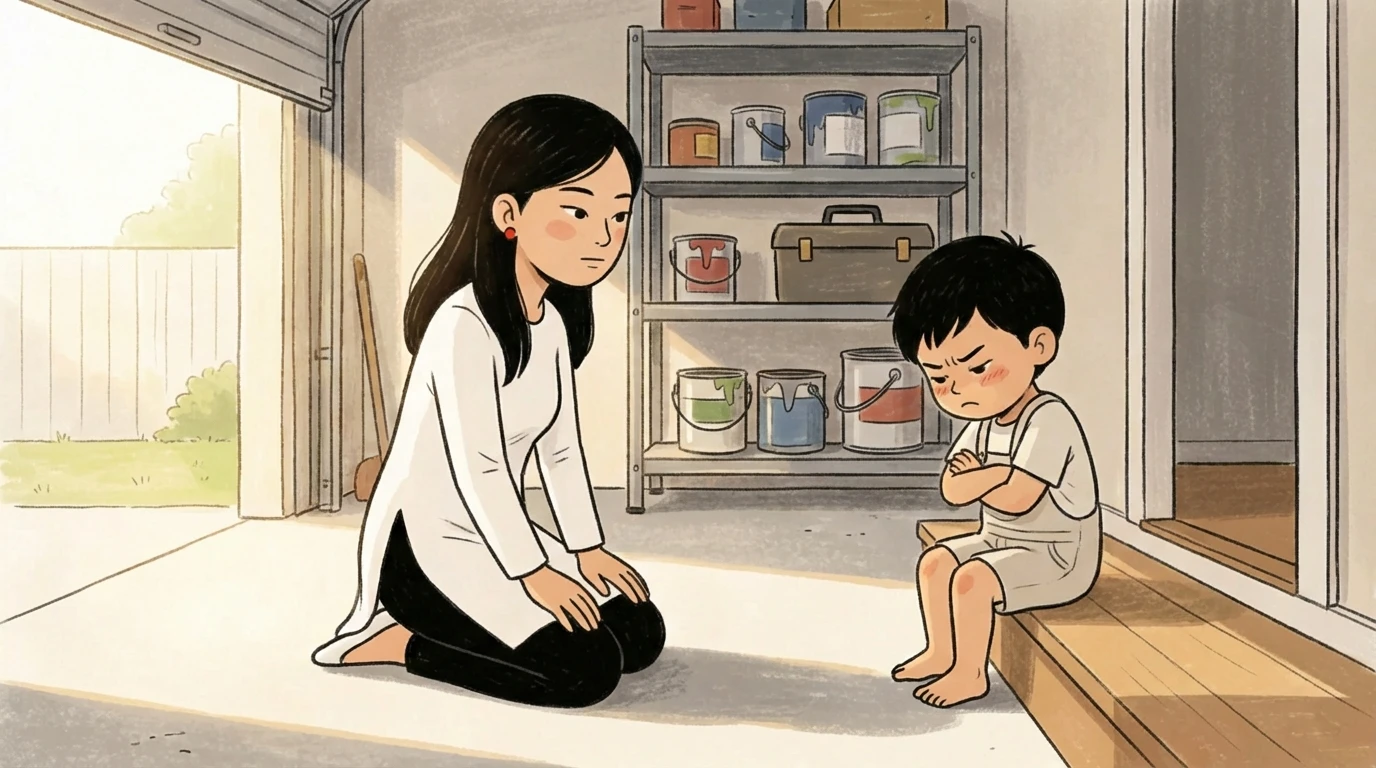
Your child witnessed a rupture. Now they need to witness the repair. Not just see you being nice to each other the next day. They need you to name what happened.
A script: "Remember last night when Dad and I were arguing about the weekend plans? We talked about it after you went to bed. We figured it out. Sometimes grown-ups get frustrated, but we always work things out."
Include both perspectives without judgment. "I wanted one thing, Dad wanted something different, and we found a way to make it work for both of us." You're teaching your child that disagreement has a structure: you listen, you talk, you solve.
If you lost your temper, apologize directly. "I'm sorry you heard me yelling. That wasn't okay, and I'm working on it." Your child doesn't need you to be perfect. They need you to be honest about your mistakes.
How to repair with your child after a fight
- Acknowledge what they sawGet on their level and name it. 'You heard Dad and me arguing last night, and it was loud. That must have been scary.' Don't pretend it didn't happen.
- Apologize for the experienceTell your child you're sorry they had to hear that. You're not apologizing for having a disagreement. You're apologizing for how it was handled.
- Show them the resolutionLet them see you and your partner being warm together. Hug in front of them. Explain the solution you reached. They need proof the relationship survived.
- Invite their feelingsAsk how they felt. Listen without defending yourself. If they say 'I was scared,' sit with that instead of rushing to reassure.
- State your family's valuesSay it out loud: 'In our family, we always work things out. You can be mad at someone and still love them.' Give them a framework to hold onto.
The five-to-one rule
Research on relationship health (the Gottman ratio) shows stable relationships maintain at least five positive interactions for every negative one. If your kids have been witnessing tension, actively increase the warmth they see between you and your partner.
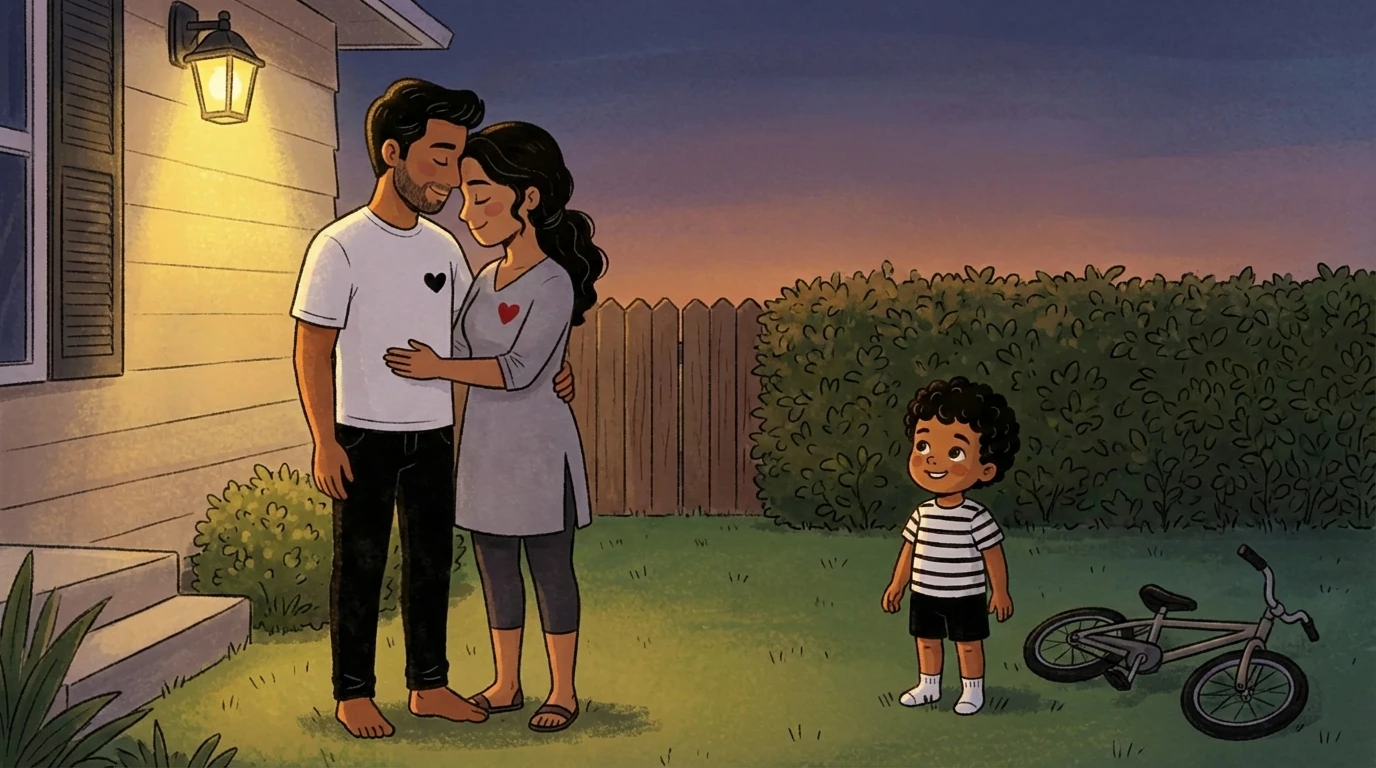
Kind words in the kitchen. A long hug when you get home. Laughing together at dinner. Your child is always watching the emotional weather of your relationship. After a storm, they need an extended forecast of sunshine before they stop bracing for the next one.
When one fight becomes a pattern
One argument your kid overheard is a bad evening. A pattern of hostile conflict is a different problem. If you and your partner are regularly fighting in front of the kids with raised voices, contempt, or name-calling, individual repair strategies won't be enough.
That might mean couples therapy. It might mean looking at the anger underneath the anger (it's almost always fear or hurt from much earlier than this relationship). The vulnerable feelings under the rage are the real conversation. The argument about who forgot to pay the electric bill is almost never about the electric bill.
Your children are building their template for what a relationship looks like by watching yours. Every time you choose to pause instead of escalate, repair instead of stonewall, or hug instead of slam a door, you're rewriting the script they'll carry into their own adult relationships.
FAQ
Yes. Respectful disagreement where both parents listen, stay calm, and work toward a solution is good for kids to witness. It teaches them that people who love each other can have different opinions and still figure things out. The line is yelling and disrespect. Once voices rise or insults land, you've left the healthy zone.
One incident is not what damages kids. Repeated exposure to hostile conflict is the risk factor. If this was a one-time event, repair it openly: acknowledge what happened, apologize to your child, show them you've resolved it. Then focus on building the pattern you want going forward.
Keep it simple. 'Mom and Dad got frustrated with each other last night. We talked about it and figured it out. Sometimes grown-ups get upset too, but we always work things out because we love each other.' Name what happened, confirm the resolution, reassure them the relationship is intact.
You can only control your half. When you feel things escalating, say 'I want to finish this conversation, but let's do it after bedtime.' Model the pause yourself. Over time, one partner consistently de-escalating shifts the pattern. If it doesn't, that's worth exploring with a couples therapist.