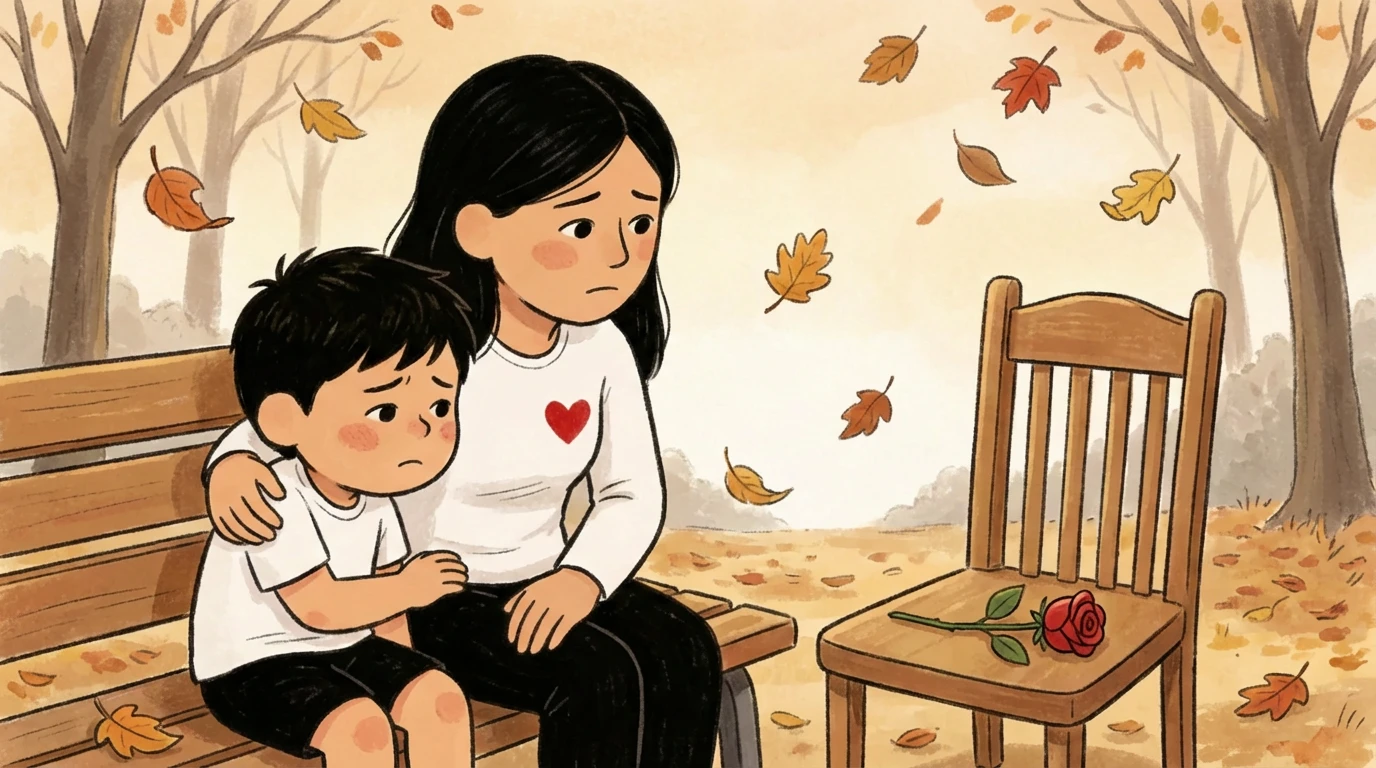
TLDR
- Tell the truth. Always. Euphemisms like 'went to sleep' or 'went away' create fear and confusion. Simple, honest language gives children something solid to hold.
- Children grieve in pockets, not pervasively. Your child may cry for ten minutes, then ask for a popsicle. This is healthy. They need periods of forgetting so the grief doesn't swallow them whole.
- Your grief models theirs. If you hide your sadness, your child learns that loss is too dangerous to feel. Let them see you cry. You are their template.
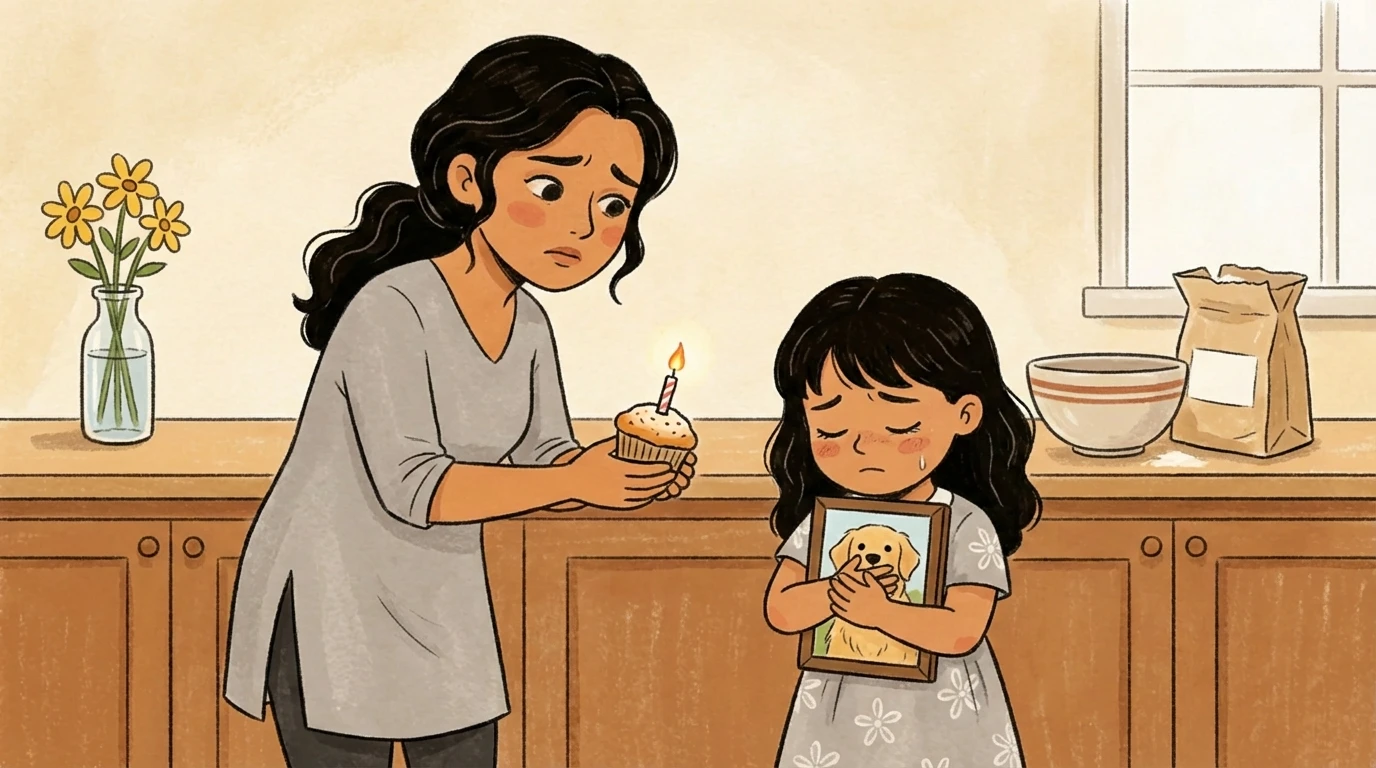
- Rituals matter more than explanations. Plant a tree, light a candle on a birthday, draw pictures together. Rituals give grief a container and keep the lost person woven into the family story.
- Pet loss is real loss. A goldfish funeral might look silly to you. To your child, it's their first encounter with permanent disappearance. Take it seriously.
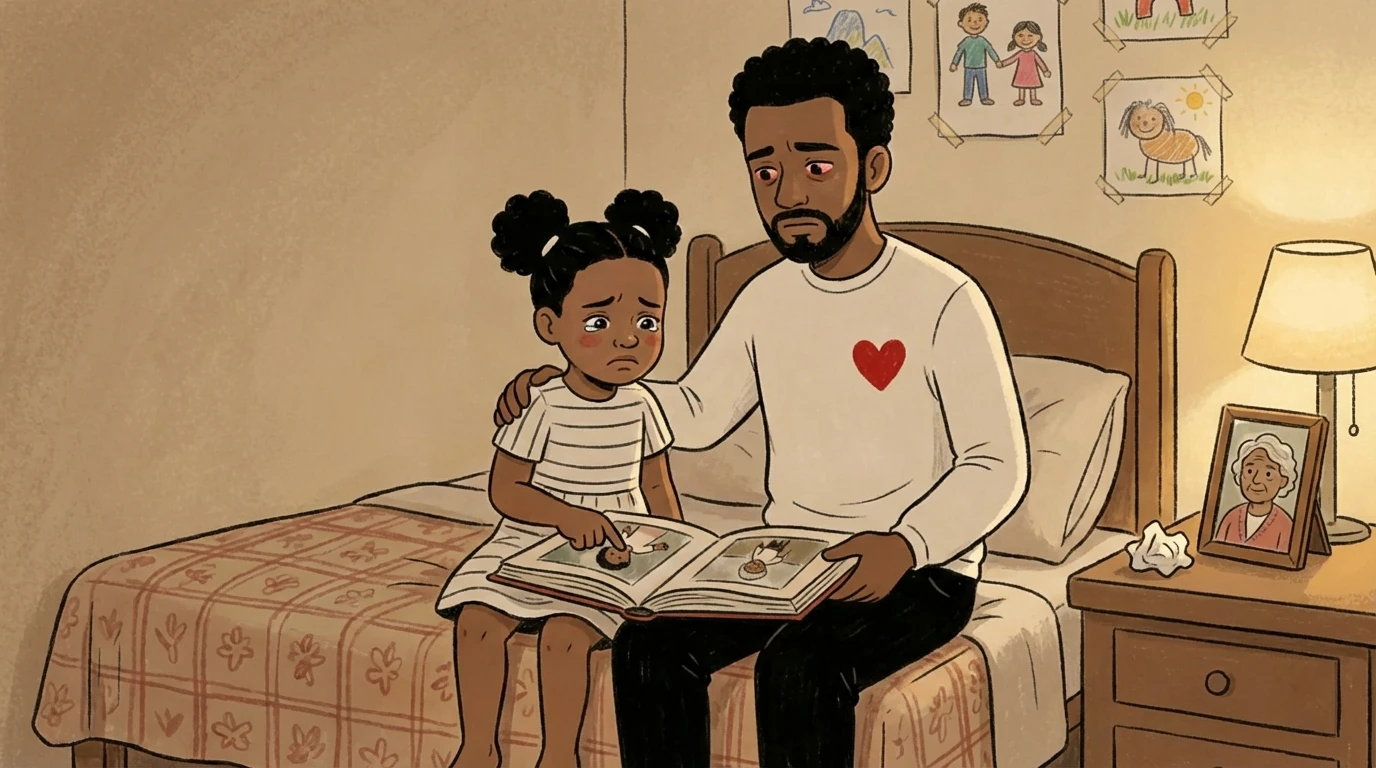
The hardest conversation you'll have with your kid
Nobody teaches you how to do this. The phone rings with news about Grandma, and suddenly you're standing in your kitchen trying to figure out how to break a world your child thought was safe.
Here's what most parents get wrong: they try to soften it. "Grandpa went to a better place." "Fluffy went to live on a farm." "God needed another angel." Every one of these phrases plants a seed of confusion that grows into something worse than the grief itself.
A child who hears "Grandpa went to sleep" becomes terrified of bedtime. A child who hears the dog "ran away" spends months scanning every street corner. The truth hurts, but it doesn't confuse. And confusion, for a child processing loss, is far more damaging than sadness.
What to say (and how to say it)
Keep it concrete. Keep it short. Match your words to what their brain can process.
For a child under five: "Grandma's body stopped working and she died. That means we won't see her anymore. We're very sad, and we're going to miss her."
For a school-age child: "I have something sad to tell you. Max was hit by a car this morning and he died. His body couldn't heal from the injuries. I know how much you loved him."
Then stop talking. Crying, rage, silence, a blank stare, an immediate request for lunch. All of it is valid. None of it needs correction.
The questions will come later, in waves, often at bedtime. "Will you die too?" "Did it hurt?" "Is it my fault because I forgot to close the gate?" Answer them honestly every time. Don't dodge. Don't redirect. When you explain death at different ages, matching your language to their developmental level matters more than finding the perfect words.
Where did grandma go
The Life Transitions course will help you answer the death questions
You'll have honest, age-right responses ready so you're not fumbling when your child looks up at you and asks.
How children grieve
Adults grieve in sustained waves. Children grieve in pockets. Your six-year-old will sob about the dead hamster for eight minutes, then ask if they can have mac and cheese, then go outside and play as if nothing happened.
Children's nervous systems can only hold grief for short bursts before they need to discharge it and return to normal. The cycling between sadness and play is how they stay functional while processing something enormous. Trying to keep them in the grief ("Don't you want to talk about Grandpa some more?") does more harm than good.
What you will see, depending on age:
- Toddlers: clinginess, sleep regression, asking repeatedly where the person went
- Preschoolers: magical thinking ("Did I make Grandma die because I was bad?"), repetitive questions, acting out the death in play
- School-age kids: anger, withdrawal, fear of losing other people, stomachaches with no medical cause
- Tweens and teens: silence, irritability, or sudden intensity about things that seem unrelated
All of it is grief wearing different costumes.
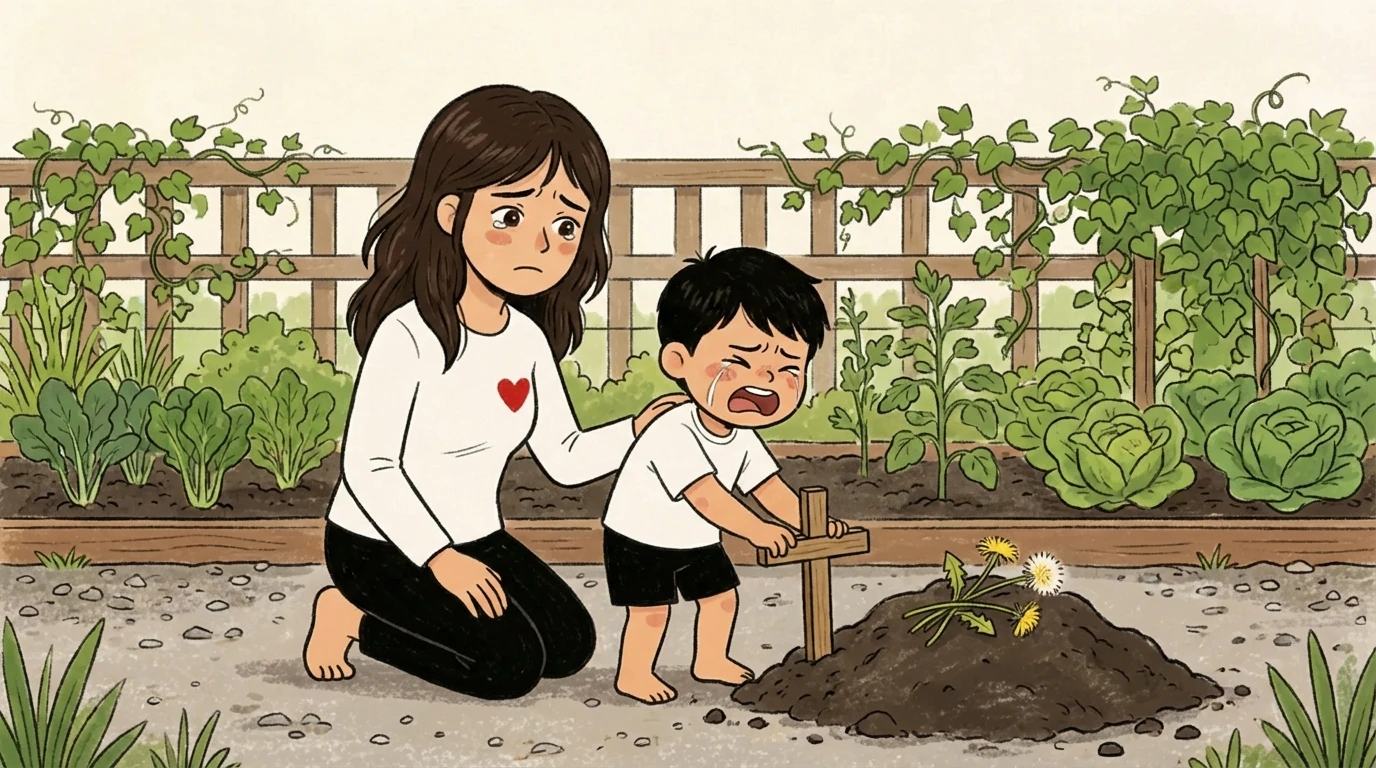
Why your own grief is the most important variable
Here is the part nobody wants to hear: your child's ability to grieve depends on your ability to grieve. Children follow the emotional lead of their primary attachment figure. If you lock your sadness in a box and present a brave face, your child learns that loss is too terrifying to feel openly.
So let them see you cry. Say it out loud: "I'm crying because I miss Nana and that's okay."
The flat, controlled, "I'm fine" performance teaches your child exactly one thing: grief must be hidden. And hidden grief does not resolve. It shows up sideways as anxiety, sleep problems, and meltdowns that seem wildly out of proportion to whatever triggered them.
When your grief is too big
If you are still overwhelmed months after a loss, unable to be present with your child, that is a signal. A grief counselor is not a luxury at that point. Your child needs you functional, and you cannot hold space for their grief while drowning in your own.
Get help. The most important thing you can do for your grieving child is become a parent who can sit with pain without being destroyed by it.
Rituals that hold grief together
Talking alone doesn't get children through loss. Rituals do the work that words can't reach.
Keep it simple and personal
- Plant a tree on the person's birthday (not the death date, because the point is to celebrate that they existed)
- Light a candle at dinner and let everyone say one thing they remember
- Draw pictures together. Frame them. Hang them next to a photo of whoever you lost
- Write a letter to the person who died. Younger kids can dictate while you write
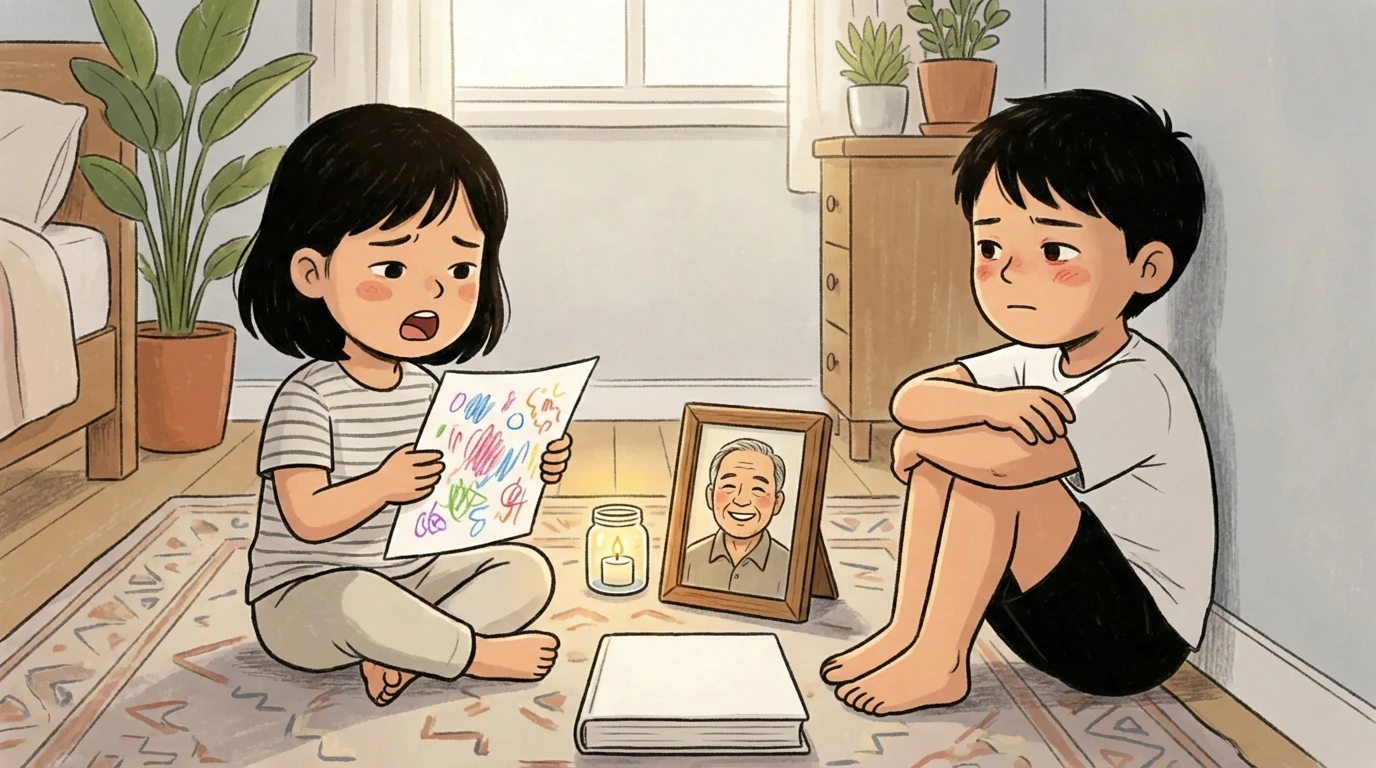
The pet funeral your child needs
When the goldfish dies, do not flush it while your child is at school. Have a funeral. Dig a small hole in the yard. Let your child wrap the fish in a tissue, place it in the ground, and say goodbye.
The way you handle the goldfish sets the template for how your child will handle every loss that follows. A child whose pet death is dismissed ("It was just a fish, we'll get another one") learns that grief is an overreaction. A child whose pet death is honored learns that love deserves mourning.
How to support a grieving child
- Tell the truth simplyUse concrete language: 'Her body stopped working and she died.' No euphemisms. Children need facts they can hold onto, not vague comfort that breeds confusion.
- Let them react however they reactCrying, anger, silence, asking to play five minutes later. All of it is normal. Don't correct the form their grief takes. Your job is to stay present, not to direct the performance.
- Answer repeated questions patientlyYoung children will ask the same question dozens of times. 'Is Grandpa coming back?' 'No, sweetheart. He died and he can't come back.' Every repetition helps the concept settle.
- Create a remembrance ritualPlant a tree, light a candle on the person's birthday, draw pictures together. Rituals give grief a container and teach children that the people they've lost stay part of the family story.
- Model your own grief openlyLet your child see you feel sad. Say 'I'm crying because I miss her and that's okay.' A parent who hides all grief teaches a child that loss is too dangerous to feel.
- Watch for warning signs over timePersistent sleep disruption, withdrawal from friends, loss of interest in activities, or aggressive behavior lasting weeks signals the grief needs professional support. Trust your gut.
What not to do
Don't lie. Don't use euphemisms. Don't tell them the cat went to live on a farm.
Don't force them to grieve on your schedule. If they want to go play after you tell them Grandpa died, let them play. They'll come back to the sadness when their system is ready.
Don't replace the pet immediately. "We'll get a new dog" before the old one is cold tells your child that love is interchangeable. Grief needs space before something new can fill it.
And the one that catches the most parents off guard: don't stop saying the dead person's name. Months later, mention Grandpa at dinner. Tell a funny story about the dog. Your child needs to know that the people they've lost are still part of the family conversation, not a topic everyone tiptoes around.
The long game
Grief doesn't end. It shrinks. In the first days, it fills every corner of your child's world. Over weeks and months, it becomes a smaller piece, still tender, still there, but no longer the whole story.
Your job is not to eliminate the grief. The families that come through loss intact are the ones who sat in it together.
FAQ
Use simple, concrete language: 'Grandma's body stopped working and she died. She can't come back, but we will always love her.' Avoid euphemisms like 'went to sleep' or 'went away,' which create confusion and fear. Expect the same questions repeated for weeks. Answer patiently every time. Repetition is how young children process permanent concepts.
Yes. When you cry in front of your child, you teach them that sadness is safe and survivable. Children who never see adults grieve learn that these feelings must be hidden. Letting tears come naturally while saying 'I'm sad because I miss Grandpa' gives them permission to feel their own grief.
Children grieve in pockets, not pervasively. They might cry for ten minutes, then ask for a snack and go play. This is normal. Watch for ongoing changes in sleep, appetite, clinginess, or aggression lasting more than a few weeks. Those signal the grief needs more support.
Take it seriously. A pet death is often a child's first encounter with permanent loss. Hold a small funeral. Let them draw pictures or write a letter. Frame a photo. Don't rush to replace the animal. The grief your child practices here builds the emotional skills they'll need for harder losses later.