
TLDR
- Anxiety directly amplifies pain. A frightened child experiences more physical pain than a calm one undergoing the identical procedure. Reducing fear is a pain intervention.
- Play is the best preparation tool. Doctor kits and bath syringes let children process fear through laughter and repetition days before the appointment.
- Parents should comfort, never restrain. If your child needs to be held still, that is the medical staff's job. You holding them down damages their trust in you.
- Small choices restore a sense of control. Which arm, which distraction, which band-aid. Helplessness amplifies fear. Any genuine choice shrinks it.
- Processing happens after, not during. Let your child retell the story, cry, play hospital for weeks. Repetition is how young brains file a scary experience as finished.
What your child fears most
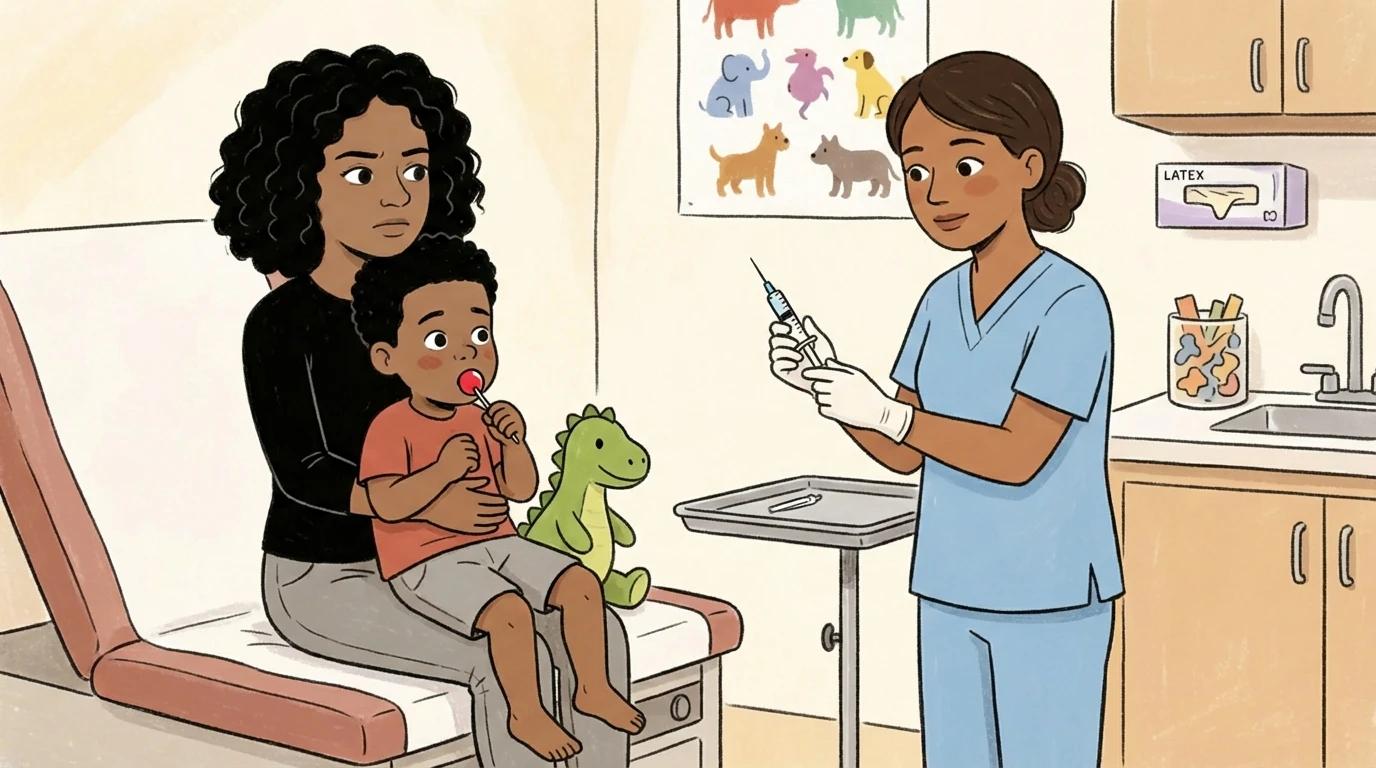
Your three-year-old doesn't have a concept of "blood draw." What they have is a memory of being taken to a strange room where their body was held down and something hurt. The pain was real, but the helplessness was worse. When a child screams in a medical setting, they are screaming about the loss of control, not the sting itself.
Research confirms that anxiety directly increases pain perception. Everything you do to reduce fear before and during a procedure is also reducing actual physical pain.
This is why "it won't hurt" is one of the worst things you can say. It does hurt. And now your child knows you'll lie to them about that.
Before the appointment
The gold standard preparation tool costs about eight dollars and lives in the toy aisle. A doctor kit.
Laughter loosens fear
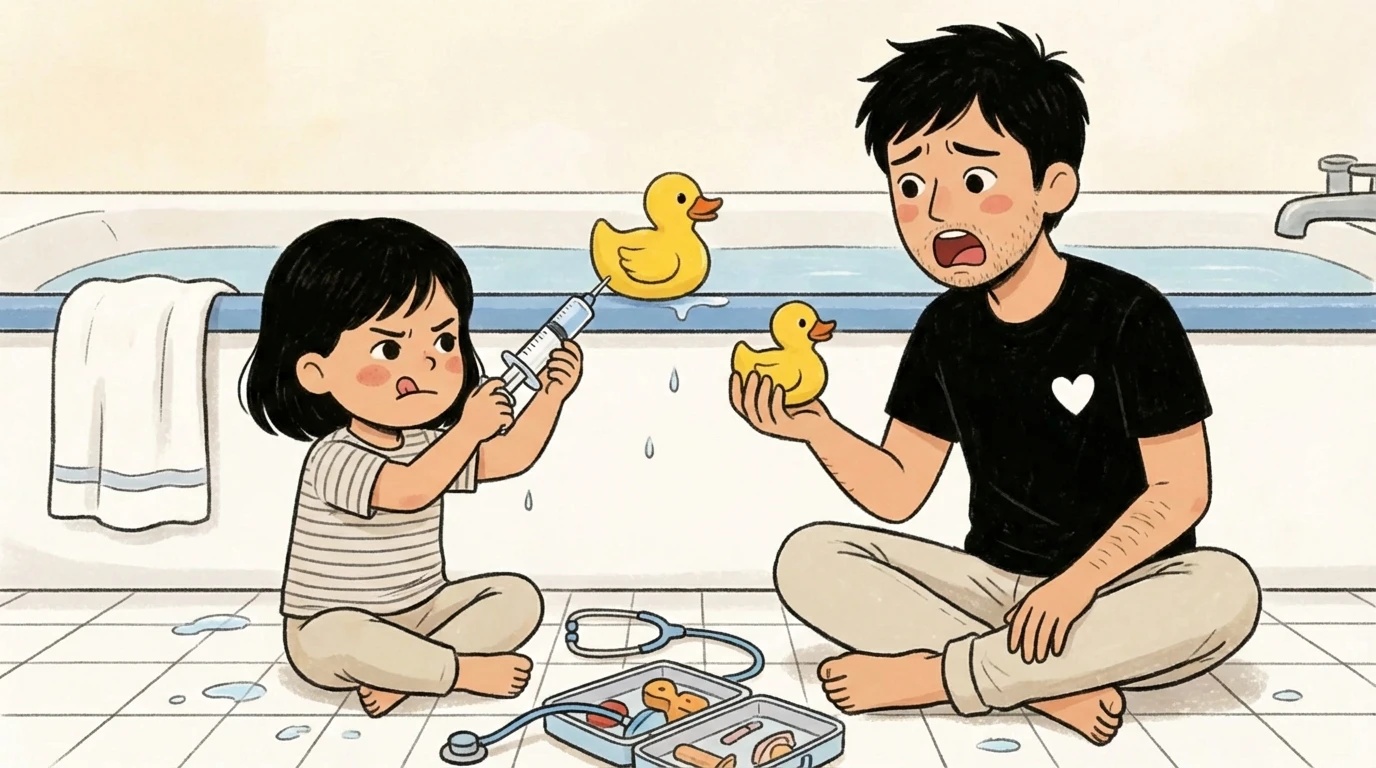
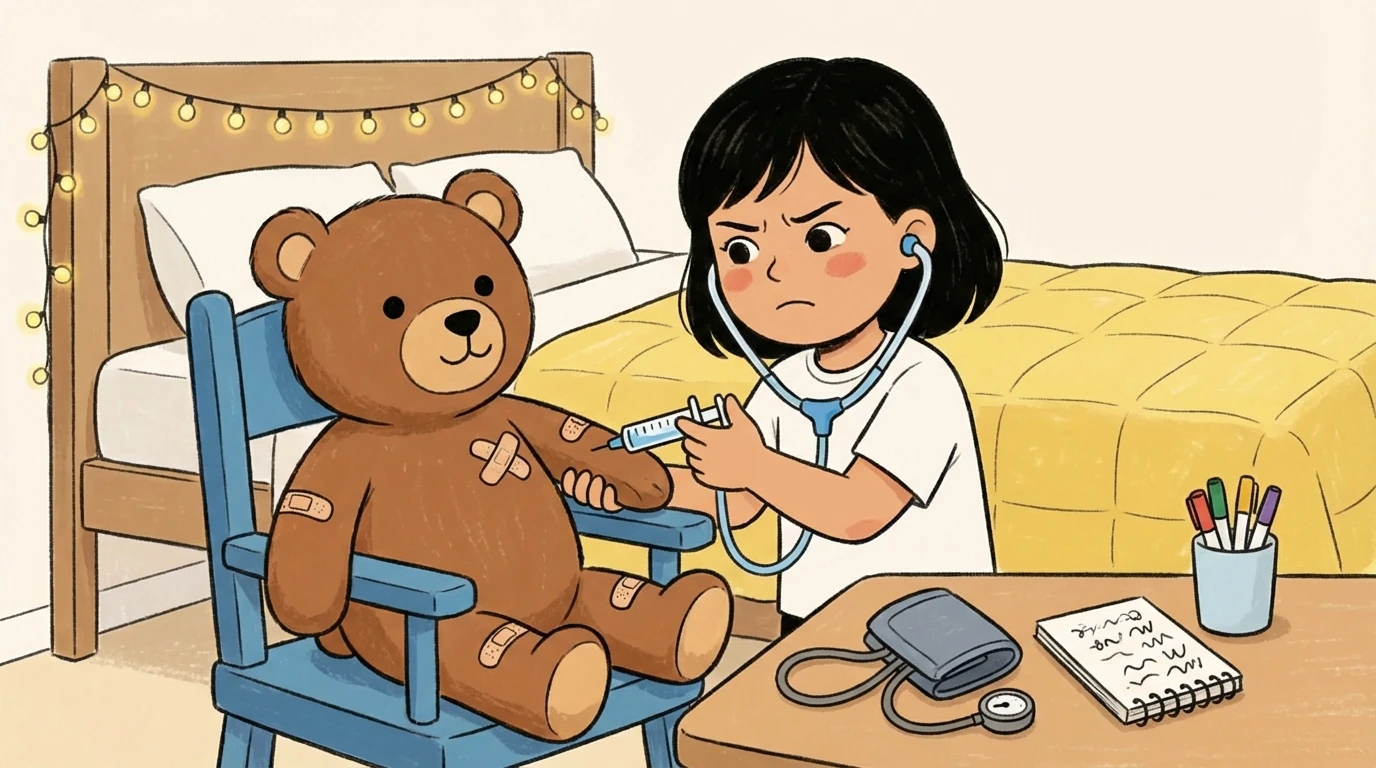
Announce to a stuffed bear that it's time for vaccinations. Fill a medicine syringe with bath water and spray it everywhere. Let your child give you shots while you dramatically yelp and fall over. The laughter discharges the same anxiety that crying does, and it does it before the appointment instead of during it.
Children have a natural drive to act out what was done to them from the powerful position. When your kid gleefully stabs you with a pretend needle, they are processing. This approach needs days or weeks of play sessions, though. Start early.
Night before the surgery
The Life Transitions course will help you prep them without scaring them
Your child walks into the hospital knowing what happens next, and your own calm becomes contagious instead of performed.
The honest preview
A day or two before (a week for older kids), tell your child what will happen. Keep it concrete: "A nurse will put a small needle in your arm to take a little bit of blood. It will feel like a pinch, and the pinch will stop quickly."
Share your own experience: "I've had blood drawn. It did hurt for a second, and then it was done." Children calibrate their responses to unfamiliar fears by watching yours. If you treat it as manageable, they borrow that confidence.
Then add: "You can cry if you need to. You just need to sit very still. I will be right there holding your hand."
The logistics parents skip
Give Tylenol an hour before the procedure. Apply numbing cream to the arm at the same time. Let your child dab the cream on themselves so they experience the numb sensation before anything else happens.
Dress your child warmly. Warmth brings veins to the surface, which means faster access and fewer attempts. The difference between a one-stick draw and a three-stick draw is the difference between "that wasn't so bad" and a lasting medical phobia.
Call the lab in advance and request a tech experienced with kids. A bad experience with the wrong staffer can shape your child's relationship with medical care for years.
During the procedure
Stay in the room. Research is clear that parental presence reduces both pain and anxiety. Your child will not blame you for collaborating with the medical staff. They will blame you for leaving.
What helps
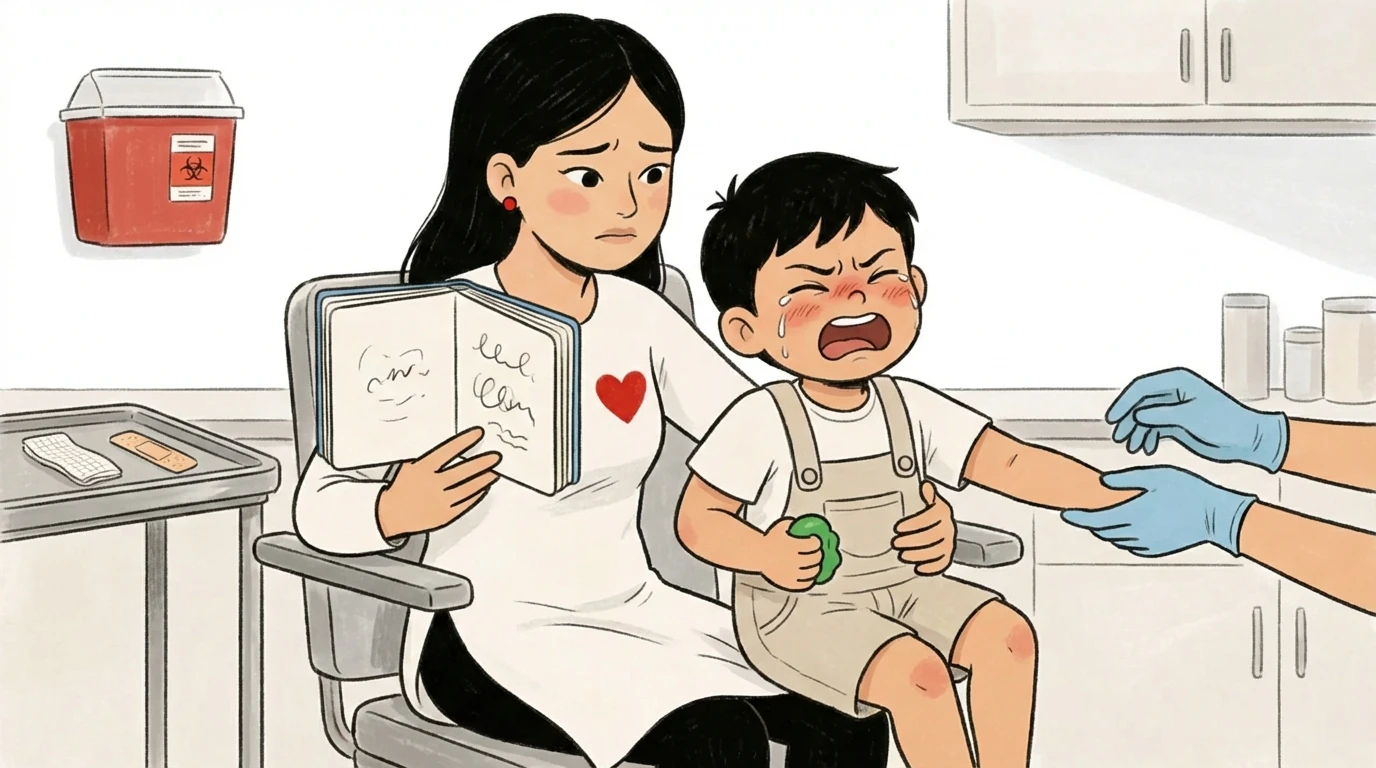
Distract. Bubbles, a favorite video, a lollipop (studies show lollipops reduce distress during shots), a book held to block the view of the blood tube. Let your child choose their distraction. The choice restores agency in a situation defined by helplessness.
Encourage actively. "You're doing it. You're being so still. Almost done." Parents who coach through the procedure produce better outcomes than parents who hover apologetically.
What to never do
Do not hold your child down. If your child needs physical restraint, that is the medical staff's job. The moment you become the person pinning their arms, you've crossed from comfort to coercion.
A toddler cannot understand why the person who protects them from everything is now helping strangers hurt them. If the staff needs to restrain, step to the side, stay visible, keep talking. "I'm right here. This will be over soon." Your voice is the anchor. Your hands should not be the restraints.
After it's over
Go get ice cream. You're marking the end of something hard, not rewarding the absence of tears (never praise a child for suppressing emotion).
Let them tell the story
Ask your child to recount what happened. If tears come during the retelling, good. That's processing. The story, the tears, and then the celebration form a complete psychological sequence that helps the brain file the experience as finished.
Play is the long game
Your child will draw blood from every stuffed animal in the house for the next three weeks. They'll give you shots, take your temperature, and announce gravely that you need surgery. This repetitive play is the primary mechanism through which young children integrate frightening experiences. Don't interrupt it or worry about it.
For children who've been through extended hospitalization, a "Goodbye Hospital" book works well. Fill a binder with photos: your family before the illness, the hospital, the child getting stronger, the homecoming. When a child cries during the book, stop reading and hold them. "I'm right here. You're safe. You can cry now."
When medical challenges are ongoing
Some children face months or years of treatment. Chronic illness, repeated procedures, medication that alters mood and sleep.
Think of your child as having temporarily reduced capacity. A child on steroids who growls, spits, and demands TV is not defiant. Their brain chemistry is altered. Standard discipline misses the mark because it treats behavior as the problem rather than the symptom. Restrict with compassion, offer alternatives, and adjust expectations to what their body can handle right now.
Building coping skills happens between treatment cycles, not during them. During the hard stretches, keep stress low and maintain whatever routines you can. Roughhousing that produces laughter releases the same tension that would otherwise emerge as aggression.
And process your own grief. You cannot witness your child's pain if you haven't sat with your own. Journal, talk to a friend, cry in the shower. Your child needs a parent who can name body parts accurately when talking to doctors and sit steady in a waiting room. That steadiness comes from having already let yourself feel the terror somewhere private.
How to prepare your child for a medical procedure
- Play doctor at home firstBuy a toy doctor kit and let your child give stuffed animals (and you) shots, blood draws, and checkups. Ham it up. The laughter releases anticipatory anxiety, and repetition over days builds familiarity with the feared experience.
- Explain honestly and simplyTell your child what will happen step by step. Acknowledge it may hurt, but frame the pain as brief and manageable. Children who are told 'it won't hurt' and then experience pain lose trust for every future visit.
- Reduce pain before it startsGive Tylenol an hour before the appointment. Apply numbing cream to the relevant area. Dress them warmly so veins surface easily. These physical interventions reduce the actual pain your child experiences.
- Offer real choicesLet them pick which arm, choose their distraction, select their own band-aid. Every small choice restores a sense of control in a situation where they have very little.
- Comfort without restrainingStay in the room, hold their hand, sing, read, or distract. If they need to be held still, let the medical staff do that. Your child needs you as the safe person, not as the person who held them down.
- Process it afterwardLet your child tell the story of what happened. If tears come, let them flow. Celebrate the bravery with a treat, then expect weeks of playing hospital. That repetitive play is healing.
The long view
Medical bravery looks like a child who is afraid, says so, cries if they need to, and still gets through it because someone they trust was honest with them beforehand, stayed close during, and let them fall apart after.
Every well-handled medical experience deposits something in your child's confidence account. You are building a relationship with medical care that will last their entire life. The goal is a teenager who shows up for blood work without a meltdown, and an adult who doesn't cancel dentist appointments out of dread.
That starts now, with a toy syringe, a rubber duck, and the truth.
FAQ
Tell them. Children who are surprised by pain lose trust in both you and medical settings. Give age-appropriate information one to two days before for young kids, a week for older ones. Be honest that it may hurt, explain what will happen step by step, and reassure them you will be right there.
Start with play weeks before the appointment. Use a toy doctor kit, spray water from a medicine syringe in the bath, and let your child give stuffed animals shots. Numbing cream applied an hour before eliminates most of the sting. On the day, offer a lollipop or screen for distraction, let them choose which arm, and stay close without restraining.
Yes. Research consistently shows parental presence reduces a child's pain and anxiety. Your job in the room is to comfort, distract, and encourage. If physical restraint becomes necessary, let the medical staff handle it. You are the safe person, and that role must stay intact.
Night terrors and nightmares after medical trauma are common. Your child is processing experiences their brain could not make sense of during the event. Stay with them when they wake, reassure them they are safe, and use play and storytelling to help them work through the memories. If symptoms persist beyond a few months, consult a professional.