TLDR
- Stepparents don't discipline. Period. The biological parent handles limits and consequences. A stepparent who disciplines before earning relational trust damages the bond they're trying to build.
- Relationship first, behavior second. Children cooperate with adults they feel connected to. Without that connection, every correction lands as rejection. Build the relationship and cooperation follows.
- Borrowed influence becomes real influence. At first your stepchild may listen to you only because their parent asked them to. Over months of consistent warmth, that borrowed authority turns into something genuine.
- Expect regression, not gratitude. Kids processing a family restructure lose skills, melt down over small things, and test every boundary. This is communication, not defiance.
- One-on-one time with the bio parent is non-negotiable. Every day, the biological parent needs to spend dedicated time with each child. No new partner, no half-siblings, just that child and their parent.
The "you're not my real parent" problem
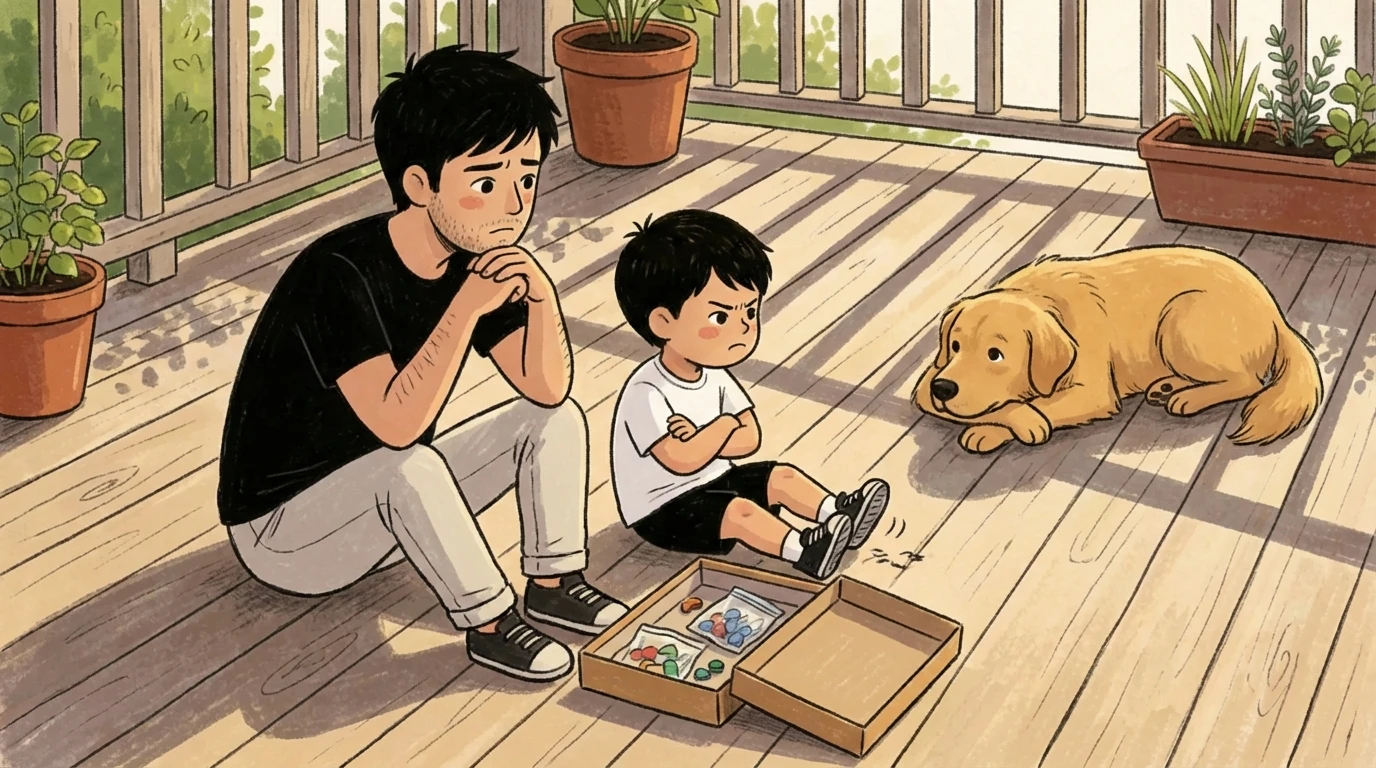
About 16% of children in the United States live in a blended family. That is a lot of households where someone is being told, in one form or another, that they have no authority here.
And here is the uncomfortable part: the kid is right. A stepparent does not start with the same relational capital that a biological parent has built since birth. You are starting with an empty account and trying to make withdrawals. Every time you enforce a rule, correct a behavior, or say "because I said so," you are spending currency you have not earned yet.
The biological imperative that gives natural parents automatic authority does not exist for stepparents. You have to earn influence daily. Which means you need to be a better parent than average just to reach the baseline.
The math of the situation is that plain.
You're not my real parent
The Life Transitions course will teach you the stepparent boundaries
You'll know when to step in and when to back off so loyalty conflicts stop hijacking every family dinner.
Why discipline from a stepparent backfires
When a stepparent steps into the discipline role too early, a predictable spiral starts. The child misbehaves. The stepparent punishes. The relationship erodes further. The child has even less reason to cooperate. The stepparent punishes harder. The child starts lying and hiding things, not because they are morally deficient, but because deception becomes a rational survival strategy in an environment where punishment is the default.
A kid hiding a poptart under their arm while swearing they did not eat the last one is a child who expects punishment rather than understanding, and is acting accordingly.
The discipline rule for stepparents
It is simple: do not do it. When something needs correcting, talk to your partner privately. Let the biological parent handle limits and consequences. Your job is to be a warm, emotionally generous adult in this child's life. That is the whole job description for now.
This feels counterintuitive, especially when you are the one home with the kids all day. But when parents disagree on discipline, the tension lands squarely on the child. When the person delivering those consequences is someone the child did not choose and does not fully trust yet, the damage multiplies.
Building the relationship (the actual work)
Play is how children decide if you are safe
The primary mechanism for building trust with a stepchild is play. Not "quality time" in the abstract. Actual, on-the-floor, follow-their-lead play. This is how children assess whether an adult is safe. It is also how they build the attachment that makes cooperation possible later.
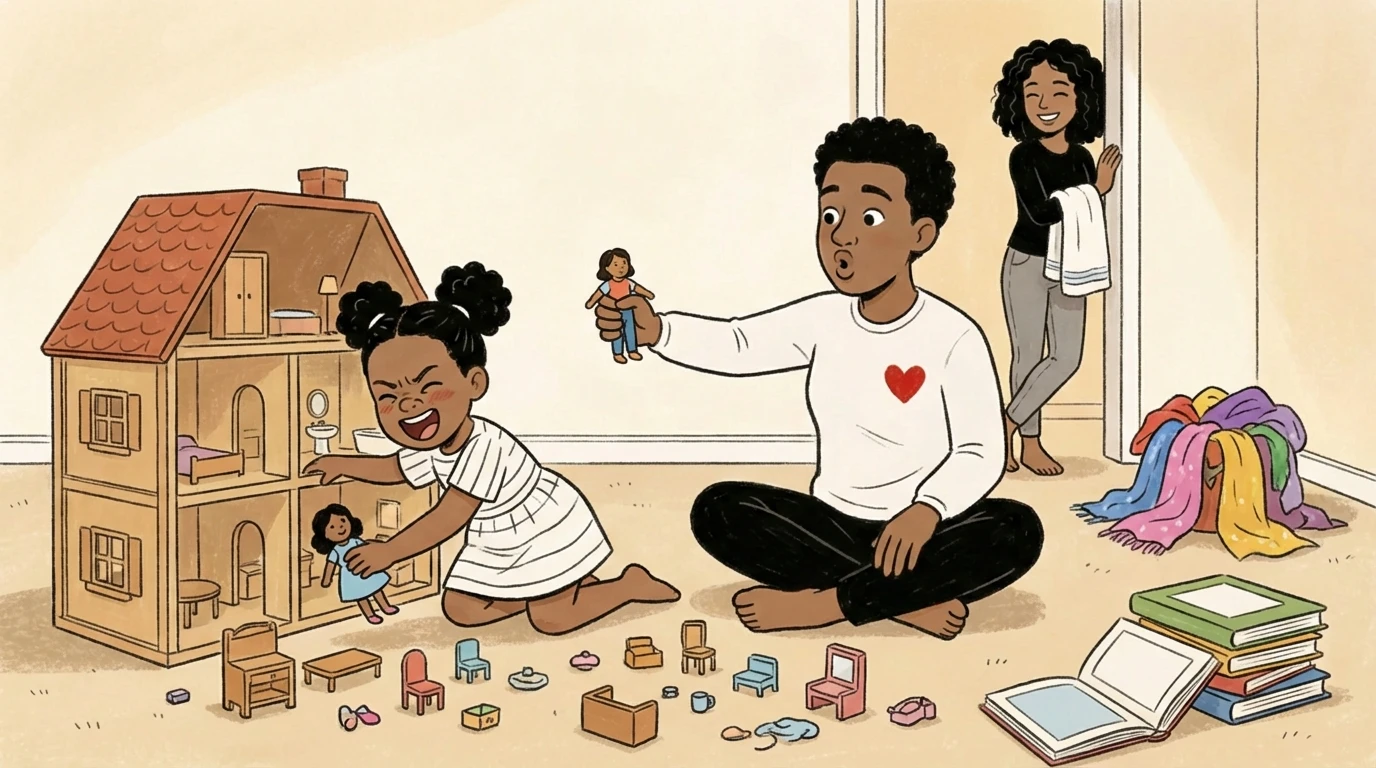
Start with the biological parent nearby but not involved. The child gets to feel safe because their parent is close, while engaging with you. Gradually, the bio parent steps back. Goes to get laundry. Takes a shower. Eventually leaves for ten minutes. The child sets the pace. Not you, not a timeline, not a parenting book.
Don't take the rejection personally
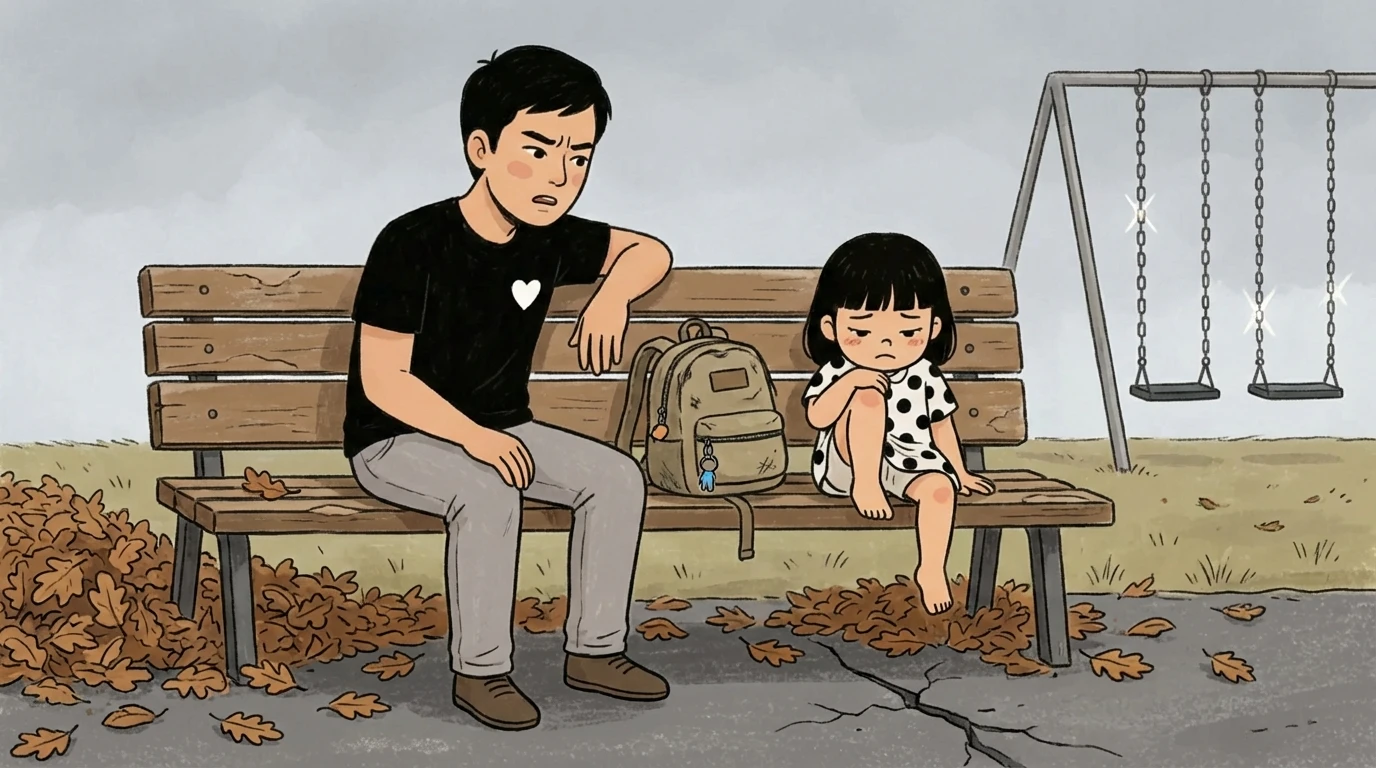
Your stepchild will say things that feel designed to destroy you. "You're not my real mom." "I wish you weren't here." "I hate you."
Take a breath. Step away. Consciously release the hurt. The hurt belongs to the child's history and their unprocessed grief about a family that broke apart. The child is carrying baggage that predates your arrival by years.
The reframe that helps: "They're not giving me a hard time. They're having a hard time."
What the biological parent must do
Daily one-on-one time is not optional
Every child in a blended family needs dedicated time with their biological parent every single day. No stepparent present. No half-siblings competing for attention. Just that parent and that child.
This is the thread of continuity when everything else has changed. New house, new adult, new rules, maybe new siblings. Daily one-on-one time is the anchor that says: you are still mine, and I am still yours.
The activity does not matter much. Basketball. A walk. Doing dishes together. The consistency matters more than the content.
Handle the co-parenting complexity
If co-parenting with an ex is part of your blended family equation, the child is already managing two different households with two different sets of expectations. Adding a stepparent's expectations on top of that creates a third authority figure to please.
Keep the communication between households as low-conflict as possible. Your child is already code-switching between two worlds. They do not need a third.
Loyalty conflicts and the feelings underneath
When your child pushes between you and your partner during a hug, that is a child who is terrified that the new relationship means less love for them.
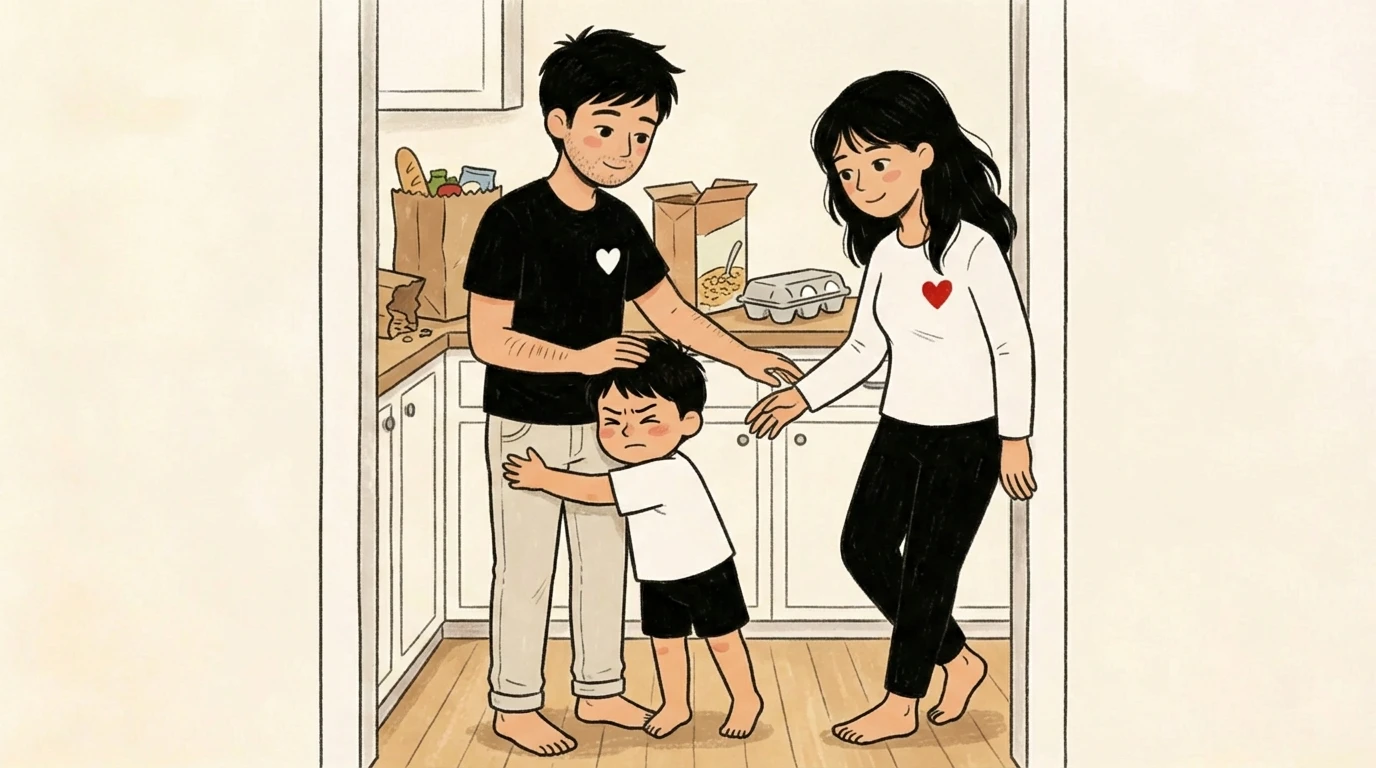
The fix: make it a family hug. Pull the child in instead of pushing them aside. Show them that this new love is additive, not competitive.
Children working through loyalty conflicts and big emotions about a new family structure need permission to have all of their feelings. The ugly ones too. "I hate the new house." "I miss my old room." "Why can't things go back to normal?" These are feelings to hold, not problems to solve.
Expect regression. Potty-trained kids may start having accidents. Sleep may fall apart. Small setbacks will trigger disproportionate meltdowns. This is a child whose emotional bandwidth is maxed out by processing the biggest change of their life. The regression is temporary if you respond with patience instead of pressure.
The step-sibling factor
Bringing children from different families into the same household creates its own set of dynamics. Fairness becomes a loaded word. "You always take their side" becomes a daily refrain. Step-sibling relationships take time to develop and cannot be forced.
The household needs clear, consistent expectations that apply to everyone. Not identical treatment (different ages need different things), but visible fairness. Kids have a justice radar that would put the Supreme Court to shame.
How to build a relationship with your stepchild
- Lead with play, not rulesGet on the floor with them. Follow their lead. Let them set the agenda. Play is how children assess whether you're safe, and it's how trust gets built before anything else can happen.
- Let the bio parent disciplineWhen correction is needed, talk to your partner privately. Let them deliver the consequence. Your role is warmth and connection. Stepping into discipline too early sets the relationship back.
- Don't personalize the rejectionWhen they say 'you're not my real parent,' breathe. Step away. That statement is about their grief and fear, not about you. Release the hurt and come back steady.
- Show up consistently over monthsBorrowed influence becomes earned influence through repetition. Keep showing up with warmth even when you get nothing back. The deposits are accumulating even when you can't see the balance.
- Protect daily one-on-one timeMake sure the biological parent spends uninterrupted time with each child every day. No stepparent, no half-siblings. This is the child's anchor during a period of massive change.
When to get outside help
If a child's behavior is escalating, if they are showing signs of depression, or if the household feels like it is in a daily cycle of punishment and withdrawal, bring in a family therapist. Not individual therapy for the child (though that may help too), but family counseling where everyone is in the room.
A stepparent who refuses to attend therapy or change their approach is telling you something diagnostic. It means they are not willing to do what the situation requires. That information matters.
The research is clear on this: every child needs at least one adult who is unconditionally committed to them. If a biological parent has failed at that (and some do), another adult stepping into that role changes the child's trajectory. That adult could be you. It is the hardest parenting you will ever do. And the stakes are exactly that high.
FAQ
Not until the relationship is well-established, which takes months to years. Even then, the biological parent should remain the primary disciplinary figure. A stepparent who enforces rules before earning trust positions themselves as an adversary, which makes everything harder.
Most family therapists estimate two to five years for a blended family to find its rhythm. The first year is the hardest. Small breakthroughs, like a spontaneous hug from a child who previously avoided you, signal progress even when the overall situation still feels chaotic.
You cannot control what happens in the other household. Focus on making your home a place where the child feels safe, heard, and connected. Consistency in your house matters more than winning a competition with the other one. Keep communication low-conflict.
Yes. Stepparenting is harder than parenting a biological child, and pretending otherwise helps no one. The resentment becomes a problem only when it drives your behavior. Notice the feeling, name it privately, and talk to your partner or a therapist about it. Then keep showing up.