TLDR
- Anger in blended families is almost always grief in disguise. When a child rages at a new step-sibling or half-sibling, they are protecting themselves from feeling the sadness of what they lost. Until you help them access that sadness, the anger stays.
- Verbal reassurance alone will not work. Telling a child 'we love you just as much' addresses the rational brain. The problem is emotional. The proof comes through consistent daily action after the new sibling arrives.
- One-on-one time with the biological parent is non-negotiable. Every day, without the baby, without the step-parent. A child who feels secure in that relationship stops competing with the new sibling for scraps of attention.
- Connection before obedience, especially for step-parents. A stepchild will only cooperate with a step-parent they feel connected to. Pushing for compliance before building that bond guarantees resistance.
- Involve the older child in the new sibling's arrival. Let them pick a name, feel the kicks, pack the hospital bag. Ownership creates excitement. A child who helped name the baby has a stake in that baby's life.
The anger is not about the sibling
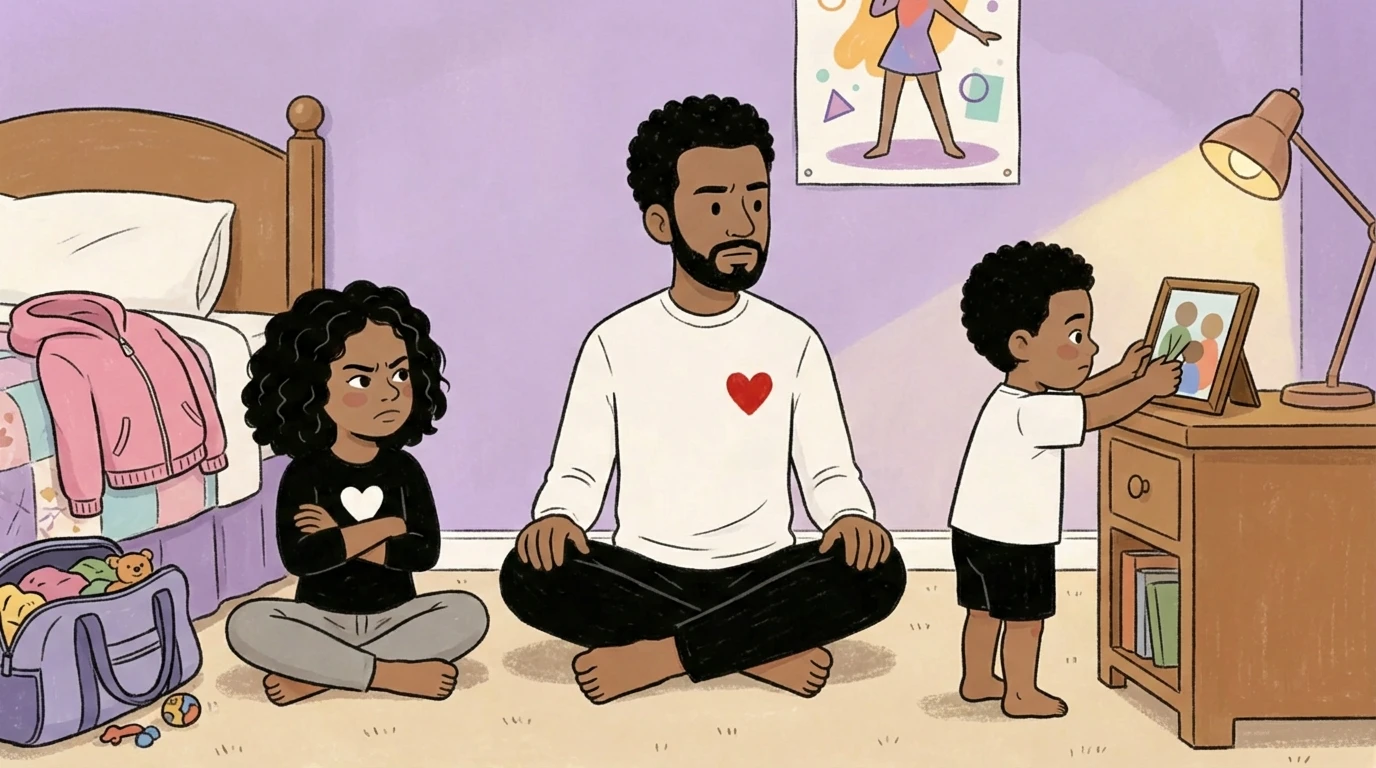
Your step-daughter has been saying "I don't want another brother" for three years. Your five-year-old screams every time the baby touches his toys. Your eight-year-old asked you, very seriously, to "send the baby back."
Here is what is happening underneath: the anger is a defense against sadness. A child who lost daily access to a parent (through divorce, a move, a new marriage) carries grief they may not even remember forming. Each new sibling reopens that wound, because every new family member feels like proof that the original family is gone for good.
The problem is what they feel. And what they feel is terrified of being replaced.
Getting underneath the anger
Standard advice (more quality time, verbal reassurances) helps but does not resolve the deeper issue. The child needs to access the sadness and fear that the anger is protecting.
How to set up the conversation
Find a time when it is just you, the child, and their biological parent. Get a sitter for younger kids. Be somewhere private (a bedroom, your car, the backyard), because this may involve loud crying.
What to say (and what not to)
Name what you see: "I've noticed how upset you are about the baby." If the child starts yelling, do not argue back. Engaging with the anger keeps them locked in defense mode. Instead, reach for what is underneath: "I wonder if you feel like we don't love you as much now."
Stay steady even when it gets intense. The child may begin crying, act much younger than their actual age, or swing between fury and tears. All of that is the process working.
Keep reflecting both sides: "You are so angry with us. I wonder if maybe you are really sad that you can't have us all to yourself."
Strangers sharing a living room
The Sibling Harmony course will help you build a blended sibling bond
Your step-kids will stop performing politeness and start building something real, at their own pace and on their own terms.
Preparing an older child for a new half-sibling
When the news is coming (pregnancy, a new partner's child moving in), timing matters more than the words you choose.
Delay the announcement, then give processing time
Tell the child toward the beginning of a weekend visit, not the end. If told at the end, they go home carrying big, unprocessed feelings to an environment where no one can help them work through it. And delay the announcement itself as long as practical. An eight-year-old who spends six months anxious about a baby cannot be reassured by words. The proof comes after the baby arrives, through your actions, not your promises.
Give them ownership over the arrival
The more a child participates, the more invested they become. Let them pick the nursery color. Let them suggest names. If you are torn between two, letting the older child make the final call creates pride that transforms into excitement. Have them sing to the baby in the womb so the baby recognizes their voice after birth (backed by research on prenatal auditory learning).
Balance this with projects celebrating the older child. Make a photo album of their life. Talk about how cute they were as a baby. Not everything has to be about the new arrival.
Establish traditions before the baby comes
Friday pizza night. Saturday library trips. Sunday playground time with Dad. Build routines as a family of three (or four) that will naturally absorb the baby later. The older child needs to feel like an original member of the family, not someone who can be displaced by whoever is newest.
When the baby arrives
This is where the real work of blended family life begins. Words had their moment. Now it is about what you do every single day.
Protect one-on-one time with the biological parent
Do not reduce visits. Do not skip alone time. A child who feared losing their parent and then sees less of that parent after the baby arrives has their worst nightmare confirmed. The father must still do playground time, game night, snuggling. The mother must still carve out daily time that belongs only to the older child, without the baby present.
Handle regression without panic
Bed-wetting. Clinging. Baby talk. Trying to fit into the baby's car seat. These are a child's way of saying: "Do you still love me even though I am not the baby anymore?"
The counterintuitive response: meet the need. Extra nurturing reduces regression faster than pushing them to act their age. A child whose emotional tank is full stops signaling that it is empty.
If anger toward the baby surfaces
Set the boundary clearly: "No hurting is allowed in our family. I would never let anyone hurt you, and I would never let anyone hurt the baby." This firm line is reassuring, not harsh. It communicates that everyone is safe here. Let them express the feelings through drawing or stomping around. Feelings are allowed. Harmful actions are not.
The step-parent trap: obedience before connection
New step-parents (and plenty of biological parents) make the same mistake: they try to get the child to behave before they have built a relationship. A child will only cooperate with an adult they feel connected to. Pushing for compliance with a stepchild who barely knows you guarantees resistance.
The step-parent who is home all day with a partner's child needs support, not just patience. Connect with other step-parents or stay-at-home parent groups. A step-parent who understands that a five-year-old's defiance is developmental (not personal) handles it differently than one who takes every refusal as disrespect.
If discipline approaches differ between households, get on the same page with your partner first. The child should not bear the cost of adults who have not sorted out their disagreements.
How to help step-siblings and half-siblings adjust
- Access the sadness under the angerFind private time with the child and their biological parent. Name the anger you see, then gently reach for the fear underneath. Stay steady through tears and rage. Do not argue or defend.
- Delay the new-sibling announcementTell the child at the start of a visit, not the end, and wait as long as practical before sharing the news. Minimize the anxiety window since you cannot prove anything until the baby arrives.
- Give the older child ownershipLet them pick nursery colors, suggest names, feel the baby kick, pack the hospital bag. Participation builds investment. A child who helped name the baby has a stake in that baby's life.
- Protect daily one-on-one timeEvery single day, the biological parent spends exclusive time with the older child. No baby present, no step-parent, no distractions. This is the single most effective move in a blended family.
- Build connection before expecting obedienceStep-parents must invest in relationship before discipline. A child cooperates with adults they feel connected to. Pushing compliance without connection creates an adversary, not a family member.
What not to do
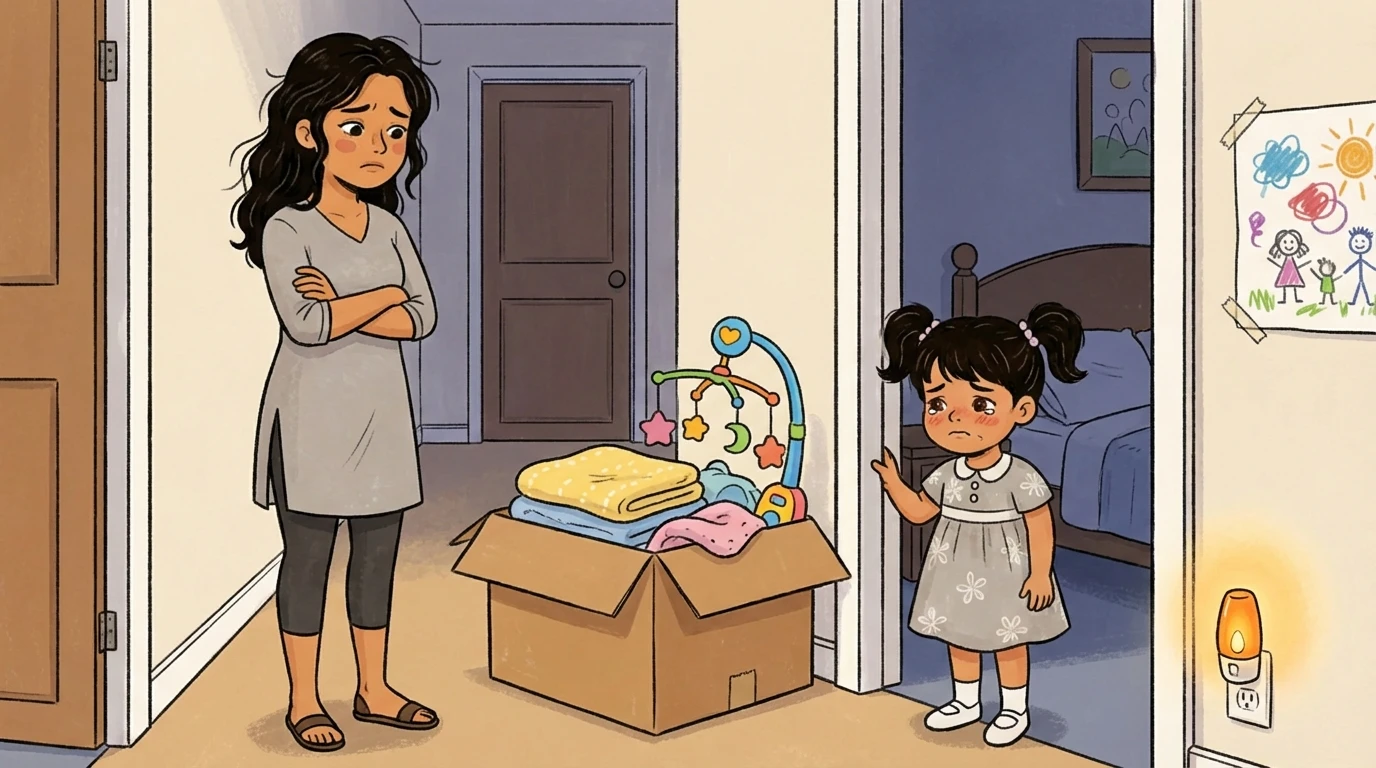
Do not try to logic away the feelings. "Love is not a pie" is true and useless when a child is operating from their emotional brain. Do not pressure the child to be excited. Performance demands backfire. Do not let the baby's belongings take over the older child's space. Territory matters when you are already afraid of being erased.
And do not fight with the ex about having another child. If a co-parent is hostile, call them early (before the child is told), keep it short, reassure them that financial commitments and visit schedules stay the same, and refuse to argue.
FAQ
Yes. Intense anger toward a new sibling in a blended family usually masks grief about the original family changing. They are scared of being replaced. Accessing the sadness underneath the anger, through empathic conversation in a private setting, often reduces hostility within days.
Get aligned with your partner first, privately. The child should not experience conflicting rules from adults who have not sorted out their own approach. Focus on connection-based discipline in your home, regardless of what happens in the other household. Consistency within your walls matters more than matching the other house.
Not until a genuine relationship exists. A step-parent who tries to enforce rules before building connection will be met with resistance. Let the biological parent handle discipline in the early months while the step-parent focuses on being a supportive, trustworthy presence. Shared discipline comes after earned trust.
Regression after transitions is the child's nervous system adjusting to a different environment. Meet the need with extra nurturing rather than pushing them to act their age. Predictable routines at your house, a warm greeting, and fifteen minutes of undivided attention upon arrival help them settle faster.
Most blended family researchers suggest two to five years for a stepfamily to feel cohesive. Rushing the bond backfires. Protect one-on-one time with biological parents, create low-pressure shared activities between the kids, and let the relationship develop at the children's pace rather than the adults' timeline.