TLDR
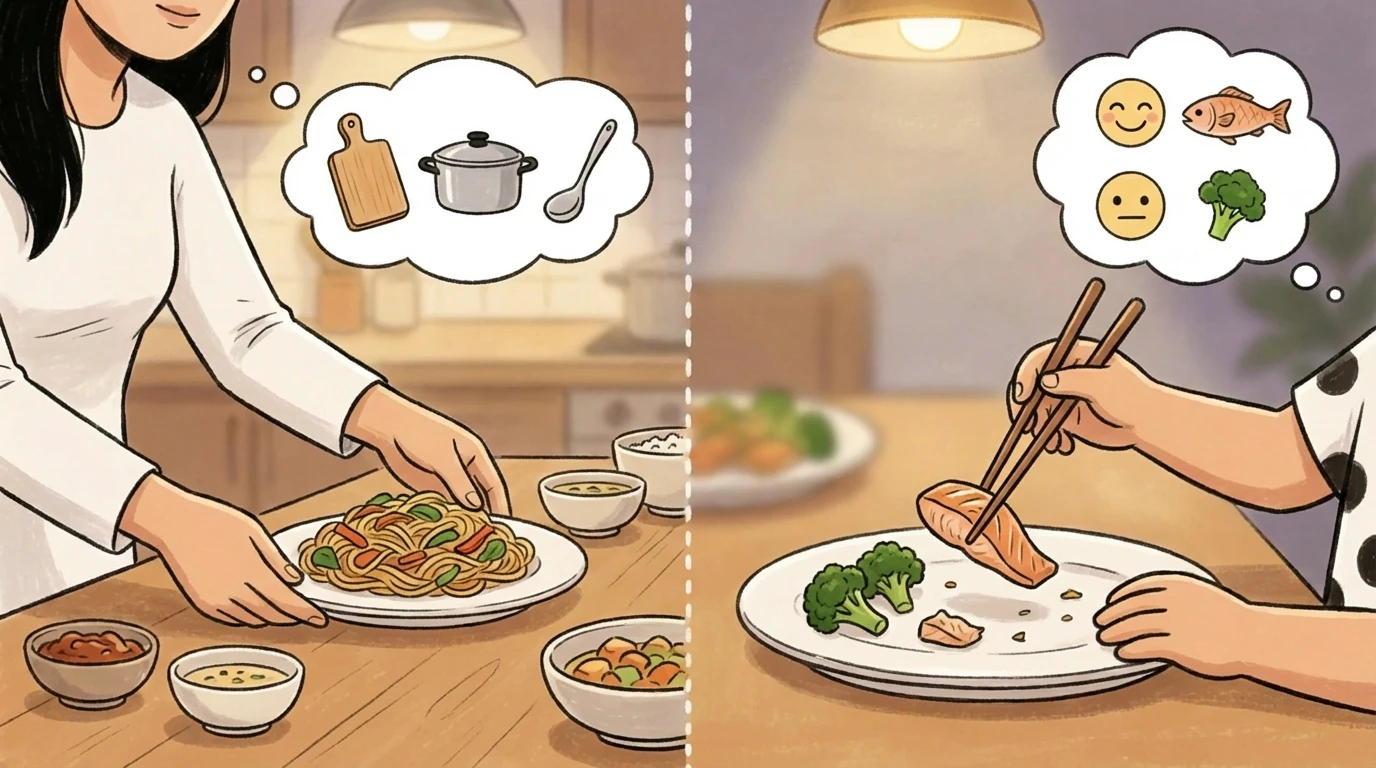
- Parents control the what, when, and where. You pick the menu, set the meal schedule, and create the eating environment. That is your entire job. Everything after that belongs to your child.
- Children control the whether and how much. Your child decides if they eat at all and how much goes in. Trusting this is the hardest part and the most important part.
- Pressure backfires every single time. Research from the Ellyn Satter Institute shows that pressuring kids to eat more or restricting certain foods both increase problem eating behaviors. Less control from you means better eating from them.
- Structured mealtimes replace grazing. Regular meals and snacks every two to three hours, with a closed kitchen in between, teach kids to tune into their own hunger and fullness cycles.
- This works from infancy through adolescence. The division of responsibility adapts as your child grows. Babies decide how much milk to drink. Toddlers decide which foods to eat from what you serve. Teens decide whether to eat the family dinner or make themselves something else.
Your job and their job: the line that changes everything
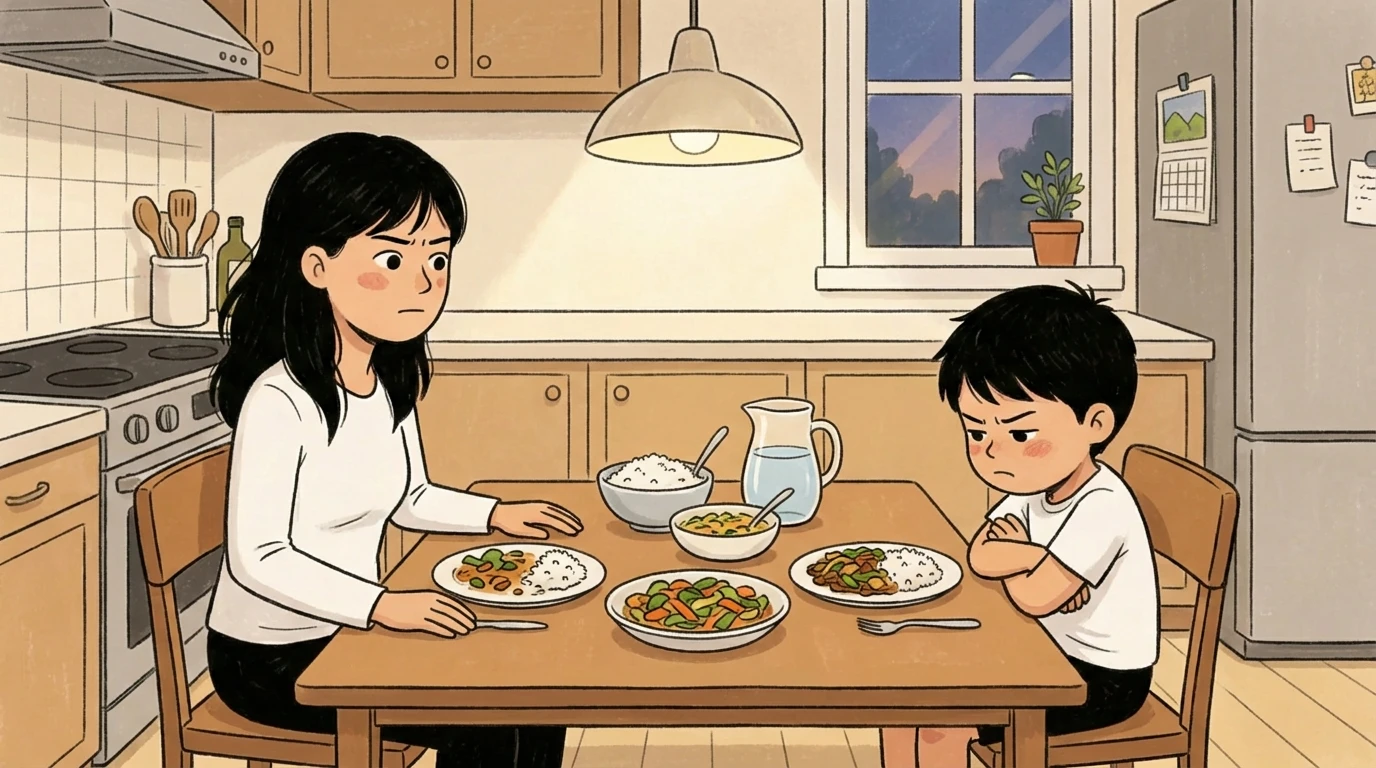
You've done the thing. You've spent twenty minutes making a balanced dinner, arranged it like a restaurant, delivered it with a hopeful smile, and your three-year-old looked at it like you handed them a plate of spiders.
So you start negotiating. Just try one bite. You liked this last week. If you eat your chicken, you can have dessert. And now dinner is a hostage situation where everyone loses.
The division of responsibility, developed by dietitian and feeding therapist Ellyn Satter, draws one clean line down the middle of the table. You are in charge of what food is served, when it's served, and where the family eats. Your child is in charge of whether they eat and how much. Everything on your side of the line is your business. Everything on their side is theirs.
This sounds simple. It is also one of the hardest things you will do as a parent, because it requires you to stop pressuring your child to eat and trust that their body knows what it's doing.
Three bites and done
The Peaceful Mealtimes course will teach you to trust the hunger cues
You'll serve the meal, let them decide how much, and finally stop counting bites in your head.
Why kids already know how much to eat
Babies are born with perfectly calibrated hunger and fullness signals. A newborn cries when hungry, turns away when full, and no one argues with that. You follow their lead.
The signals are there from the start
Those same signals persist into toddlerhood and beyond. A two-year-old who pushes their plate away is doing the same thing the newborn did: communicating that their body has enough fuel. By age two, adults have started second-guessing the signals.
She barely ate anything. She can't be full already. She had twice this much yesterday.
Children's appetites fluctuate wildly. Some days a toddler eats the equivalent of a full adult meal. Other days they survive on four crackers and a lick of peanut butter. Over the course of a week, their intake evens out. Multiple studies from the Ellyn Satter Institute confirm that children who are allowed to self-regulate their intake maintain appropriate growth patterns without any adult portion management.
What breaks the signals
The signals break when adults override them. "Clean your plate." "Three more bites." "No dessert until you finish your vegetables." Each of these teaches your child to eat past fullness, to ignore their own body in favor of an external rule. Decades of feeding research show that the more parents pressure children to eat, the less children eat of the pressured food and the worse their relationship with food becomes.
The structure that makes it work
The division of responsibility requires more structure from you, not less. You are building the framework that eating happens inside.
Meals and snacks on a schedule
Offer food every two to three hours: breakfast, snack, lunch, snack, dinner, and possibly an evening snack. Between those times, the kitchen is closed. Water is always available. Juice and milk are not.
This matters because a child who grazes all day never gets truly hungry and never gets truly full. They lose the ability to feel the hunger-fullness cycle that the division of responsibility is designed to protect. Structured mealtimes set clear limits without restricting food. If your child is hungry between meals, you can say: "Snack time is at three o'clock. Your tummy will have food soon."
Family meals, same food, everyone sits
Serve the same meal to everyone. No short-order cooking. No separate "kid meal." Put the food in serving bowls in the center of the table and let your child serve themselves. A two-year-old can do this with a little help, and the act of choosing what goes on their plate is part of the process.
Sit down and eat with your child. Your child learns more about food by watching you eat a salad than from any amount of "try it, you'll like it." This is respectful parenting in action: you provide the structure and the model, and you trust them to do their part.
How to start the division of responsibility at home
- Set a meal and snack scheduleOffer meals and snacks every two to three hours. Post the schedule on the fridge. Between eating times, the kitchen is closed. This structure gives your child predictable access to food so they can trust that another chance to eat is always coming.
- Serve family stylePut food in serving dishes on the table and let your child serve themselves. Even a two-year-old can scoop with help. This gives them ownership over their plate and removes the message that you have already decided how much they should eat.
- Include one safe food at every mealAlways put at least one thing on the table you know your child will eat. This is their safety net. It means they will never leave the table hungry, even on nights when they reject everything else.
- Sit down and eat with themFamily meals are where the magic happens. Your child watches you eat broccoli and that exposure counts. Eat the same food together. Skip the short-order cooking. If you made dinner, that is dinner for everyone.
- Stop commenting on what they eatNo 'good job eating your peas.' No 'just try one more bite.' No face of disappointment when they skip the salmon. Your job ended when the food hit the table. Their job started. Let the boundary hold.

What the evidence says about pressure and restriction
Ellyn Satter's division of responsibility model is endorsed by the American Academy of Pediatrics, the Academy of Nutrition and Dietetics, and most pediatric feeding specialists worldwide.
Pressure to eat backfires
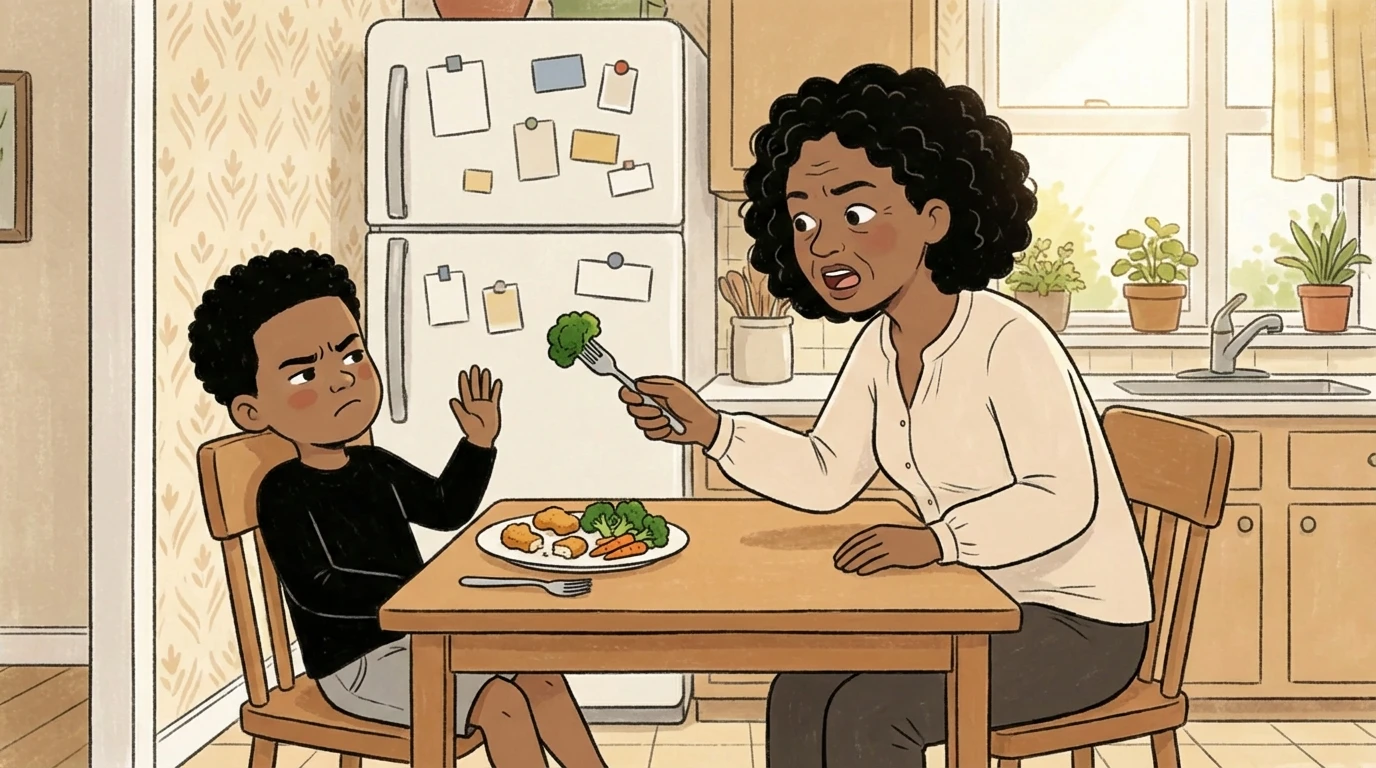
Studies consistently show that children who are pressured to eat become pickier over time, eat fewer fruits and vegetables, and develop more anxiety around meals. The child who was forced to eat broccoli at age three is less likely to choose broccoli at age ten than the child who was allowed to ignore it. The pressure, even when loving, creates a negative association with the food.
Restriction creates obsession
When parents restrict access to sweets or snack foods, children want those foods more, think about them more, and eat more of them when they finally get access. Multiple studies confirm this. Forbidden food becomes fascinating food. The fix: serve dessert with the meal sometimes, offer sweets at snack time occasionally, and treat them as neutral foods rather than rewards or forbidden objects.
Trusting hunger cues works
Children raised with the division of responsibility show better self-regulation of energy intake, lower rates of overweight, and fewer eating disturbances in longitudinal studies. If you're curious about how these hunger signals shift as babies start solids, the readiness cues change with age, but the core principle stays the same: the child's body knows.
The hardest part is sitting there and doing nothing
Your child sits down to dinner, takes one look at the stir-fry, eats three bites of rice, and says they're done. Every instinct screams: make them eat more.
You don't. You say, "Okay. Kitchen closes after dinner, so eat as much as your tummy needs." And then you sit there and watch them leave the table after consuming what appears to be eighteen calories.
This is the moment that matters most. Your child just practiced listening to their body. They said "I'm done" and the people they trust most in the world respected that. You just taught them that their internal signals are reliable. That lesson pays dividends for the rest of their life.
They will be hungry at bedtime. You can acknowledge it: "Your tummy is hungry. Breakfast is in the morning." One night of mild hunger won't hurt them. What will hurt them is twenty years of learning that their body's signals don't matter because someone else decides when they've had enough.
When it feels like it's not working
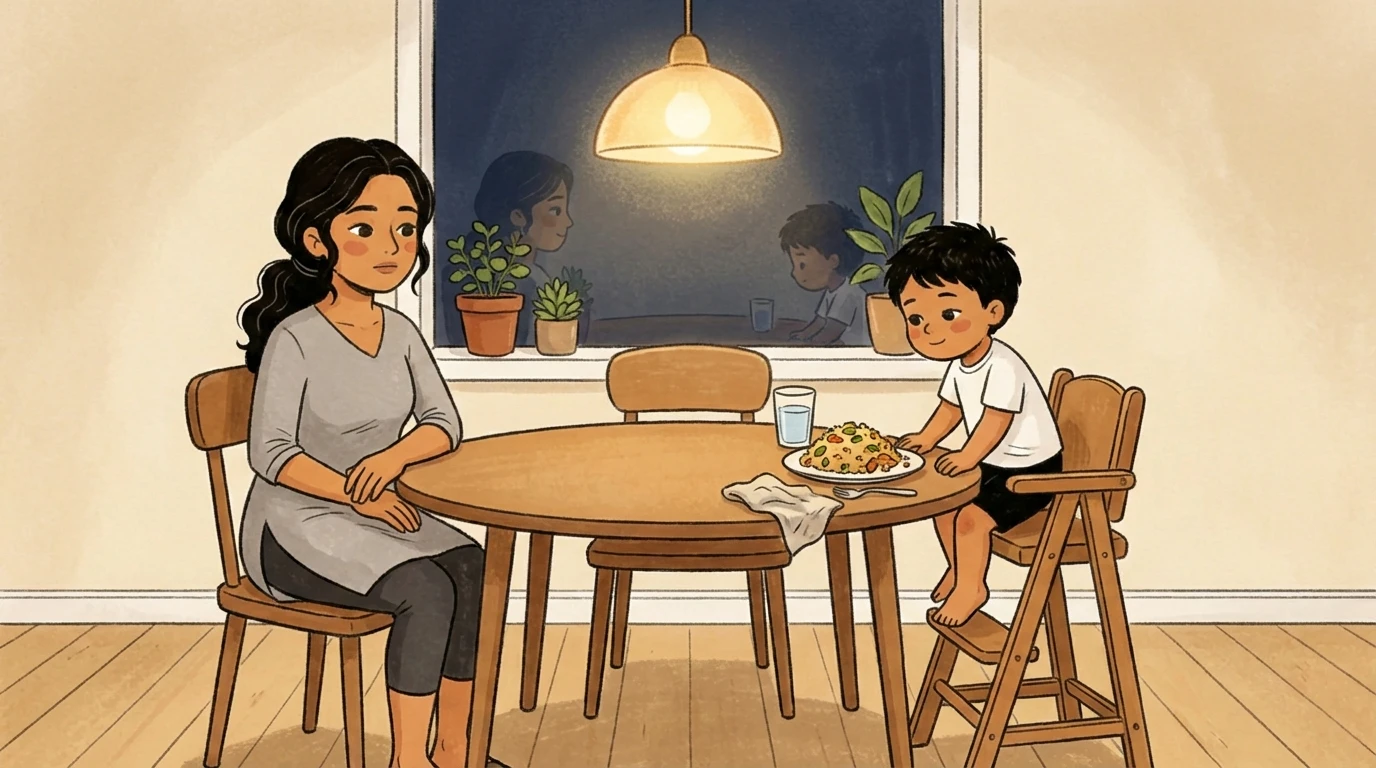
Three weeks in and your kid is still only eating bread. A few things worth remembering.
The division of responsibility is a long game. Research suggests it takes 15 to 30 neutral exposures to a new food before a child accepts it. "Neutral" means the food is on the table, no one mentions it, no one asks them to try it, and no one celebrates if they do. Fifteen meals where broccoli just exists on the table, minding its own business.
Your child will not develop a nutritional deficiency from eating bread and butter for a few weeks. Pediatricians confirm this regularly. Young children are remarkably good at getting what they need from a limited range of foods, as long as variety keeps showing up.
If you are genuinely concerned about your child's growth, talk to your pediatrician. There is a difference between a picky eater (developmentally normal, responds to the division of responsibility over time) and a problem feeder (significant food restriction, weight concerns, possible sensory issues that need professional help). Your pediatrician can tell you which one you're dealing with.
The division of responsibility asks you to trust your child's body. That trust gets tested at every meal. But the alternative (controlling, pressuring, bribing, tricking) has decades of evidence showing it makes everything worse. The best thing you can do at the dinner table is also the simplest: do your job, and let them do theirs.
FAQ
Keep serving a variety of foods alongside the bread and butter. Your child will eventually branch out when they feel zero pressure about it. Research from the Ellyn Satter Institute shows that repeated neutral exposure to new foods, sometimes 15 to 30 times, is what builds acceptance. The bread is keeping them fueled while they get there.
Yes. Toddler food refusal is developmentally normal and peaks around ages two to three. The division of responsibility is specifically designed for this stage. You keep offering varied meals on a predictable schedule. They keep deciding what to eat from what you offer. The refusal phase passes faster when there is no pressure attached to it.
Be direct: 'We let her decide how much she eats.' You can explain that forcing kids to eat past fullness teaches them to ignore their body's signals. Most grandparents respond better to 'the pediatrician recommended this approach' than to a debate about feeding philosophy.
When forbidden foods become allowed foods served at regular intervals, they lose their power. Research shows that restriction increases a child's desire for and intake of restricted foods. Kids with reliable access to sweets at structured snack times eat less of them over time than kids whose parents hide the cookies.