TLDR
- Toddlers are not wired to sit still. Their vestibular system is still developing. Sitting in one place for more than 10 to 15 minutes is physically uncomfortable for most kids under three.
- Chasing them back to the table makes it worse. Every time you carry them back, you have turned leaving the table into a game with a guaranteed parental reaction. They will do it again.
- A booster seat they can climb into themselves changes everything. Autonomy over getting in and out of the chair removes the power struggle. When sitting is their choice, they sit longer.
- Meals should be 10 to 20 minutes, max. If the food is gone or your child is done, the meal is over. Lingering at an empty table teaches nothing.
- The family meal you want is a long game. Right now you are building the habit of coming to the table. The sitting-nicely part comes later, around age four or five.

Ten minutes is a long time when you are two
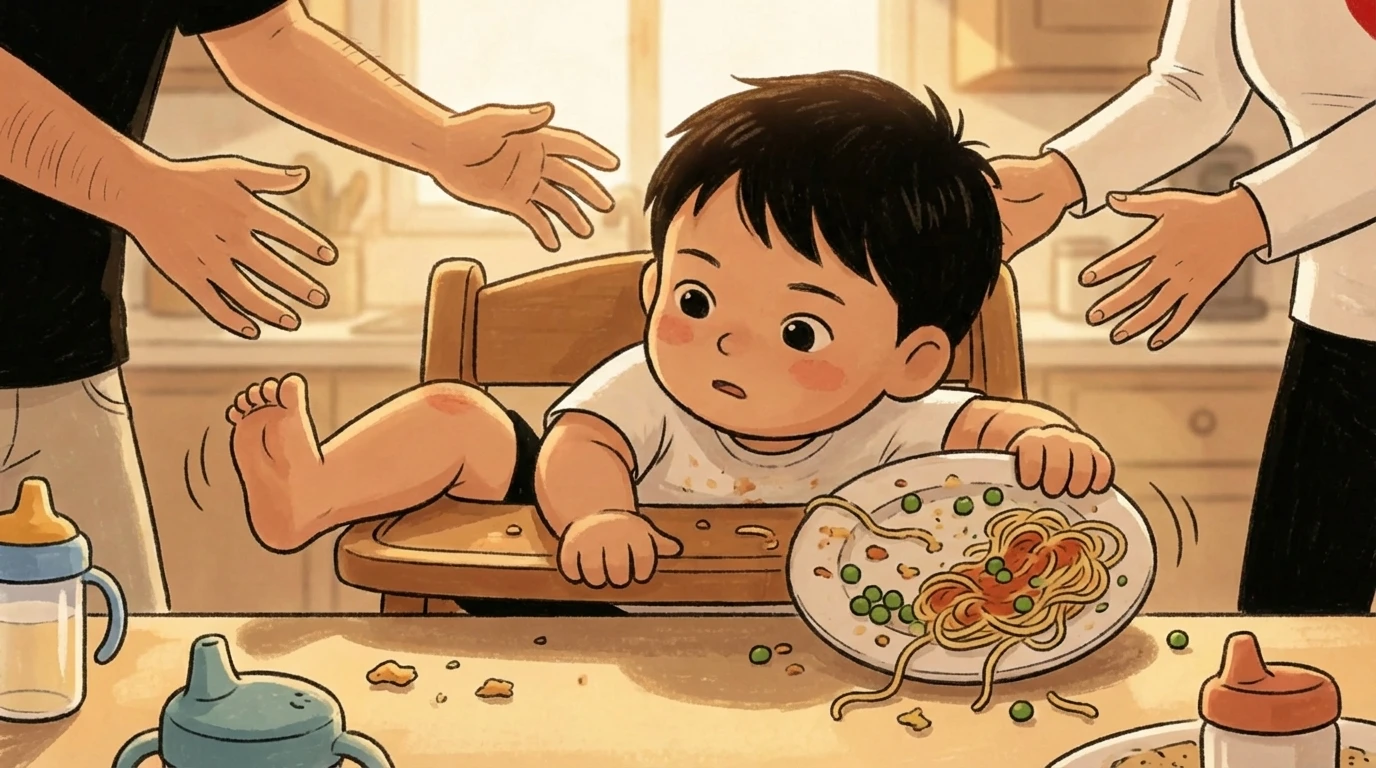
You sat down for dinner. You cut the food into tiny pieces. You arranged them on the plate in the shape of a face because someone on the internet said that helps. Your toddler ate two bites, announced "all done," and is now driving a toy truck across the kitchen floor.
A toddler's attention span for sitting at a table is roughly one minute per year of age, plus five. So your two-year-old? Seven minutes. Maybe. Expecting a 20-minute seated dinner from a child whose body is telling them to move is like expecting a cat to enjoy a bath.
The full eating series covers the big picture, but this article is about the specific problem of getting small humans to stay in their chairs long enough to eat something.
Why they cannot sit (it is not defiance)
Their bodies need to move
The vestibular system, the one that controls balance and spatial awareness, is still under construction in toddlers. Sitting upright in a chair requires muscular effort that adults take for granted. After a few minutes, your child's body sends urgent signals to move, wiggle, stand, climb.
This is the same reason toddlers spin in circles and hang upside down off couches. Their brain is calibrating. Asking them to override that calibration so you can finish your salad is a losing proposition.
Some kids have a harder time than others. If your child seems physically unable to sit still even briefly and is also overwhelmed by loud environments or certain textures, the sensory piece may be bigger than average.
The chair is wrong
Most dining chairs are built for adults. Your toddler's feet dangle, their torso is unsupported, and they cannot get down without help. A child who cannot touch the floor with their feet will fidget more, sit for less time, and eat less food.
Get a chair or booster with a footrest. When your child's feet are flat on a surface and their hips are at 90 degrees, they are physically stable enough to focus on eating instead of on not falling.

What works (without bribery or begging)
Keep meals short
Set a kitchen timer for 15 minutes. When it goes off, the meal is over for everyone. Your child does not need to sit until you are finished. They need to sit long enough to eat, and that takes far less time than you think.
If you are used to long, drawn-out meals where you spend 30 minutes trying to get your child to take one more bite, this will feel abrupt. That is the point. Short meals with a clear end remove the power struggle. The division of responsibility framework says your job is to decide what food is offered and when. Your child's job is to decide whether to eat and how much.
Give them a way in and out
A chair your toddler can climb into independently is worth more than any plate presentation trick. When getting into the chair is their action, eating becomes their project. When you lift them into a high chair and strap them down, eating is something being done to them.
A learning tower, a booster they can step onto, a small table at their height. Any of these gives your child the autonomy that makes them want to stay.
Up from the chair again
The Peaceful Mealtimes course will help you keep them seated without a power struggle
You'll have a calm boundary for leaving the table that doesn't involve chasing or bribing them back.
The one-warning exit
When your child gets down from the table, you have one move: "If you leave the table, dinner is over."
They will test this. They will get down, look at you, and wait.
Follow through every time. If they come back, great. If they leave, wrap the plate. No chasing. No carrying them back while they arch their spine. No screaming about limits they have already forgotten. The meal ends without drama, and the next snack happens at its scheduled time.
This is limit-setting at its most boring and most effective. The line is clear. The consequence is natural. Your child learns fast.

Making the table somewhere they want to be
Here is the part most mealtime advice skips: if the table is a place where your child gets pressured, corrected, and told to sit still, they will avoid it. If the table is where the family talks and eats together without anyone monitoring their intake, they will want to be there.
Eat with them
Your toddler does not want to eat alone while you stand at the counter checking your phone. Family meals work because your child sees eating as a social activity, not a task they perform while adults supervise.
Sit down. Eat the same food. Talk to them about their day, even if their vocabulary is 30 words. The meal becomes something you do together instead of something you make them do.
Stop commenting on their eating
"Good job eating your carrots." "You barely touched your chicken."
Every comment turns eating into a performance. Your child starts eating for your approval instead of for hunger. The less you say about what is on their plate, the more they eat.
How to get your toddler to sit at the table
- Fix the chair firstFeet must be flat on a surface, hips at 90 degrees. A dangling child is an uncomfortable child. Use a footrest, booster with platform, or learning tower.
- Keep meals under 15 minutesSet a timer. When it goes off, the meal is done for everyone. Short meals remove the power struggle and match your toddler's actual attention span.
- Let them climb in themselvesA chair they can get into and out of independently turns sitting into their choice. Autonomy increases cooperation.
- Use one calm warningWhen they leave the table, say 'dinner is over if you get down.' Follow through. No chasing, no begging, no carrying them back.
- Eat the same food togetherSit at the table, eat what they eat, and talk. A child eating alone while you hover is a child who hates the table. A child eating with you is a child learning a social ritual.
The behaviors that look like problems but are not
Your toddler stands on their chair. They eat with their hands. They sing at the table. They talk to their fork.
None of this is misbehavior. It is being two. The behaviors worth addressing are the ones that end the meal: throwing food on purpose and leaving the table. Everything else is noise.
If you correct every small thing ("sit on your bottom," "use your spoon," "stop singing"), mealtimes become a list of rules your child cannot follow. Pick one boundary, hold it calmly, and let the rest go.

When to worry versus when to wait
Most table behavior issues resolve between ages three and five as your child's body matures and family meal routines become predictable. You are building the habit of coming to the table right now. Sitting politely for 30 minutes comes years later.
Talk to your pediatrician if your child consistently cannot sit for even two to three minutes at any activity (not just meals), seems to be in physical discomfort when seated, or is losing weight because they never stay long enough to eat.
For everyone else: short meals, a good chair, one clear boundary, and patience.
FAQ
Most toddlers can sit for about 10 to 15 minutes by age two or three. Expecting a full 30-minute family dinner is unrealistic until age four or five. Start with short meals and gradually increase as your child's attention span grows.
A booster seat or learning tower that your child can get into independently works better than a high chair with a tray after about 18 months. Autonomy over sitting down increases cooperation. Make sure their feet are supported regardless of which seat you use.
Grazing while moving is a choking hazard and makes it harder for your child to recognize hunger and fullness cues. Gently transition to all food at the table by offering meals and snacks only when seated. It takes consistency but usually clicks within a week or two.
That means the boundary is working. Stay calm, acknowledge they are upset, and hold the line. The next scheduled snack is coming. After a few consistent days, the screaming fades because your child learns the pattern is predictable and non-negotiable.
Screens keep a child's body in the chair but take their brain out of the meal. They eat less, taste less, and miss the social learning that makes family meals valuable. It is better to have a short device-free meal than a long one with a screen doing the parenting.