TLDR
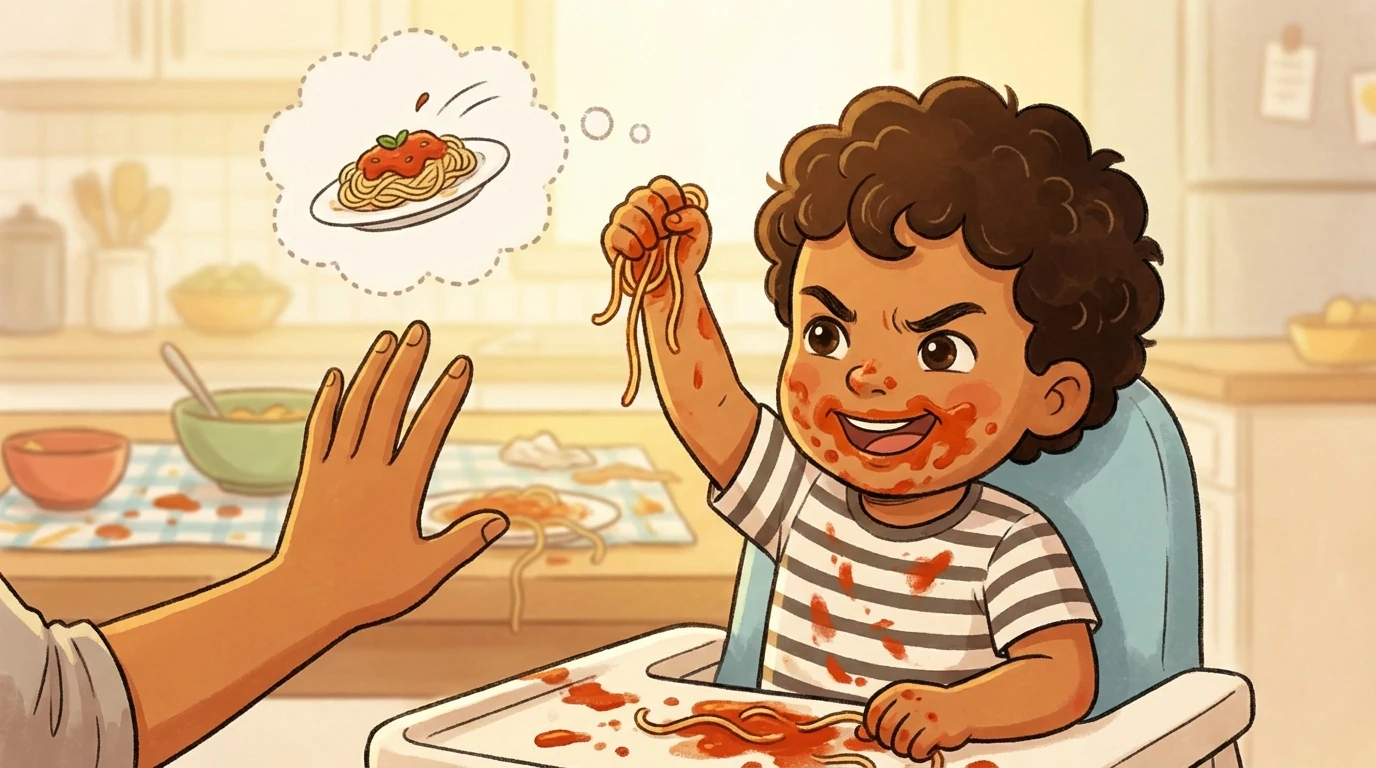
- Throwing food is a sensory experiment, not a power move. Under age two, your child is learning physics. The spaghetti falls, the dog eats it, you make a face. Three outcomes, one action. They will run it again tomorrow.
- Your reaction is the fuel. Big responses make throwing more interesting. A bored parent who quietly removes the plate makes throwing less rewarding than eating.
- End the meal, not the relationship. When food hits the floor, say 'food stays on the table' once. If it happens again, meal is over. No anger. No countdown.
- Playing with food is a good thing. Squishing and smearing food builds familiarity with new textures. The mess is the learning. Throwing is different from exploring.
- This phase has a shelf life. Most food throwing peaks between 8 and 18 months and fades as language develops. When your child can say 'all done,' the plate stays on the table.

The physics lesson you did not sign up for
Your child picks up a piece of sweet potato. They look at it. They look at you. They extend their arm and release it, watching it arc toward the floor with the focus of a NASA engineer tracking a launch.
You say "no." They pick up another piece and do it again.
Your child under 18 months has no concept of rules about food placement. What they have is a developing understanding of cause and effect. The food falls every single time. Gravity works. The dog shows up. You make a noise. Three outcomes from one action. That is extremely good data.
The same behavior that is developmentally appropriate at 10 months becomes genuinely annoying at 14 months and feels like a personal attack at 18 months. The sensory exploration that starts with first foods does not come with a clean end date. Between 8 and 12 months, throwing is mostly about the fall itself: the arc, the splat, the sound it makes on the floor. After 12 months, the social dimension kicks in. Your child starts watching your face before they release the food, because now the experiment includes you.
Why they throw (it is not always the same reason)
The experiment
Before about 15 months, most food throwing is pure research. Drop it, watch it, repeat. Your child is studying gravity, not testing you. They throw different foods to see if they fall differently. A blueberry rolls. A piece of toast slides. Yogurt splatters. Each material gives them new information about how the physical world works, and they are not going to stop collecting data just because you said "no" once.
The signal
Many toddlers throw food when they are done eating but do not have the words to say so. If throwing consistently happens at the end of meals, your child is communicating, not misbehaving. Teach the sign for "all done" or give them a small "no thank you" bowl on the tray for food they do not want. The bowl works surprisingly well. Most toddlers will place unwanted food in the bowl instead of throwing it once they understand the option, because it still gives them an action to perform with the food they have rejected.
The reaction harvest
Around 12 to 18 months, your child discovers that throwing food produces a spectacular adult response. You gasp. You say their name in That Voice. You might even stand up abruptly, which to a toddler is the equivalent of a standing ovation. Every one of those reactions makes the behavior more likely to happen again. They are running a social experiment, and you keep giving them interesting results.

What to do (the boring version that works)
The most effective response to food throwing is the one that feels the least satisfying: be boring.
The one-warning method
Say "food stays on the table" in the same tone you would use to say "it is Tuesday." If food flies again, remove the plate. Meal is over. One calm statement, one chance, done.
This is natural consequences in action. The food left the table, so the meal ended. That is a consequence your child can understand even before they understand language. You do not need to explain it. You do not need to narrate why it happened. The connection between the throw and the empty tray teaches the lesson without a single word from you.
Shrink the ammunition
Put two or three pieces of food on the tray at a time instead of a full plate. When those are eaten, add more. Less food on the tray means less food on the floor. This also helps you figure out when your child is done eating, because they will stop reaching for the next round of food before they start throwing.
Spaghetti on the wall
The Peaceful Mealtimes course will teach you to read the throwing
You'll know whether it's play, protest, or all-done and respond to each one differently.
Separate throwing from playing
This is the part that requires some parental discomfort: squishing, smearing, licking, and poking food is not the same as throwing it, and you should let it happen. Children who are allowed to explore food with their hands develop broader food acceptance over time. The mess is the mechanism.
Your child mashing a banana into the tray is texture research. Hurling a fistful of pasta at the wall means they are done eating. Learn the difference. Exploration gets tolerance. Throwing gets a calm end to the meal. If you are having trouble telling the difference in the moment, watch where the food goes. Exploration keeps the food near the child or on the tray surface. Throwing sends it away from them, often with eye contact and sometimes with a grin.

When it pushes you past your limit
Nobody warns you about the cumulative effect of food throwing. The first time is funny. The four-hundredth time, when the arsenic hour is in full swing, makes you want to scream into a towel.
It is okay to admit that food on the floor makes you angry. You are not a bad parent for having a temper that rises over mashed sweet potato on your sock. The trick is to keep your response boring even when your internal experience is anything but. Remove the plate. Say "all done." Clean up later. If you feel yourself about to lose it, it is fine to step back for ten seconds while your child sits safely in the high chair. The plate can wait. Your composure matters more than the sweet potato.
How to handle food throwing at meals
- Put small amounts on the trayTwo or three pieces at a time. Refill when eaten. A full plate is an invitation to experiment. Small portions keep the focus on eating.
- Give them an outTeach the sign for 'all done' or put a small bowl on the tray for rejected food. When your child has a way to say they are finished, throwing becomes less necessary.
- State the rule onceSay 'food stays on the table' in a flat, neutral tone. One time. If food flies again, the meal ends. No countdown, no negotiation.
- End the meal without dramaRemove the plate and take your child out of the chair. No lecture. No anger. Just done. They will eat at the next scheduled meal or snack.
- Let messy eating continueSquishing and smearing food is exploration, not throwing. Allow hands-on contact with food even when it gets messy. The texture learning matters for long-term food acceptance.
The timeline (it ends)
Food throwing peaks somewhere between 8 and 18 months for most children. It tapers as language develops, because a child who can say "done" or "no" or "yucky" has less reason to communicate by launching their dinner. By age two, most children who have experienced consistent, boring responses to throwing have moved on to other forms of mealtime testing (refusing new foods, for instance, which is a whole different problem with a whole different timeline).
If your child is still regularly throwing food past age two, look at what is happening right before the throw. Are they bored? Full? Is dinner happening during the worst hour of the day? Sometimes the fix is not about the throwing at all. Sometimes it is about the timing of the meal or how long they have been sitting in the chair.
The family meal you want is coming. Right now, your job is to keep offering food, keep the response boring, and trust that the child who threw their dinner tonight will someday ask for seconds. The eating series covers the bigger picture. The toddler table behavior strategies cover what comes right before this phase.

FAQ
No. Food throwing under age two is developmentally normal. It becomes a concern only if it continues well past age three with intensity, is part of a broader pattern of aggression, or your child shows distress around food.
Under 18 months, no. They do not understand the connection between throwing and cleaning. After 18 months, you can hand them a cloth and pick up together, but keep it brief and matter-of-fact. It is a routine, not a punishment.
Wait 15 to 20 minutes, then offer the next scheduled snack. Do not return the same meal immediately. The slight wait helps them connect throwing with the end of the meal.
Playing with food means touching, squishing, smearing, and licking it while it stays on or near the tray. Throwing means launching it away from the eating area. Let them play. End the meal when they throw. The distinction matters because messy eating builds food acceptance.
Sometimes briefly. When you stop reacting, your child may throw more food for a day or two to test whether the old reaction is really gone. Stay consistent. The increase is temporary and usually resolves within a week.