TLDR
- Readiness signs matter more than age. A baby who can sit upright, reaches for food, and has lost the tongue-thrust reflex is ready. A baby who hits six months but cannot do those things is not.
- Milk stays the main event until 12 months. Solids before age one are practice, not nutrition. The pressure to get your baby eating full meals right away is based on anxiety, not biology.
- Bottles should go between 12 and 18 months. Keeping bottles longer makes the transition harder, not easier. Drop them one at a time starting with the least important feeding.
- Mess is the curriculum. Smearing, throwing, and spitting out food is how babies learn about what they are eating. Stopping the mess stops the learning.
- Every transition gets easier when you stop rushing it. The parents who white-knuckle through feeding transitions create the resistance they are trying to avoid. Slow timelines produce confident eaters.
The first spoonful nobody warns you about
You read the articles. You bought the silicone bibs. You steamed the butternut squash and pureed it into something that looks like baby food from a commercial.
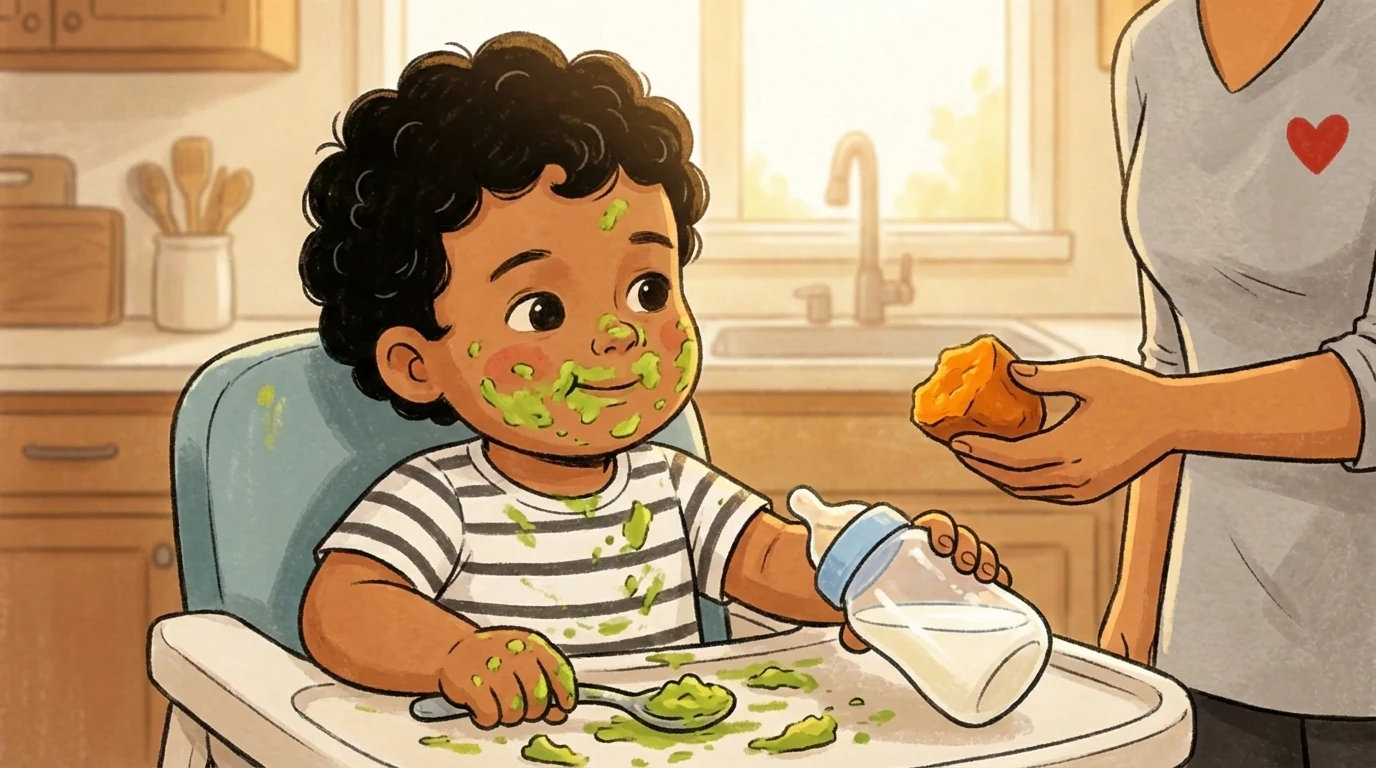
Your baby takes one lick, makes a face like you have offered poison, and lets the entire spoonful slide out of their mouth and down their chin.
This is a successful first meal. That is the part nobody tells you. The goal of early solids is exposure, not calories. Your baby's nutrition is still coming almost entirely from breast milk or formula, and it will stay that way until they are close to a year old. Everything before that is practice.
The problem is that practice does not feel like enough. You want to see food go in and stay in. You want your baby to eat like the babies in the Instagram reels who cheerfully gnaw on broccoli florets. When your baby gags on a pea-sized piece of banana, your brain screams that something is wrong.
Nothing is wrong. You are watching a brand new human figure out what food is. And the solid foods readiness quiz can help you confirm your baby is physically ready, not just old enough.
When to start (and why the calendar lies)
Most pediatricians say "around six months." That word "around" is doing a lot of work.
The signs that matter
Your baby is ready for solids when they can sit upright with minimal support, are reaching for food and bringing things to their mouth, and have lost the tongue-thrust reflex that automatically pushes objects out. Some babies hit all three signs at five months. Others are not there until seven. Both are fine.
Starting before your baby is physically ready leads to more gagging, more refusal, and more anxiety for you. Starting at the right time, whenever that is, leads to a baby who is genuinely interested in what is on the spoon.
The method does not matter as much as you think
Baby-led weaning (letting your baby self-feed with finger foods from the start) and traditional spoon-feeding (purees first, then textures) both work. Most families end up doing a combination without realizing it. The method matters far less than following your baby's cues about pace and quantity instead of overriding them.
The eating series covers the full picture of how feeding relationships work from birth through childhood. But for right now, with a six-month-old wearing avocado in their eyebrows, here is the short version: you choose what food to offer. They choose how much goes in. That is it.
Untouched puree on the tray
The Peaceful Mealtimes course will guide you through every feeding transition
You'll know when to introduce textures, when to drop the bottle, and when to just wait.
The bottle question
Here is where feeding transitions get emotionally complicated. Your baby loves their bottle. The bottle is comfort, warmth, closeness. And now you are supposed to take it away.
The recommendation is to transition off bottles between 12 and 18 months. Prolonged bottle use can affect dental alignment and makes it harder to shift the balance from milk to solid food. A toddler who drinks 30 ounces of milk from a bottle has no appetite left for the chicken and vegetables on their plate.
How to drop bottles without tears (mostly)
Start with the bottle your child cares about least. For most kids, that is the midday one. Replace it with milk in an open cup at a meal. Wait about a week before dropping the next one.
The bedtime bottle goes last because it carries the most emotional weight. When you get there, the weaning guide covers how to handle the emotional side of that transition without unraveling your bedtime routine. And if you are still sorting out feelings about ending breastfeeding altogether, that is its own thing. Both transitions can overlap without either one going smoothly.
The two-week rule: any bottle you have not used in two weeks, remove from the house. Having them visible makes both you and your toddler more likely to backslide on a rough day.
The messy middle
Between "my baby just started purees" and "my kid eats what we eat," there is a period that lasts months and looks like chaos.
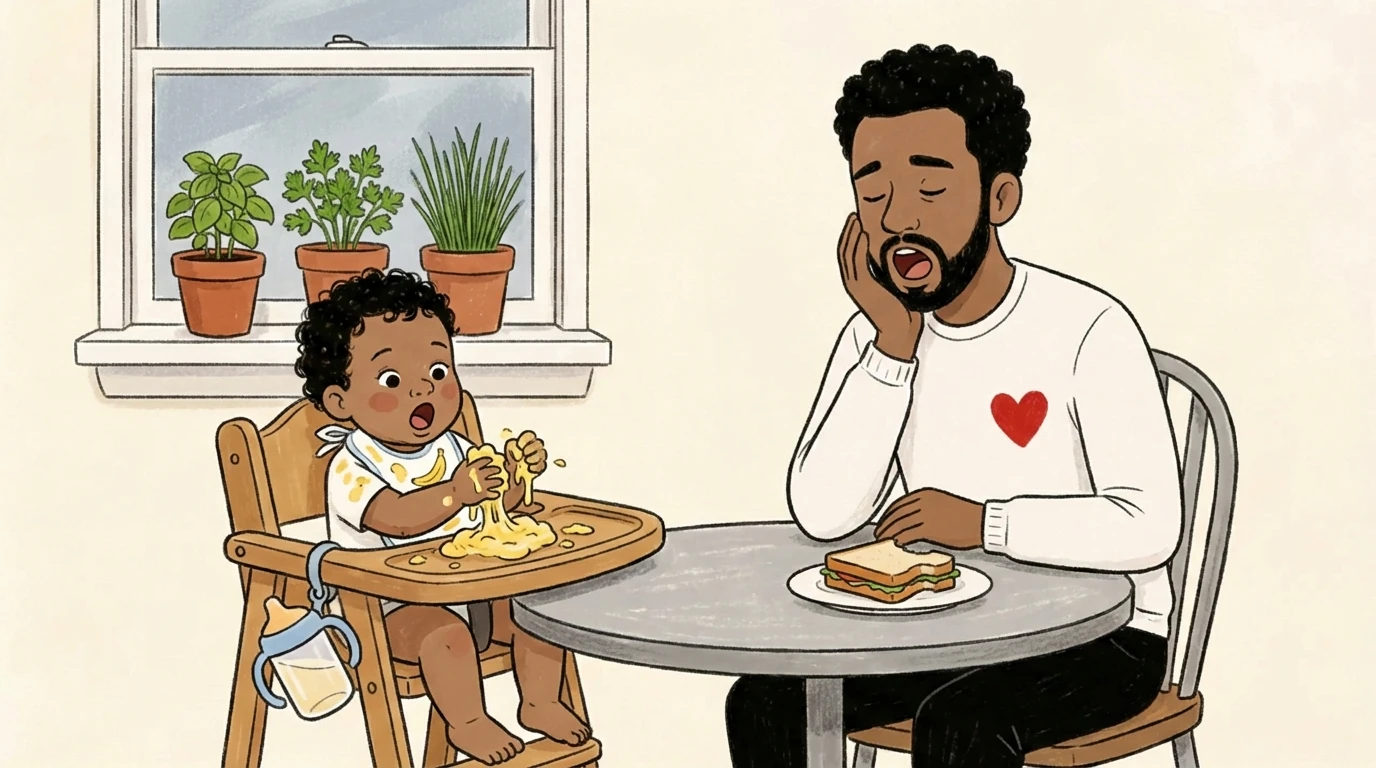
Your child will eat something enthusiastically on Monday and refuse it on Thursday. They will throw food on the floor and then cry because it is gone. They will go through a week of eating almost nothing solid and then suddenly demolish an entire plate of pasta.
This is normal regulation, not a problem to solve. Kids balance their intake over days, not meals. A child who barely eats lunch might demolish dinner. A child who eats nothing today might eat double tomorrow. Your job is to keep showing up with food at predictable times.
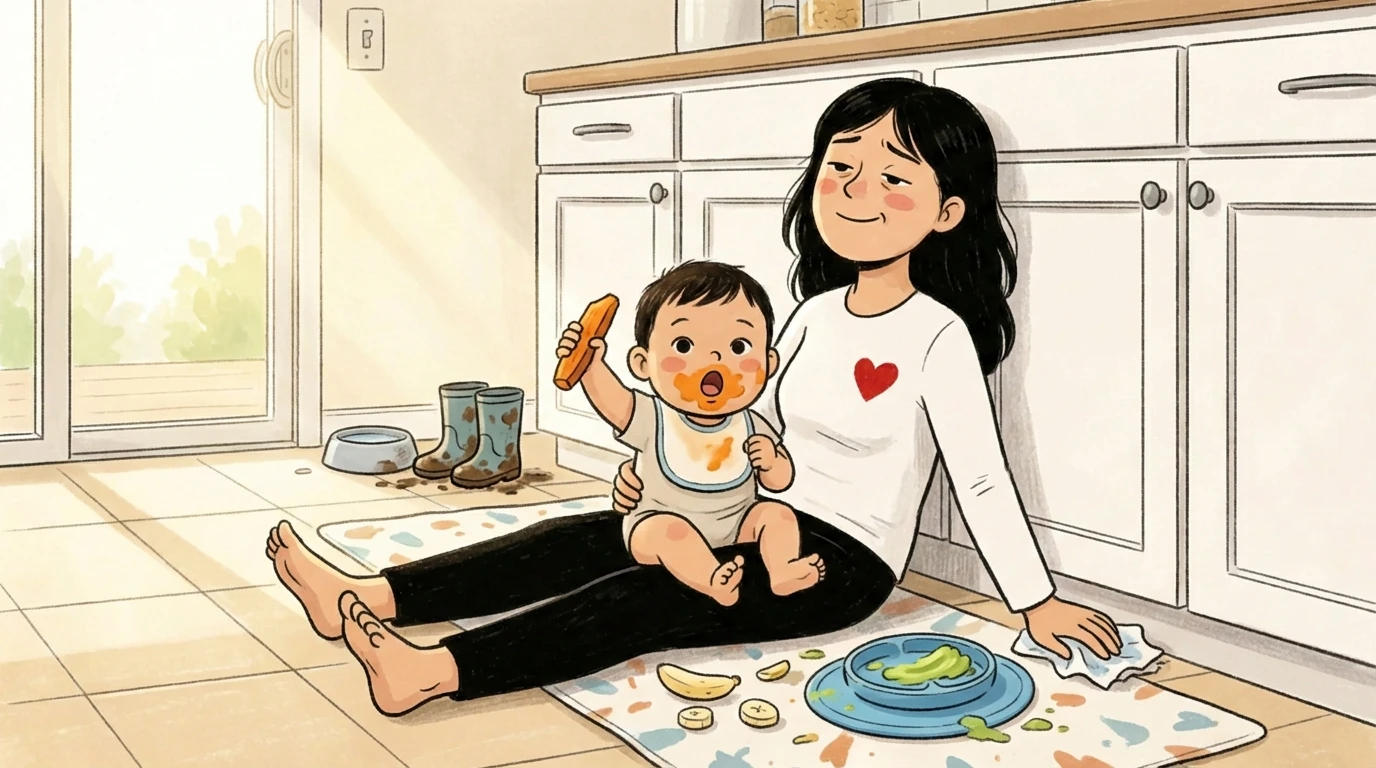
And yes, the food throwing is part of it. It is maddening. It is also how your baby learns about gravity, texture, and cause and effect. You do not have to love it. You do have to survive it.
When picky eating enters the picture
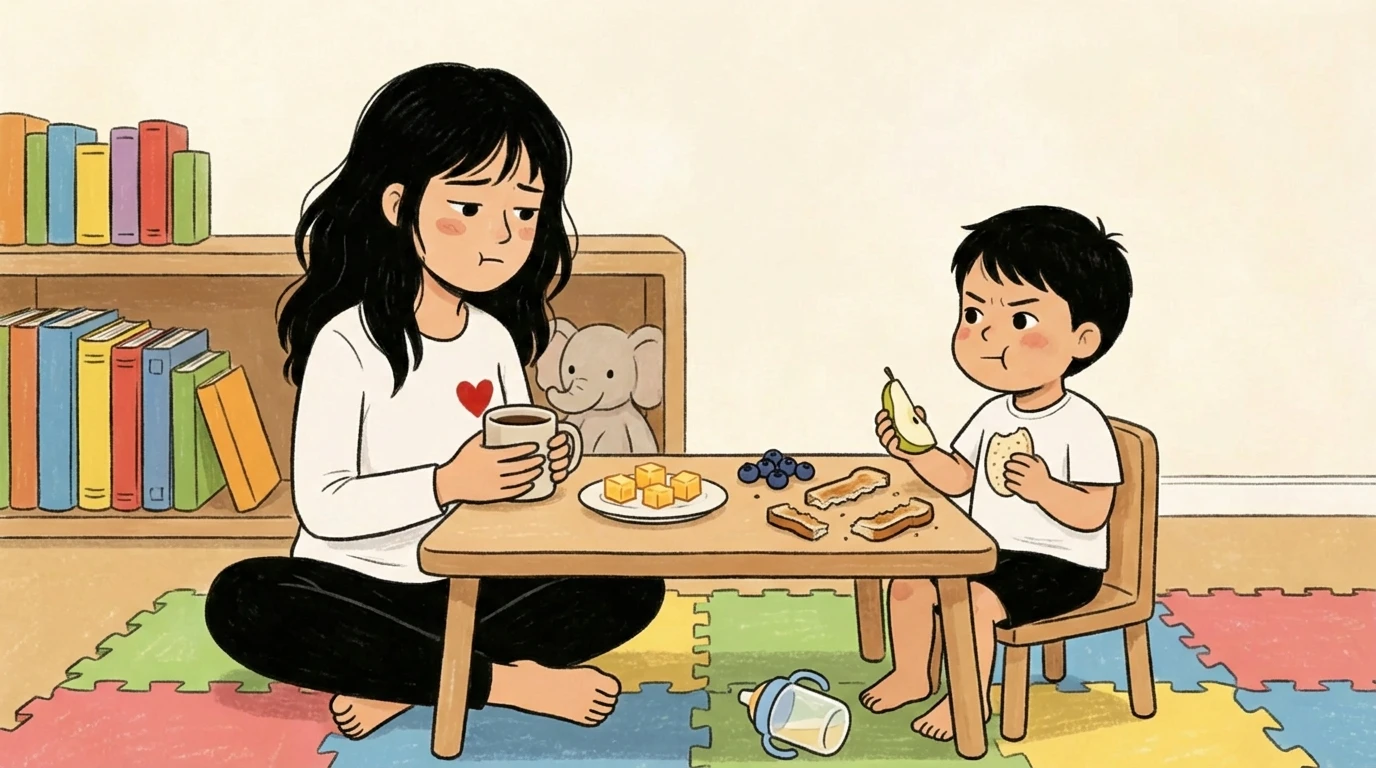
Almost every baby who happily ate everything at seven months becomes selective somewhere between 15 and 24 months. This is developmentally normal, not a sign that you did something wrong.
The honeymoon period of starting solids tricks parents into thinking their child will always eat this way. Then the toddler brain kicks in, and suddenly your adventurous eater only wants crackers and cheese.
The instinct is to push harder. The research says the opposite. Pressuring a reluctant eater makes the resistance worse. The reasons behind picky eating are biological and developmental, not a character flaw. And the tools for expanding what your child will eat are the same tools you used when starting solids: low pressure, repeated exposure, patience measured in months.
The path from the healthy relationship with food you are building now to the kid who eats a varied diet at age five is not a straight line. It loops back on itself, stalls, and occasionally reverses. The timeline has always looked like this.
How to introduce solids without the stress
- Wait for readiness signs, not the calendarSitting upright, reaching for food, and losing the tongue-thrust reflex matter more than hitting exactly six months. Starting before your baby is physically ready leads to frustration for everyone.
- Start with one food at a timeOffer a single new food for two to three days before adding another. This helps you spot any reactions and keeps the experience simple for your baby.
- Let your baby set the paceSome babies eat two tablespoons on day one. Others lick the spoon and spit everything out for a week. Both are normal. Milk remains the primary nutrition source until around 12 months.
- Drop bottles one at a timeStart with the midday bottle since it is usually the least emotionally loaded. Replace it with a cup of milk at a meal. Wait a week before dropping the next one.
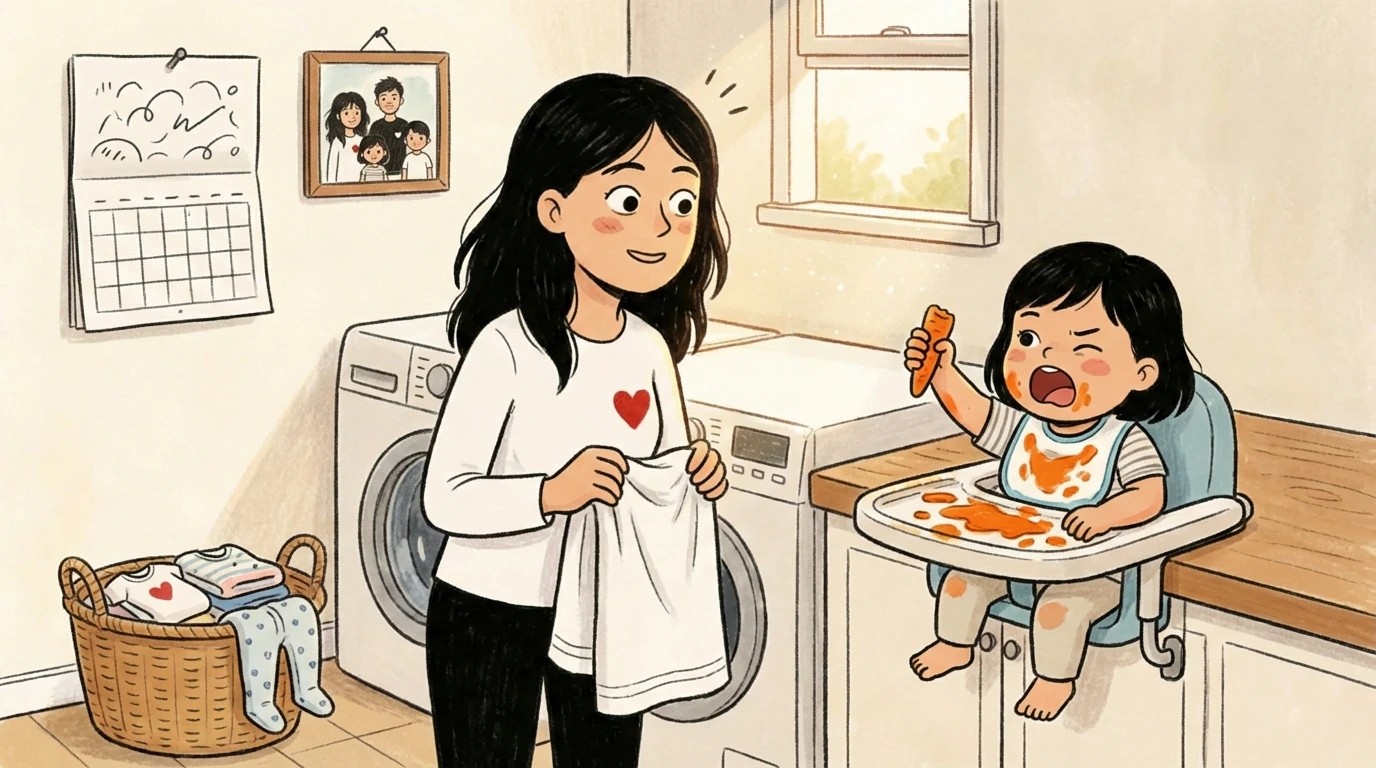
- Expect mess and move onFood on the floor, in the hair, and smeared across the high chair tray is how babies learn about texture, temperature, and taste. Cleaning up is your job. Exploring is theirs.
The long view from the high chair
Feeding transitions feel urgent when you are in them. Every refused spoonful, every thrown piece of banana, every night your toddler demands their bottle back feels like evidence that you are getting this wrong.
You are not getting it wrong. You are watching a small human slowly learn how to eat, which is one of the most complex motor and sensory tasks their developing brain will tackle. The parents who produce confident eaters stayed consistent and kept their anxiety off the table.
Put the food out. Sit down. Eat your own meal. Let them figure out theirs. It is boring advice. It is also the only advice that works across every feeding stage from first purees to family dinners.
FAQ
Look for these physical signs around six months: sitting upright with minimal support, reaching for food and bringing objects to their mouth, loss of the tongue-thrust reflex that pushes food out, and showing interest when others eat. Age alone is not enough. Take the solid foods readiness quiz if you are unsure.
Reduce milk intake gradually. Offer milk after solid meals instead of before. A child who fills up on 24 ounces of milk has no room left for food. Cut back to 16 ounces spread across the day and serve it in an open cup at mealtimes. Appetite for solids usually appears within a week.
Neither approach is superior. Some babies do well with finger foods from the start. Others prefer spoon-feeding first. Many families combine both. What matters more than the method is that you follow your child's cues and avoid pressuring them to eat more than they want.
Most pediatricians recommend transitioning off bottles by 12 to 18 months. Prolonged bottle use can affect dental development and makes it harder to reduce milk intake. Start by swapping the least favorite bottle feeding for an open cup, then drop one bottle at a time over two to three weeks.