TLDR
- Pressure makes picky eating worse, not better. Studies consistently show that children who are urged to eat more become more resistant to the foods being pushed. The power struggle itself causes food aversion.
- Kids are born knowing how much they need. Toddlers regulate calories with surprising accuracy over a week, even if individual meals look wildly unbalanced. Overriding those signals teaches them to distrust their own body.
- Food rewards turn eating into a transaction. Dessert as a bribe for finishing vegetables teaches children that vegetables are the price you pay and sugar is the prize. It backfires within weeks.
- The division of responsibility ends mealtime battles. You control what is served and when. Your child controls whether they eat and how much. This framework removes the power struggle entirely.
- Your childhood eating rules are probably running the show. Most pressure-to-eat habits come directly from how you were raised. Recognizing that pattern is the first step to breaking it.

The meal nobody finishes
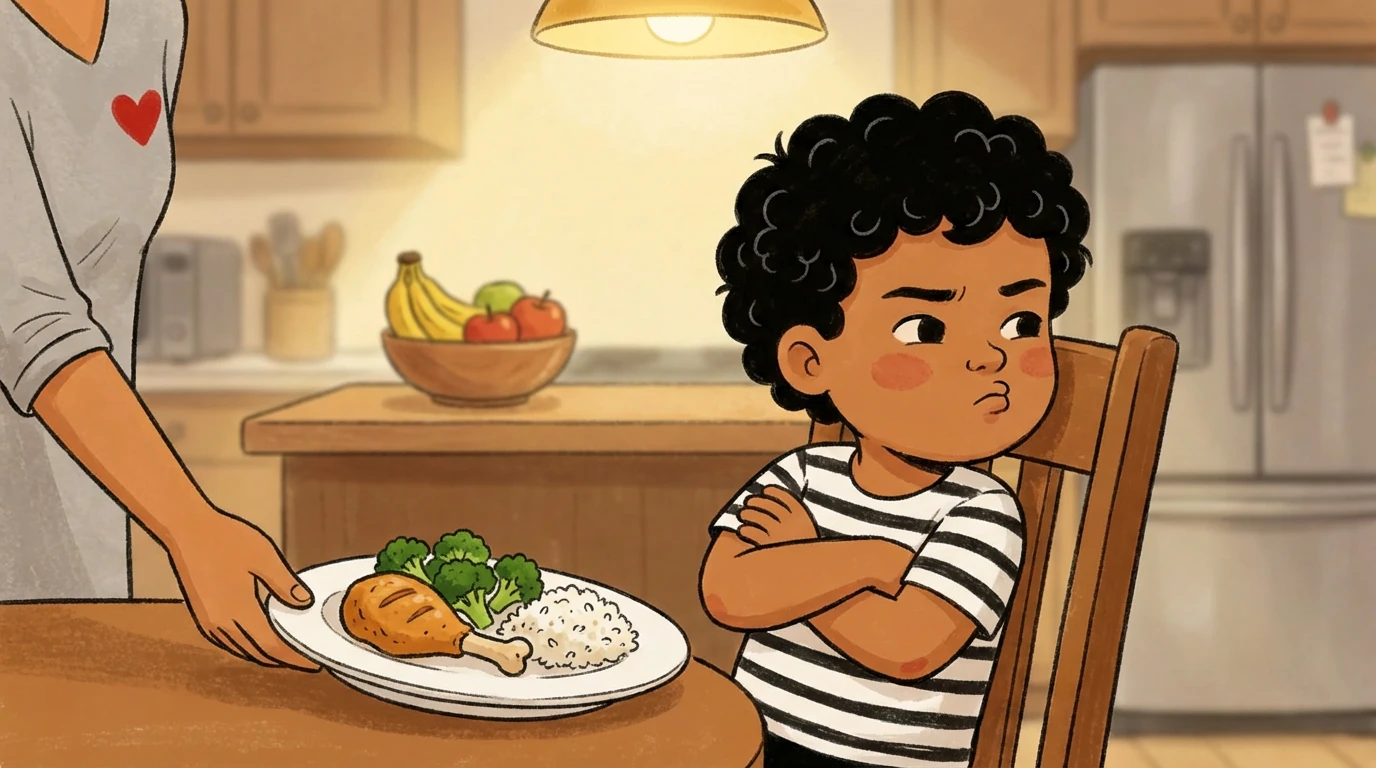
You made chicken. You cut it into small pieces. You added the broccoli your child ate three weeks ago without complaint. You sat down, put the plate in front of them, and watched the performance begin.
Arms crossed. Lip curled. "I don't like this."
You know they liked it last time. You can feel the sentence forming: just try one bite. For me. Please.
That sentence is the problem. And every feeding researcher who has studied this for the last 40 years will tell you the same thing. Pressure to eat, no matter how gentle, makes children eat less of the food you are pushing, not more.
Here is what happens in the child's brain: the food in front of them becomes associated with conflict, anxiety, and loss of control. Even mild encouragement ("Can you try the broccoli?") registers as pressure when your child already does not want it. Over time, the foods you push hardest become the foods they resist most.
What counts as pressure (it is more than you think)
Most parents think pressure means forcing a child to clean their plate. That is the obvious version. But pressure comes in forms so subtle you might not recognize them.
The gentle push
"Just one bite" sounds reasonable. It is still pressure. You are asking your child to override a body signal (not hungry, not interested, not ready) because of your anxiety about their intake. One-bite rules teach children that their own sense of "enough" is wrong.
Praising a child for eating ("Good job finishing your peas!") is also pressure. It turns eating into a performance where the audience is you. The child starts eating for your approval instead of their own hunger.
The negotiation
"Three more bites and you can have dessert." This is a bribe, and it does two things at once. It confirms that the food on the plate is unpleasant (why else would you need to bribe?) and it elevates dessert into a reward. Research on food rewards and bribes shows that children who are routinely bribed to eat vegetables develop a stronger preference for the reward food and a weaker preference for the vegetable. You are training the opposite of what you want.

What the research says about pressured kids
The data on this is remarkably consistent. Children who experience more mealtime pressure:
- Eat fewer fruits and vegetables, not more
- Show higher levels of food fussiness at follow-up
- Have a harder time recognizing their own fullness signals
- Are more likely to eat in the absence of hunger as they get older
That last point is the one that should stop you cold. When you teach a child that the amount on the plate matters more than the feeling in their stomach, you are laying groundwork for a lifetime of confused eating. They learn to eat because the plate says so, because someone else says so, because it is there.
The division of responsibility framework, developed by dietitian Ellyn Satter, exists specifically to prevent this. You decide what food is available, when meals happen, and where the family eats. Your child decides whether to eat and how much. Full stop.
Just one more bite
The Peaceful Mealtimes course will show you what to say instead of pushing
You'll drop the negotiating and watch them start eating more on their own timeline.
Why your own childhood is running the show
Here is the part nobody talks about at the pediatrician's office. The reason you pressure your child to eat is almost certainly because someone pressured you.
The clean plate club. The "no dessert until you finish your dinner" rule. The guilt about starving children somewhere else. These messages lodged deep, and they fire automatically when your child pushes a plate away.
The intergenerational pattern with food is one of the strongest in parenting. Your parents worried about your nutrition. Their parents worried about actual scarcity. The anxiety traveled down the line and landed in your dining room, where your well-fed child is refusing perfectly good pasta.
Recognizing the trigger
Next time your child refuses food and you feel your chest tighten, pause. Ask yourself: whose voice is that? Is it genuine concern about nutrition (your pediatrician says your child is growing fine)? Or is it an old rule from your own childhood that says leaving food on the plate is wrong?
Most of the time, it is the old rule. And old rules can be retired.

What to do instead
Let them come to the table hungry
Grazing kills appetite. If your child snacks all afternoon, they arrive at dinner already full. Structured meal and snack times with nothing in between (except water) let real hunger do the work that pressure never can.
A child who is genuinely hungry will eat. A child who had goldfish crackers 45 minutes ago will push their plate away and you will blame pickiness when the real problem is timing.
Serve it, then ignore it
Put food on the table. Sit down. Eat your own meal. Talk about something that has nothing to do with food. Your child is more likely to try something new when nobody is watching them do it.
The moment you stare at their plate, comment on what they have or have not touched, or make hopeful eye contact when they pick up a fork, you have re-introduced pressure. Eat your dinner. Let them eat theirs. The research on expanding food acceptance is clear: low-pressure repeated exposure works. Surveillance does not.
Redefine what a "good meal" looks like
Stop measuring success by how much your child eats at any single meal. Kids balance their intake over days, not meals. Your child might eat almost nothing at dinner and then demolish breakfast. That is normal regulation working exactly as designed.
A good meal is one where your child sat at the table, food was available, nobody cried, and you did not say "just one bite." That is success. The eating will follow.
How to stop pressuring at meals
- Drop all food commentaryNo praise for eating, no disappointment for skipping. No 'good job' when they try something, no sighing when they do not. Make eating as unremarkable as breathing.
- Serve one accepted food per mealAlways put at least one item on the plate you know your child currently eats. This gives them a safe landing spot so the meal is not all unfamiliar territory.
- Separate dessert from dinnerServe a small dessert alongside the meal or at a scheduled snack time. When dessert is not contingent on finishing dinner, it stops being a bribe and becomes just another food.
- Set a meal schedule and stick to itThree meals and two to three snacks at predictable times. Close the kitchen between them. Real hunger at mealtime is the single most effective tool you have.
- Eat together without screensFamily meals where everyone eats the same food normalize the menu. Your child sees you eating broccoli fifty times before they try it. That modeling is more powerful than any amount of encouragement.
The long game
Mealtime pressure feels urgent because food feels urgent. Your child is small. They need to grow. Every refused plate feels like a threat.
But the real threat is not a skipped dinner. The real threat is a child who learns that other people know better than their own stomach about how much to eat. That belief follows them into adolescence, into adulthood, into every complicated relationship they will ever have with food.
The parents who raised adventurous eaters did not do it by insisting on one more bite. They did it by serving good food, eating it themselves, and keeping their mouths shut about what their kid did or did not eat. It is boring. It is slow. It works.

FAQ
It is common and usually temporary. Keep offering variety alongside their safe foods. Most children expand their range over months when pressure is removed. If the list shrinks further or they lose weight, talk to your pediatrician about a feeding evaluation.
Let them. A healthy child will not starve from one missed meal. Offer the next scheduled snack or meal as usual. When they arrive hungry, they eat. Skipping a meal teaches them that hunger has natural consequences and food will be available at predictable times.
Have a short direct conversation: 'We are letting her decide how much she eats. You can offer food but please do not ask her to finish or try things.' Most grandparents respond better to a clear rule than a lecture about feeding research.
Yes. Serve a small portion of dessert alongside dinner or at a scheduled time regardless of what they ate. When dessert is always available in normal amounts, it loses its power as a forbidden reward and children stop obsessing over it.
See your pediatrician if your child drops off their growth curve, refuses all foods from a major food group for months, gags or vomits regularly with certain textures, or seems anxious or distressed around food beyond normal preference. Most pickiness is developmental and resolves with time.