
TLDR
- One caregiver, not five. Rotating your child through different sitters to build 'separation tolerance' backfires. Toddlers don't generalize trust. They need one specific person they can fall apart with safely.
- Make a book about what's coming. Even pre-verbal toddlers understand far more than they can say. A simple homemade book with photos of you, the caregiver, and the reunion gives them a mental map of the event.
- Crying with comfort is fine. Your child will probably cry. The goal is not zero tears. The goal is someone warm holding them through the tears instead of leaving them to cry alone.
- The reunion message is the anchor. Every conversation, every book page, every practice goodbye should end the same way: 'I always come back to you.' Repetition makes it real.
- Sleep changes are normal and temporary. Your toddler may start waking more at night as the birth approaches. This is connection-seeking, not regression. Meet the need now and it passes faster.
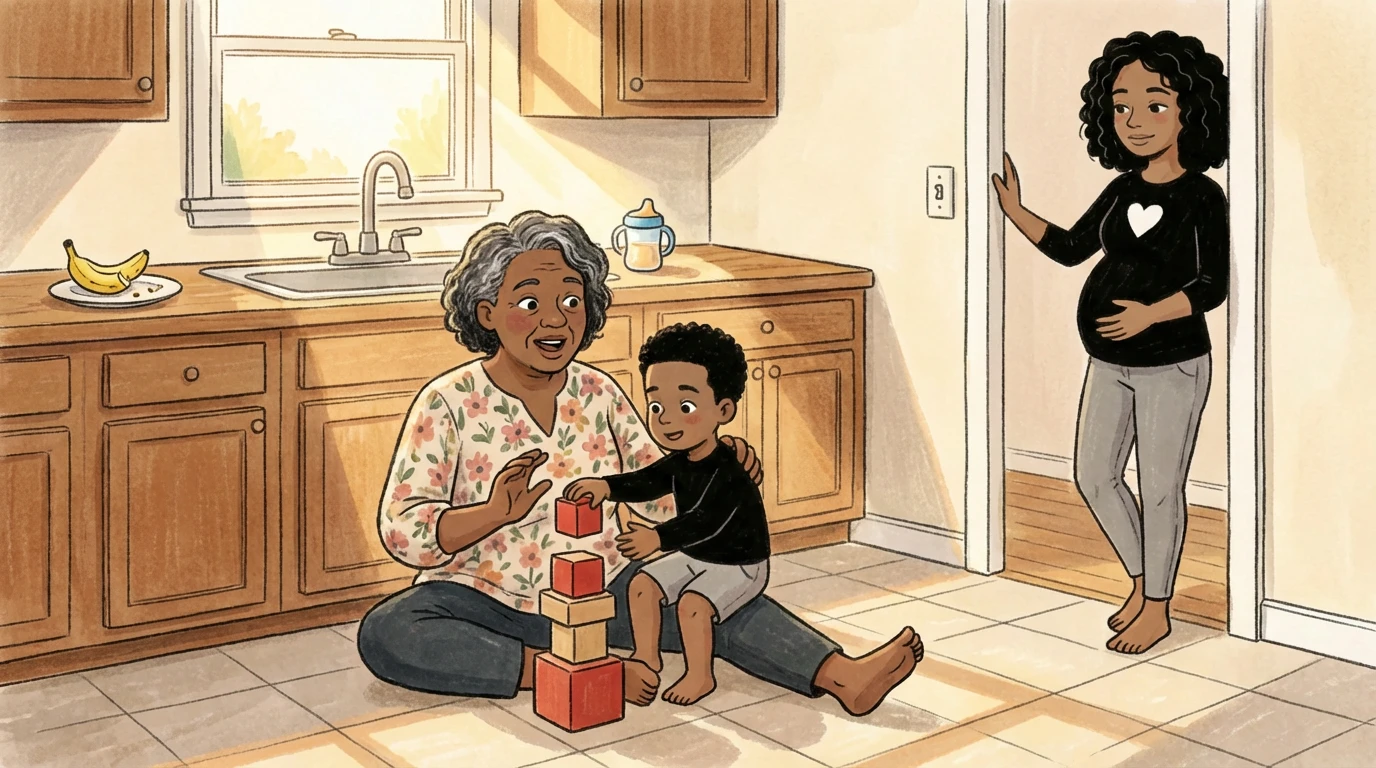
The problem with "getting them used to it"
You're eight months pregnant and panicking about who will watch your toddler when labor starts. So you've been leaving them with the neighbor for an hour, then grandma for an afternoon, then your friend from work for a morning.
This approach makes separation harder, not easier. Toddlers don't build a general skill called "being okay without you." They build trust with specific people. Shuffling them through a rotation of caregivers teaches them that you disappear unpredictably and strangers show up.
You want your child to be flexible. But separation anxiety in toddlers runs on attachment, not exposure therapy. Your eighteen-month-old doesn't need to get comfortable with being left. They need to get comfortable with being left with one particular person.
Pick your person
Choose the one human who will be there when labor starts. Maybe it's your mother, your best friend, or a neighbor you trust completely. Stop spreading the preparation across multiple people and concentrate everything on this one relationship.
Start having this person spend time with your child regularly, with you present. Then gradually step back. Let them handle a diaper change while you're in the next room. Let them do a feeding while you sit nearby reading. The caregiver needs to learn your child's specific cues: what the pre-meltdown face looks like, which stuffed animal works, how the bedtime wind-down goes.
Leaving for the hospital
The Sibling Harmony course will teach you the separation plan
Your child will know exactly what happens while you're gone and who brings them to meet the baby.
Build toward real separations
After a few weeks of overlapping time together, try short separations with just this person. An hour at first. Then two. Then a nap. The nap is the real test. If your child can fall asleep in this person's care, you have something solid.
Don't push sleepovers unless your child is genuinely ready. If the birth ends up requiring an overnight, let that be the one hard night rather than forcing practice sleepovers that erode trust. One difficult night with a familiar caregiver who handles bedtime separation well is survivable. Multiple forced overnights with a caregiver the child barely knows just erode the trust you're trying to build.

Make the invisible visible
Your toddler understands far more language than they can produce. Use that. Even a child with ten words can follow a simple story about what's going to happen.
The homemade book
Get five pieces of paper. Tape photos to them. Think of it as a cognitive scaffold, not an art project.
- Page one: A photo of you and your child together. "I love you so much."
- Page two: You with your pregnant belly. "There's a baby growing. I'm going to the hospital to have the baby."
- Page three: Your child with the designated caregiver, looking happy. "You get to stay with Grandma while I have the baby."
- Page four: The caregiver holding your child. "You might miss me. Grandma will hold you and tell you I'm coming back soon."
- Page five: You hugging your child. "I come back. I always come back to you."
Read it every day. Multiple times if your child brings it to you. The repetition is the point. You're laying down a neural pathway: separation is temporary, reunion is guaranteed.
The verbal script
Alongside the book, talk about it plainly. "When the baby comes, you'll go to Grandma's house. I'll go to the hospital. Then I'll come get you. I always come back." Say it at breakfast. Say it in the car. Say it at bedtime. The phrase "I always come back" should become as familiar as "I love you."
Comfort objects and the caregiver's toolkit
Identify whatever your child already clings to and make sure it travels with them. The ratty blanket. The one specific stuffed bear. A shirt you've been wearing that smells like you.
No object replaces a person. But familiar objects create continuity between your home and wherever your child will be. The emotional coaching your caregiver does while holding the child's comfort object creates a powerful combination: a trusted person plus a familiar anchor.
Give the caregiver a cheat sheet. Not a novel. A single page:
- Bedtime routine (exact order, exact words)
- What works when they cry (rocking? singing? walking outside?)
- What makes it worse (loud voices? being put down too fast?)
- Food preferences and timing
- The comfort object and how to deploy it
The night of: what to expect
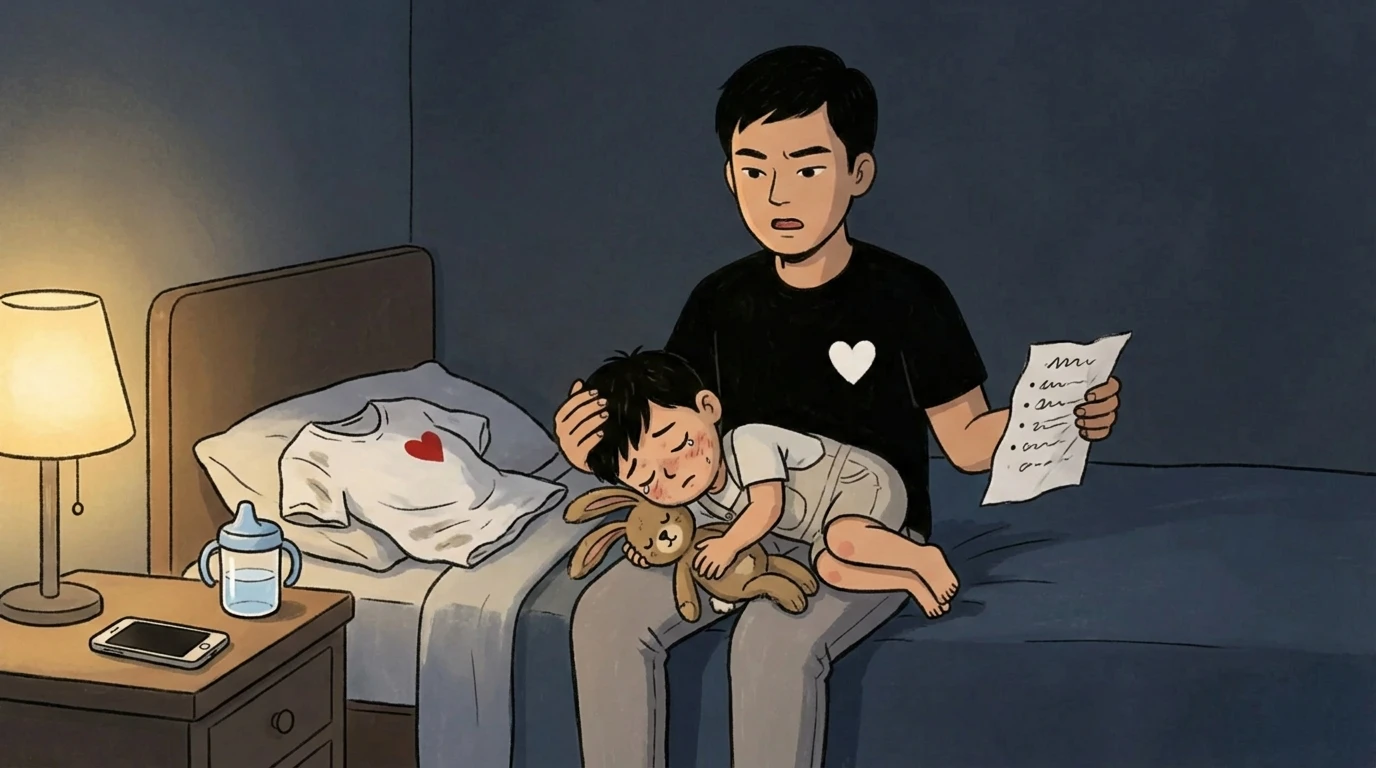
Your child will probably cry. Maybe a lot. This is normal and it does not mean you failed at preparation.
The difference that matters is whether someone is holding them through it. A toddler who cries in the arms of someone they trust is processing a hard emotion with support. A toddler who cries alone until they give up is learning that their distress doesn't bring help. Those are completely different neurological events.
Your caregiver should expect tears and not panic. Their job is to stay present and keep repeating: "Your parent is coming back. I'm right here with you." If the child falls asleep crying in their caregiver's arms, that's okay. They were held.
When sleep gets disrupted
In the weeks surrounding a new sibling's arrival, your toddler may start waking more at night. This often intensifies when both parents work full-time because the child is already running a connection deficit during the day. Night waking here is the child making sure they get enough of you.
Meet the need rather than fighting it. Sleep near them if you can. A parent on a mattress next to the crib often cuts night waking in half because the child senses you're close and doesn't need to fully wake to confirm it. This is temporary. Once the adjustment period passes and your child feels secure again, sleep patterns stabilize as you find your postpartum rhythm.
After you come home
The preparation doesn't end when you walk through the door with a newborn. Your toddler just survived the biggest separation of their life. They need repair.
Give them an intense reconnection period. Hold them. Let them be clingy. Don't push them toward the new baby or expect excitement. Some toddlers ignore the baby for days. Some fall apart the moment you walk in. All of these are normal.
A child who was prepared, who had a trusted caregiver, who heard "I always come back" fifty times before it happened, bounces back. The relationship absorbs the shock.
How to prepare your child for the birth separation
- Choose one caregiver earlyPick the person who will be with your child during labor. Stop rotating through multiple people. All your preparation energy goes into building this one relationship.
- Build the relationship graduallyStart with visits where you're present, then short separations, then a nap with the caregiver. Don't rush to sleepovers unless your child is genuinely comfortable.
- Make a homemade bookFive pages with photos: you together, your pregnant belly, the child with the caregiver, the caregiver comforting the child, and the reunion hug. Read it daily.
- Rehearse the reunion phraseSay 'I always come back to you' until it's boring. At breakfast, at bedtime, in the car. The repetition builds a neural pathway that separation is temporary.
- Prepare the caregiver's toolkitWrite a one-page cheat sheet: bedtime routine, comfort strategies, food timing, what makes crying worse. Send the comfort object with the child.

FAQ
Six to eight weeks minimum. The caregiver relationship needs time to build through repeated positive interactions. A few visits won't cut it. You need weeks of gradually increasing solo time with the designated person before you can trust the bond will hold during labor.
If they're crying in someone's arms, they're okay. The caregiver's job is to hold them through it, not stop it. Children process hard emotions through tears. A child who cries with comfort recovers faster than a child who is distracted or shushed into silence.
It depends on the child's age and temperament. Some toddlers find a hospital visit reassuring because they see you're real and coming back. Others find it confusing and the second goodbye is harder than the first. If your child is under two, a video call may work better than an in-person visit.
Probably. Toddlers sense changes in routine, energy, and attention even before they can name them. Increased night waking during late pregnancy is common and usually reflects a need for reassurance. Respond to it warmly rather than trying to sleep-train it away right before another big transition.
Start building that relationship now. A trusted friend, a relative, even a consistent babysitter who comes weekly. The key is frequency and consistency with one person. If you truly have no one, a postpartum doula who starts visiting before the birth can fill this role, though the preparation window is tighter.