TLDR
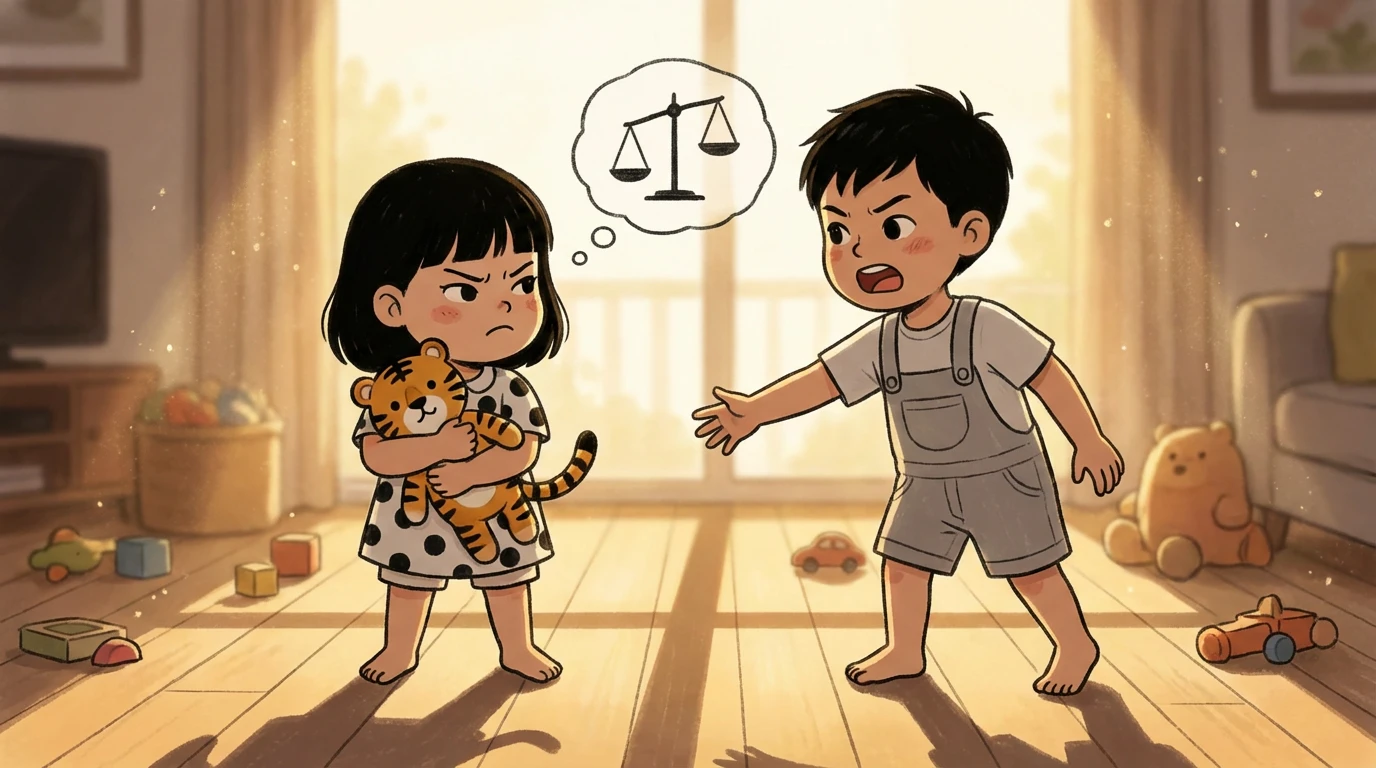
- Jealousy is grief wearing an angry mask. Your child is terrified of losing you. The scorekeeping was never about equal portions. The anger is a defense against the sadness underneath.
- Punishment makes rivalry worse, not better. Timeouts and yelling confirm your child's worst fear: that they've lost your love. The worse they behave, the more they need your connection, not less.
- One-on-one time is the single most effective tool. Fifteen minutes daily, no siblings present, doing whatever they want. It directly addresses the root cause of jealousy: feeling displaced.
- Let them say the ugly things out loud. A child who can say 'I hate my brother' is less likely to hit him. Feelings that get expressed verbally don't need to be acted out physically.
- Fairness means each child feels individually seen. Stop trying to make everything even. Start making each child feel like they matter specifically, not identically.
The fairness complaint is never about fairness
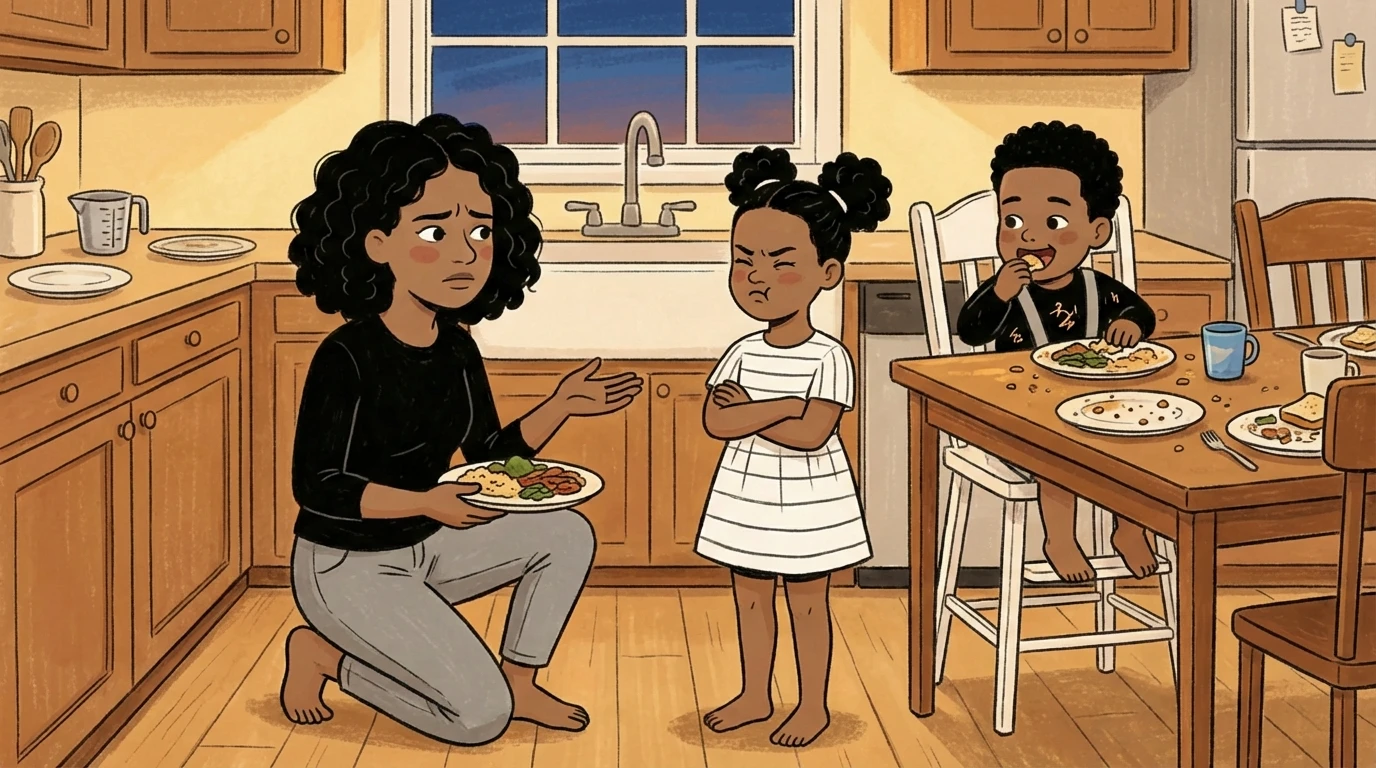
Your kid is standing in the kitchen, pointing at their sibling's plate, and shouting "that's not fair!" You measured the portions. You know they're identical. You briefly consider getting a kitchen scale.
The complaint has nothing to do with the food. The fairness obsession is a symptom. The disease underneath is fear. When a child keeps score, they're asking a question they can't articulate: Am I still as important to you? Every perceived imbalance becomes evidence that the answer might be no. The portion size is a proxy for love, and you cannot fix a love problem with a measuring cup.
Study after study shows that when parents build a strong individual bond with each child, sibling rivalry decreases. The kids who fight least are the ones who feel most secure in their connection with their parents.
Why the jealousy hits so hard
The grief nobody names
Sibling jealousy looks like anger, but anger is almost always a defense against something more vulnerable. Underneath the "I hate my sister" and the toy-grabbing is fear or sadness.
Your child lost exclusive access to you. That loss triggers a grief response that is enormous relative to their coping capacity. Imagine the worst breakup of your life, then remove every coping mechanism: no friends to call, no wine, no ability to articulate what happened. That's your three-year-old.
The grief resurges at predictable points: a spike when the baby starts crawling into the older child's things, another when the younger one starts talking.
The vicious cycle
The child feels jealous, so they act out. The parent punishes. The child interprets that as confirmation they've lost parental love, so they act worse. Every time you yell at a child for being mean to their sibling, you're feeding the exact fear that's driving the behavior. Their logic: if you don't love me anyway, why not just hit her?
That's not fair again
The Sibling Harmony course will help you dissolve the scorekeeping
Your kids will stop measuring equal and start feeling individually seen, which is what the fairness complaint means.
What dissolves the rivalry
Daily one-on-one time (this is the big one)
Fifteen to twenty minutes a day of dedicated one-on-one time with each child. No siblings present. Not family time. Time where your child has you to themselves, doing whatever they choose.
The jealous child needs proof, delivered repeatedly, that they haven't been replaced. Words alone won't do it. They need the lived experience of your undivided attention. Both parents need to be part of this. If your child is uncooperative with a specific parent, that relationship needs repair through dedicated time together.
Let them say every terrible thing they feel
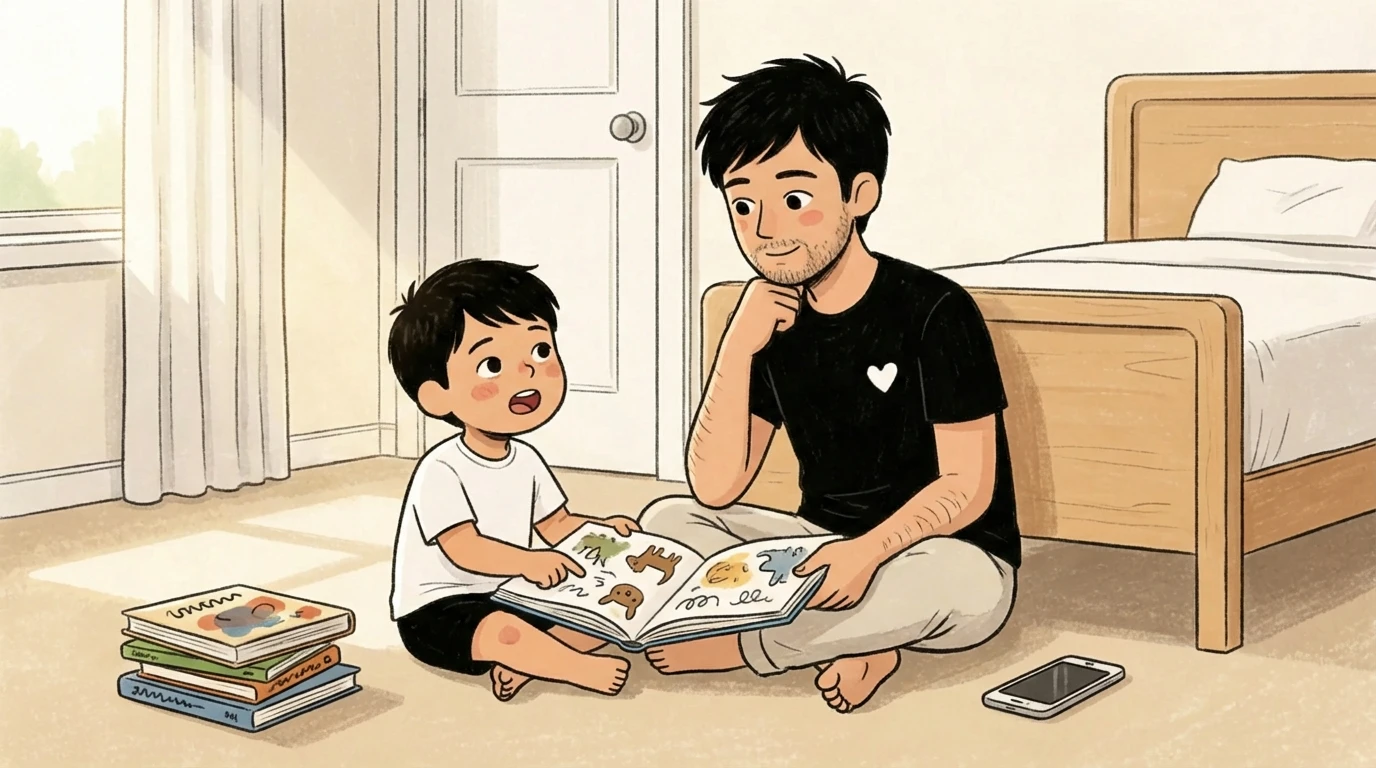
A four-year-old once told his dad: "I just hate her, Dad. I don't know why." Because he could say it, he never hurt her.
Children who can verbalize jealousy are less likely to act on it physically. The feelings need somewhere to go. If your child believes their jealousy is unspeakable, they'll push it down, and stuffed emotions don't stay stuffed. They come back out as aggression, defiance, clinginess, or whining.
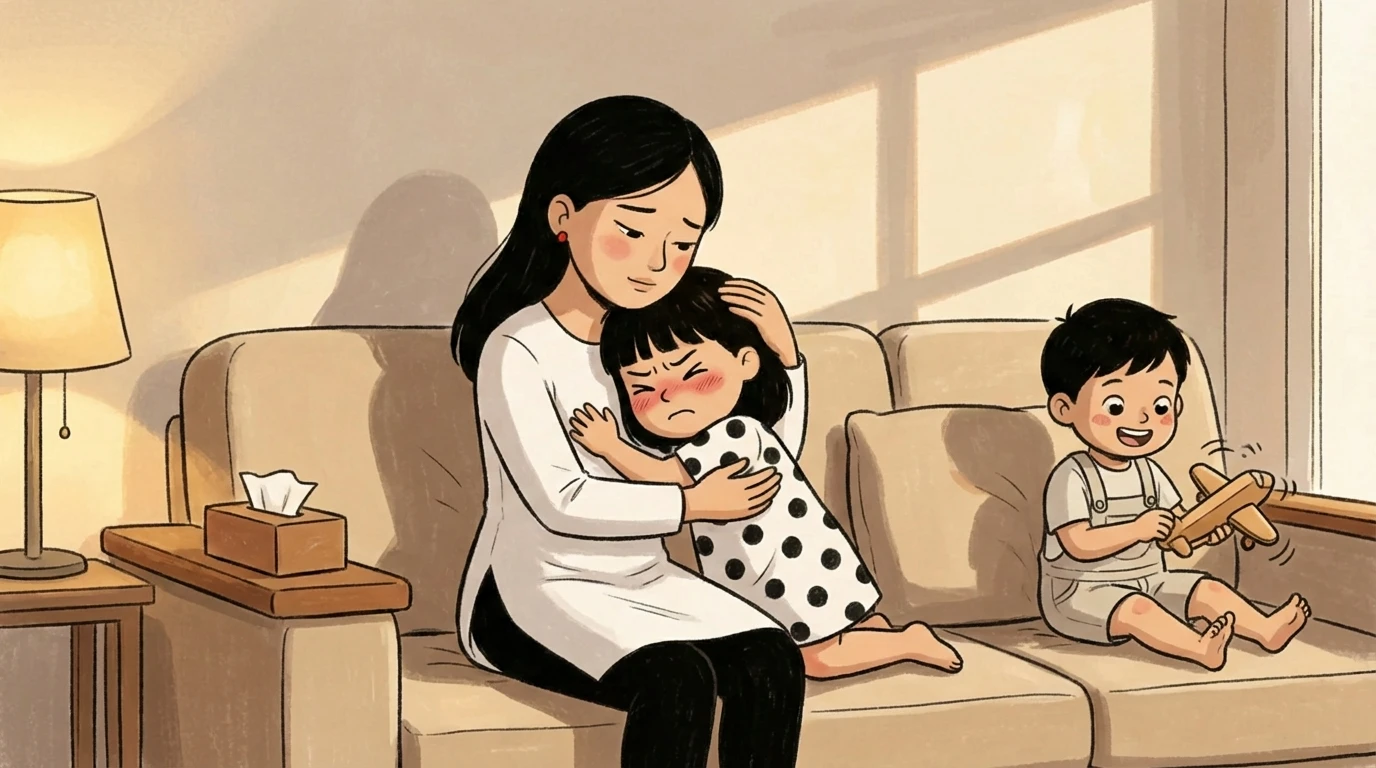
When your child says something that makes your stomach drop ("I wish the baby would go away," "can we sell my brother?"), resist the urge to correct. They already know it's wrong, and they hate themselves for it. Instead, reflect the deeper feeling: "Sometimes you wish you had me all to yourself." Offer physical comfort. The goal is to get past the anger to the sadness underneath. If your child can cry in your arms about how unfair everything feels, that's the grief moving through.
Stop the fairness game entirely
You will never achieve a distribution of resources that satisfies a jealous child. The scorekeeping is bottomless because the problem isn't the score.
Instead of trying to make things equal, make each child feel individually seen. Comparing siblings or rewarding one child's behavior confirms their fear that they're the lesser one. What works: specific, contribution-focused acknowledgment. "I love the way you help me with this" tells the child they have a unique role that nobody else fills.
When jealousy turns physical
Prevention beats correction
Never leave a jealous child unsupervised with a younger sibling. Preschoolers cannot control jealous impulses, and the stakes are too high. If you see the older child getting rough, move the baby away before it escalates. When hitting happens: remove the younger child first, then set the limit. "I see you're mad. I won't let you hit. Use your words."
Empathize and redirect (skip the punishment)
Research shows punishment makes aggressive children act worse. The timeout after hitting confirms the child's belief that they're terrible, which fuels more aggression. Instead: "I guess you were pretty mad she had your toy. If you need help protecting your toys, call me."
A point about sharing and fairness with possessions: the jealous child already has to share you. Forcing them to also share every toy amplifies the loss. Some toys should belong exclusively to the older child, off-limits without permission.
The feelings underneath (and what to do with them)
A child's disproportionate reactions to small things are often tangled-up sibling emotions finding any available exit. The meltdown over the wrong cup is really about the brother.
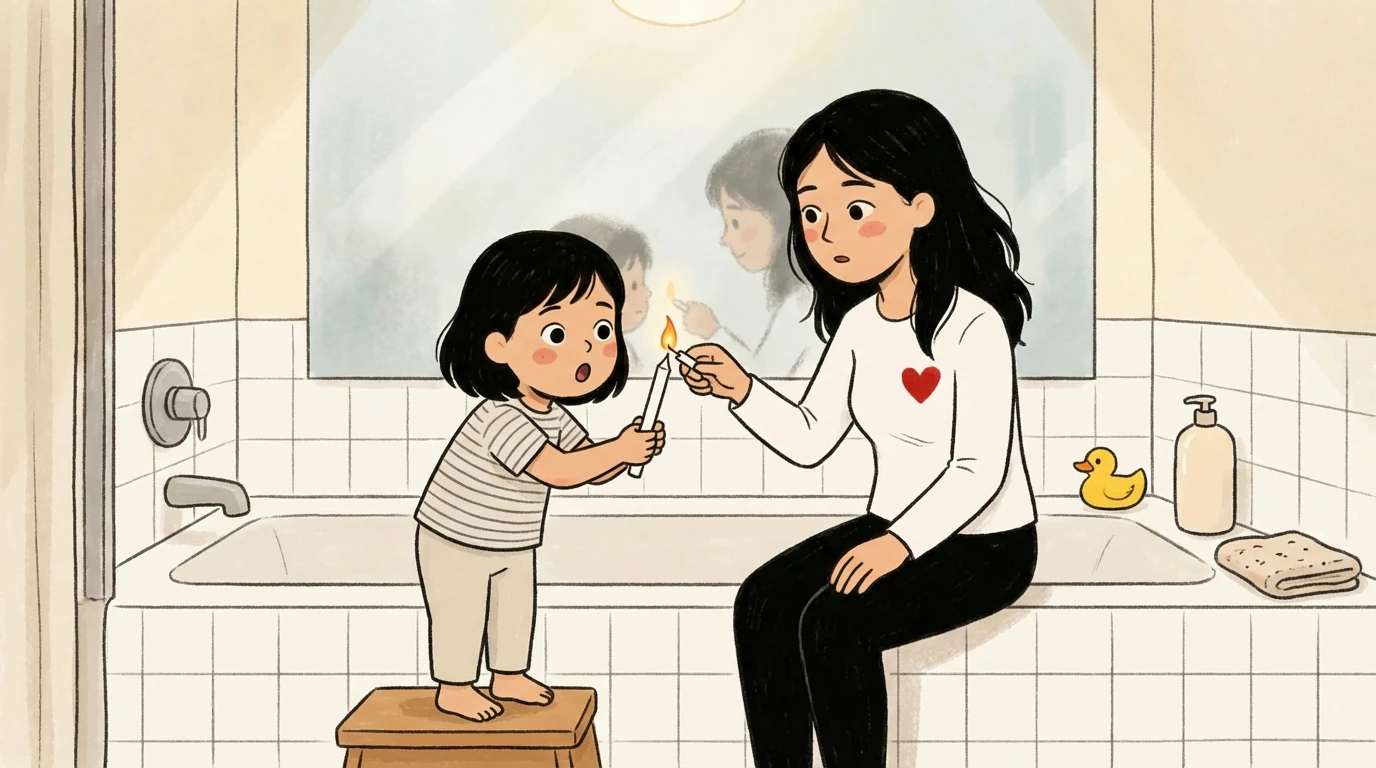
The candle trick for when they need to see it
Light a candle for yourself. Light a second from the first for your partner, and explain you gave them all your love. The first candle still burns just as bright. Light a third for the older child. Still no flames diminished. Light the sibling's candle. Love multiplies. It doesn't divide. Your child can't understand this through words alone. They need to watch it happen.
The family story technique
Tell your child the story of their life: how it was just them and you, then the sibling came, and things changed, and they were sad and angry. End with how you always understood and were always there, and how they would always be the only one of them in all the world. One parent reported her child asked for this story every night for months.
The long game
Jealousy doesn't resolve on a schedule. Some children adjust in weeks. Others cycle through resentment for months, especially at the nine-month mark after a baby arrives, which is notorious for triggering a second wave of open jealousy.
Your child's brain is still building the architecture for impulse control and empathy. Development happens fast, and your consistent connection accelerates it. The children who eventually become close siblings are the ones whose parents held space for the ugly feelings, refused to play scorekeeper, and kept showing up with individual attention even when the child was at their most unlovable, not the ones who never fought.
How to respond when jealousy flares
- Name the feeling, not the behaviorSay 'You're really mad your sister got to go first' instead of 'Stop being so dramatic.' The child needs to know you see what's underneath. Naming emotions reduces their intensity.
- Skip the lectureThey already know hitting is wrong. Repeating it doesn't help. What helps is showing you understand why they did it: 'I guess you were feeling left out.' Save the teaching for when they're calm.
- Offer one-on-one time within the hourAfter a jealousy flare, find even five minutes alone with that child. Read one book. Do one puzzle. The proximity to the incident makes the connection land harder.
- Let them pick the activityDuring your time together, let the jealous child choose what you do. This gives back a sense of control they're desperately missing. Following their lead says: you matter, your preferences count.
- Resist evening scorekeepingDon't recap who was good and who wasn't at dinner. Don't compare their days. Ask each child one specific question about their experience. Make it individual, not competitive.
FAQ
The most intense jealousy typically appears between ages two and five, when children lack both the verbal skills to express their feelings and the impulse control to manage them. It often spikes again around nine months after a baby's arrival, when the younger child starts crawling into the older child's space and toys.
Not all of them. The older child already shares you, which is the biggest sacrifice they can make. Designate some toys as exclusively theirs, off-limits to the sibling without permission. This sense of ownership over at least some things helps a child who feels powerless everywhere else.
Completely normal. Children who can say it out loud are in better shape than children who suppress those feelings. Stuffed emotions come out as aggression, defiance, and anxiety. Verbal expression is healthy. Reflect the feeling back without correcting it.
A minimum of fifteen to twenty minutes daily makes a measurable difference. It must be truly individual: no siblings present, no multitasking, and the child picks the activity. Brief but consistent beats occasional long outings. The regularity is what builds security.
You stop it by refusing to play. You will never achieve a distribution that satisfies a jealous child because the problem isn't the portions. Instead of matching everything, focus on making each child feel individually seen. 'You needed extra help today, so I gave it' beats 'I gave you both the same amount.'