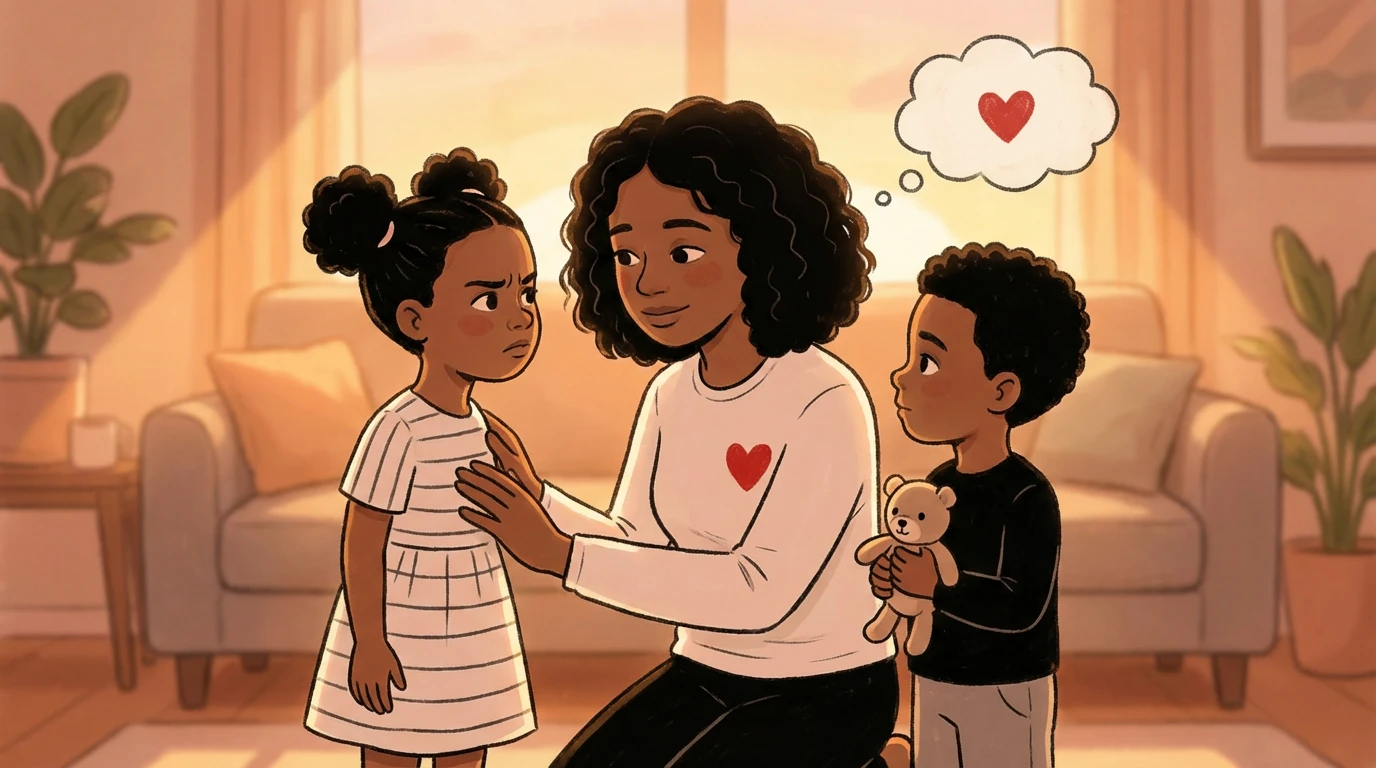
TLDR
- Siblings don't learn to get along by default. Research shows that without explicit coaching, kids carry underdeveloped conflict skills into their teen years. Hoping they'll figure it out is a strategy that fails slowly.
- Every feeling is allowed. Every action has a limit. Your child can say 'I wish she was never born.' They cannot throw a shoe at her head. Accepting the feeling is what stops the action.
- Anger always carries a message. When your kid is furious at their sibling, the anger is protecting a softer feeling underneath: hurt, fear, jealousy. Name the deeper feeling and the anger loses its charge.
- You teach conflict resolution by doing it yourself. If you yell when frustrated, your kids will yell at each other. If you use timeouts, they learn social exclusion. They copy your worst moments with perfect accuracy.
- Prevention happens during calm, not crisis. Co-create anger management lists, practice scripts at dinner, wonder aloud about other people's feelings. The tools get built when nobody is screaming.
Your kids aren't fighting because they hate each other
They're fighting because they don't have the skills to do anything else yet.
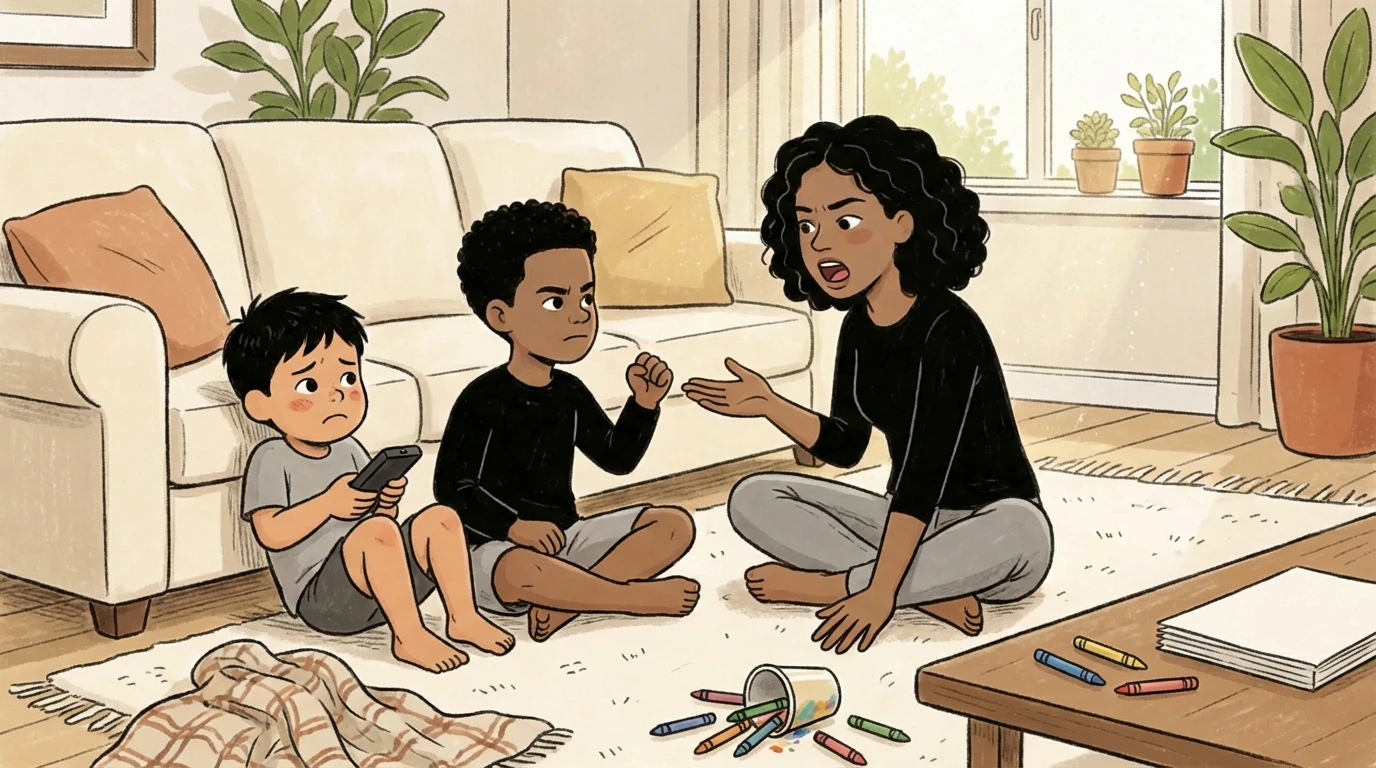
When your five-year-old shoves his sister off the couch for touching his blanket, your first instinct is to separate them and maybe yell. But here's what that teaches: the person with the loudest voice wins, and feelings are something you handle by exploding or stuffing down.
Emotion coaching is the process of teaching kids to recognize, name, and manage their feelings before those feelings turn into someone getting hit. It works for siblings because the sibling relationship is where emotional stakes are highest and supervision is constant.
The research is clear: siblings don't naturally learn prosocial skills from proximity. Without explicit guidance, they carry underdeveloped patterns into adolescence. Two teenagers who can't share a bathroom without screaming were two toddlers whose parents assumed they'd figure it out.
You can feel the fight brewing
The Sibling Harmony course will teach you the early redirect
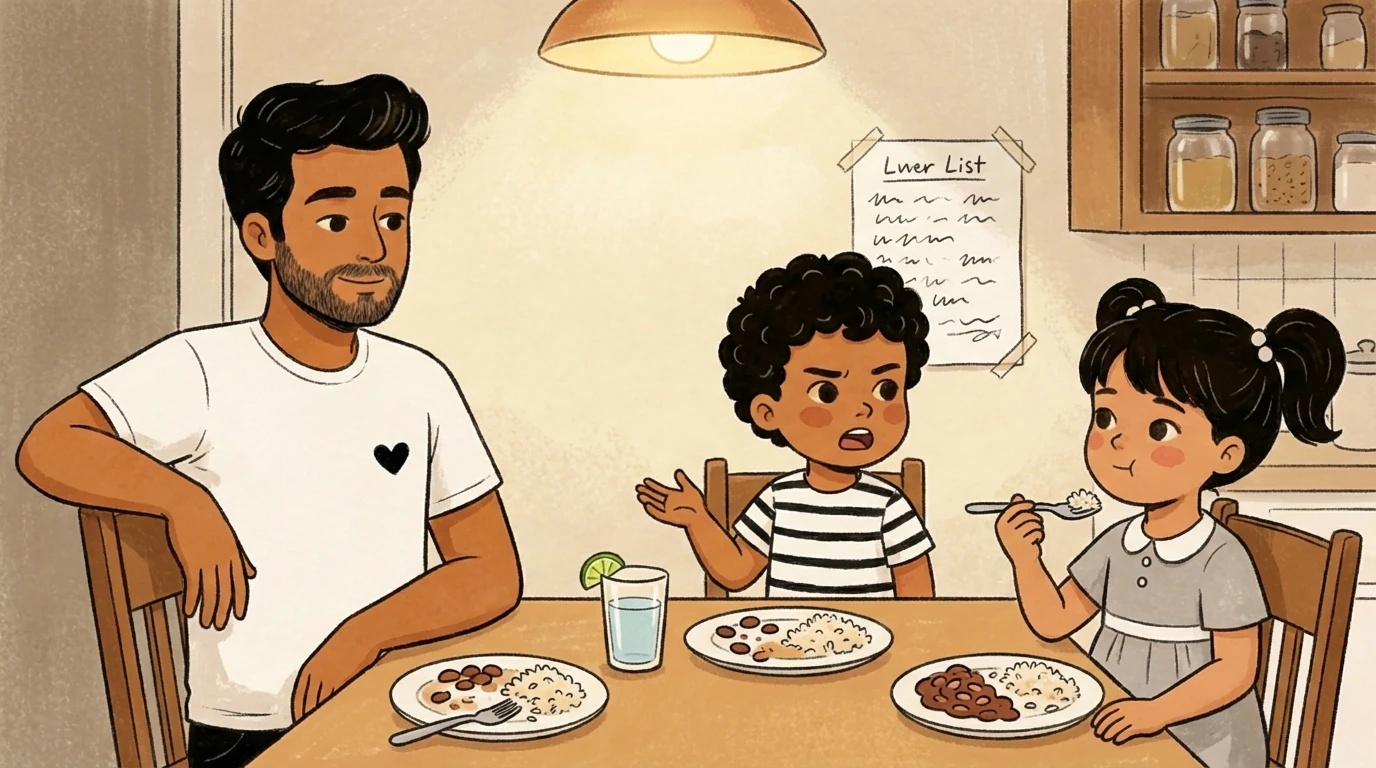
You'll catch the tension at the dinner table and defuse it before anyone throws a fork or a word.
Feelings are welcome. Fists are not.
This is the foundation everything else builds on. Your child is entitled to every feeling that shows up, including the ugly ones. Jealousy, rage, the wish that their sibling had never been born. Those feelings exist whether you acknowledge them or not.
The only question is whether those feelings get expressed safely or acted out destructively.
Here's what this sounds like in practice:
"When your brother messes with your things, you get really angry. You can tell him how that makes you feel in words. No hitting."
"You wish you could stay up later like your sister. I get it. You can tell me you're jealous. You cannot mess up her room."
The pattern is always: validate the feeling, offer a verbal outlet, state the behavioral limit. Three sentences. Every time.
Why suppressed feelings make fighting worse
Kids who must hide their negative feelings about siblings start believing they're monsters for having those feelings at all. A child who thinks I'm terrible for hating my brother doesn't suddenly become kind. They act out the identity they've assigned themselves. The guilt-to-aggression cycle works like this: the child has angry thoughts, feels ashamed of those thoughts, and then behaves in ways that confirm they're "bad." Punishment completes the loop perfectly.
When you let your child say "I wish she was never born" and respond with "Sometimes you wish you had me all to yourself, huh?" something shifts. The child learns that dark feelings don't make them unlovable. Feeling less like a monster, they act less like one.
Anger always has a message under it
When your child screams "I HATE her," your job is not to correct the word "hate." Your job is to translate it.
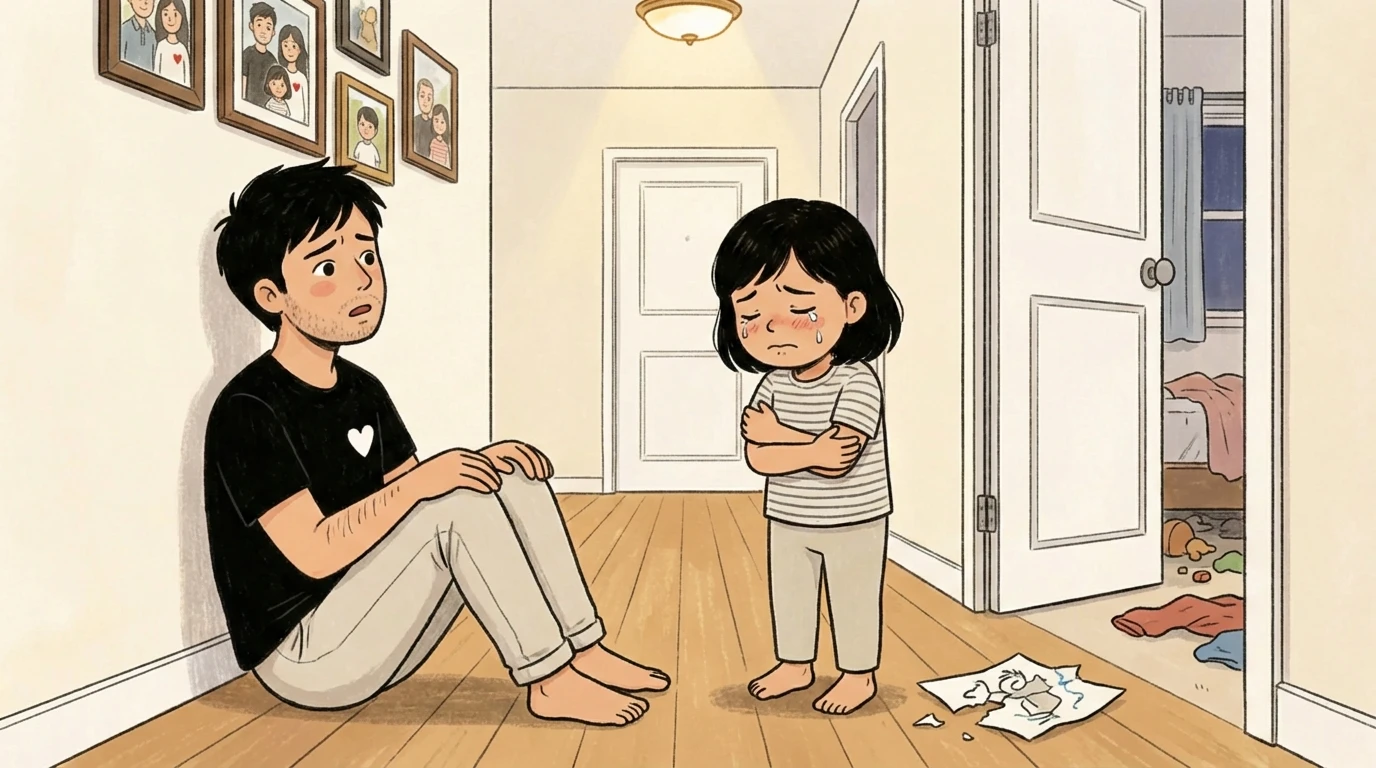
Anger protects softer feelings. When your son is furious that his sister called his idea stupid, the anger is a shield over the hurt of being dismissed by someone whose opinion matters to him. Naming the hurt underneath is more effective at diffusing anger than labeling the anger itself. Labeling anger without going deeper tends to reinforce it.
Try: "I hear you're really angry at your sister. It could really hurt to have her say your idea was stupid."
The anger is acknowledged. The hurt is named. The child feels understood at the level that matters.
When they say "I hate my sister"
Hate is a stance, not a feeling. It means "I refuse to connect." Your response needs to translate it back into the real emotions:
"You're so angry right now that it feels like you hate her. Sometimes when we're really hurt, it feels that way, even with people we love. Let's go tell her how hurt you are and how angry that makes you feel."
This keeps the door to connection open while honoring the intensity. It also models that naming what you feel is the first step toward doing something about it.
Build the tools before the crisis
Everything in this article falls apart if you try to implement it mid-screaming-match. The tools get built during calm moments. Here's what that looks like.
Co-create an anger management list
Sit down with your kids when everyone is fed and rested. Make it a game. "What could you do when you're so angry you want to hit someone?" Let them contribute ideas. Some will be silly. Put them all on the list:
- Breathe and count backwards from 10
- Go kick the soccer ball outside
- Put on headphones and dance to loud music
- Write in your journal about how angry you are
- Yell a code word (like "STOP!") and wrap your arms around yourself
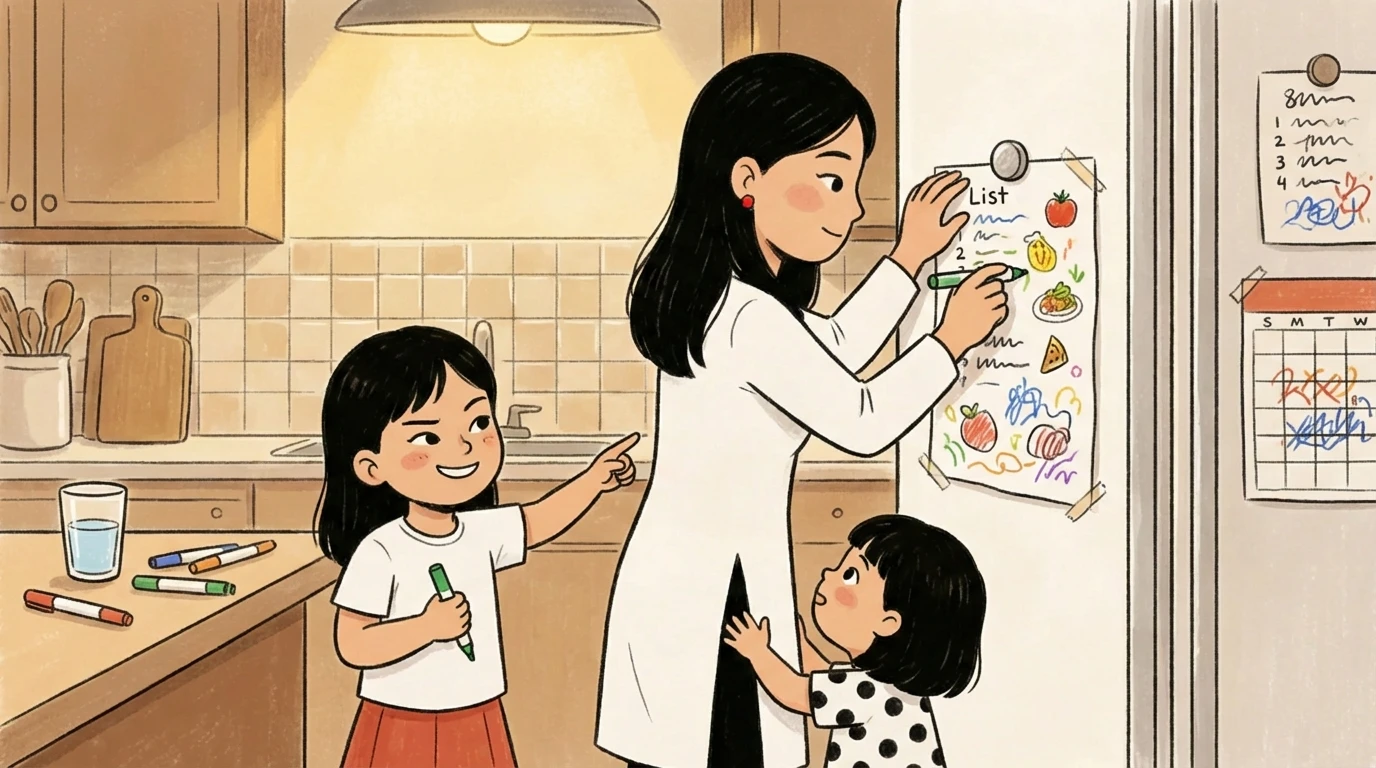
Post it on the fridge. Then use it yourself, in front of them, the next time you get frustrated. "I'm really annoyed right now. I'm going to look at our list." This is worth more than a hundred lectures about managing feelings.
Practice conflict resolution scripts together
Work with your kids to create rules for disagreements: say what you need without attacking, listen and repeat back what you heard, stay respectful, stick to the current issue. Post these next to the anger list. You now have two visible tools that everyone in the house can reference, including you.
How to emotion coach siblings before fights start
- Validate feelings, limit actionsWhen your child is angry at a sibling, name the feeling first: 'You're really mad.' Then state the limit: 'You can use words. No hitting.' Three sentences, every time.
- Name the feeling under the angerAnger protects hurt, fear, or jealousy. Ask yourself what's underneath. 'I hear you're angry. It must really hurt when she says that about your drawing.'
- Build tools during calm momentsCo-create two lists with your kids: healthy ways to handle anger and rules for resolving disagreements. Post both on the fridge and model using them yourself.
- Wonder aloud about feelings dailyPoint out emotions in everyday life: 'That boy looks upset. I wonder what happened.' This builds perspective-taking without turning it into a lecture.
- Run a daily appreciation ritualAt dinner, each person names one specific thing they appreciate about another family member. 'I appreciate that Javi helped me find my shoe.' Specific beats generic.
What you model is what they copy
If you yell when someone cuts you off in traffic, your kids will yell at each other when someone takes their turn. If you use timeouts, they learn that social exclusion is how powerful people control less powerful people. The causal chain is direct and unforgiving: children who are punished fight more, not less.
This means the work starts with you. Do you know how to resolve a disagreement with your partner without raising your voice? Do you apologize when you lose your temper? Your kids are watching every adult conflict for instructions on how this works.
Emotion coaching is a skill you may not have been taught either. That's not a moral failing. But you can't hand your kids tools you don't own. Start with the fridge lists. Use them yourself. Let your children see you choosing a strategy when you're upset.
Prevention doesn't mean zero fights
Even with perfect coaching, your kids will still fight. The goal is reducing frequency and raising the floor on how civil those fights are. When a fight does happen, you'll need strategies for intervening that don't undo all the coaching you've done.
The long game looks like this: two kids who can say "I'm angry because you took my turn and that felt unfair" instead of one kid with a bloody lip and another in their room crying. They won't get there by age four. They might get there by age eight if you've been consistent.
Teach them to use words instead of aggression to get what they need. Wonder aloud about feelings every day. Run the appreciation ritual at dinner. These are reps, and every rep counts, even the ones that feel like they aren't working.
FAQ
As soon as the younger child is verbal, around age two. Before that, you're coaching the older child while narrating for the younger one. A three-year-old can learn 'Use your words' if you've been modeling it since they started talking. Start simple and build.
Talk to that child privately. Ask what's making them so angry. Often the child who hits most fears they're loved less. Let them feel heard about the unfairness they perceive. A child who feels heard about their upset doesn't need to act it out physically.
Forced apologies teach performance, not empathy. Instead, help them repair: 'Your brother is upset. What could you do to help him feel better?' A genuine offer to rebuild a knocked-over tower teaches more than a hollow 'sorry' spoken through gritted teeth.
Yes. Children feel safe enough to express real feelings at home and around you. At school they hold it together. At home they let it out. This means home is working as a safe base, even though it doesn't feel like it when someone is screaming.
It works when combined with emotion coaching, not as a standalone fix. The jar makes cooperation visible and shared. But if kids don't have the emotional skills to resolve conflict, no reward system will substitute. Use both together.