
TLDR
- Attention-seeking is connection-seeking. Children need to feel seen and heard. When they can't get that through positive behavior, they'll get it through negative behavior. Even getting yelled at counts as attention.
- Punishment makes it worse, not better. Timeouts and reprimands still deliver attention. The child learns that acting out is the fastest route to one-on-one time with you, even if that time involves a lecture.
- Fifteen minutes of focused time changes everything. Research on enriched attention shows that children who get predictable one-on-one time engage in far less challenging behavior. The bar is lower than you think.
- Catch them being good. Parents spend so much energy reacting to problem behavior that they miss the moments when the child asks for connection appropriately. Those moments need acknowledgment.
- Kids don't know how to ask for what they need. Appropriate ways to seek connection are learned by watching you. If you model it, they'll copy it. If you don't, they'll keep using what works: chaos.
The behavior that drives you up the wall is a request
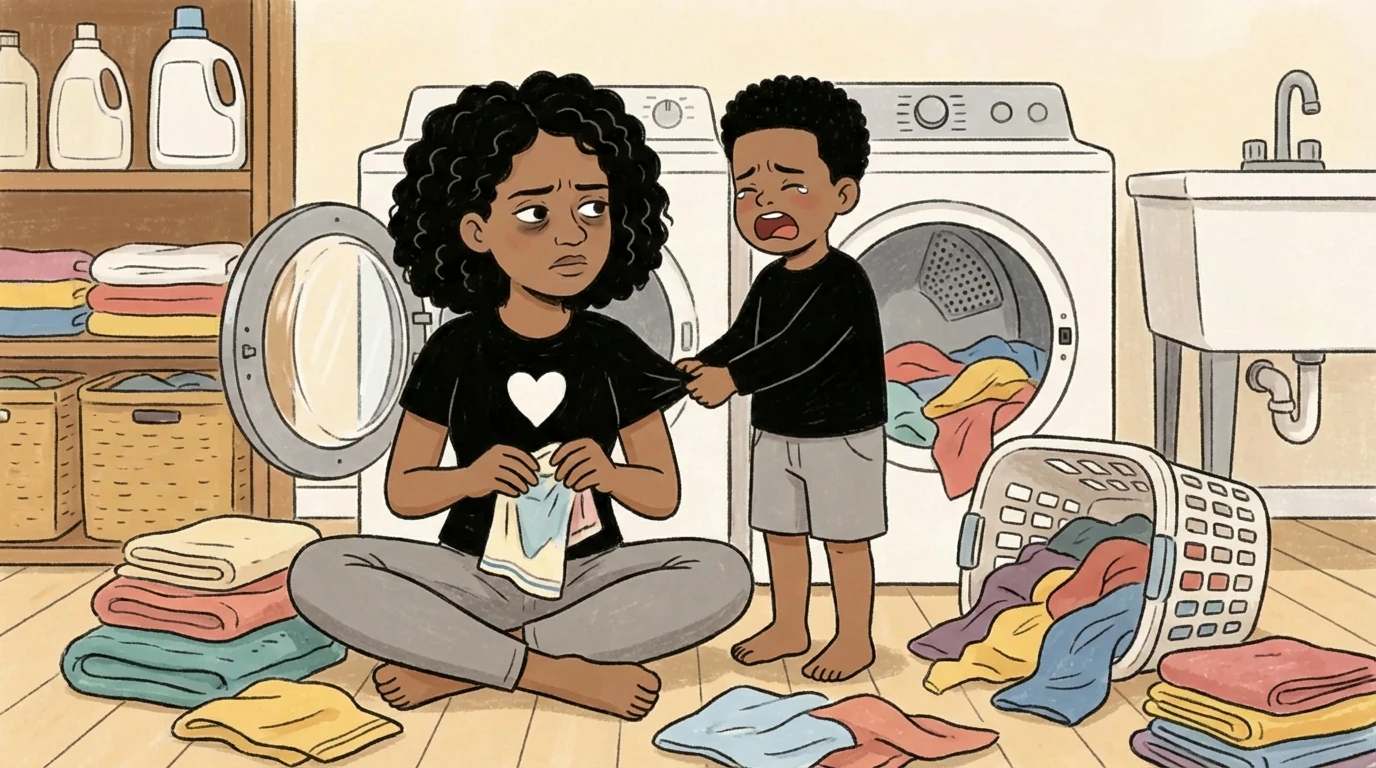
Your kid has been following you from room to room for 45 minutes. They've asked you to watch them do a somersault eleven times. They knocked over their sibling's block tower "on accident." They are now standing three inches from your face repeating your name on a loop.
You are about to lose it.
Here's the part that makes this harder before it makes it easier: everything your child just did is a request for connection. The interrupting, the showing off, the sibling provocation, the relentless proximity. All of it translates to the same message: I need to know you see me right now.
Attention is a basic human need. Adults get it through conversation, texts from friends, a partner asking about their day. Children have exactly one source: you. When that source feels insufficient, they do whatever works to get it flowing again. And "whatever works" often looks like the behavior that makes you want to hide in the bathroom.
Why the label "attention-seeking" makes things worse
Calling a behavior "attention-seeking" implies the child is doing something manipulative. Something optional. Something you should ignore so you don't "reinforce" it.
But you cannot ignore a child out of a need for connection. That's like ignoring a hungry person until they stop asking for food. They won't stop. They'll just get louder, more creative, and more desperate. The connection-based approach to parenting starts with accepting that the need underneath the behavior is real, even when the behavior itself is maddening.
Why punishment accidentally rewards the behavior
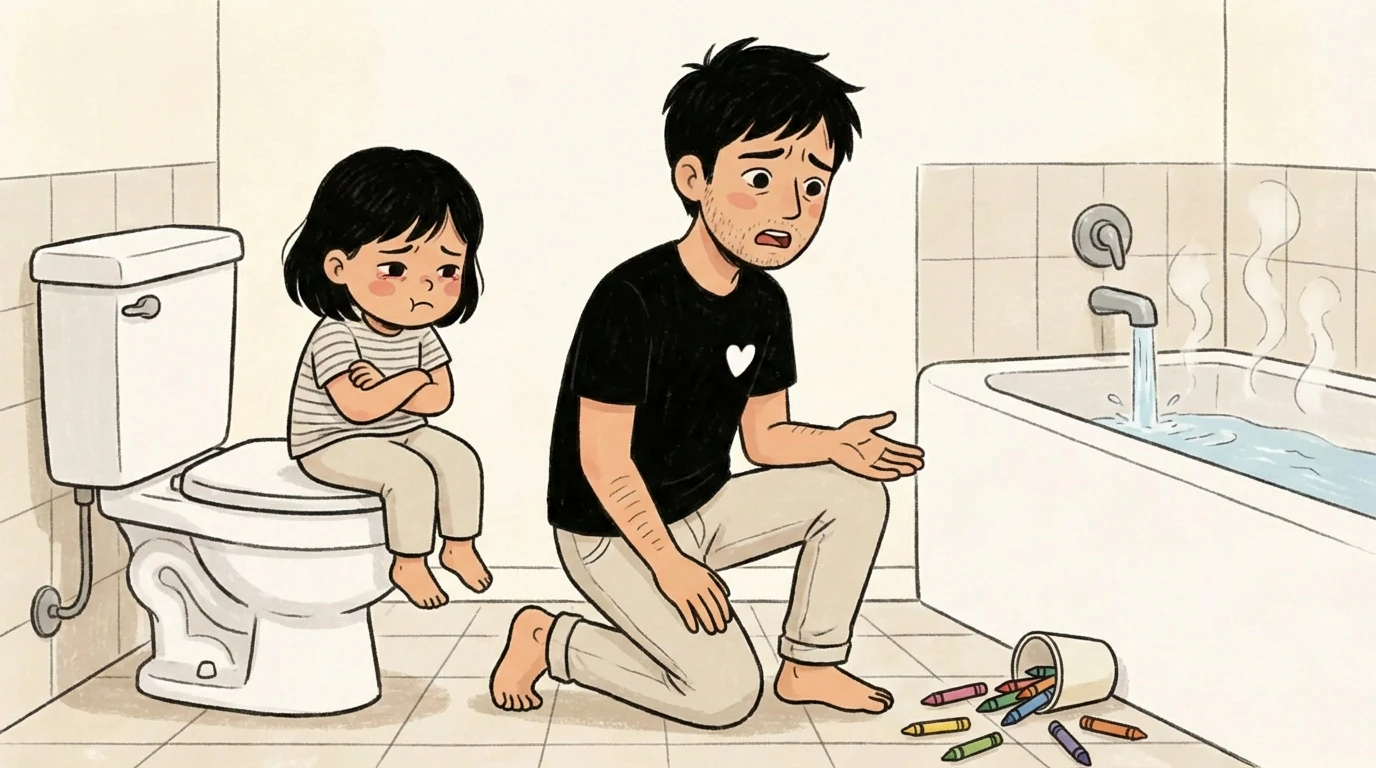
You send your kid to timeout for hitting their sibling. Timeout is supposed to be a consequence. So why does the hitting keep happening?
Because timeout still delivers the thing the child was after: your undivided attention.
The reinforcement loop nobody explains
Here's how it works:
- Child feels disconnected
- Child hits sibling
- Parent stops everything, makes eye contact, delivers a lecture, escorts child to timeout
- Child has now received five solid minutes of one-on-one parent attention
- Child's brain files this under "methods that work"
Negative attention is still attention. Getting yelled at, spanked, or lectured still involves a parent who is fully focused on the child. For a kid running on an empty connection tank, that's better than being invisible.
Your child isn't scheming. Their nervous system is doing something simpler: repeating whatever behavior produced closeness last time.
The fix is simpler (and harder) than you think
Children who receive what psychologists call "enriched attention" engage in far less challenging behavior. The word "enriched" sounds like it requires a Pinterest board and a dedicated craft room. It doesn't.
What enriched attention looks like
Enriched attention means your child knows you notice them. That's it. The bar is on the floor.
- Watching a show together (watching, not scrolling your phone)
- Asking one question about what they're building
- Cooking dinner side by side
- Reading two pages of a book before bed
- Checking in during independent play: "That tower is getting tall"
You don't need to manufacture elaborate quality time. You need predictable moments where your child experiences being the thing you're paying attention to. Regular one-on-one time doesn't have to be long. It has to be consistent.
Here's where it gets counterintuitive. When you first start doing this, your child might get worse. They finally have your full attention, and now the grief from all the times they didn't have it comes flooding up. They might cry, cling harder, or melt down the second you try to stop. This is the approach working, not failing. Stay with them through it.
Can't finish a phone call
The Spirited Kids course will show you what the interrupting is really asking
You'll fill the connection gap before they start performing for it, and the constant bids will ease.
Catch them doing the thing you want
This one sounds obvious. It's the step parents skip most.
When your kid is in a phase of constant interrupting, toy-throwing, or sibling-antagonizing, something happens to your attention filter. You stop noticing the moments they do it right. The time they waited until you finished your phone call. The time they tapped your shoulder instead of screaming your name. The time they played independently for twenty minutes without incident.
Those moments slip by because they don't trigger your alarm system. Problem behavior triggers it. Quiet, appropriate behavior doesn't.
How to retrain your own attention
Start tracking the good stuff. Not on paper (though you can). Just in your responses.
- "I noticed you waited until I was off the phone to ask. That was great."
- "You tapped my shoulder instead of yelling. I really liked that."
- "You played by yourself for a while and then came to tell me about your drawing. That's exactly how to get my attention."
Behavior that produces a desired result gets repeated. If appropriate connection-seeking gets your enthusiastic attention, your child will use it more. If only chaos gets your attention, chaos it is. The pattern you notice in whining applies here too: whatever gets the response becomes the strategy.

How to respond to attention-seeking behavior
- Name what you see, not what annoys youInstead of 'Stop interrupting,' try 'You really want to tell me something right now.' This acknowledges the need without rewarding the method. The child feels seen, which is the whole point.
- Fill the tank before it emptiesSchedule fifteen minutes of one-on-one time daily. No screens, no reading, just presence. Physical play that produces laughter works best. Pillow fights, chase games, sock-wrestling matches.
- Acknowledge appropriate bids immediatelyWhen your child asks for connection in a way you want to see more of, respond fast and with warmth. 'You waited so patiently. Let me see what you made.' Speed matters here.
- Model how you want them to askSay things like 'Hey, when you're done with that, could we hang out for a minute? I missed you today.' You're showing them the exact words and tone they can use with you.
- Stay through the meltdown at transitionWhen one-on-one time ends and your child falls apart, don't extend the time or get defensive. Stay close, validate how hard it is to stop, and remind them it will happen again tomorrow.
Teaching them a better way to ask
Here's a fact that's easy to forget: children don't instinctively know how to ask for connection. They learn it by watching you.
A toddler who wants your attention has three tools: physical contact (climbing on you), volume (screaming), and provocation (doing the one thing they know will make you look up). They're the only strategies a developing brain has produced so far.
What modeling looks like in practice
You teach appropriate connection-seeking by doing it yourself, through how you interact with them.
- "I missed you today. Can we read something together after dinner?"
- "Hey, I can see you're really into that game. When you get to a stopping point, I'd love to hear about it."
- "I need a hug. Can I have one?"
These sentences do double duty. They give your child connection right now, and they provide a script they'll start using back at you. Children are extraordinary mimics. The phrases you use become the phrases they use. This is how attachment patterns develop in real time, not through grand gestures, but through thousands of small interactions where a child learns they can ask and be heard.
When it isn't about connection at all
Not every challenging behavior is connection-seeking. Sensory overwhelm, developmental delays, anxiety, or trauma can all produce behaviors that look like attention-seeking but aren't.
The test is whether filling the connection tank changes the pattern. If you've been doing consistent one-on-one time, catching appropriate behavior, and modeling for several weeks without change, something else is going on. That's worth exploring with a professional.
But for most kids, the math is straightforward. They need connection. They're using the loudest tool available to get it. Give them a quieter tool, and give them a reason to believe it works.

FAQ
The behavior is the symptom, not the problem. The problem is an empty connection tank. If you only respond to bad behavior, you teach your child that bad behavior is the way to reach you. Fill the tank proactively and the bad behavior loses its purpose.
Research suggests fifteen minutes of daily focused attention makes a measurable difference. It doesn't need to be elaborate. Physical play that produces laughter is the most effective per minute spent. Consistency matters more than duration.
Yes. When children finally get the connection they've been missing, grief from past unmet needs surfaces. They may cling harder or melt down when the time ends. This is the process working. Stay present through it and it resolves within days to weeks.
Manipulation implies strategic deception. Young children lack the cognitive development for that. What looks like manipulation is usually a child using the only strategy that has historically produced the result they need: your focused attention.
The need for connection doesn't expire at age five. Older children express it differently, through back-talk, dramatic sighing, or picking fights, but the underlying mechanism is the same. Enriched attention reduces challenging behavior across all age groups.