
TLDR
- Grounding is isolation disguised as discipline. Your teen sits in their room getting angrier at you. They are composing a mental list of your hypocrisy, not reflecting on their choices.
- The teen brain is wired to prioritize peer connection above almost everything. Cutting them off from friends as punishment targets the thing they value most, which feels like an attack on their identity, not a lesson.
- Problem-solving conversations replace punishment with accountability. Ask what happened, what went wrong, and what would help next time. Teens who design the fix follow the fix.
- Natural consequences still work. You just have to get out of the way. Your teen stayed up until 3 AM and is exhausted for practice? That's the consequence. You don't need to add another one.
- Trust is rebuilt through small demonstrations, not through suffering. A two-week check-in plan gives your teen something to work toward. A two-week grounding gives them something to endure.

What grounding teaches your teenager
You caught your fifteen-year-old sneaking out. Or they came home an hour past curfew. Or you found a vape in their backpack. Your first instinct says ground them. Two weeks. Maybe a month. Phone too.
Here's what happens during those two weeks. Your teen sits in their room. They do not reflect on their choices. They do not develop better judgment. They ruminate on how unfair you are, how their friends' parents are cooler, and how to not get caught next time.
Research on adolescent brain development confirms this. The teenage prefrontal cortex, the part responsible for weighing consequences before acting, won't finish construction until the mid-twenties. Grounding assumes your teen can sit alone and reason their way to better behavior. They can't. The hardware isn't there yet. The brain science behind why punishment backfires applies double for teenagers, whose brains are simultaneously more impulsive and more socially dependent than at any other age.
Grounding works the way holding your breath works. The behavior stops while you're enforcing it. The moment you let go, everything floods back, often worse than before, because now there's resentment layered on top of whatever drove the behavior in the first place.
Two weeks grounded, nothing changed
The Parenting Teens course will replace punishment with consequences that teach
You'll have responses that hold weight without trapping both of you in a standoff nobody wins.
Why teens experience grounding as an attack
Adults think of grounding as a cooling-off period. Teens experience it as social death.
Between ages twelve and eighteen, peer relationships become the primary vehicle for identity formation. Your teen's friendships go far beyond hanging out. They're building the self-concept they'll carry into adulthood. When you cut them off from that, you're attacking the core of who they're becoming, and they feel it as a threat to their identity, not a lesson.
The isolation problem
A grounded teen is a teen with nothing to do except get angrier. Their prefrontal cortex is offline (because they're upset), their social world is gone (because you took it), and their primary coping mechanism (connection with peers) is unavailable.
So they cope with what's left: rumination, resentment, and increasingly creative forms of defiance. The quiet kid gets quieter. The loud kid gets louder. Neither is reflecting.
The trust problem
Every grounding is a withdrawal from the relationship bank account. Your teen learns that mistakes lead to isolation, which teaches them to hide mistakes. The seventeen-year-old who doesn't call you from a scary party does it because past experience says calling you makes things worse.
The broader philosophy of moving away from punishment at any age applies with even more force here. A teenager has the cognitive ability to understand why you're upset. They also have the emotional intensity to hold a grudge about it for years.
The conversation that replaces the sentence
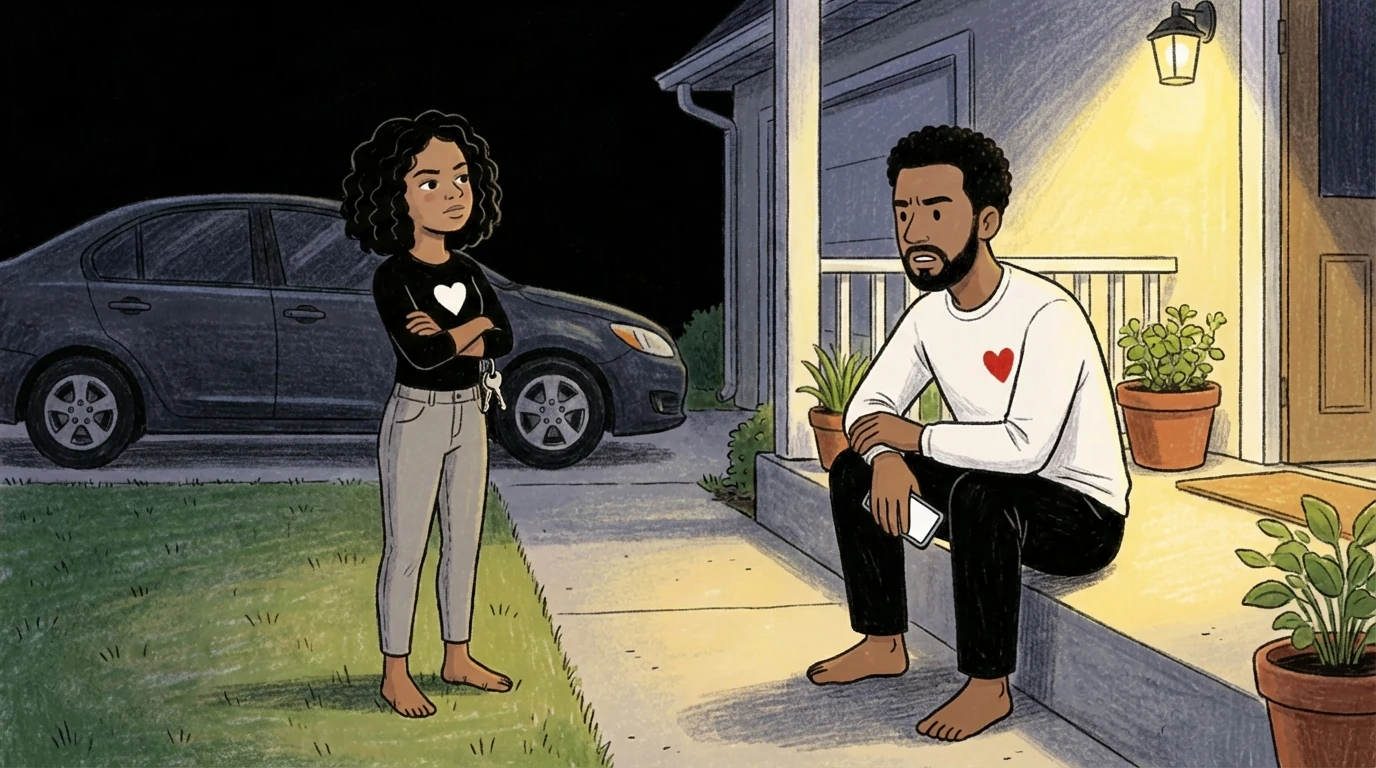
Your teen missed curfew by two hours. You're furious. The old script says you're grounded for two weeks, give me your phone. Here's the new one.
Wait first
If you address it in the first ten minutes, you'll yell. They'll yell back. Nobody learns anything. Say: "We need to talk about tonight. But not right now." Then walk away. Give yourself an hour. If it's late, sleep on it and talk in the morning.
Ask, don't lecture
When you do sit down, start with a question: "What happened tonight?" Let them talk. Resist the urge to interrupt with corrections. Your goal is to understand their version, not to cross-examine them.
Then: "What do you think went wrong?" This is where the work happens. A teen who identifies their own mistake has processed it at a deeper level than a teen who got told what they did wrong. Their answer might surprise you. Sometimes the real problem is a missing plan, not defiance.
Design the fix together
"What would help make sure this doesn't happen again?" When teens design their own solutions, those solutions tend to be stricter than what you would have imposed. And they follow them, because the plan is theirs.
Maybe the fix is a check-in text at 10 PM. Maybe it's a shared location app. Maybe it's "I'll call if plans change, and you won't freak out." Negotiate the details. The fact that they had input is what makes it stick.
The teens series covers this framework in depth, and the approach to setting limits specifically with teens maps out how boundaries work when your kid is old enough to argue back intelligently.
How to respond to a teen's mistake without grounding
- Wait until you're both calmIf you respond in the first five minutes, you'll say something you regret. Tell your teen 'We need to talk about this, but not right now.' Give yourself an hour. Give them one too.
- Ask before you tellStart with 'What happened?' and listen to the full answer. Then: 'What do you think went wrong?' Teens who narrate their own mistakes process them more deeply than teens who get lectured at.
- Name the real problem togetherGet specific. The problem is rarely 'you broke a rule.' It's usually 'you didn't have a plan for when things got complicated.' Identify the gap together.
- Design the fix togetherAsk: 'What would help this not happen again?' Their solution will almost always be stricter than yours. If it isn't, negotiate. A plan they helped build is a plan they'll follow.
- Set a check-in dateAgree on when you'll revisit. 'Let's see how the next two weeks go and then talk again.' This gives them something to work toward instead of just time to serve.
Natural consequences still exist (you just have to stop adding extras)
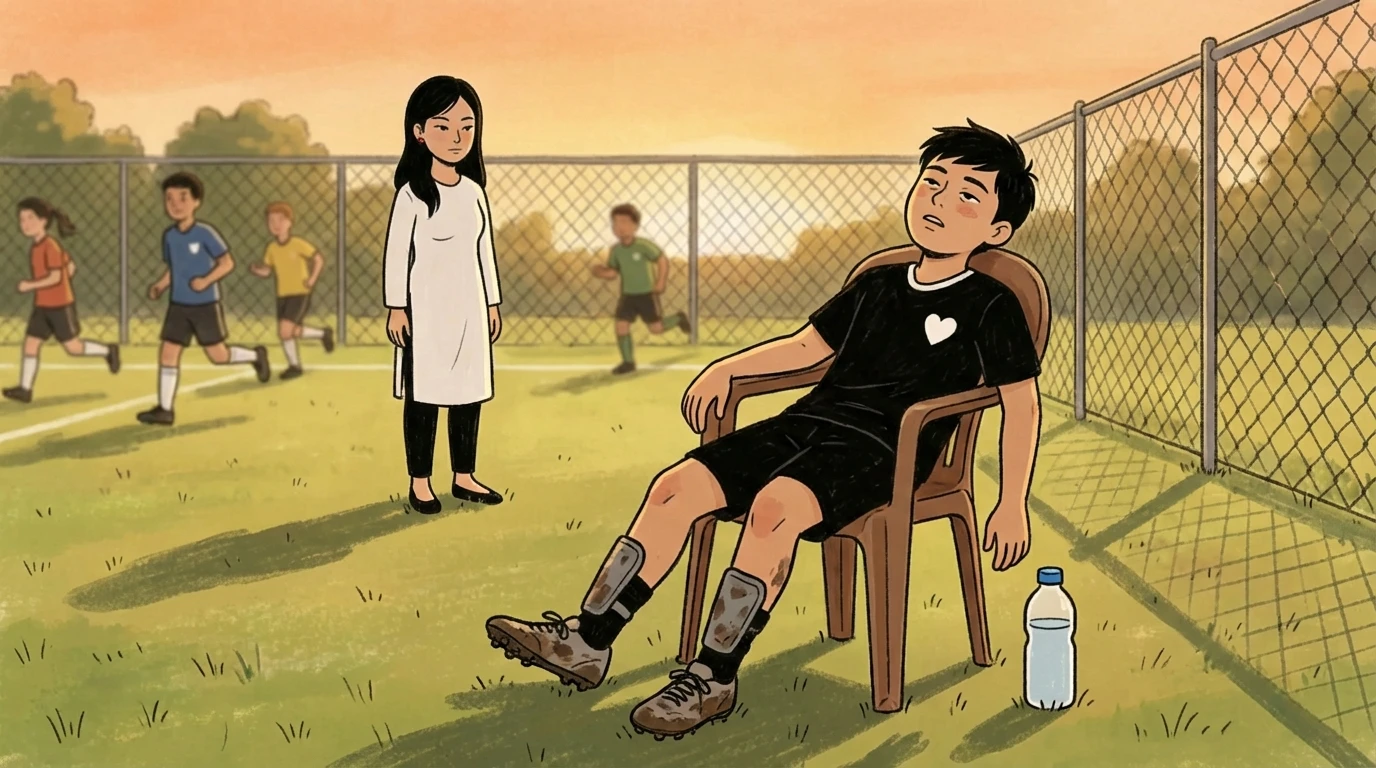
Your teen stayed up gaming until 3 AM on a school night. They're wrecked the next day. They bomb their quiz. They drag through soccer practice.
That's the consequence. It already happened. You don't need to confiscate the console on top of it. The morning after a 3 AM gaming session, with a failed quiz and a miserable practice, teaches more than any punishment you could design.
The test for whether you need to add a consequence is simple: did life already provide one? If your teen is experiencing the direct result of their choice, your job is to be quiet and let it land. Don't rescue, but also don't pile on.
The distinction between natural and parent-imposed consequences gets clearer with teenagers because teens are old enough to connect cause and effect across time. A twelve-year-old who forgot their jacket and was cold at recess will remember that. You don't need to also cancel the playdate.
When the same mistake keeps happening
You've had the conversation. You designed the plan together. They broke curfew again.
Before you reach for the old playbook, check two things.
First, is the boundary realistic? A 9 PM curfew for a sixteen-year-old whose friends all stay out until 11 is a boundary designed to fail. A curfew that far from reality just creates a conflict that guarantees repeated violation. Adjust the boundary, and the violations often disappear on their own.
Second, is something bigger going on? Repeated rule-breaking in a teen who previously cooperated is usually a symptom, not the disease. They might be struggling socially, dealing with anxiety, or testing whether you'll still show up when they push you away. When a teen keeps breaking rules, the answer is almost always more connection, not more restriction.
The hardest part of parenting a disrespectful preteen or teen is staying curious when you want to clamp down. But curiosity is what gets you information. And information is what lets you help.
The long game
Grounding feels decisive. You said a thing, it happened, the conversation is over. Except it isn't over, because nothing was resolved. The behavior that triggered it will return, wearing a different outfit.
The collaborative approach feels slower because it is slower. A problem-solving conversation takes thirty minutes. Grounding takes ten seconds. But the conversation produces a teen who calls you when things go sideways. The grounding produces a teen who handles it alone, badly, and tells you about it never.
You're preparing an adult now. Adults don't get grounded when they mess up. They assess what went wrong, make a plan, and try again. Every time you sit with your teen and work through a mistake together, you're rehearsing the skill they'll use for the rest of their life. Every time you send them to their room, you're rehearsing obedience to authority, a skill with a very short shelf life.
FAQ
You're still holding limits. The difference is you're replacing isolation with problem-solving. A teen who helped design the boundary is far more likely to follow it than one who had a punishment dropped on them. You're trading forced compliance for voluntary cooperation.
Safety situations need safety responses, not punishment. Have the conversation when everyone is calm. Ask what happened, what the risks were, and what the plan is next time. Then adjust freedoms based on demonstrated readiness. The goal is a teen who calls you from the party, not one who hides it better.
There should be a path back. Trust is rebuilt through small, consistent demonstrations over time, not through suffering. 'You took the car without asking. For the next two weeks, we check in before you drive. Then we reassess.' That's a trust-rebuilding plan, not a punishment.
Permissive parenting has no boundaries. This approach has clear boundaries with collaborative enforcement. Your teen still cannot stay out past curfew. The difference is what happens after they do: a conversation that solves the problem versus a lockdown that creates a new one.
Grounding stops being effective around age eleven or twelve, when peer relationships become central to identity. After that point, isolating a teen from their social world doesn't produce reflection. It produces rage, resentment, and increasingly creative ways to get around you.