
TLDR
- Your mood is the holiday. Kids don't remember the decorations. They remember whether you were relaxed or frantic. Protecting your emotional state is the single most effective thing you can do for your family this season.
- One event per day, maximum. Overscheduling is the fastest route to meltdowns. Kids need downtime to decompress between stimulating experiences, and they won't tell you they need it until it's too late.
- Routines are non-negotiable. Same bedtime, same meals, same rituals. When everything external changes, the internal family rhythm is the only anchor your child has.
- Feed them before they fall apart. Sugar highs followed by crashes account for a staggering number of holiday meltdowns. Carry protein snacks everywhere you go.
- Perfection is a trap. The holidays families remember most fondly are often the ones where things went sideways. Give up the magazine-spread fantasy and go for connection instead.
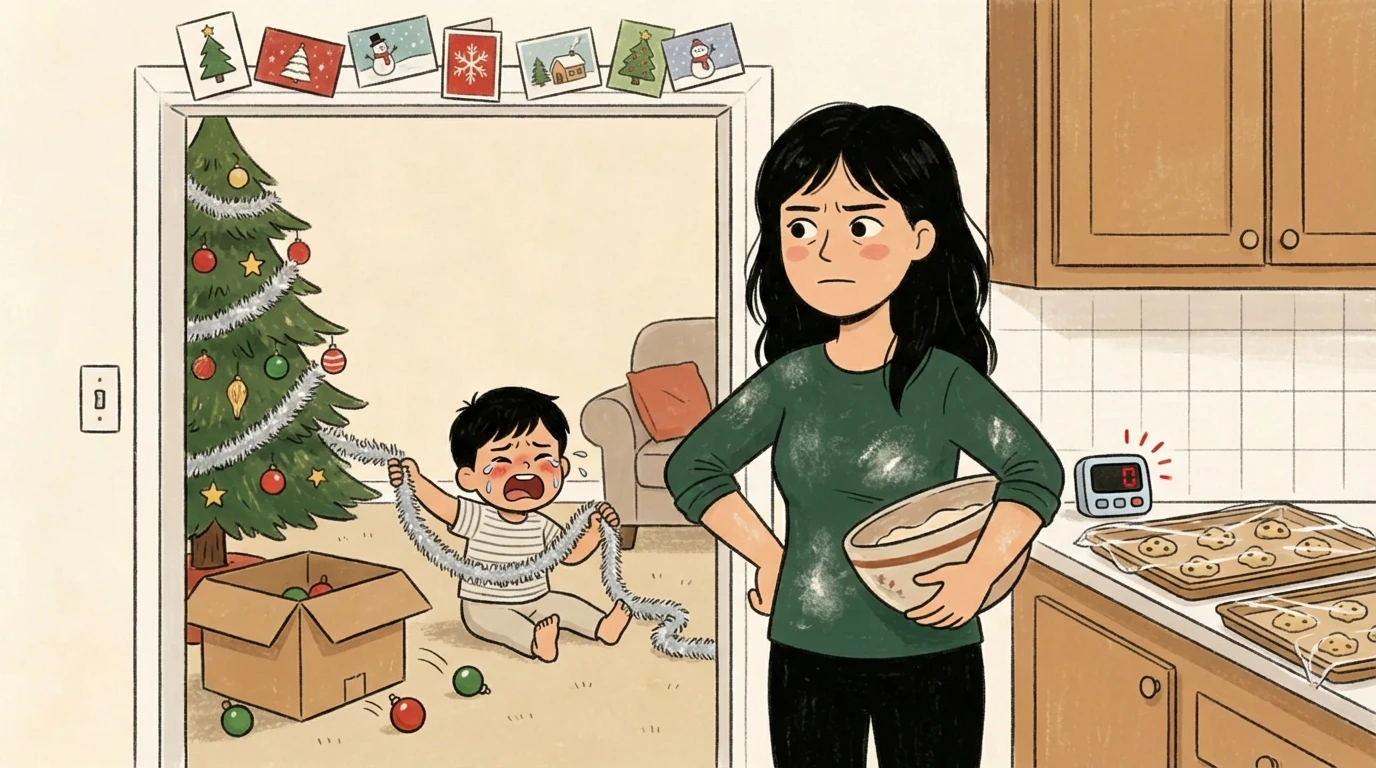
The holiday you're having versus the one in your head
You had a vision. Matching pajamas. Cookies cooling on the counter. Your child decorating the tree while humming something vaguely festive. Maybe a light dusting of snow outside, because why not.
What you got: your four-year-old eating raw cookie dough off the floor, your partner stress-wrapping in the bedroom with the door locked, and a relative who just texted to say they're arriving a day early. The gap between the holiday you imagined and the holiday you're living is where all the stress lives.
This gap hits kids too. They pick up on your tension the way a smoke detector picks up on toast. When you're anxious about the to-do list, running from event to event, snapping at small things, your child's nervous system reads the environment as unsafe. And unsafe means meltdowns, clinginess, regression, or all three at once.
So here's the survival guide: stop trying to produce a holiday and start trying to be present for one.
Why holidays are harder on kids than you think
We assume holidays are magical for children. They're often the opposite. The routine that keeps your child emotionally regulated, the daily rhythms that tell their nervous system everything is predictable and okay, all of it gets dismantled in December.
Bedtime moves. Meals happen at weird times. The house fills with unfamiliar people. There's sugar everywhere. The sensory environment shifts completely: new sounds, new smells, new expectations about how to behave. For a child whose brain depends on predictability to feel safe, this is a lot.
The overstimulation spiral
When kids get overstimulated during holiday chaos, they don't say "I need a break." They hit their sibling. They refuse to put on shoes. They dissolve into tears because you cut their sandwich wrong. The meltdown is the message. It means the system is overloaded and your child has no tools left to cope.
Add sugar to this equation and you've got a chemical accelerant. The high sends them bouncing off walls; the crash sends them into tears. Many holiday tantrums that look like behavioral problems are blood sugar and overstimulation colliding with disrupted routines.
Meltdown at the family gathering
The Life Transitions course will help you survive the holiday pressure
You'll set boundaries with relatives before you arrive and have an exit plan that doesn't require a scene.
The one-event-per-day rule
This is the single most useful guideline for surviving the season with small children, and almost nobody follows it. Plan no more than one stimulating event per day. Not the morning with cousins AND the afternoon at a holiday market. Not the school concert AND the neighborhood party.
Kids need downtime between events to decompress. Without it, the stimulation accumulates like pressure in a pipe. By the third event, you're wondering why your child is screaming in a parking lot, and the answer is that you scheduled a day that would exhaust most adults.
What counts as downtime
Real downtime means unstructured time at home. Not errands. Not "quick" stops. Time where your child can do whatever relaxes them: play with toys, take a bath, lie on the couch, stare at the ceiling. This time is the maintenance that keeps the whole system running.
If you're visiting family and the house is full of people, find a quiet room. Bring favorite books from home. Build a blanket fort. Fifteen minutes of genuine quiet with your child resets the clock more effectively than any distraction technique.
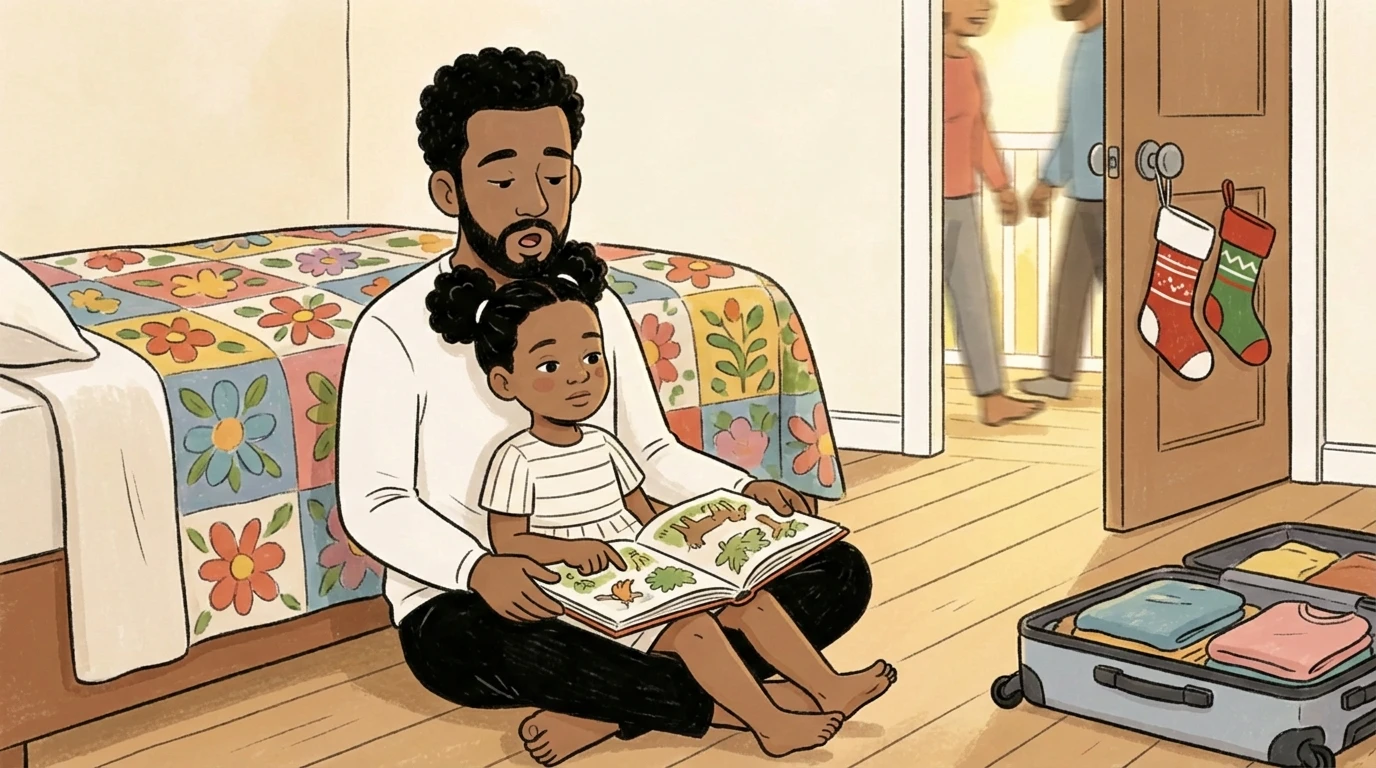
Protect your own mood first
This sounds selfish. Your mood IS the holiday for your children. When you're relaxed and present, your kids feel safe. When you're frantic and resentful, they feel it in their bones and act accordingly.
The research is clear: children depend on parents for two kinds of regulation. You regulate their environment (routines, schedule, food) and you help them regulate their emotions (staying calm when they can't). Both require you to be in a functional state. A parent running on fumes cannot help a child stay on an even keel.
Practical self-regulation
Set a low bar for what "success" looks like this season. The cookies don't have to be homemade. The gifts don't have to be wrapped beautifully. The house doesn't have to look like a catalog. Every expectation you drop is energy you get back for the people who need you.
When you feel your mood shifting from present to frantic, stop. Stop what you're doing. Hug your kid. Regroup. The thing you were rushing to finish can wait. Your child's experience of you cannot.
How to survive holiday stress with kids
- Lower expectations before the season startsDecide in advance what you're willing to let go of. Homemade everything, perfect decorations, attending every event. Pick two or three things that matter and release the rest.
- Keep daily routines ruthlessly consistentSame bedtime. Same meals. Same morning ritual. When the external world gets chaotic, internal rhythms are the anchor your child clings to.
- Limit to one event per daySchedule one stimulating activity and protect downtime around it. If your child seems fine, great. If they melt down, you'll know why.
- Carry protein snacks everywhereHunger and sugar crashes cause more holiday meltdowns than anything else. A bag of nuts or cheese sticks in your pocket prevents disasters.
- Build in daily connection timeA morning snuggle and a bedtime check-in are powerful anchors. Even five minutes of undivided attention helps your child feel safe in unfamiliar settings.
- Monitor your own stress hourlySet a phone alarm. When it goes off, notice what you need and give it to yourself. Your calm is the most important gift you give your family.
Handling relatives who have opinions
Family gatherings come with an audience, and the audience has notes. Your mother thinks you're too permissive. Your uncle thinks kids should be seen and not heard. Your cousin just read an article about screen time and wants to share it with you at dinner.
When someone criticizes your parenting during a holiday gathering, your first job is to stay regulated. Smile. Acknowledge their concern without agreeing or defending. "I hear you. We're working on it." Then redirect.
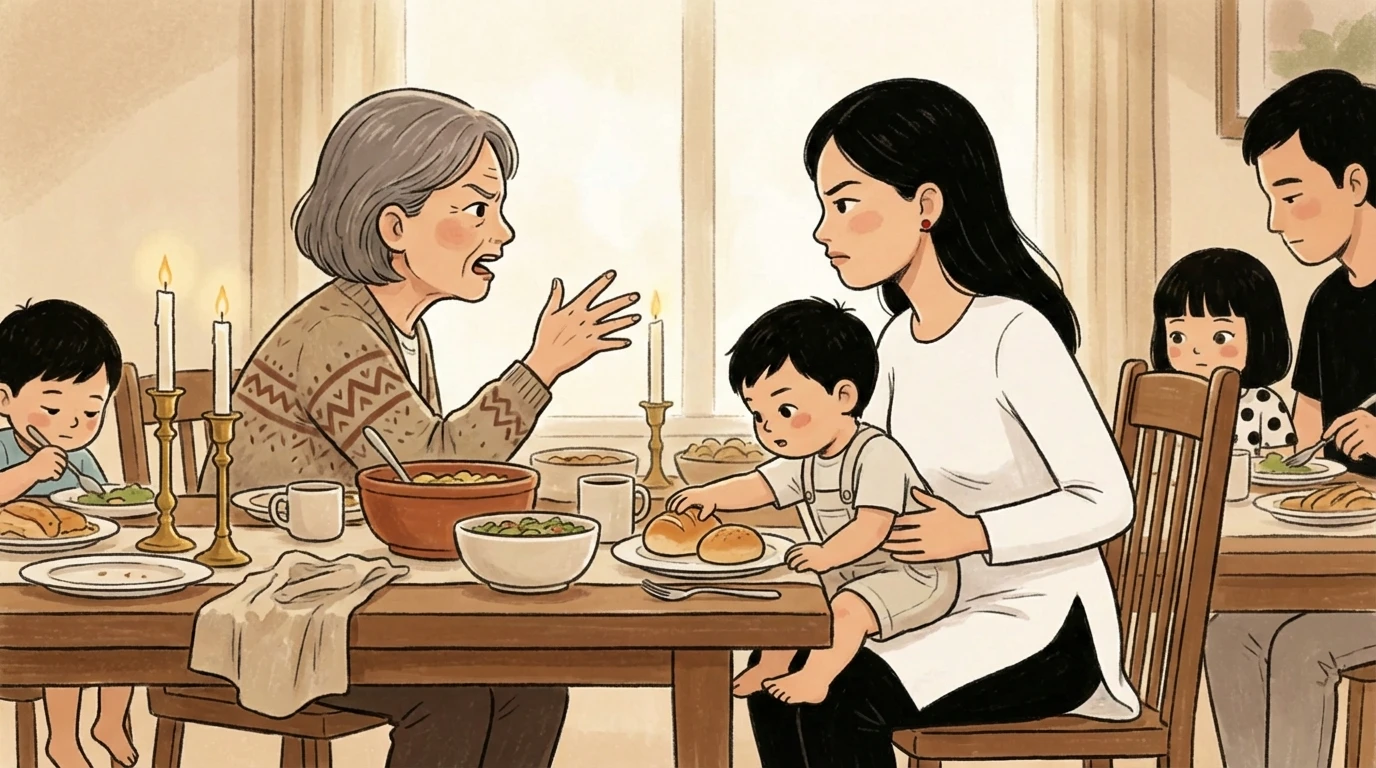
When kids act out in front of family
Your child will choose the moment you most want them to behave to fall apart. The timing feels personal, but they're off routine, overstimulated, surrounded by people, and reading your tension. The acting out is the overflow.
Resist the urge to use force or threats because people are watching. That approach escalates the upset and ensures your child pushes harder. Instead, get close. Acknowledge the feeling: "You were really hoping to keep playing, and now it's time for dinner. I get it." Give them a moment. At worst, they cry, which releases the tension, and then they're ready to move on.
The "do less, connect more" test
Here's a quick diagnostic for the entire holiday season. The minute your mood shifts from loving to frenzied, you've taken on too much. Pare back. Cancel something. Order takeout instead of cooking. Skip the event.
Your children will not remember whether you attended the neighborhood cookie exchange. They will remember whether you were burning out or laughing with them on the couch. Kids treasure simple, free experiences, sitting together looking at lights, reading stories by the tree, playing a board game after dinner, far more than elaborate productions.
The holidays families remember most fondly are often the disasters. The year the dog ate the cake. The year everyone got the flu and watched movies in pajamas for three days. Presence makes a holiday memorable, not perfection.
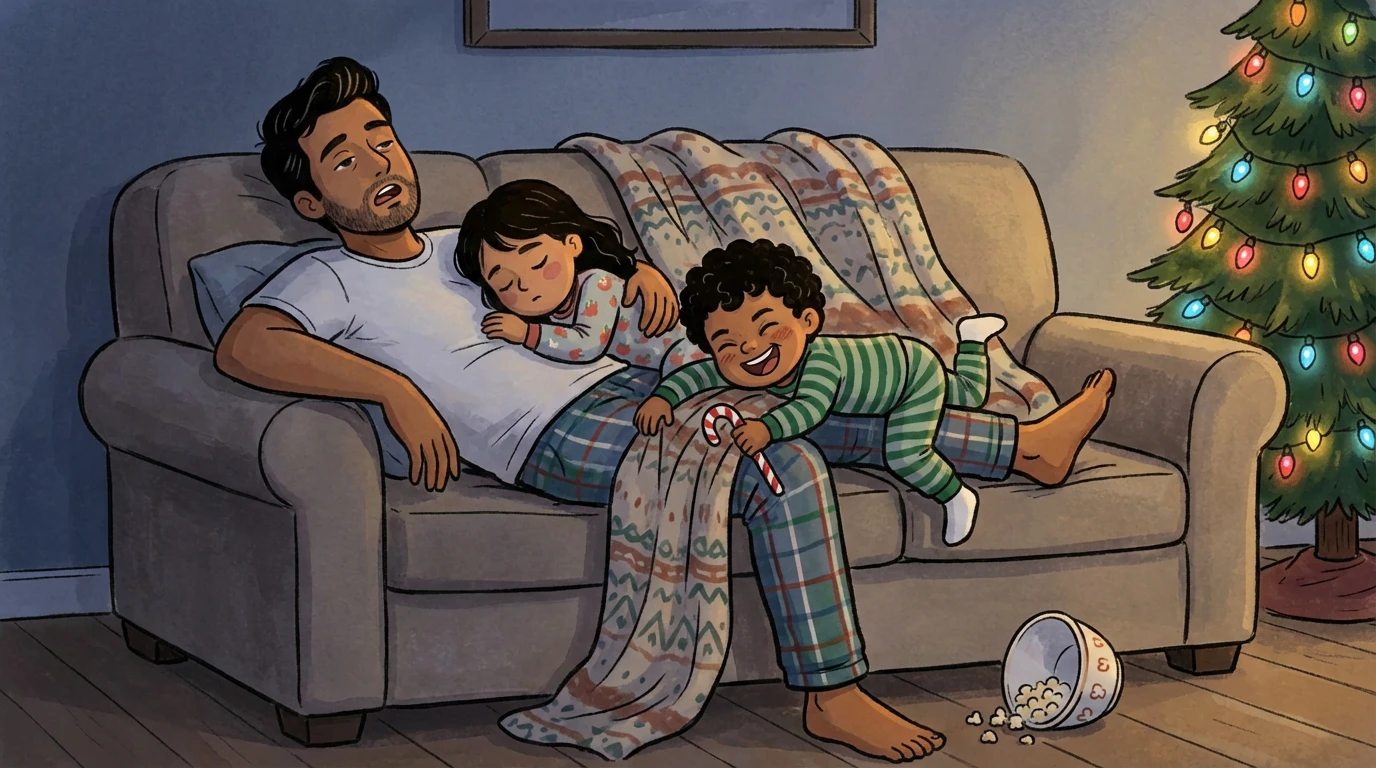
What kids want for the holidays
When children seem greedy about presents, something deeper is happening. They're longing for a version of life where they feel completely enveloped by love. Toy commercials exploit this: they show a child playing a game with a parent. The child craves the attention.
Research shows that fulfillment comes from connection, creativity, contribution, gratitude, and meaning. The kid who opens twelve presents on Christmas morning and says "is that all?" is unfulfilled. The presents didn't deliver what they were looking for.
Give them what they're looking for. Your time. Your attention. Your willingness to sit on the floor and do nothing productive for twenty minutes.
FAQ
Keep them on their regular sleep and meal schedule as closely as possible. Attend one event per day maximum. Carry protein snacks. Build in downtime before and after stimulating activities. When the meltdown comes anyway, stay calm and take them somewhere quiet. Your composure is their co-regulation tool.
Stay regulated. Smile, acknowledge their concern without defending yourself, and redirect. 'I hear you, we're handling it.' In quiet moments you can explain your approach, but don't do it mid-conflict. Your parenting is demonstrated by how you respond to your child, not by whether your relatives approve.
Try the four-gift framework: one store-bought item within your budget, one book, one experience you'll do together, and one gift they give to someone else. This structure satisfies the desire for abundance while teaching that fulfillment comes from connection and generosity, not volume.
It's more than okay. A child who misses one party but sleeps on time is going to have a better week than a child who attends everything and unravels. You are not obligated to attend every gathering. Choose the ones that matter and let the rest go without guilt.